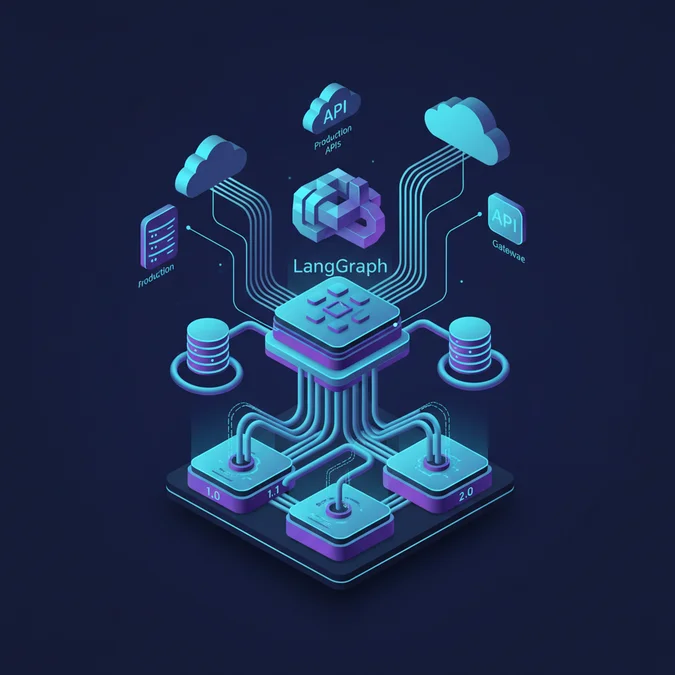

Enterprise LLM integration often hits a wall when Python-based orchestration frameworks struggle under high-concurrency loads or strict memory constraints. For engineering teams operating at scale, the shift toward langchain golang represents a move away from interpreted bottlenecks and toward the performance-first guarantees of the Go runtime.
This article provides the architectural blueprint for implementing robust LLM agents in Go. We dissect the trade-offs of the current ecosystem, evaluate performance metrics against traditional Python implementations, and establish a production-readiness checklist for managing complex agentic workflows in 2026.
Foundations of Langchain Golang Architectures
At its architectural core, langchain golang provides a structured framework for building LLM-powered applications by leveraging Go’s native strengths: static typing, efficient binary compilation, and a sophisticated concurrency model. Unlike Python, where the Global Interpreter Lock can impede high-throughput asynchronous operations, Go enables developers to spin up thousands of lightweight goroutines to handle concurrent LLM requests without significant memory overhead.
Technical Insight: The primary value proposition of using Go for agent orchestration lies in its deterministic memory management and superior performance under high-load scenarios. By offloading complex logic to Go’s runtime, teams can achieve lower tail latency in RAG pipelines and more predictable resource utilization in containerized environments.
Comparative Analysis: Langchain Go vs Python Ecosystems
Choosing between langchain go and the original Python framework requires a clear understanding of the trade-offs between ecosystem maturity and raw execution speed. The following table highlights the critical performance and architectural differences observed in 2026 production environments.
| Feature | Langchain Go | Langchain Python |
|---|---|---|
| Concurrency Model | Native Goroutines | Asyncio/Multi-process |
| Runtime Performance | High (Compiled) | Moderate (Interpreted) |
| Dependency Lifecycle | Single Binary | Complex venv/pip |
| Ecosystem Maturity | Growing/Targeted | Massive/Experimental |
| Memory Footprint | Predictable | High/Variable |
Implementing Core Mechanics with Langchain Go
Implementing agentic workflows in Go requires an idiomatic approach to state management. By utilizing interfaces and structs, you can build modular chains that are easier to test and maintain than their dynamic Python counterparts.
- Initialize the LLM Client: Configure your provider using the native SDK, ensuring that context timeouts are explicitly defined to prevent hanging goroutines.
- Define Chain Components: Leverage Go interfaces to wrap prompt templates and output parsers, allowing for seamless swapping of model backends.
- Execute with Concurrency: Utilize
sync.WaitGroupor worker pools to execute parallel prompt chains, aggregating results before moving to the next stage of the agent flow.
// Example: Parallel chain execution pattern
func RunAgent(ctx context.Context, input string) (string, error) {
 var wg sync.WaitGroup
 results:= make(chan string, 2)

 wg.Add(2)
 go func() { defer wg.Done(); results <- callLLM(ctx, input) }()
 go func() { defer wg.Done(); results <- callLLM(ctx, input) }()

 wg.Wait()
 close(results)
 // Aggregation logic here
 return "aggregated_result", nil
}
Production Readiness Checklist for Agentic Workflows
When deploying langchain golang agents to production, developers must treat LLM interactions as external network dependencies. The following checklist ensures your implementation is resilient and observable.
- Observability: Integrate OpenTelemetry to trace LLM request lifecycles across distributed services.
- Graceful Degradation: Implement circuit breakers using libraries like
gobreakerto stop cascading failures when LLM providers experience latency spikes. - Context Management: Always pass a
context.Contextobject through your chains to enforce request deadlines and cancellation signals. - Structured Logging: Use
slogto capture structured metadata including prompt token counts and latency metrics for cost analysis. - Memory Management: Explicitly handle buffer sizes when dealing with large document chunks in vector databases to avoid heap fragmentation.
Ecosystem Evolution and Future Directions
The langchain golang ecosystem has matured significantly throughout 2026, shifting focus from parity with Python to performance-optimized primitives. Future roadmap items emphasize deeper integration with Go’s standard library and the development of high-performance vector store connectors that bypass overhead-heavy serialization.
Architectural Outlook: As we look toward the remainder of 2026, the focus will remain on stabilizing interfaces for multi-model support and enhancing the type-safety of chain inputs, further cementing Go’s role as the language of choice for high-scale, production-critical AI infrastructure.
Frequently Asked Questions
Is Langchain Golang suitable for production environments?
Yes, Langchain Golang is increasingly viable for production. By leveraging Go’s superior concurrency model, developers can build highly performant LLM agents that handle parallel request streams more efficiently than traditional Python-based orchestration frameworks, provided the specific library maturity meets your project’s feature requirements.
How does Langchain Go differ from the original Python library?
Langchain Go focuses on idiomatic Go patterns, utilizing strong typing and goroutines for asynchronous task execution. While it offers similar abstractions for chains and memory, it prioritizes compiled performance and memory efficiency over the expansive, dynamic plugin ecosystem found in the Python original.
Building production-ready agents requires moving beyond the convenience of scripting languages and embracing the rigor of Go. By focusing on concurrency-first design and robust error handling, engineering teams can deploy LLM applications that are performant, maintainable, and ready for the demands of 2026.
Review your current agent architecture against the provided checklist to identify bottlenecks and start your migration toward a more resilient, Go-based infrastructure.