
When integrating large language model orchestration into production environments, legal clarity is as critical as latency benchmarks. The LangChain framework has become the industry standard for building agentic workflows, but engineering teams often conflate the open-source library with the broader suite of commercial tools offered by the underlying organization. Understanding the boundaries of the LangChain license MIT is the first step toward building a compliant, scalable AI architecture in 2026.
This guide cuts through the noise to provide a technical breakdown of what the MIT license permits, how it differs from proprietary ecosystem components like LangSmith, and how to verify your dependencies within automated CI/CD pipelines. We focus on the practical realities of enterprise deployment rather than abstract legal theory.
Decoding the LangChain License MIT Framework
The core LangChain library is distributed under the MIT License, which is widely considered one of the most permissive open-source licenses available. For a developer, this means you are granted the right to use, copy, modify, merge, publish, distribute, sublicense, and sell copies of the software without restriction, provided you include the original copyright notice and permission notice in your distribution.
Technical Callout: The MIT license is a ‘permissive’ license, not a ‘copyleft’ license. Unlike GPL-licensed software, it does not mandate that your derivative works or applications built using the library must also be open-sourced.
In the context of 2026 AI infrastructure, this permissive nature allows teams to bake LangChain into proprietary, closed-source SaaS products without creating intellectual property entanglement. The primary obligation is simple: maintain the attribution notice within your codebase or documentation. This compliance requirement is trivial to automate during build processes, ensuring that your legal audit trail remains pristine as you scale your agentic systems.
Taxonomy of the LangChain Ecosystem and Licensing Models
A common friction point for engineering leads is the assumption that the ‘LangChain’ brand implies a singular licensing model. In reality, the ecosystem is a hybrid of open-source libraries and proprietary service layers. Failing to distinguish between these can lead to compliance violations when moving from a prototype to a paid enterprise product.
| Component | License | Primary Use Case |
|---|---|---|
| LangChain (Core) | MIT | Orchestration, Chains, Memory |
| LangGraph | MIT | Stateful Multi-Agent Workflows |
| LangSmith | Proprietary | Tracing, Evaluation, Deployment |
| LangChain Templates | MIT | Boilerplate Agent Logic |
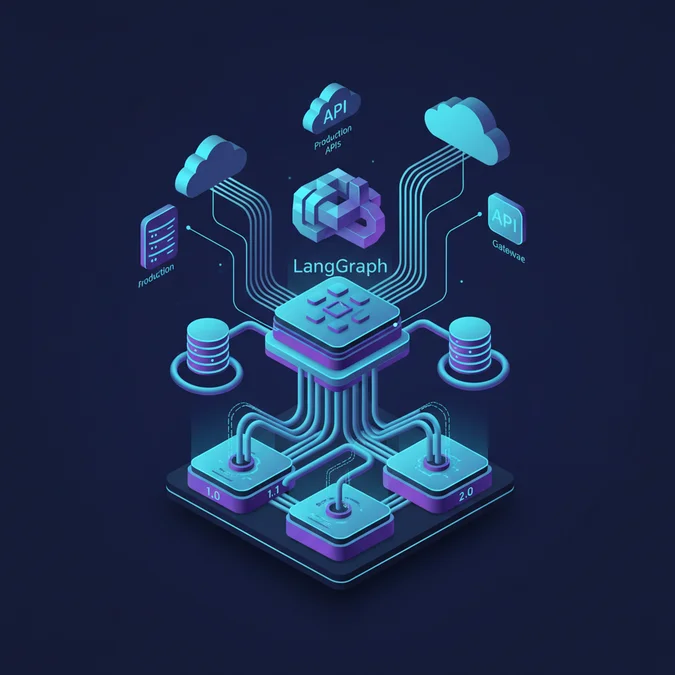
The distinction is vital: while the orchestration logic (LangChain/LangGraph) is freely available under the MIT license, the observability and monitoring platform (LangSmith) is a commercial service. Your architecture should treat these as distinct tiers. If your system relies on internal proprietary logic, ensure that only the MIT-licensed components are bundled in a way that risks exposure, while service-based dependencies are handled through secure API gateways.
Practical Implementation and Derivative Work Boundaries
Engineering teams frequently worry about the ‘derivative work’ clause in legal contexts. In software development, importing a library as a dependency does not typically constitute creating a derivative work of that library under standard copyright interpretations. You are using the library as a tool to build your own application logic.
# Example of standard library consumption
from langchain_core.agents import AgentExecutor

# Your proprietary agent logic remains yours
class CustomEnterpriseAgent:
 def execute(self, task):
 # Logic using LangChain as a dependency
 pass
To maintain compliance, follow this implementation checklist:
- Dependency Audit: Regularly run
pip-licensesornpm-license-crawlerin your build pipeline to flag any non-MIT components that may have been introduced via transitive dependencies. - Attribution Preservation: Ensure your build scripts do not strip license files from the
node_modulesorsite-packagesdirectories during containerization. - Separation of Concerns: Keep your proprietary business logic in separate modules from any modified LangChain internal code.
Risk Assessment for Enterprise Deployment
For CTOs, the risk associated with the LangChain license MIT is remarkably low, but the risk associated with unmanaged dependencies is high. When deploying AI agents at scale, your primary concern should be the security and provenance of the packages being pulled into your production environment.
- Define a Dependency Policy: Explicitly whitelist the MIT license in your internal package manager (e.g. Artifactory or Sonatype Nexus).
- Automate License Scanning: Integrate a license compliance check into your CI/CD pipeline that blocks builds containing licenses that do not meet your organization’s legal standards.
- Audit Transitive Dependencies: Use tools like Snyk or GitHub Dependabot to verify that no malicious or restrictive-licensed code has entered your dependency tree via a third-party LangChain integration.
- Documentation of Use: Maintain a simple ‘Software Bill of Materials’ (SBOM) that lists LangChain as an MIT-licensed dependency, simplifying the process for future legal reviews.
Frequently Asked Questions
Is the LangChain license mit compatible with commercial software?
Yes, the LangChain license mit is highly permissive, allowing for commercial use, modification, and distribution. It requires that the original copyright notice and permission notice are included in all copies or substantial portions of the software, making it suitable for proprietary enterprise AI implementations.
Does the general LangChain license cover all ecosystem tools?
While the core LangChain library uses an MIT license, other tools within the ecosystem, such as LangSmith or specific enterprise-grade connectors, may operate under different proprietary terms. Developers must verify the license file within each specific repository before integrating components into production architectures.
The LangChain license MIT provides the flexibility necessary for rapid innovation in the AI space, allowing teams to build, deploy, and scale without the burden of restrictive copyleft requirements. However, the maturity of your architecture depends on your ability to distinguish between the open-source framework and the proprietary ecosystem services surrounding it.
By automating your license auditing and maintaining clear boundaries between your proprietary business logic and the underlying orchestration libraries, you can leverage the power of LangChain with full confidence. Ensure your CI/CD pipelines are configured to monitor these dependencies, and you will be well-positioned to navigate the evolving landscape of 2026 AI development.