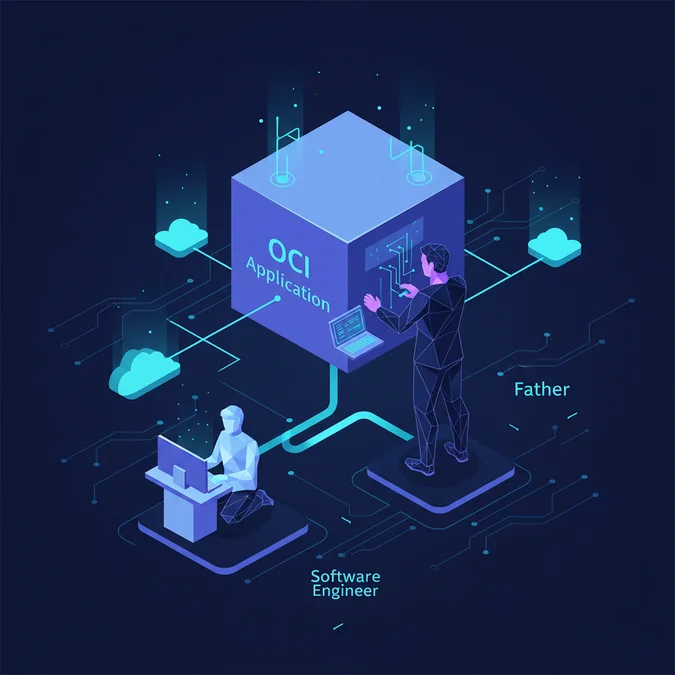

When completing the father’s profession in oci application for software engineers, the most compliant entry is Software Engineer, Information Technology Professional, or Service with employer details if retired or deceased, accurately reflecting your father’s historical employment record without abbreviation. Consulates verify this data against original lineage documents like birth certificates and passports, where discrepancies create administrative delays.
The Overseas Citizenship of India (OCI) registration infrastructure historically evolved from paper ledgers processed by diplomatic posts into an automated, distributed registry managed under India’s Ministry of Home Affairs (MHA). Over the past two decades, this backend migrated toward relational and document validation pipelines, creating rigid data-matching requirements across legacy passports, ancestral naturalization certificates, and web application forms.
For technology professionals operating complex software systems and cloud infrastructures, mapping real-world parental work histories into these legacy civil registration schemas often introduces confusion. Understanding how consular intake pipelines parse, validate, and store parental employment fields allows applicants to prevent document rejects and systemic processing freezes.
Answering Father’s Profession in OCI Application for Software Systems
When specifying your father’s profession in an OCI application within software contexts, enter Software Engineer, Computer Systems Analyst, or general Private Service based on official employment records. The Ministry of Home Affairs web portal maintains deterministic field parsing rules that evaluate string values against civil record databases.
Submitting ambiguous titles or modern corporate jargon often triggers automated document validation flags. Consular intake workers rely on legacy taxonomy sets. If your father operated as a Site Reliability Engineer, DevOps Specialist, or Solutions Architect, the civil registration portal prefers standardized classifications.
- Active Software Engineers: Enter Software Engineer or IT Professional, appending the current enterprise name if prompted in subsidiary address blocks.
- Retired Engineers: Enter Retired (Software Engineer) or select Retired and specify his prior technology domain on physical supplementary disclosures.
- Deceased Parents: Enter Deceased (Late Software Engineer) or Deceased as required by the dropdown, ensuring the death certificate or estate documents corroborate prior service.
- Business Owners / Founders: Enter Business or Self Employed (Software Consultancy) rather than colloquial terms like Tech Founder or Startup Creator.
Consular verification models validate text inputs against supporting documents, such as parental naturalization certificates, Indian passports, or foreign residency filings. Any divergence between the form’s text entry and the occupational remarks on apostilled documentation requires manual administrative reconciliation.
OCI Form Field Schema and Database Validation Constraints
The OCI online registration portal utilizes strict input sanitation rules and legacy relational database validation constraints on form fields. Inspecting the DOM and payload payloads reveals how string formatting affects server-side processing.
Understanding database schemas clarifies why certain character combinations crash consular validation pipelines. Many web forms interfacing with legacy national databases still leverage fixed-width VARCHAR constraints and restricted regular expressions that reject non-alphanumeric punctuation marks.
| Field Identifier | Database Data Type | Character Limit | Permitted Characters | Parsing Rule |
|---|---|---|---|---|
father_prof |
VARCHAR(50) | 50 chars | A-Z, a-z, spaces | No periods, slashes, hyphens, or commas allowed |
father_emp_name |
VARCHAR(100) | 100 chars | Alphanumeric, spaces | Truncated silently if exceeding column limits |
father_nat_status |
ENUM | 12 options | Predefined lists | Must match parental proof document precisely |
parent_domicile |
VARCHAR(120) | 120 chars | Alphanumeric, spaces | Maps to state civil registrar jurisdiction tables |
When handling migrations of legacy records across large systems, engineers encounter similar structural issues. Handling schema validations correctly mirrors operational tasks such as executing database migration workflows in distributed cloud environments, where schema evolution must not break backwards compatibility with external consumers.
<php

namespace App\Http\Requests;

use Illuminate\Foundation\Http\FormRequest;

class OciParentalDataRequest extends FormRequest
{
 public function rules(): array
 {
 return [
 // Consular schema enforces strict alpha-space limits
 'father_profession' => [
 'required',
 'string',
 'max:50',
 'regex:/^[a-zA-Z\s]+$/',
 ],
 'father_employer' => [
 'nullable',
 'string',
 'max:100',
 'regex:/^[a-zA-Z0-9\s\.\,\-]+$/',
 ],
 'father_status' => [
 'required',
 'in:Active,Retired,Deceased',
 ],
 ];
 }
}
Failing to strip special characters such as slashes or parenthetical notes directly inside the primary string field frequently causes backend exceptions, resulting in incomplete document submission packets.
Parental Documentation Verification Workflow in Cloud Registries
Once parental employment data is submitted, the intake lifecycle enters a multi-stage background check spanning consular offices, foreign service posts, and central intelligence verification systems in New Delhi.
The administrative pipeline follows an asynchronous event-driven model. The client uploads digitized PDF records containing lineage data, employer proofs, and passport photocopies. These blobs land in secure object storage, triggering an optical character recognition (OCR) and ingestion job.
- Edge Intake: Web forms and document uploads pass through regional reverse proxies hosted by consular outsource vendors (such as VFS Global) before arriving at government gateway clusters.
- Document Ingestion: Files undergo automated metadata scrubbing, virus scanning, and resolution verification before being indexed into document storage systems.
- Asynchronous Reconciliation: The data model compares field text directly with the historical records of the father’s Indian passport or renunciation declaration.
- Manual Review: Consular verification officers inspect documents side by side to ensure occupational entries do not imply sovereign security affiliations (e.g. military, defense contracting, or intelligence).
Architecturally, this multi-stage workflow mirrors distributed enterprise microservices handling secure document processing. Minimizing latency and database read pressure across distributed review nodes requires careful index selection and query optimization, avoiding structural flaws comparable to the database N plus one query problem seen in complex application layers.
Standard Software Titles vs Consular Professional Taxonomies
Modern software engineering titles are notoriously hyper-specialized. However, diplomatic entry lists maintain simplified taxonomies. Matching your father’s actual professional duties to consular acceptable terms avoids unnecessary document reviews.
Consular gatekeepers are unfamiliar with evolving tech industry job titles. Using corporate designations such as Staff Infrastructure Architect or Cloud FinOps Specialist raises questions about whether the applicant is self-employed, contracted by foreign state departments, or working in regulated defense fields.
| Current Tech Industry Title | Recommended OCI Form Entry | Acceptable Supporting Documentation | Risk Level for Manual Audit |
|---|---|---|---|
| Site Reliability Engineer (SRE) | Software Engineer | Standard employment letter, W2 / P60 | Low |
| Cloud Solutions Architect | Computer Professional / IT Consultant | Offer letter, tax returns | Low |
| Chief Technology Officer (CTO) | Business Executive / Software Director | Corporate registry, company letterhead | Medium |
| Independent DevOps Contractor | Self Employed / IT Consultant | 1099, client contract proof, corporate filings | Medium |
| Cybersecurity Defense Specialist | Information Technology Professional | General verification letter (omit defense references) | High |
Keep the professional category general and clear. If your father’s work involves general commercial software, standardizing to Software Engineer remains the safest path across all international consular missions.
Defense, Security, and Public Sector Employment Disclosures
A critical consideration during OCI verification involves historical or present links to state defense, telecommunications infrastructure, intelligence, or law enforcement entities. The Indian Citizenship Act of 1955 explicitly restricts OCI grants to individuals who have served in foreign defense ministries.
If your father worked as a software developer for a defense contractor, military branch, or federal law enforcement agency, standard entry conventions do not apply. Strict background checks apply to these entries.
- Defense Contracting Firms: If he was employed by firms like Lockheed Martin, Raytheon, or BAE Systems, simply entering Software Engineer without specifying the corporate division can trigger manual scrutiny if employer tax forms are requested.
- Military Software Divisions: Direct active service as an enlisted software programmer or civil servant within an armed forces department disqualifies the applicant from standard OCI registration pathways under statutory rules.
- Civilian Telecommunications: Software engineering in telecom infrastructure (e.g. public switching, satellite communications) is permitted, but consular officers may request non-involvement declarations regarding surveillance or signals intelligence.
Document packages must include an explicit verification letter from the employer confirming civilian, commercial duties whenever the parent’s employer brand is broadly recognized as a defense or intelligence supplier.
Handling Retired, Deceased, and Self-Employed Lineage Records
Lineage verification mandates accounting for the full chronological status of parental occupations. Many applicants run into processing blocks when their father is either retired, deceased, or operated an unincorporated software consultancy.
Retired Software Engineers
When an applicant’s father is no longer actively coding or managing systems, select Retired. If the interface permits secondary free-text clarification, input Retired (Formerly Software Engineer). Consulates cross-reference this against naturalization papers; if the naturalization certificate issued decades prior lists him as a student or electrical draftsman, no administrative conflict exists as long as career progression accounts for the change.
Deceased Parental Filings
For deceased parents, the applicant must select Deceased. Consular review requires the original apostilled death certificate alongside parental passport copies. If the death certificate notes an occupation differing from earlier Indian passport records (e.g. software developer vs accountant), attach a self-attested affidavit clarifying the professional transition during his foreign residence.
Self-Employed Consultants and Agency Owners
Software contractors running single-member LLCs or proprietorships must avoid colloquial labels like Solopreneur or Freelancer. Use Self Employed (Software Consultant). Prepare to supply corporate registration papers, commercial bank statements, or business licenses if consular staff request proof of commercial operations.
Common Data Mismatches and Administrative Rectification
Data divergence between primary application records and historic parental passports accounts for the majority of consular rejection notices (known as deficient application flags). Resolving these issues requires systematic triage.
When a rejection email or portal status update indicates a parental profession deficiency, the processing pipeline freezes until supplementary declarations are processed. Common root causes include:
- Historical Typographical Errors: A handwritten Indian passport from the 1980s listing a parent as Progrmr while the digital form reads Senior Systems Architect.
- Abbreviation Incompatibilities: Submitting acronyms like SWE, PM, or DBA, which intake clerks cannot validate against official occupational classifications.
- Discrepancies in Naturalization Records: Naturalization certificates listing Technician while subsequent foreign passports list Director of Software Engineering.
To rectify an active discrepancy flag, upload an explanatory affidavit notarized by a local notary public alongside the updated form re-submission. The affidavit should cleanly state the chronological employment path connecting the historical title to the modern software engineering designation.
Total Cost Breakdown: Consular Fees, Legal Services, and Processing
Securing an OCI card requires budgeting for multiple mandatory government fees, third-party logistics costs, document apostille services, and potential legal or consular service retainers. Depending on whether an applicant processes the application independently or employs professional assistance, overall expenses vary predictably.
The table below provides a comprehensive breakdown of the real-world expenses involved across different processing pathways.
| Expense Category | Direct Self-Filing Model | Assisted Consular Agent Model | Legal Retainer / Law Firm Model |
|---|---|---|---|
| Government Statutory Fee | $275.00 | $275.00 | $275.00 |
| Outsource Service & Logistics (VFS) | $19.90 – $35.00 | $19.90 – $35.00 | $19.90 – $35.00 |
| Parental Document Notarization & Apostille | $40.00 – $120.00 | $60.00 – $150.00 | Included in package |
| Courier / Secure Return Transit | $30.00 – $60.00 | $30.00 – $60.00 | $30.00 – $60.00 |
| Professional Agency / Legal Processing Fee | $0.00 | $150.00 – $350.00 | $800.00 – $2,200.00 |
| Hourly Consultation Rate (Edge Cases) | N/A | $50.00 – $100.00 / hr | $250.00 – $450.00 / hr |
| Total Estimated Investment | $364.90 – $490.00 | $534.90 – $870.00 | $1,374.90 – $3,020.00 |
For applicants with simple parental records, direct self-filing remains the most economical path. Engaging an immigration attorney is usually warranted only when parental service history intersects with foreign government agencies or complex naturalization timelines.
Document Storage, Encryption, and Identity Protection
Submitting sensitive family records, including parental tax declarations, passports, and employment verification letters, introduces meaningful data privacy considerations. Applicants must follow basic operational security measures when digitizing and storing these files.
Consular intake platforms require documents to be uploaded as compressed PDFs under strict file-size limits (typically under 500 KB per file). In compressing these assets, ensure that personal identity details remain legibly readable by human adjudicators while securing local storage nodes.
- Client-Side Encryption: Archive raw parental scans inside an encrypted vault (such as VeraCrypt or BitLocker-encrypted drives) rather than leaving them in unencrypted cloud drive folders.
- Redaction of Ancillary Metadata: Strip non-essential identifying strings like Social Security Numbers or bank account balances from employment offer letters before uploading.
- Hash Integrity Tracking: Maintain SHA-256 checksums of the files uploaded to the consular portal to verify that what was transmitted matches your physical submission set exactly.
Adopting clean data management routines protects lineage assets from accidental exposure during multi-month review periods.
Modernizing Legacy Civic Registries: Architectural Considerations
From an architectural standpoint, the challenges applicants encounter with parental occupation fields reflect broader realities of public sector computing infrastructure. Many government administrative networks rely on monolithic systems designed decades ago.
Modern application frameworks approach relational record management with far greater flexibility. For example, modern enterprise applications built with tools like Laravel 11 feature improvements leverage typed casts, flexible validation systems, and automated testing pipelines to handle evolving data schemas gracefully.
<php

namespace App\Services;

class ParentalProfileMapper
{
 private array $taxonomyMap = [
 'sre' => 'Software Engineer',
 'devops' => 'Software Engineer',
 'architect' => 'Computer Systems Analyst',
 'programmer' => 'Software Engineer',
 ];

 public function normalizeProfession(string $rawInput): string
 {
 $clean = strtolower(trim($rawInput));

 foreach ($this->taxonomyMap as $key => $normalized) {
 if (str_contains($clean, $key)) {
 return $normalized;
 }
 }

 return 'Information Technology Professional';
 }
}
Implementing normalization layers enables public services to accept contemporary vocational descriptions from citizens while storing standardized keys in backend ledgers, bridge-building between public users and compliance databases.
Mastering Core Application Frameworks for Distributed Systems
Understanding the interplay between frontend form validation, data ingestion microservices, and backend schema constraints is a core competency for developers building modern distributed web applications.
Engineers handling complex digital public goods or consumer-facing enterprise portals must design systems that accommodate real-world edge cases without compromising relational integrity.
[Explore our complete Laravel, Basics directory for more guides.](/topics/topics-laravel-basics/)
Factors That Affect Development Cost
- Government application statutory fees
- Consular outsource provider logistics charges
- Apostille and document notarization fees
- Legal representation or filing agency retainers
Total costs range between $365 and $490 for direct self-filing, or up to $3,000 when retaining formal immigration counsel.
Entering your father’s profession correctly on an OCI application requires balancing modern industry terminology with standardized consular taxonomies. Selecting straightforward designations like Software Engineer or IT Professional eliminates administrative ambiguity, ensures compliance with underlying database validations, and avoids costly verification delays.
Before final submission, verify all character inputs, confirm alignment across parental naturalization and passport records, and secure your uploaded identity assets. Clear preparation ensures a clean, predictable path through consular processing pipelines.