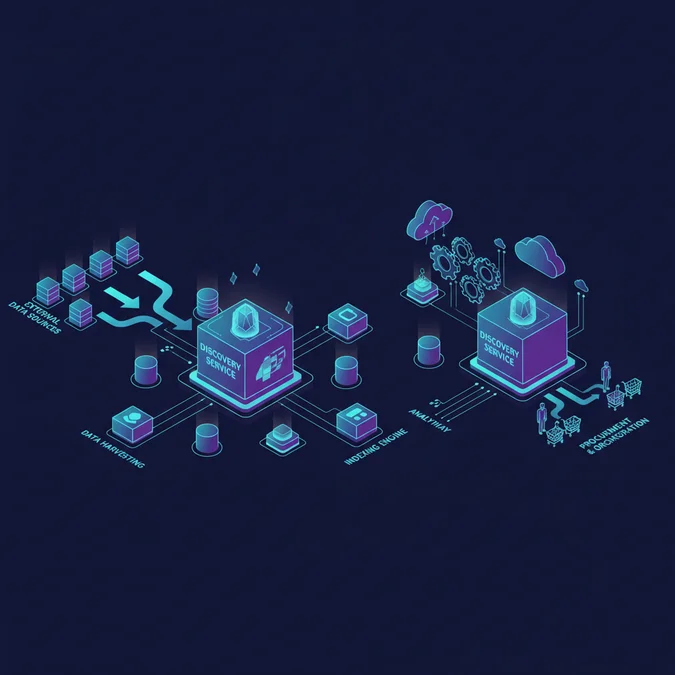

A discovery service provides real-time network location tracking, dynamic endpoint registration, and cryptographic health verification for ephemeral microservice instances. Without an authoritative control plane continuously synchronizing state, distributed systems collapse under stale IP routing, cascading timeout storms, and split-brain states during node churn.
In 2026, engineering organizations routinely operate mixed topologies across multi-region Kubernetes clusters, legacy virtual machines, and managed cloud edge platforms. In these distributed environments, hardcoded DNS endpoints and static configuration management are fundamentally broken paradigms. Ephemeral containers scale to zero, IP addresses recycle within seconds, and edge gateways must dynamically re-route traffic without dropping inflight requests.
This engineering guide dissects the architectural mechanics and financial trade-offs of modern registry solutions. We evaluate client-side versus server-side topologies, benchmark HashiCorp Consul, CoreDNS, etcd, Apache ZooKeeper, and Envoy dynamic SDS, and establish a vendor vetting framework for technical leadership assessing commercial procurement.
Executive Deliverables and Technical Scope of an Enterprise Discovery Service
At its technical foundation, an enterprise discovery service must eliminate the latency and routing brittleness inherent in static infrastructure. In a production cluster running thousands of microservices, pod lifecycles fluctuate on a sub-minute cadence. The registry acts as the single source of truth for dynamic network topologies, binding ephemeral network coordinates to cryptographically verifiable service identities.
The system comprises three distributed control plane primitives: dynamic endpoint registration, active health verification with anti-flapping controls, and distributed consensus state synchronization across isolated availability zones.
+---------------------------------------------------------------------------------+
| DISTRIBUTED CONTROL PLANE TOPOLOGY |
+---------------------------------------------------------------------------------+

 +---------------------+ gRPC Register / Heartbeat +---------------+
 | Microservice Worker | ---------------------------------------> | Discovery Node|
 | (Pod / VM Instance) | <--------------------------------------- | (Leader Raft) |
 +---------------------+ Health Lease / Keepalive +---------------+
 | ^
 | Ingress Request | Raft Log Sync
 v v
 +---------------------+ Stream SDS / Endpoints +---------------+
 | Envoy Data Plane | <====================================== | Discovery Node|
 | (Service Mesh) | | (Follower) |
 +---------------------+ +---------------+
 | |
 +------------------- Route Direct via mTLS ------------------+
Dynamic registration without cryptographic verification creates security vulnerabilities. In a zero-trust architecture, the discovery service must assert identity at the discovery boundary using frameworks like SPIFFE/SPIRE before admitting any endpoint into the active routing table.
When selecting or architecting a discovery service, engineering organizations must audit capabilities against strict distributed systems criteria:
- Sub-second Registration Propagation: New service endpoints must propagate to every downstream data-plane proxy in under 500 milliseconds across availability zones.
- State-Machine Consensus: Use of provable distributed consensus algorithms, such as Raft or Paxos, to prevent dirty reads during control plane partition events.
- Graceful Deregistration Leases: Time-to-live (TTL) lease mechanisms that automatically evict ungracefully terminated workloads without operator intervention.
- Cryptographic Attestation: Direct validation of workload SVIDs (SPIFFE Verifiable Identity Documents) during the registration handshake to prevent unauthorized service impersonation.
Evaluating Commercial Service Discovery Software: TCO and Infrastructure Cost Drivers
When choosing between running open-source consensus clusters (such as self-managed etcd or Consul) and adopting commercial service discovery software, technical buyers frequently underestimate ongoing operational overhead. Infrastructure calculations often focus solely on baseline compute, ignoring cross-availability-zone data transfer costs, backup replication, and dedicated site reliability engineering (SRE) support.
In high-churn container fleets, discovery heartbeats, consensus sync traffic, and dynamic health checks generate high network egress volume. When a 10,000-instance fleet sends heartbeats every five seconds across availability zone boundaries, the cross-AZ egress charges can eclipse the cost of the underlying compute instances running the control plane.
| Evaluation Metric | Self-Hosted Open Source (Consul/etcd) | Managed Cloud-Native (AWS Cloud Map) | Enterprise Commercial Platform |
|---|---|---|---|
| P99 Discovery Latency | 2ms to 5ms (In-Memory, Local Mesh) | 45ms to 120ms (Managed API Calls) | 3ms to 8ms (Optimized Edge/Control Plane) |
| Consensus Protocol | Raft (Self-Tuned, Quorum Sensitive) | Proprietary Distributed Consensus | Multi-Raft / Paxos with WAN Federation |
| Cross-AZ Egress Penalty | High (Heartbeat floods without local caching) | Medium (Regional API gateway aggregation) | Low (Aggregated Delta-xDS Push Models) |
| Operational FTE Load | 1.5 to 2.5 Dedicated Platform SREs | 0.2 Platform SREs | 0.5 Platform SREs |
| Licensing & Support | $0 direct software license fees | Usage-based API request billing | Per-node or per-service annual commit |
| Failure Mode Risk | Split-brain recovery, Raft log bloat | Provider regional API rate limiting | Vendor lock-in, proprietary ingress agent |
Procuring commercial service discovery software shifts responsibility for consensus quorum management, multi-region database compaction, and security patches to a specialized vendor. However, teams must weigh this convenience against strict vendor pricing tiers, where sudden auto-scaling events during traffic surges can trigger steep commercial overage penalties.
Architectural Topologies: Client-Side vs Server-Side Service Discoverability
Architecting for optimal service discoverability requires a fundamental choice between client-side discovery and server-side discovery topologies. This decision directly influences packet travel time, control plane complexity, and language-specific dependency management.
In client-side discovery, every consuming microservice embeds a dedicated client library or local sidecar. The client queries the discovery service registry directly, caches the endpoint list locally, and runs its own load-balancing algorithms (such as round-robin, least-connections, or peak EWMA). This removes an extra network hop, lowering latency, but couples the application runtime to specific registry client libraries.
package main

import (
 "context"
 "fmt"
 "log"
 "net"
 "sync/atomic"
 "time"
)

// ClientDiscoveryResolver balances requests across verified registry endpoints
type ClientDiscoveryResolver struct {
 registryURL string
 endpoints []string
 counter uint64
}

func (r *ClientDiscoveryResolver) RefreshEndpoints(ctx context.Context) error {
 // Simulated fetch of active instances from discovery registry
 activeHosts:= []string{"10.244.1.12:8080", "10.244.2.45:8080", "10.244.3.89:8080"}
 if len(activeHosts) == 0 {
 return fmt.Errorf("discovery registry returned zero healthy endpoints")
 }
 r.endpoints = activeHosts
 return nil
}

func (r *ClientDiscoveryResolver) NextEndpoint() (string, error) {
 if len(r.endpoints) == 0 {
 return "", fmt.Errorf("no endpoints available")
 }
 idx:= atomic.AddUint64(&r.counter, 1)
 return r.endpoints[idx%uint64(len(r.endpoints))], nil
}

func main() {
 resolver:= &ClientDiscoveryResolver{registryURL: "consul-cluster.internal:8500"}
 ctx, cancel:= context.WithTimeout(context.Background(), 2*time.Second)
 defer cancel()

 if err:= resolver.RefreshEndpoints(ctx); err!= nil {
 log.Fatalf("Failed to initialize service discoverability: %v", err)
 }

 target, _:= resolver.NextEndpoint()
 conn, err:= net.DialTimeout("tcp", target, 500*time.Millisecond)
 if err!= nil {
 log.Printf("Failed connection to %s, falling back", target)
 return
 }
 defer conn.Close()
 log.Printf("Successfully routed client-side discovery request directly to %s", target)
}
In server-side discovery, the microservice directs requests to a central load balancer or reverse proxy (such as an AWS ALB, F5, or internal NGINX pool). The intermediary proxy queries the discovery service and routes traffic accordingly. While this decouples microservices from registry details, it introduces an extra physical network hop and can create centralized performance bottlenecks.
| Architectural Attribute | Client-Side Discovery Topology | Server-Side Discovery Topology |
|---|---|---|
| Network Hops | 1 hop (Client straight to downstream instance) | 2 hops (Client to proxy, proxy to instance) |
| Network Latency | Lowest (Zero proxy overhead) | Higher (1ms to 10ms proxy overhead added) |
| Polyglot Maintenance | Complex (Requires SDKs for Go, Java, Node, Rust) | Simple (Standard HTTP/gRPC to static proxy) |
| Failure Domain | Isolated (Single client library failure) | Centralized (Proxy cluster failure impacts all) |
| Traffic Visibility | Distributed across all application metrics | Centralized on the proxy access logs |
Web Service Discovery in Hybrid Stacks: DNS, Envoy SDS, and Edge Gateways
Enterprise web service discovery in hybrid environments requires bridging native Kubernetes container networks with bare-metal data centers and edge ingress layers. Modern architectures achieve this by integrating standard CoreDNS infrastructure with dynamic control plane interfaces, specifically Envoy dynamic Service Discovery Service (SDS) and Endpoint Discovery Service (EDS).
Rather than relying on high-churn DNS queries with stale TTL values, high-performance web service discovery systems maintain long-lived gRPC streaming connections using the Envoy xDS protocol suite. When an upstream container initializes or fails a health check, the control plane immediately streams an incremental delta update directly to every Envoy data-plane proxy.
static_resources:
 listeners:
 - name: ingress_edge_listener
 address:
 socket_address: { address: 0.0.0.0, port_value: 443 }
 filter_chains:
 - filters:
 - name: envoy.filters.network.http_connection_manager
 typed_config:
 "@type": type.googleapis.com/envoy.extensions.filters.network.http_connection_manager.v3.HttpConnectionManager
 stat_prefix: ingress_http
 route_config:
 name: dynamic_web_route
 virtual_hosts:
 - name: backend_apis
 domains: ["api.internal.network"]
 routes:
 - match: { prefix: "/v2/checkout" }
 route: { cluster: dynamic_checkout_service }
 http_filters:
 - name: envoy.filters.http.router
 typed_config:
 "@type": type.googleapis.com/envoy.extensions.filters.http.router.v3.Router

 clusters:
 - name: dynamic_checkout_service
 type: EDS
 connect_timeout: 0.25s
 eds_cluster_config:
 eds_config:
 api_config_source:
 api_type: GRPC
 transport_api_version: V3
 grpc_services:
 - envoy_grpc:
 cluster_name: dynamic_discovery_control_plane

 - name: dynamic_discovery_control_plane
 type: STRICT_DNS
 connect_timeout: 0.5s
 dns_lookup_family: V4_ONLY
 load_assignment:
 cluster_name: dynamic_discovery_control_plane
 - lb_endpoints:
 - endpoint:
 address:
 socket_address:
 address: discovery-control-plane.mesh.internal
 port_value: 18000
Operating web service discovery using pure DNS in high-churn environments creates caching problems. Because downstream clients, HTTP runtimes, and intermediate resolvers cache DNS records regardless of low TTL settings, endpoint updates are delayed. This can route live production traffic to decommissioned IP addresses. Dynamic EDS and SDS protocols bypass OS-level DNS layers entirely, streaming updates instantly over memory-mapped gRPC channels.
Vendor Vetting Framework: SLA Traps and Reliability in a Service Discovery Service
When purchasing or deploying a service discovery service, technical leadership must evaluate resilience, fault boundaries, and partition behavior rather than surface-level feature checklists. Because the discovery plane controls every communication path between microservices, a complete registry outage can take down the entire distributed application platform.
Vendors and platform engineering teams must be evaluated across three critical failure modes: split-brain consensus handling during cross-region network splits, resilience against heartbeat storms when thousands of instances recover simultaneously, and local cache survival policies when the control plane becomes unavailable.
- Local Proxy Cache Survival: When the central discovery service drops offline, data-plane proxies (like Envoy or local client agents) must continue routing traffic using their last known good state. They should not flush their endpoint caches or fail incoming requests.
- Delta Updates Over Full Snapshot Broadcasts: Ensure the software supports delta endpoint discovery. If every pod scaling event forces the registry to push a complete 25-megabyte cluster state JSON payload to 4,000 proxies, the network interfaces will saturate immediately, triggering cascading failure loops.
- Heartbeat Backoff and Jitter: Verify the system includes exponential backoff with full jitter in its heartbeat daemons. During a rolling cluster restart, synchronized heartbeat checks can unintentionally trigger a self-inflicted denial-of-service attack against the registry.
- Partition Quorum and Stale Read Guarantees: Determine whether the discovery registry favors consistency or availability under the CAP theorem. For routing metadata, eventual consistency with sub-second bounds is often preferable to strict linearizable consistency, which drops write operations whenever a network partition isolates a quorum node.
Factors That Affect Development Cost
- Total registered microservice instances and container churn rate
- Cross-AZ and cross-region consensus log synchronization egress
- Dedicated control plane operational maintenance and SRE allocation
- Enterprise support tiers and vendor licensing per node or service
- Hardware footprint for multi-datacenter consensus clusters
Total cost of ownership varies substantially based on whether organizations manage consensus clusters in-house or adopt managed cloud registries with request-based pricing.
Frequently Asked Questions
What is the primary function of a service discovery service in distributed systems?
A service discovery service acts as a centralized registry that tracks dynamic network locations of microservice instances. It automatically detects instance scale-out, crashes, and network shifts, routing traffic only to healthy targets without requiring static IP configuration or manual restarts.
How do teams improve service discoverability across multi-region clusters?
Teams enhance service discoverability across multi-region architectures by pairing distributed consensus registries like Consul with Envoy xDS control planes and federated DNS. This configuration synchronizes local endpoint updates while routing requests to the lowest-latency healthy instance.
When should an enterprise purchase commercial service discovery software over native CoreDNS?
Commercial service discovery software is warranted when systems span hybrid on-premise and multi-cloud footprints, require sub-second health-check convergence, demand dynamic traffic shaping, or need out-of-the-box mTLS workload attestation that standard Kubernetes CoreDNS cannot coordinate.
How does web service discovery handle sudden registry partition failures?
Modern web service discovery frameworks prevent cascading failures by using local client-side caches, exponential backoff retries, and circuit breakers. If the primary registry partitions, services fall back to cached routing tables until consensus nodes restore quorum.
Selecting and architecting an enterprise discovery service requires balancing sub-second control plane convergence against operational complexity and network costs. As microservice fleets scale through 2026, relying on unmanaged DNS resolvers or single-node registries introduces unacceptable downtime risks. Modern architectures rely on streaming delta-xDS protocols, client-side resilience caching, and zero-trust workload attestation to maintain high availability.
Before signing an enterprise commercial contract or building a self-hosted control plane, audit your architecture against real-world distributed failure modes. Ensure your data plane preserves last-known-good routing tables during consensus outages, enforce client-side jitter on dynamic heartbeats, and verify that the cross-AZ traffic footprint matches your organization’s infrastructure budget.
Need Engineering Guidance for Your Production Stack?
Evaluate architecture trade-offs, scalability limits, and implementation feasibility with experienced systems engineers.