
Database software encompasses a range of tools and systems designed for efficient data storage, retrieval, and management. It enables structured organization, ensuring data integrity and accessibility for applications and analytics. Understanding various database software examples is crucial for selecting the right foundation for any data-driven project.
This article provides an in-depth comparison of leading database platforms, from traditional relational systems to modern NoSQL and cloud-native solutions. We will explore their architectural underpinnings, real-world use cases, and critical factors for selecting the optimal database management solution for diverse technical requirements and business objectives.
Understanding Database Software: Definitions and Core Concepts
At its core, database software is an organized collection of data, typically stored and accessed electronically from a computer system. More precisely, it refers to the specialized applications and systems that facilitate the creation, maintenance, and use of databases. The fundamental purpose of this software is to provide a systematic way to manage large volumes of information efficiently and securely.
The overarching term for these systems is database management software. This encompasses not just the database itself, but also the tools and utilities used to interact with it. These tools allow developers and administrators to define data structures, manipulate data (insert, update, delete), and control access permissions. Without robust database management software, handling data at scale would be chaotic and prone to errors.
The most common and foundational type of database management software is known as a DBMS software, or Database Management System. A DBMS acts as an interface between the user or application and the database. It handles data storage, retrieval, and updates, ensuring data consistency, integrity, and security. Modern DBMS software often includes features like transaction management, concurrency control, and recovery mechanisms to protect against system failures.
A Database Management System (DBMS) is a software system designed to store, retrieve, and run queries on data. A DBMS serves as an interface between an end-user and a database, allowing users to create, read, update, and delete data in the database.
The term database management system software is frequently used interchangeably with DBMS software, emphasizing the software component that orchestrates all database operations. These systems are critical infrastructure for almost every modern application, from simple websites to complex enterprise resource planning (ERP) systems, enabling reliable and performant data operations across various computing environments.
Types of Database Software: Relational, NoSQL, and Specialized Platforms
The landscape of database platforms has diversified significantly beyond traditional models to address varied data types and application needs. Understanding these distinct categories is crucial for informed selection. Each type offers specific advantages and trade-offs in terms of data modeling, scalability, and query capabilities.
Relational Database Software
Historically, relational database software has been the bedrock of enterprise applications. These systems store data in tables, which consist of rows and columns, with relationships defined between different tables using primary and foreign keys. This structure ensures data integrity through ACID properties (Atomicity, Consistency, Isolation, Durability), making them ideal for transactional applications where data accuracy is paramount. Popular examples include MySQL, PostgreSQL, Oracle Database, and Microsoft SQL Server.
Relational database management software excels in scenarios requiring complex queries, strong consistency, and well-defined schemas. The SQL (Structured Query Language) standard provides a powerful and ubiquitous way to interact with these databases. While highly reliable, scaling relational systems horizontally can be more complex and expensive compared to some NoSQL alternatives.
Many organizations still rely heavily on relational database programs for their core business operations, financial transactions, and inventory management, due to their proven reliability and mature ecosystem of tools and support.
NoSQL Databases
NoSQL (Not Only SQL) databases emerged to address the limitations of relational databases, particularly concerning massive scale, flexible schema requirements, and handling unstructured or semi-structured data. They forgo the strict ACID properties in favor of eventual consistency and higher availability, often adhering to the BASE principles (Basically Available, Soft state, Eventually consistent).
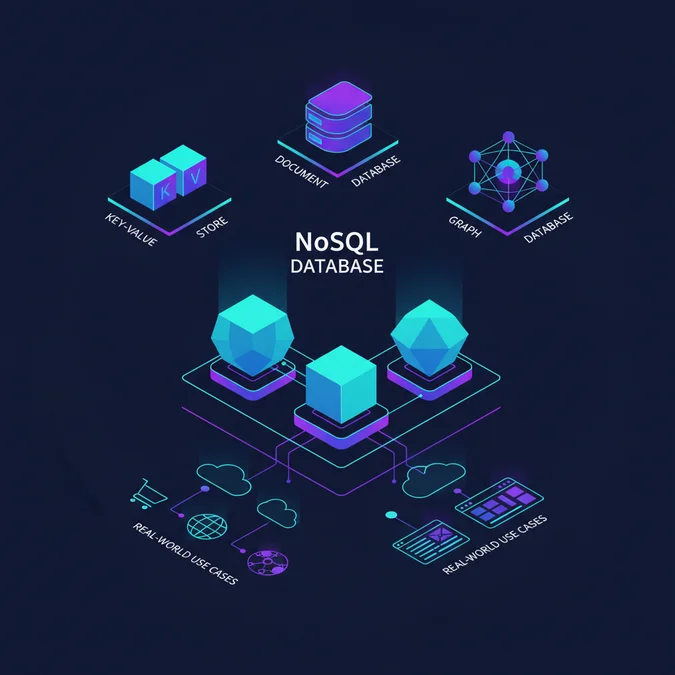
NoSQL databases are broadly categorized into four main types:
- Document Databases: Store data in flexible, semi-structured document formats (like JSON or BSON). Examples: MongoDB, Couchbase. Ideal for content management, catalogs, and user profiles.
- Key-Value Stores: The simplest NoSQL model, storing data as a collection of key-value pairs. Examples: Redis, DynamoDB (often used as key-value). Excellent for caching, session management, and real-time data.
- Wide-Column Stores: Store data in tables, rows, and dynamic columns, allowing for flexible schema evolution. Examples: Cassandra, HBase. Suited for large-scale data analytics, time-series data, and IoT applications.
- Graph Databases: Use graph structures with nodes, edges, and properties to represent and store data. Examples: Neo4j, Amazon Neptune. Perfect for social networks, recommendation engines, and fraud detection.
Specialized Database Platforms
Beyond relational and NoSQL, other specialized database platforms cater to niche requirements:
- Time-Series Databases: Optimized for storing and querying time-stamped data, such as sensor readings or financial metrics. Examples: InfluxDB, TimescaleDB.
- Search Engines: While not traditional databases, systems like Elasticsearch and Apache Solr are often used as primary data stores for full-text search and analytical workloads.
- Ledger Databases: Provide an immutable, cryptographically verifiable record of data changes, ideal for auditing and compliance. Example: Amazon QLDB.
The choice among these types depends heavily on the specific data characteristics, access patterns, scalability needs, and consistency requirements of the application.
| Database Type | Data Model | Schema | Scalability | Consistency | Primary Use Cases |
|---|---|---|---|---|---|
| Relational | Tables (rows, columns) | Strict, predefined | Vertical (some horizontal) | ACID (Strong) | Transactional apps, ERP, CRM |
| Document | JSON/BSON Documents | Flexible, dynamic | Horizontal | Eventual/Tunable | Content management, user profiles |
| Key-Value | Key-Value pairs | Schemaless | Horizontal | Eventual/Tunable | Caching, session management |
| Wide-Column | Rows, dynamic columns | Flexible | Horizontal | Eventual/Tunable | Big data analytics, IoT |
| Graph | Nodes, Edges, Properties | Flexible | Horizontal (complex) | Eventual/Tunable | Social networks, recommendation engines |
| Time-Series | Time-stamped data | Defined for series | Horizontal | Strong/Eventual | Monitoring, IoT sensor data |
Top Database Software Examples: Features, Use Cases, and Performance
Selecting from the vast array of database software examples requires a clear understanding of each product’s strengths and typical performance characteristics. This section provides an overview of prominent database products, covering both established and emerging solutions, and highlights their ideal application scenarios.
Relational Database Software Programs
- MySQL: An open-source relational database, widely used for web applications (LAMP stack), e-commerce, and data warehousing. Known for its reliability, ease of use, and strong community support. Performance is excellent for read-heavy workloads, though writes can be a bottleneck without proper indexing and optimization.
- PostgreSQL: Often considered the most advanced open-source relational database. Offers rich features like JSON/JSONB support, advanced indexing, and extensibility. Ideal for complex data workloads, geospatial applications, and systems requiring high data integrity. Performance is robust across various workloads, often outperforming MySQL for complex queries.
- Oracle Database: A commercial, enterprise-grade relational database known for its comprehensive feature set, high availability, and scalability. Dominates critical business applications, data warehousing, and large-scale OLTP (Online Transaction Processing) systems. While powerful, its licensing costs and complexity can be significant.
- Microsoft SQL Server: A robust commercial relational database for Windows environments, increasingly available on Linux and Docker. Integrates seamlessly with Microsoft’s ecosystem, offering strong BI tools, reporting services, and excellent performance for OLTP and data warehousing.
NoSQL Database Software Programs
- MongoDB: A leading document-oriented NoSQL database. Offers flexible schema, horizontal scalability, and high performance for applications requiring fast iteration and handling diverse data types. Excellent for content management, mobile apps, and real-time analytics. Its BSON format allows for rich, nested documents, simplifying application development.
- Redis: An in-memory data structure store, often used as a database, cache, and message broker. Renowned for its extreme speed and versatility. Supports various data structures like strings, hashes, lists, sets, and sorted sets. Ideal for real-time analytics, caching, session management, and leaderboards.
- Cassandra (Apache Cassandra): A highly scalable, distributed wide-column NoSQL database designed to handle massive amounts of data across many commodity servers, providing high availability with no single point of failure. Best for large-scale data analytics, IoT, and applications requiring continuous uptime.
- Neo4j: The most widely adopted graph database. Excels at managing highly interconnected data and performing complex graph traversals. Perfect for social networks, recommendation engines, fraud detection, and knowledge graphs. Its Cypher query language is intuitive for graph operations.
Key Considerations for Database Management Products
When evaluating these database management products, it’s crucial to look beyond raw benchmarks and consider the total cost of ownership, operational complexity, community support, and vendor lock-in. Performance is highly dependent on schema design, query optimization, and infrastructure. For instance, a well-optimized PostgreSQL instance might outperform a poorly configured Oracle database for specific workloads.
Choosing the right database software example is less about finding the ‘best’ and more about finding the ‘best fit’ for your specific application’s data model, query patterns, scalability demands, and operational budget.
The table below summarizes key features and ideal use cases for some of these prominent database software examples.
| Database Software Example | Type | Key Features | Ideal Use Cases | Performance Characteristics |
|---|---|---|---|---|
| MySQL | Relational | Open-source, SQL, ACID, replication | Web apps, e-commerce, data logging | High read throughput, good for OLTP |
| PostgreSQL | Relational | Open-source, advanced SQL, JSONB, extensibility | Complex OLTP, geospatial, data warehousing | Strong consistency, robust for complex queries |
| Oracle Database | Relational | Enterprise-grade, high availability, advanced security | Mission-critical apps, large data warehouses | High performance, scalability for demanding workloads |
| Microsoft SQL Server | Relational | T-SQL, BI tools.NET integration | Enterprise apps, data warehousing (Microsoft ecosystem) | Excellent for Windows-based OLTP, BI |
| MongoDB | Document NoSQL | Flexible schema, horizontal scaling, rich query language | Content management, mobile apps, IoT, user profiles | High availability, fast writes, good for diverse data |
| Redis | Key-Value NoSQL | In-memory, pub/sub, diverse data structures | Caching, session management, real-time analytics | Extremely low latency, high throughput |
| Apache Cassandra | Wide-Column NoSQL | Distributed, high availability, linear scalability | Big data analytics, IoT, time-series, messaging | High write throughput, resilient to failures |
| Neo4j | Graph NoSQL | Graph model, Cypher query language, ACID transactions | Social networks, recommendation engines, fraud detection | Efficient for complex relationship queries |
This comparison underscores that each of these database software programs has a distinct niche where it provides optimal value. Understanding these nuances is critical for making strategic architectural decisions.
Cloud Database Solutions: Managed Services and Web-Based Options
The advent of cloud computing has revolutionized database deployment and management, offering highly scalable, flexible, and often more cost-effective alternatives to traditional on-premise setups. Cloud DB services abstract away much of the underlying infrastructure management, allowing developers and organizations to focus more on application logic and less on database administration.
Benefits of Database Cloud Solutions
Moving to a database cloud environment provides several compelling advantages:
- Scalability: Easily scale resources (CPU, RAM, storage) up or down based on demand, often with minimal downtime.
- High Availability and Durability: Cloud providers offer built-in replication, automated backups, and disaster recovery options, significantly enhancing data resilience.
- Reduced Operational Overhead: Providers manage patching, backups, hardware provisioning, and sometimes even performance tuning, reducing administrative burden.
- Cost-Effectiveness: Pay-as-you-go models eliminate large upfront capital expenditures, converting CapEx to OpEx. Costs scale with usage, making it efficient for variable workloads.
- Global Reach: Deploy databases in multiple regions or availability zones to reduce latency for global users and improve fault tolerance.
- Security: Cloud providers invest heavily in security infrastructure, often exceeding what individual organizations can achieve on-premise.
Popular Cloud Database Services
Major cloud providers offer a comprehensive suite of managed database services, covering both relational and NoSQL paradigms:
- Amazon Web Services (AWS):
- Amazon RDS (Relational Database Service): Managed relational databases for MySQL, PostgreSQL, Oracle, SQL Server, MariaDB.
- Amazon Aurora: AWS’s proprietary relational database, MySQL and PostgreSQL compatible, designed for high performance and availability.
- Amazon DynamoDB: A fully managed NoSQL key-value and document database, known for single-digit millisecond performance at any scale.
- Amazon DocumentDB: MongoDB-compatible document database service.
- Amazon Neptune: Fully managed graph database service.
- Google Cloud Platform (GCP):
- Cloud SQL: Fully managed relational database service for MySQL, PostgreSQL, and SQL Server.
- Cloud Spanner: Horizontally scalable, globally distributed, strongly consistent relational database service.
- Firestore: NoSQL document database for mobile, web, and server development.
- Bigtable: Petabyte-scale, low-latency NoSQL wide-column database for large analytical and operational workloads.
- Microsoft Azure:
- Azure SQL Database: Managed relational database service based on the latest stable version of Microsoft SQL Server.
- Azure Database for PostgreSQL/MySQL/MariaDB: Fully managed community versions of these relational databases.
- Azure Cosmos DB: Globally distributed, multi-model (document, key-value, graph, column-family) NoSQL database service with guaranteed low latency.
Web-Based Database Options
For applications primarily accessed via the web, a web based database solution often implies a cloud-hosted, managed service. These are particularly advantageous for:
- SaaS applications: Enabling multi-tenancy and dynamic scaling for diverse customer bases.
- E-commerce platforms: Handling fluctuating traffic and large product catalogs.
- Content management systems: Providing reliable storage for digital assets and dynamic content.
The choice of a cloud database involves evaluating the specific features, pricing models, and ecosystem integration offered by each provider, aligning them with application requirements and existing cloud infrastructure.
| Cloud Provider | Relational Offerings | NoSQL Offerings | Specialized | Key Differentiator |
|---|---|---|---|---|
| AWS | RDS (MySQL, Pg, Oracle, SQL Server), Aurora | DynamoDB (KV/Doc), DocumentDB (Mongo), Keyspaces (Cassandra) | Neptune (Graph), QLDB (Ledger), Timestream (Time-Series) | Most comprehensive service portfolio, deep integration |
| Google Cloud | Cloud SQL (MySQL, Pg, SQL Server), Spanner | Firestore (Doc), Bigtable (Wide-Column) | Memorystore (Redis/Memcached), AlloyDB (Pg) | Global consistency, strong analytics integration |
| Azure | Azure SQL DB, Azure DB for Pg/MySQL/MariaDB | Cosmos DB (Multi-model: Doc, KV, Graph, Column-Family) | Azure Cache for Redis, Data Explorer (Time-Series) | Multi-model NoSQL, strong hybrid cloud capabilities |
Choosing the Right Database Management Solution: A Strategic Selection Guide
Selecting the optimal database management solution is a critical architectural decision that impacts an application’s performance, scalability, development velocity, and long-term operational costs. It’s not merely about picking the most popular database, but rather matching the database’s characteristics to the application’s specific requirements.
Evaluation Criteria Checklist
Consider the following factors when evaluating different database software examples:
- Data Model and Schema:
- Does your data have a strict, well-defined structure (e.g., financial records)? Or is it flexible, semi-structured, or unstructured (e.g., user profiles, IoT sensor data)?
- Do you anticipate frequent schema changes?
- Scalability Requirements:
- What is the expected data volume (GB, TB, PB)?
- What are the anticipated read/write throughputs (transactions per second, queries per second)?
- Does the application need to scale vertically (more powerful server) or horizontally (more servers)?
- Consistency and Durability:
- How critical is strong consistency (ACID properties) for your transactions? Can your application tolerate eventual consistency?
- What are the data durability and backup/recovery requirements?
- Query Patterns and Performance:
- What types of queries will be most frequent? Complex joins, simple key-value lookups, full-text searches, graph traversals?
- What are the latency requirements for these queries?
- Operational Complexity and Management:
- What is the expertise of your team in managing specific database technologies?
- Are you opting for a self-managed (on-premise/IaaS) or fully managed (PaaS) solution?
- What are the monitoring, logging, and alerting capabilities?
- Security:
- What are the encryption requirements (at rest, in transit)?
- What are the authentication and authorization mechanisms?
- Compliance requirements (GDPR, HIPAA, PCI DSS)?
- Ecosystem and Community Support:
- Is there a strong community, extensive documentation, and readily available tools (ORMs, drivers, admin consoles)?
- What is the vendor’s reputation and support model for commercial products?
- Cost:
- Consider licensing fees (for commercial databases like Oracle, SQL Server), infrastructure costs (servers, storage, networking), and operational costs (staffing, maintenance).
- Cloud costs can vary significantly based on instance type, storage, I/O, and data transfer.
- Integration:
- How well does the database integrate with your existing application stack, programming languages, and other services (e.g., analytics platforms, message queues)?
When to Choose Relational Database Management System Software
A relational database management system software remains the default choice for applications requiring:
- Strong transaction integrity: Financial systems, e-commerce orders, inventory management.
- Complex, ad-hoc querying: Business intelligence, reporting, and data analysis where data relationships are crucial.
- Well-defined and stable data structures: Where the schema is unlikely to change frequently.
- Established tooling and expertise: Leveraging a mature ecosystem and readily available skilled professionals.
Examples include PostgreSQL for its advanced features and extensibility, or MySQL for its widespread adoption in web applications. For enterprise-grade needs, Oracle Database or Microsoft SQL Server offer robust, feature-rich solutions, albeit with higher licensing costs.
Decision Framework: Matching Database to Use Case
The following table provides a simplified decision framework:
| Primary Requirement | Recommended Database Type | Example Database Software |
|---|---|---|
| Strong ACID transactions, complex joins | Relational | PostgreSQL, MySQL, Oracle, SQL Server |
| Flexible schema, high scalability, web/mobile apps | Document NoSQL | MongoDB, Couchbase, Firestore |
| High-speed caching, real-time data, session management | Key-Value NoSQL | Redis, DynamoDB |
| Massive data volume, high write throughput, distributed | Wide-Column NoSQL | Apache Cassandra, Apache HBase, Google Bigtable |
| Interconnected data, relationship querying | Graph NoSQL | Neo4j, Amazon Neptune |
| Time-series data, IoT, monitoring | Time-Series | InfluxDB, TimescaleDB |
| Full-text search, analytical queries on diverse data | Search Engine | Elasticsearch, Apache Solr |
Ultimately, the best database management solution is one that aligns with your technical requirements, budget constraints, team expertise, and future growth projections. A thorough evaluation using the criteria above will lead to a more resilient and efficient data architecture.
Factors That Affect Development Cost
- Project complexity and scale
- Licensing model (open-source vs. commercial)
- Infrastructure costs (on-premise hardware vs. cloud compute/storage)
- Managed service fees (for cloud solutions)
- Data volume and transaction throughput
- High availability and disaster recovery requirements
- Staffing and operational expertise
- Support contracts and service level agreements
The cost for database software and its operation varies significantly based on the chosen solution, deployment model, and specific usage patterns.
Frequently Asked Questions
What is the primary function of database management programs?
Database management programs are designed to efficiently store, retrieve, and manage data. They provide tools for data definition, manipulation, and control, ensuring data integrity and consistency. These programs are crucial for organizing large datasets, enabling quick access, and supporting various applications across an organization’s infrastructure.
How do cloud database solutions differ from on-premise database software?
Cloud database solutions are hosted and managed by a third-party provider over the internet, offering scalability, flexibility, and reduced operational overhead. In contrast, on-premise database software requires organizations to manage their own hardware, software, and infrastructure. Cloud options typically feature pay-as-you-go models, while on-premise involves significant upfront investment and maintenance.
What are some key considerations when evaluating relational database software for a new project?
When evaluating relational database software, key considerations include data integrity, transaction support (ACID properties), scalability requirements, query performance, and community support. Compatibility with existing systems, ease of integration, and the availability of skilled personnel for management and development are also crucial for ensuring project success and long-term maintainability.
The ecosystem of database software examples is rich and diverse, offering specialized solutions for virtually every data management challenge. From the robust transactional integrity of relational databases to the horizontal scalability and flexible schemas of NoSQL systems, and the operational simplicity of cloud-managed services, each category serves distinct purposes.
Making an informed choice requires a deep understanding of your application’s data model, scalability demands, consistency requirements, and operational capabilities. By carefully evaluating the features, performance characteristics, and total cost of ownership for various database products, organizations can select a database management solution that not only meets current needs but also supports future growth and innovation.
NR Studio builds custom web apps, mobile apps, SaaS platforms, and internal tools for growing businesses. If you’re working through a technical decision, feel free to reach out — no commitment required.