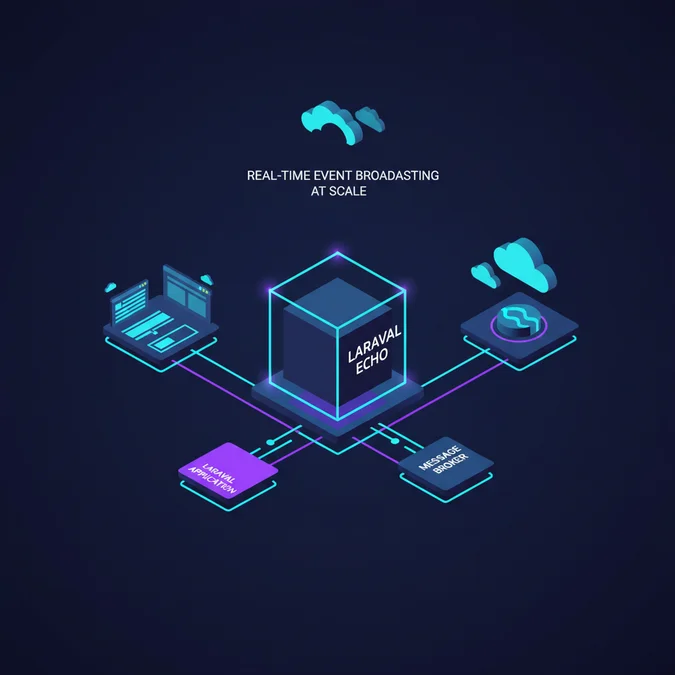

A Call to Action (CTA) in software development is an interactive element or execution trigger designed to prompt a specific system transaction, state change, or user progression. While often viewed as front-end UI buttons, technical CTAs function as the critical boundary where presentation logic interfaces with distributed backends, asynchronous event queues, and business workflows.
With the release of Laravel 11 streamlining application kernels and standardizing minimalist configuration structures, treating user actions as high-throughput, fault-tolerant events has become a core engineering requirement. Software teams frequently stumble when they treat an actionable trigger as merely a CSS class rather than an orchestrated transactional pipeline that affects latency, telemetry, and distributed data integrity.
From an architectural standpoint, every interactive trigger represents an agreement between client state and server guarantees. Optimizing these mechanisms requires addressing latency budgets, idempotency keys, telemetry ingestion, and backpressure management so that business-critical user conversions do not introduce cascading failures across backend infrastructure.
Technical Definition: The CTA as a Transactional Boundary
A CTA in software development is an interactive interface control, such as a button, input submission, or programmatic hook, that initiates a state transition within an application. It transforms passive user engagement into active database writes, background jobs, external service calls, or localized client-side routing routines.
Engineers often inherit designs where interactive elements are treated solely as decorative markup. However, within distributed application environments, an interactive trigger is fundamentally a contract. It represents an ingress point where unpredictable human behavior meets structured, resource-constrained services. When an operator triggers a checkout process or confirms a deployment, the underlying software must evaluate authentication, validate input contracts, handle rate limits, and secure write locks on shared data stores.
The distinction between simple interface controls and architectural CTAs rests on state mutability. An interface control might toggle a dark mode stylesheet locally inside browser memory without network overhead. In contrast, an operational trigger demands verifiable execution across system boundaries, requiring telemetry, error boundaries, and defensive retry logic.
Architectural Taxonomy: Synchronous, Asynchronous, and Distributed Actions
Software architectures categorize user-driven actions into distinct execution paradigms based on operational requirements and throughput thresholds. Classifying these mechanisms helps teams determine how to isolate compute resources, allocate thread pools, and manage client-facing response times.
Synchronous Request-Response Triggers
Synchronous actions require immediate, atomic verification before returning a response to the client. Examples include user authentication or cryptographic credential verification. The client thread remains blocked until the server executes relational database queries, validates tokens, and returns payload state.
Asynchronous Background Dispatches
High-latency operations must decouple the user-facing acknowledgment from the underlying compute work. When a user clicks a button to generate an enterprise report or provision a cloud environment, the backend writes a command to a messaging queue (such as Redis, RabbitMQ, or Amazon SQS) and immediately returns an HTTP 202 Accepted response containing a polling identifier or WebSocket channel subscription.
Distributed Orchestration Triggers
Multi-step business transactions span several autonomous services, requiring Saga patterns or two-phase commits. In these designs, an initial interaction sets off an orchestration pipeline where failure in a downstream microservice triggers compensating transactions to maintain consistency.
| Action Archetype | Typical Latency Target | Failure Isolation Mechanism | State Consistency Model |
|---|---|---|---|
| Synchronous Write | < 200ms | Circuit Breakers & HTTP Retries | Strong Consistency (ACID) |
| Asynchronous Queue Dispatch | < 50ms (enqueue) | Dead Letter Queues (DLQ) | Eventual Consistency (BASE) |
| Distributed Saga Trigger | 500ms to 5000ms | Compensating Transactions | Orchestrated Eventual Consistency |
State Machine Integration and Idempotency Guardrails
One of the most persistent failure points in web software is the uncoordinated submission of mutating actions. Network jitter, double clicks, and automated crawlers often lead to duplicate execution runs unless protected by deterministic state machines and idempotency layers.
Integrating state machines ensures that an interactive trigger can only transition an entity from one valid status to another. If an order object is in an AWAITING_PAYMENT status, triggering a cancel action moves it to CANCELLED. If the client repeats the action while the transaction is resolving, the transition is rejected at the domain level rather than producing conflicting database rows.
To guarantee safety at the network edge, backend APIs must enforce unique idempotency keys using headers such as Idempotency-Key: <uuid>. Below is a practical Laravel implementation illustrating how to cache and resolve idempotent requests before executing costly domain logic:
<php

namespace App\Http\Middleware;

use Closure;
use Illuminate\Http\Request;
use Illuminate\Support\Facades\Cache;
use Symfony\Component\HttpFoundation\Response;

class IdempotencyMiddleware
{
 public function handle(Request $request, Closure $next): Response
 {
 // Idempotency applies strictly to state-mutating HTTP methods
 if (!$request->isMethod('POST') &&$request->isMethod('PATCH')) {
 return $next($request);
 }

 $key = $request->header('X-Idempotency-Key');
 if (!$key) {
 return response()->json(['error' => 'Missing X-Idempotency-Key header'], 400);
 }

 $cacheKey = 'idempotency:'. $key;
 $cached = Cache:get($cacheKey);

 if ($cached) {
 // Return previously computed response to prevent double processing
 return response()->json($cached['body'], $cached['status']);
 }

 // Establish atomic lock to avoid concurrent race conditions
 $lock = Cache:lock('lock:'. $cacheKey, 10);
 if (!$lock->get()) {
 return response()->json(['error' => 'Action currently processing'], 409);
 }

 try {
 $response = $next($request);

 // Cache only successful operations for subsequent replays
 if ($response->isSuccessful()) {
 Cache:put($cacheKey, [
 'status' => $response->getStatusCode(),
 'body' => json_decode($response->getContent(), true),
 ], now()->addHours(24));
 }

 return $response;
 } finally {
 $lock->release();
 }
 }
}
Implementing this pattern neutralizes duplicate transactions and shields the system from unpredictable front-end interactions.
Frontend-Backend Interaction Patterns: Optimistic UI vs Defensive Confirmation
When designing engineering systems for user-triggered events, teams face an architectural trade-off between perceived responsiveness and data durability. Choosing between Optimistic UI updates and Defensive Confirmation models changes network resource consumption and client complexity.
Optimistic UI Architectures
In optimistic designs, the front-end interface immediately assumes server success, mutating the local state tree (such as updating a counter or toggling an item status) before the HTTP payload reaches the server. This yields near-zero perceived latency for the end user.
- Upside: Frictionless user flow, high interface velocity, enhanced perceived performance.
- Trade-off: Requires complex rollback logic in client-side state stores (such as Pinia, Redux, or Vuex) if the downstream API returns a 4xx or 5xx validation failure.
- Best suited for: Low-risk mutations, such as bookmarking items, toggling task completions, or reordering layout cards.
Defensive Confirmation Architectures
Defensive confirmation suspends user interaction until the server issues an authoritative response. The user sees loading indicators, disabled input states, or multi-factor confirmation modals while network packets traverse the stack.
- Upside: Strong transactional safety, deterministic state progression, zero rollback complexity on the client.
- Trade-off: Slower perceived speed, susceptible to network delays, potential user drop-off during degraded network conditions.
- Best suited for: High-risk mutations, such as initiating financial disbursements, resetting cryptographic keys, or dropping tenant schemas.
Adopting unified architectural patterns, similar to the frameworks discussed in our analysis of modern engineering workflows and operational architecture, ensures teams standardize state transitions across services.
Telemetry, Observability, and Event Streaming Pipelines
A high-value user action must not be an unmonitored dead end. To optimize conversion funnels and detect system anomalies, engineering organizations treat every interactive trigger as a telemetry event. Capturing these signals requires decoupling real-time metrics tracking from primary transactional databases to prevent resource exhaustion.
Instead of executing ad-hoc database writes inside application controllers to increment counter columns, mature architectures leverage decoupled log collectors or event streaming fabrics (such as Apache Kafka, AWS Kinesis, or Vector agents). This structure provides an immutable audit trail while keeping critical API response times minimal.
- Client-Side Telemetry: Beacon APIs (
navigator.sendBeacon) transmit interaction metadata asynchronously, ensuring payloads reach analytics collectors even if the user navigates away or closes their tab immediately after clicking. - Edge Ingestion: Ingress nodes terminate analytics payloads, validate schemas using JSON Schema validation, and push events to buffer pools without touching primary application servers.
- Distributed Tracing: Injecting W3C Trace Context headers (
traceparent) into the HTTP requests generated by actions allows observability tools to correlate a button click with backend microservice execution, database query latency, and external gateway calls.
Without this structured telemetry, operations teams cannot correlate drop-offs in user engagement with localized infrastructure latency or intermittent API errors.
Performance Budgets: Minimizing INP and Interaction Latency
Interaction to Next Paint (INP) is a Core Web Vital metric that measures interface responsiveness across all interactions during a session. If a user clicks an interactive element and the main browser thread remains blocked by heavy JavaScript execution, the interaction registers high latency, hurting search visibility and user retention.
Engineers must balance the work performed on the browser main thread versus asynchronous web workers or network workers. Common architectural bottlenecks that elevate INP include:
- Monolithic Script Evaluation: Parsing un-chunked 2MB JavaScript bundles during user interaction windows, which monopolizes main thread cycles.
- Synchronous DOM Manipulation: Re-rendering extensive document subtrees synchronously inside the event loop rather than scheduling updates with
requestAnimationFrame. - Excessive Third-Party Trackers: Multiple third-party tracking scripts hooking into identical DOM nodes, executing redundant parsing tasks concurrently.
The following table outlines standard performance benchmarks for evaluating whether an interactive action conforms to production latency budgets:
| Metric Phase | Target Threshold | Degraded Threshold | Primary Engineering Lever |
|---|---|---|---|
| Input Delay | < 50ms | > 100ms | Thread de-duplication, script chunking |
| Processing Time | < 50ms | > 200ms | Asynchronous Web Workers, lean handlers |
| Presentation Delay | < 50ms | > 100ms | Virtual DOM diffing, CSS will-change hooks |
| Total INP Lifecycle | < 150ms | > 300ms | Comprehensive interface profiling |
Security Vectors: CSRF, Rate Limiting, and Abuse Prevention
Because critical interactive controls trigger system state mutations, they represent primary targets for automated abuse, denial of service attacks, and Cross-Site Request Forgery (CSRF). Engineering teams must implement defense-in-depth protections across the networking, application, and database tiers.
First, all state-changing endpoints must reject HTTP GET requests entirely, strictly enforcing POST, PUT, PATCH, or DELETE verbs guarded by anti-CSRF tokens. In modern distributed or single-page applications, this is achieved by pairing cryptographically secure, encrypted cookies with explicit custom headers (such as X-XSRF-TOKEN).
Second, applications need fine-grained rate limiting that accounts for user context rather than relying solely on global IP restrictions. A shared corporate IP address can easily trigger false positives, while a distributed botnet using rotating residential proxies bypasses basic IP throttles. Enforcing token-bucket algorithms tied to authenticated tenant IDs, user hashes, and action signatures provides a more resilient shield.
Below is a route-level rate limiting configuration in Laravel, illustrating tiered thresholds based on the sensitivity of the triggered action:
<php

use Illuminate\Cache\RateLimiting\Limit;
use Illuminate\Http\Request;
use Illuminate\Support\Facades\RateLimiter;

// Defining an adaptive rate limiter for critical transactional triggers
RateLimiter:for('transactional-action', function (Request $request) {
 $user = $request->user();

 // Authenticated users get higher throughput but remain strictly bounded
 if ($user) {
 return Limit:perMinute(30)->by($user->id)->response(function () {
 return response()->json([
 'message' => 'Action rate limit exceeded. Please wait before retrying.',
 'retry_after' => 60
 ], 429);
 });
 }

 // Unauthenticated actors receive restrictive boundaries keyed to IP
 return Limit:perMinute(5)->by($request->ip());
});
Implementing adaptive limits ensures that resource-intensive operations cannot be leveraged to exhaust backend capacity.
Dynamic and Server-Driven Action Workflows
Hardcoding operational triggers into static frontend templates creates technical debt and slows development velocity. When business requirements shift, releasing code updates across web platforms, mobile clients, and internal portals requires full continuous integration and deployment runs. Modern systems address this using Server-Driven UI (SDUI) patterns.
In an SDUI architecture, the backend engine acts as the authoritative source not just for data models, but also for interface control capabilities. The API returns dynamic schemas specifying which actions are valid for the active user session, their layout hierarchy, and the exact payload schema required to execute them.
Consider an enterprise hospitality platform managing booking workflows, as explored in our guide on architecting modular management systems with Laravel. An administrative user viewing a reservation entity receives a dynamic payload containing contextual action definitions based on their granular permissions:
{
 "entity": "reservation",
 "id": "res_99281",
 "status": "pending_payment",
 "available_actions": [
 {
 "action_id": "process_payment",
 "label": "Collect Deposit",
 "type": "primary",
 "endpoint": "/api/v1/reservations/res_99281/payments",
 "method": "POST",
 "required_payload": ["amount", "payment_method_token"]
 },
 {
 "action_id": "void_booking",
 "label": "Cancel Booking",
 "type": "destructive",
 "endpoint": "/api/v1/reservations/res_99281/void",
 "method": "POST",
 "requires_confirmation": true
 }
 ]
}
Using this strategy, teams can disable, redirect, or alter permissions on actionable elements centrally on the server without deploying frontend client bundles.
Hidden Pitfalls in Production Implementations
When scaling web applications to thousands of concurrent transactions, edge cases around user action execution multiply. Identifying and addressing these issues during architecture design prevents catastrophic data corruption and infrastructure outages.
The Thundering Herd Phenomenon
When high-demand items are released (such as limited inventory releases or ticket sales), thousands of clients click action triggers simultaneously. If caching layers are not configured with probabilistic early expiration or distributed locks, incoming requests will overwhelm the primary database, crashing connection pools.
Zombie Requests and Unhandled Client Aborts
When users grow impatient with a long-running transaction, they often refresh the browser tab or click away. In many default web server configurations (including PHP-FPM and Node.js runtimes), the underlying thread continues running expensive database queries and third-party API calls in the background, consuming resources on work that the client has already abandoned.
Out-of-Order Execution
In networks with high packet latency variance, a user clicking “Update Quantity” followed immediately by “Proceed to Checkout” may produce requests that arrive at the server out of order. Unless version markers or concurrency checks are embedded into the payload contract, the checkout transaction may resolve using stale shopping cart data.
A/B Testing Infrastructure: Feature Flags vs Split Routing
Iterating on interactive controls requires structured testing mechanisms to determine whether interface modifications drive genuine business impact. Engineering teams must weigh the operational implications of using client-side feature flag evaluation against edge-layer split routing.
Client-Side Feature Flagging
Client-side feature flag evaluations run within the user application space via SDKs (such as LaunchDarkly, Unleash, or custom Redis backends). The client downloads flag rules and dynamically toggles action labels, colors, or positioning.
- Operational Cost: Flag SDKs increase JavaScript bundle size and can introduce interface layout shifts (CLS) if flags resolve asynchronously after initial DOM rendering.
- Architecture Debt: Codebases can become polluted with stale conditionals if teams do not actively prune expired flag blocks from their repositories.
Edge-Layer Split Routing
Edge split routing moves experimentation to edge compute workers (such as Cloudflare Workers or Fastly Compute). The worker intercepts incoming requests, reads user cookies or session headers, and returns pre-rendered static variations directly from the nearest regional node.
- Operational Cost: Near-zero client overhead, zero cumulative layout shift, and instant interface rendering.
- Architecture Debt: Requires maintaining divergent template versions across caching tiers, which can complicate continuous deployment pipelines.
Framework Directory and Core Architectural Hubs
Building resilient, secure, and performant interactive flows requires a firm understanding of fundamental backend engineering patterns, queue systems, and caching layers.
Explore our complete Laravel, Basics directory for more guides.
Treating a CTA in software development as merely a decorative interface element creates systemic technical debt. When engineered correctly, an interactive control represents a coordinated pipeline spanning resilient client-side state models, deterministic idempotency controls, and asynchronous telemetry streaming backbones.
By implementing defensive design practices, monitoring Interaction to Next Paint latency, and insulating write operations with state machines and rate limiters, teams ensure that system-critical user transactions scale cleanly without degrading infrastructure stability.