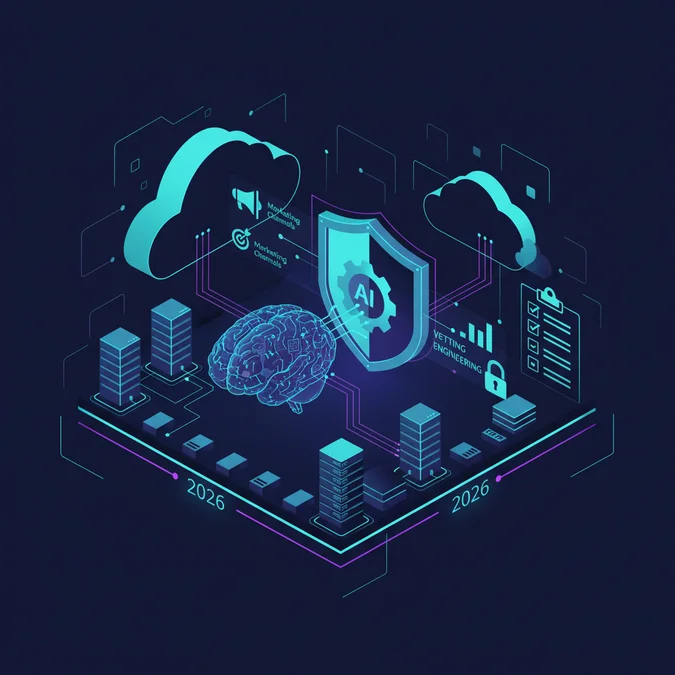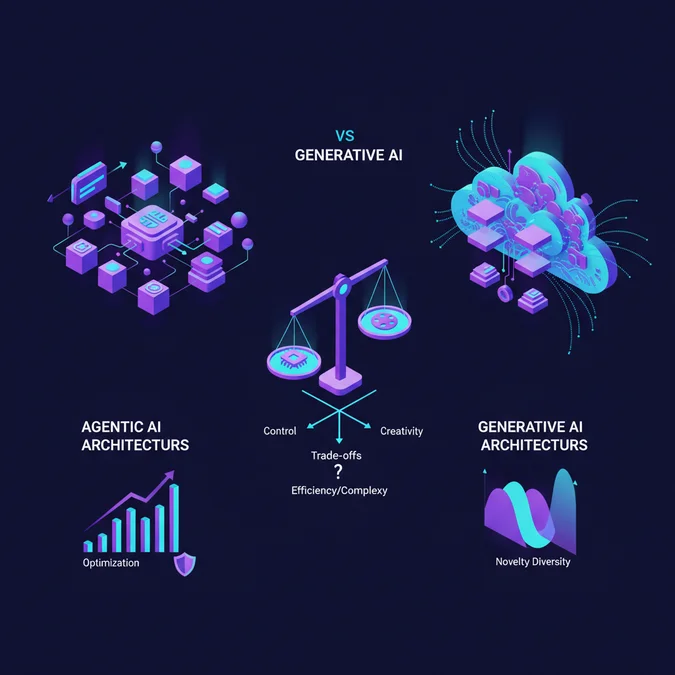

Autonomous AI agents cross the boundary from static, prompt-response text generation into stateful, iterative execution. Unlike linear pipelines that break the moment an API payload shifts or an unexpected exception emerges, the best ai agents leverage runtime self-reflection, dynamic tool discovery, and closed-loop environmental feedback to resolve multi-step operational goals without pre-scripted branching.
Yet in enterprise production environments, autonomy introduces profound engineering bottlenecks. Unbounded agent loops turn a twenty-cent reasoning task into a four-hundred-dollar token runaway disaster within minutes. Latency climbs past acceptable SLA windows as multi-turn consensus algorithms wait on distributed model calls. More critically, granting non-deterministic Large Language Models root access to bash environments, internal databases, and external SaaS endpoints creates unprecedented prompt injection and data exfiltration vectors.
Deploying production-grade agentic systems requires moving past toy demos and brittle orchestration scripts. This teardown evaluates the leading autonomous architectures, benchmarks top commercial and open-source models across standard industry suites, analyzes the dominant development frameworks, and details the infrastructure controls needed to sandbox runtime environments safely.
Architectural Taxonomy: Categorizing Modern Autonomous Systems
To select the best ai agents for enterprise infrastructure, systems architects must differentiate between deterministic chains, routing heuristics, and truly autonomous cognitive architectures. A common failure in enterprise evaluation is classifying linear Directed Acyclic Graph (DAG) runners, like basic webhook triggers, as agentic platforms. A system is only agentic when its execution trajectory is dynamically determined at runtime based on environmental feedback rather than hardcoded edge conditions.
The Agentic Spectrum: Chains, Routers, and Autonomous Loops
The progression toward autonomy spans four discrete operational tiers:
- Deterministic Chains: Sequential pipelines where step A explicitly calls step B. While LLMs may transform data within steps, the control flow is entirely rigid and defined at compile-time.
- Intent Routers: Single-hop decision engines. An orchestrator evaluates an incoming prompt, queries an embedding index or dynamic classifier, and dispatches the payload to a designated handler. The workflow terminates after the handler responds.
- Agentic RAG (Retrieval-Augmented Generation): Multi-hop retrieval where the model inspects its initial semantic retrieval results, assesses relevance against the query context, reformulates search parameters dynamically, and issues secondary queries if the context is insufficient to answer the prompt accurately.
- Fully Autonomous Multi-Agent Systems: Looped runtime architectures where agents create, prioritize, execute, evaluate, and terminate dynamic task queues. These systems leverage specialized roles, tool reflection, and execution sandboxes to complete expansive, ambiguous goals.
+-----------------------------------------------------------------------------+
| COGNITIVE CONTROL LOOP |
| |
| +------------------+ +------------------+ |
| | Goal Objective | ------> | Planning Engine | |
| +------------------+ +------------------+ |
| | |
| v |
| +------------------+ +------------------+ |
| | Runtime State | <------ | Tool Selection | |
| | Context Window | | (MCP / OpenAPI) | |
| +------------------+ +------------------+ |
| ^ | |
| | v |
| +------------------+ +------------------+ |
| | Self-Reflection | <------ | Execution Kernel | |
| | & Verification | | (Docker / Wasm) | |
| +------------------+ +------------------+ |
| | |
| +--- [Goal Fulfilled?] ----> EXIT / COMPLETE |
| | |
| +--- [Goal Blocked?] ----> RE-PLAN & RETRY |
+-----------------------------------------------------------------------------+
Deconstructing Agent Classifications
Modern production ecosystems require segmenting popular ai agents and the most advanced ai agents into four distinct architectural classes:
- Agentic RAG: Moves beyond static vector lookups. These engines leverage semantic rerankers, dynamic query decomposition, and factual verification loops to eliminate hallucinations in heavily regulated domains like legal, healthcare, and financial compliance.
- Autonomous Coding Agents: Systems designed specifically for software engineering lifecycles. They ingest entire Git repositories, reproduce unit test failures, modify dependencies, execute shell commands in ephemeral containers, analyze compiler stack traces, and open pull requests autonomously.
- UI and Computer Use Agents: Models that interact with software visually and structurally through operating system accessibility trees, DOM trees, and virtual mouse/keyboard input streams. They operate enterprise legacy software lacking modern REST APIs.
- Multi-Agent Orchestration Frameworks: Distributed coordination layers where specialized agents negotiate responsibilities, review each other’s outputs, and run consensus protocols to minimize single-point reasoning failures.
Architectural Rule: Never deploy an autonomous loop where a deterministic DAG will suffice. Use agents when the task space has non-deterministic inputs, variable step sequences, and dynamic recovery needs. If the execution path is fully known in advance, hardcode it to save latency, compute budgets, and token overhead.
Runtime Architectural Requirements Checklist
- Dynamic Goal Formulation: System accepts unstructured, broad objectives and generates intermediate sub-tasks without human intervention.
- Bidirectional Tool Communication: Tool execution returns structured validation output back into the model context window rather than blindly returning success codes.
- State Preservation and Compaction: Memory stores implement semantic pruning, rolling context windows, or external key-value state graphs to prevent context window saturation.
- Self-Correction and Reflection: Agent executes automated checks against intermediate results, detecting syntax errors, validation failures, or logical drift prior to final task output.
- Sandboxed Execution Boundaries: Tool-calling environments run inside isolated micro-VMs or containerized sandboxes with restricted network routing and resource quotas.
Benchmark Showdown: Top 10 AI Agents and Platforms Ranked
Marketing metrics and synthetic evaluations frequently mask real-world degradation. To realistically compare ai agents, engineering teams evaluate platforms across two standardized real-world benchmarks: SWE-bench Verified (measuring the resolution of real-world GitHub issues from complex open-source repositories) and GAIA (General AI Assistants benchmark, measuring complex, multi-modal, multi-step desktop reasoning tasks).
Below is our empirical ai agents ranking, assessing the top ai agents and commercial platforms operating in 2026 across verified problem resolution rates, deterministic tool reliability, mean token consumption, and target execution topologies.
| Rank | Agent / Platform Architecture | Primary Modality | SWE-bench Verified (%) | GAIA Benchmark (Level 3 %) | Tool-Call Determinism | Mean Tokens Per Task | Runtime Security Model |
|---|---|---|---|---|---|---|---|
| 1 | Devin (Cognition Labs) | Autonomous Coding | 54.2% | N/A | 96.8% | 1.4M | Isolated Cloud Micro-VM |
| 2 | Claude Computer Use (Anthropic 3.5 Sonnet) | OS / GUI Automation | N/A | 41.2% | 91.4% | 850k | Dockerized OS Container |
| 3 | OpenHands (Formerly OpenDevin) | Open-Source Coding Engine | 43.8% | N/A | 89.1% | 1.1M | Local Docker Daemon |
| 4 | Aider (CLI Coding Agent) | Interactive Pair Programming | 46.2% | N/A | 98.2% | 180k | Host System Execution |
| 5 | Cursor Agent (Anysphere) | IDE Native Coding Engine | 41.5% | N/A | 95.4% | 320k | Hybrid Local / Remote VM |
| 6 | Factory Droids (Factory AI) | Enterprise SDLC Automation | 42.1% | N/A | 94.7% | 920k | Managed Cloud Sandbox |
| 7 | Manus AI | General Purpose Desktop Automation | N/A | 44.8% | 88.6% | 780k | Isolated Browser Sandbox |
| 8 | AutoGPT Platform (Significant Gravitas) | Multi-Agent Workflow Engine | 21.4% | 31.5% | 82.3% | 1.8M | Ephemeral Cloud Container |
| 9 | Agentless (Open Source) | Two-Phase Localization & Repair | 38.9% | N/A | 99.1% | 95k | CLI Script Sandboxing |
| 10 | Multi-On (Agent Cloud) | Web Navigation & Task Execution | N/A | 38.7% | 86.2% | 450k | Remote Chrome Remote DevTools |
Benchmark Analysis: SWE-bench and GAIA Performance Vectors
SWE-bench Verified removes ambiguous test cases, testing if an agent can clone a repository, reproduce a bug using existing test suites, implement a patch without breaking collateral features, and verify the patch via standard testing harnesses. Devin holds the performance lead, but its deep planning loops consume astronomical token volumes, regularly crossing 1.5 million tokens on complex patch cycles.
For desktop and multi-modal environments, GAIA Level 3 poses extreme reasoning friction, requiring agents to navigate arbitrary PDF attachments, manipulate spreadsheet data, synthesize information across multiple web portals, and overcome unexpected CAPTCHAs. Anthropic’s native Computer Use framework exhibits structural superiority by processing direct framebuffer snapshots and issuing coordinate-level mouse clicks, though it requires strict latency buffers due to round-trip image encoding.
Critical Benchmark Insight: High SWE-bench solve rates do not correlate linearly with runtime cost efficiency. Frameworks like Agentless achieve strong benchmark performance by utilizing deterministic search and localization algorithms before invoking LLMs, drastically slashing token usage and execution runaways relative to unconstrained loop architectures.
Top 5 Tools for Building AI Agents for Enterprise Deployments
When constructing proprietary architectures, selecting the correct foundational framework determines long-term observability, determinism, and state-graph management. Evaluating the top 5 tools for building ai agents for enterprise deployments reveals divergent philosophies regarding state persistence, loop safeguards, and language interoperability. Below is an architectural breakdown of the leading developer platforms.
| Framework | Core Architecture Paradigm | State Persistence Engine | Loop Termination Handling | Best Enterprise Use Case |
|---|---|---|---|---|
| LangGraph | Cyclic Finite State Machine (FSM) | PostgreSQL, Redis, Memory Checkpointing | State-Level Max Step Gates & Edge Fallbacks | Complex, multi-turn stateful orchestrations needing deterministic control |
| CrewAI | Role-Based Hierarchical Delegation | Vector Store & Local Memory Trees | Timeout Caps & Iteration Thresholds | Collaborative text analysis, research teams, automated content pipelines |
| Microsoft AutoGen | Event-Driven Multi-Agent Conversation | Distributed Message Bus (Redis/Kafka) | Agent Termination Messages & Human-In-The-Loop | Distributed microservices, asynchronous real-time simulation |
| Semantic Kernel | Plugin-Centric Native SDK (.NET/Java/Python) | Enterprise Azure Storage & CosmosDB | Policy Engine & Execution Pipeline Limits | Internal Microsoft stack migrations, legacy C# enterprise integration |
| LlamaIndex Workflows | Event-Driven Directed State Graphs | Document Store & Vector Index Integration | Event Loop Timeout Controls | Agentic RAG, unstructured enterprise data retrieval, document processing |
Production Architecture: Implementing a Deterministic Cyclic Agent in LangGraph
To avoid non-deterministic loops while building production workflows with top ai agent platforms, engineers must enforce explicit state validation, step counting, and human intervention checkpoints. Below is a complete, production-grade Python implementation of an agent state graph featuring tool validation, execution ceilings, and fallback state transitions.
import os
from typing import Annotated, Dict, List, Literal, TypedDict
from langchain_core.messages import BaseMessage, HumanMessage, ToolMessage
from langchain_openai import ChatOpenAI
from langgraph.graph import StateGraph, END
from langgraph.prebuilt import ToolNode
from pydantic import BaseModel, Field

class AgentState(TypedDict):
 messages: Annotated[List[BaseMessage], lambda x, y: x + y]
 iteration_count: int
 is_resolved: bool

class SystemValidatorInput(BaseModel):
 query: str = Field(description="SQL or operational query to execute")

def run_database_query(query: str) -> str:
 """Simulated secured read-only enterprise query runner."""
 if "DROP" in query.upper() or "DELETE" in query.upper():
 raise ValueError("Write-actions rejected by security sandbox.")
 return f"Query executed successfully: Record set [rows=12, status=active] for {query}"

tools = [run_database_query]
tool_node = ToolNode(tools)

model = ChatOpenAI(model="gpt-4o", temperature=0.0).bind_tools(tools)

def agent_node(state: AgentState) -> Dict[str, any]:
 current_iterations = state.get("iteration_count", 0) + 1
 response = model.invoke(state["messages"])
 return {
 "messages": [response],
 "iteration_count": current_iterations
 }

def router_edge(state: AgentState) -> Literal["tools", "human_review", "end"]:
 messages = state["messages"]
 last_message = messages[-1]

 # Circuit breaker: Halt if steps exceed strict operational SLA
 if state.get("iteration_count", 0) >= 5:
 return "human_review"

 if last_message.tool_calls:
 return "tools"

 return "end"

def human_review_fallback(state: AgentState) -> Dict[str, any]:
 alert_message = HumanMessage(
 content="[CIRCUIT BREAKER] Iteration threshold reached. Execution paused for human intervention."
 )
 return {
 "messages": [alert_message],
 "is_resolved": False
 }

# Construct the Cyclic State Machine
workflow = StateGraph(AgentState)
workflow.add_node("agent", agent_node)
workflow.add_node("tools", tool_node)
workflow.add_node("human_review", human_review_fallback)

workflow.set_entry_point("agent")

workflow.add_conditional_edges(
 "agent",
 router_edge,
 {
 "tools": "tools",
 "human_review": "human_review",
 "end": END
 }
)

workflow.add_edge("tools", "agent")
workflow.add_edge("human_review", END)

app = workflow.compile()

# Production Invocation with state boundary verification
if __name__ == "__main__":
 initial_payload = {
 "messages": [HumanMessage(content="Find the total sales volume for EMEA region, Q3 2026.")],
 "iteration_count": 0,
 "is_resolved": False
 }

 try:
 for output in app.stream(initial_payload):
 for key, value in output.items():
 print(f"Completed Node: {key}")
 except Exception as e:
 print(f"Agent execution pipeline failed: {str(e)}")
This implementation establishes rigid boundary conditions. When evaluating the best ai agent tools, frameworks that rely solely on string-based prompt instructions to control loops without underlying state graphs (like basic chat pipelines) regularly fail in production. LangGraph enforces loop isolation via programmatic conditions, preventing runaway costs before state updates commit.
In-Depth AI Agent Reviews: Autonomous Coders, Workflow Bots, and Computer-Use Engines
Enterprise engineering teams cannot rely on generic vendor claims when reviewing specialized systems. Conducting deep ai agent reviews across real-world workloads reveals stark architectural differences in sandboxing, context retention, and error recovery capabilities.
1. Devin by Cognition Labs: The Software Engineering Standard
Devin operates as an unbundled, asynchronous cloud developer. When an engineer links Devin to a repository and issues an issue ticket, Devin provisions a dynamic Linux micro-VM complete with bash, Python, Node, browser environments, and code editors.
Devin’s primary advantage is its robust continuous planning engine. When executing unit tests, Devin does not simply crash upon encountering a stack trace. It captures the standard error output, indexes the failing line, creates a secondary sub-agent to search related source files, applies an inline patch, and re-executes the test suite in a closed loop. The principal downside remains latency and cost: non-trivial fixes take between 10 to 45 minutes of processing time, burning extensive API credits.
2. Claude Computer Use: Operating via Dynamic OS Control
Anthropic’s approach bypasses DOM scraping or API translation by giving Claude direct visual and system-level interface control. Claude analyzes consecutive screen captures, plans cursor coordinates, sends raw mouse click instructions, and issues keydown events natively.
import time
import anthropic

client = anthropic.Anthropic()

def execute_computer_action(action_type: str, coordinate: list = None, text: str = None):
 """Simulated operating system input wrapper."""
 print(f"Executing action: {action_type} at {coordinate} with text: {text}")

def run_autonomous_os_loop(user_task: str, current_screenshot_base64: str):
 response = client.beta.messages.create(
 model="claude-3-5-sonnet-20241022",
 max_tokens=1024,
 tools=[
 {
 "type": "computer_20241022",
 "name": "computer",
 "display_width_px": 1024,
 "display_height_px": 768,
 "display_number": 1
 }
 ],
 messages=[
 {
 "role": "user",
 "content": [
 {"type": "text", "text": user_task},
 {
 "type": "image",
 "source": {
 "type": "base64",
 "media_type": "image/png",
 "data": current_screenshot_base64
 }
 }
 ]
 }
 ],
 betas=["computer-use-2024-10-22"]
 )

 # Process structural tool use calls
 for block in response.content:
 if block.type == "tool_use" and block.name == "computer":
 action = block.input.get("action")
 coord = block.input.get("coordinate")
 txt = block.input.get("text")
 execute_computer_action(action, coord, txt)

 return response
The architectural risk with Computer Use is failure recovery when interacting with non-standard UI widgets. If a pop-up modal blocks the expected coordinate space, agents struggle to recalculate bounding boxes without entering visual retry loops, resulting in high token spend per frame analyzed.
3. OpenHands: Open Source Micro-Agent Flexibility
OpenHands provides an open, extensible alternative to closed enterprise platforms. It provisions Docker containers directly on the user’s local or cloud infrastructure, routing tasks through customizable core loops. Engineers modify prompt scaffolds, switch inference providers (e.g. swapping between Claude, DeepSeek, and locally hosted vLLM instances), and enforce absolute data locality.
Security Warning: Avoid giving coding agents direct read-write access to local development machines. OpenHands, Aider, and custom agent runtimes must execute within ephemeral, network-isolated Docker containers or Firecracker micro-VMs to prevent unexpected bash deletion commands, unauthorized shell modifications, or exfiltration of local SSH keys.
Production Engineering Trade-Offs: Token Runaway, Latency, and Sandboxed Execution
Running autonomous agents in production introduces critical engineering trade-offs between dynamic capability, latency guarantees, operational costs, and infrastructure security. Without strict operational controls, agent systems destabilize downstream microservices, exhaust token budgets, and expose runtime environments to malicious exploitation.
1. Mitigating Token Runaway and Context Window Compounding
Every step in an autonomous agent loop inflates the context window. An agent that captures intermediate tool results, standard outputs, and self-reflection critiques compounds its token usage exponentially over multiple turns. In a twenty-step problem-solving sequence, the final turns process the aggregated tokens of all prior executions.
COMPACTED STATE GRAPH MEMORY TOPOLOGY

[Raw Message History]
 |
 +---> [Semantic Truncation / Compactor Node]
 | |
 | +---> Extracts: Goal, Current Impediment, Executed Tool Outcomes
 | +---> Discards: Redundant Logs, Raw JSON API Payloads
 v
[Compact State Ingestion]
 |
 +---> [Next-Hop Context Window: Max 8k Tokens]
 +---> [Isolated External Key-Value / Vector Cache: 100k+ Tokens]
To maintain sub-second agent routing and manageable operational expenditures, implement semantic message compaction. Instead of appending raw tool outputs into chat history, pass execution logs through an intermediate compression node that extracts key outcomes and discards verbose payloads.
2. Standardized Tool Integration with Model Context Protocol (MCP)
Integrating heterogeneous databases, internal Git repositories, and third-party SaaS APIs previously required custom prompt wrappers for each service. The industry has converged on Anthropic’s Model Context Protocol (MCP) as the open architectural standard for connecting agents to external context and capabilities.
{
 "mcpServers": {
 "secure_production_db": {
 "command": "docker",
 "args": [
 "run",
 "-i",
 "--rm",
 "--network=internal_vpc",
 "-e", "DB_READONLY_SECRET",
 "mcp/postgresql:1.2.0"
 ]
 },
 "github_sdlc": {
 "command": "npx",
 "args": ["-y", "@modelcontextprotocol/server-github"],
 "env": {
 "GITHUB_PERSONAL_ACCESS_TOKEN": "sec_token_proc_redacted"
 }
 }
 }
}
MCP establishes uniform, client-server abstractions. The agent acts as an MCP host, establishing JSON-RPC interfaces over standard input/output or Server-Sent Events (SSE) to ephemeral MCP servers. This eliminates ad-hoc function signature parsing and isolates tool credentials outside the LLM reasoning context.
Production Engineering Checklist for Autonomous Deployment
- Global Execution Budgets: Establish max-token and max-dollar spending ceilings at the individual session level to kill orphaned agent processes.
- Ephemeral Container Sandboxing: Run dynamic code execution in micro-VM environments (e.g. AWS Firecracker, Fly.io Machines, or gVisor) that terminate after task completion.
- Egress Network Filtering: Explicitly whitelist external IP addresses accessible to the agent runtime; reject generic outbound internet calls to block credential exfiltration.
- Deterministic Tool-Call Fallbacks: Enforce typed validation schemas (using Pydantic or Zod); trigger immediate automated retries on malformed JSON parameters before invoking inference models.
- Human-in-the-Loop (HITL) Interceptors: Require multi-factor manual approval whenever an agent plans an irreversible side-effect, such as database writes, production deployments, or public email communications.
Enterprise Procurement Framework: Internal Build vs External Partner Selection
When modernizing enterprise operations, technology leadership faces a fundamental strategic decision: build an in-house agentic platform using open-source primitives or partner with a specialized systems development agency. The total cost of ownership (TCO) across autonomous systems encompasses far more than model inference tokens; it includes building custom observability harnesses, security isolation perimeters, evaluation pipelines, and integration layers.
Build vs. Buy vs. Partner Evaluation Matrix
| Evaluation Dimension | Internal In-House Development | Off-the-Shelf SaaS Solutions | Specialized Systems Agency |
|---|---|---|---|
| Time to Production | 6 to 12 months | 1 to 3 weeks | 2 to 4 months |
| Custom Architecture Fit | High (Customized to internal VPC/APIs) | Low (Constrained to rigid platform APIs) | High (Tailored microservices & workflows) |
| Data Privacy & VPC Isolation | Full Control (On-premise / Private Cloud) | External Multi-Tenant Risk | Full Control (Built directly inside your VPC) |
| Ongoing Infrastructure Maintenance | High (Internal platform team overhead) | Low (Vendor managed) | Low (Transferred with runbooks and SLAs) |
| Total Cost of Ownership (3 Years) | Extremely High (Engineering salaries + infra) | Predictable Subscription + Usage Margins | Optimized (Capitalized build, zero subscription tax) |
| Security and Guardrail Auditing | Requires internal AI SecOps expertise | Vendor-dependent black box | Engineered to exact enterprise compliance specs |
Assessing Security, Compliance, and Partner Capabilities
If engineering leadership elects to engage external architectural specialists, vetting the engagement requires looking past standard web development shops. When searching for the best ai agency, enterprise procurement teams must rigorously audit technical candidates against specialized agentic competencies:
- Dynamic Sandbox Provenance: The partner must demonstrate zero-trust execution topologies, isolating user-provided payloads, dynamic code execution, and database queries inside ephemeral gVisor or Firecracker virtualization perimeters.
- Prompt Injection Vector Containment: Verify the team implements structural firewalls that isolate untrusted data retrieved from Agentic RAG lookups or third-party web scrapers from the primary cognitive planning loop, neutralizing indirect prompt injection exploits.
- Evaluation and Observability Harnesses: Ensure the agency builds regression pipelines using frameworks like DeepEval or Ragas, benchmarking all updates against SWE-bench or custom enterprise test splits prior to deployment.
- No Proprietary Lock-In: Architecture deliverables must run on open primitives (such as LangGraph, OpenTelemetry, and MCP) directly within your organization’s cloud environment, ensuring full IP ownership and operational independence.
Autonomous agents deliver immense business leverage when designed with bounded autonomy, state checkpointing, and robust security sandboxes. By matching architecture to task complexity, establishing deterministic circuit breakers, and enforcing strict data-plane isolation, engineering teams can safely transition agentic systems from speculative experiments into production reality.
Factors That Affect Development Cost
- Context window token compounding rates during multi-step execution loops
- Micro-VM and ephemeral container compute infrastructure runtime charges
- Latency overhead and API billing from auxiliary reflection and reranking passes
- Engineering overhead for security sandboxing, SOC 2 compliance, and prompt-injection defense
- Maintenance costs of continuous custom benchmark and regression evaluation pipelines
Total operational costs scale directly based on the agent loop recursion limits, the underlying model parameter tiers chosen, and the compute footprint of sandbox environments.
Frequently Asked Questions
What separates the best AI agents from traditional deterministic workflows?
Unlike static pipelines, autonomous AI agents dynamically plan sub-tasks, select external tools through runtime reflection, evaluate environmental feedback, and iteratively self-correct execution failures without relying on pre-programmed branch conditions.
Which benchmark scores determine the most advanced AI agents?
Industry-standard benchmarks evaluate autonomous performance across complex workflows: SWE-bench verified measures autonomous software engineering and debugging proficiency, while the GAIA benchmark evaluates multimodal tool selection, factual validation, and multi-step reasoning capabilities.
What are the primary tools for building AI agents in an enterprise environment?
The dominant enterprise frameworks include LangGraph for cycle-controlled state graphs, CrewAI for role-based multi-agent collaboration, Microsoft AutoGen for event-driven conversational architectures, Semantic Kernel for enterprise.NET integration, and LlamaIndex Workflows for document-grounded multi-step reasoning.
How should engineering teams compare AI agents before procurement?
Teams should compare agents across four operational criteria: tool-calling determinism rates, Model Context Protocol (MCP) compatibility, sandboxed runtime security, and context-window token compounding costs incurred during autonomous retry loops.
Autonomous agents represent an architectural paradigm shift from static prompting to iterative, self-correcting cognitive loops. Successfully running these systems in enterprise production environments requires discarding the illusion that non-deterministic foundation models can operate safely without deterministic guardrails. True production reliability is achieved not by granting unconstrained autonomy, but by bounding agents within robust state machines, enforcing execution budgets, isolating tool execution in ephemeral sandboxes, and adhering to open standards like the Model Context Protocol.
As you evaluate your deployment strategy, begin by auditing your target workflows. If a task follows predictable pathways, construct a deterministic state machine or structured DAG. Where operational spaces demand dynamic planning, iterative tool usage, and environmental recovery, leverage proven frameworks like LangGraph and deploy strict runtime circuit breakers. The competitive advantage in 2026 belongs not to the organizations running the most unconstrained loops, but to those engineering the most resilient, observable, and cost-controlled agentic platforms.
Need Engineering Guidance for Your Production Stack?
Evaluate architecture trade-offs, scalability limits, and implementation feasibility with experienced systems engineers.