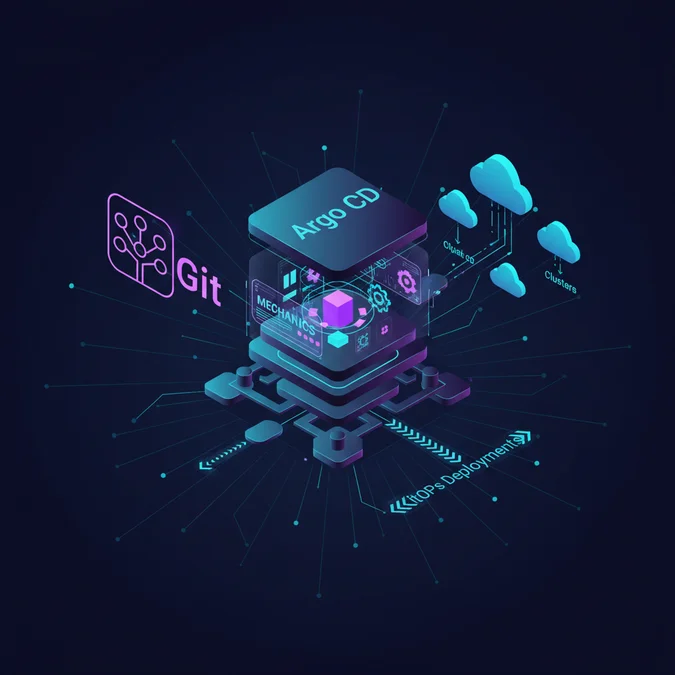

In the evolving landscape of 2026 infrastructure, engineering teams often encounter a significant naming collision: the ARGO Data enterprise banking suite versus the Argo CD GitOps controller. This ambiguity frequently halts procurement and architectural planning. This guide serves as the definitive technical resource to resolve this confusion, providing clear paths for both financial systems deployment and cloud native GitOps implementation.
Whether you are managing legacy teller software or architecting high-frequency financial services on Kubernetes, understanding these distinct technological ecosystems is critical for production stability. We analyze the operational requirements of both systems to ensure your infrastructure decisions align with your specific domain needs.
Disentangling the ARGO Brand: Financial Systems vs GitOps
The confusion stems from a simple brand overlap. ARGO Data provides specialized software for the financial services industry, while Argo CD is a CNCF-graduated project for Kubernetes. Distinguishing these is vital for any systems architect.
| Feature | ARGO Data Teller | Argo CD |
|---|---|---|
| Primary Domain | Financial Services | Cloud Native DevOps |
| Target Environment | Banking Infrastructure | Kubernetes Clusters |
| Core Function | Transaction Management | Declarative Delivery |
| Architecture | Enterprise Monolith/SOA | Controller-based GitOps |
Note: The argo teller system is a proprietary commercial product. It should never be confused with the open source Argo CD tool used for container orchestration and GitOps-driven deployment pipelines.
The Role of Teller Systems in Modern Banking Infrastructure
An argo teller system focuses on high-availability transaction processing and regulatory compliance. These systems operate under strict latency and audit requirements that differ fundamentally from standard web application deployments.
- Real-time Consistency: Maintaining ACID compliance across distributed banking nodes.
- Auditability: Immutable logging of all teller-initiated operations.
- Security Hardening: Strict adherence to financial industry standards like PCI-DSS.
Production readiness for these systems requires specific operational checks:
- Validate network isolation between the teller interface and core banking databases.
- Implement multi-factor authentication at the hardware-software interface.
- Conduct quarterly penetration testing on the teller application endpoints.
Architecting Financial Workflows with Argo CD
If your goal is to manage financial microservices using modern delivery patterns, Argo CD provides a robust framework. While not related to the argo teller software, it is the standard for deploying secure, version-controlled financial services.
apiVersion: argoproj.io/v1alpha1
kind: Application
metadata:
 name: financial-service-deployment
 namespace: argocd
spec:
 destination:
 server: https://kubernetes.default.svc
 namespace: finance-prod
 project: default
 source:
 repoURL: https://github.com/org/finance-app.git
 targetRevision: HEAD
 path: manifests/prod
 syncPolicy:
 automated:
 prune: true
 selfHeal: true
By utilizing this declarative approach, teams ensure that the state of their financial services matches the source of truth in Git, minimizing configuration drift.
Production Readiness and Compliance Standards
Deploying financial software requires a rigorous approach to security and observability. Regardless of whether you are deploying a teller system or a containerized microservice, the following checklist applies.
- Encryption at Rest: Ensure all sensitive financial data is encrypted using FIPS 140-2 validated modules.
- Secret Management: Integrate external secret providers to prevent credential leakage in Git repositories.
- Observability: Deploy Prometheus and Grafana for real-time monitoring of transaction throughput.
| Requirement | Standard |
|---|---|
| Data Integrity | SHA-256 Hashing |
| Access Control | RBAC/OIDC Integration |
| Deployment Model | Blue/Green or Canary |
Frequently Asked Questions
Is the argo teller system related to Argo CD?
No, they are distinct technologies. The argo teller system refers to enterprise banking software provided by ARGO Data, while Argo CD is an open source declarative GitOps continuous delivery tool for Kubernetes used to manage and deploy cloud native applications.
By clearly separating the commercial argo teller system from the GitOps-centric Argo CD tooling, engineering teams can avoid costly architectural misalignments. Focus on security, auditability, and infrastructure-as-code to ensure your financial systems remain resilient and compliant in 2026.