
Application development services in USA refer to specialized software engineering contracts delivered by domestic technical firms that design, construct, test, and maintain digital systems subject to United States federal, state, and industry-specific regulatory standards. These services encompass custom backend architecture, mobile application engineering, cloud infrastructure deployments, and API integrations engineered under strict data governance frameworks.
Procuring engineering talent within the United States market requires balancing premium hourly billing with tangible risk mitigation. For high-security environments, engineering leaders do not simply contract application development services for raw development speed. They invest in domestic development firms to reduce technical liability, verify security provenance, enforce strict statutory data controls, and maintain verifiable compliance postures across complex cloud infrastructure.
This vetting guide breaks down the technical mechanics, security auditing protocols, cost profiles, and architectural patterns necessary to evaluate US application development partners effectively. Rather than accepting marketing narratives, technical decision-makers must inspect vendor code-level security hygiene, automated testing frameworks, and defensive development strategies.
What Distinguishes Application Development Services in USA
Procuring domestic development teams within the United States introduces operational boundaries distinct from global delivery models. While offshore or nearshore vendors offer labor arbitrage, domestic teams operate under direct legal jurisdictions governed by federal and state regulatory statutory mandates. When engineering custom web platforms, real-time event brokers, or distributed microservices, physical jurisdiction directly influences data sovereignty, contractual accountability, and technical compliance.
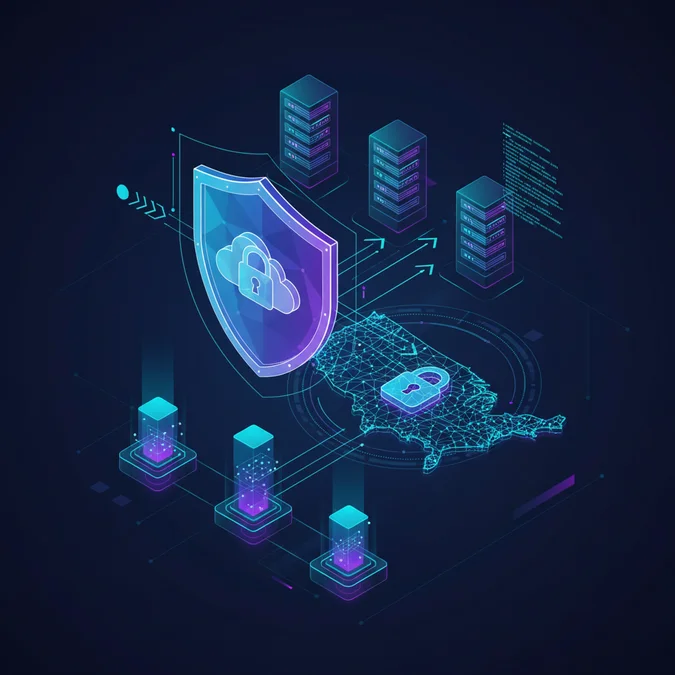
From a defensive perspective, development pipelines must account for US-centric frameworks such as SOC 2 Type II, HIPAA for health data, GLBA for banking infrastructure, and state-level privacy mandates like CCPA/CPRA. Sourcing domestic application development services ensures that all developers accessing staging repositories, production snapshots, and test environments adhere to defined background screening standards and mandatory incident reporting paths.
Domestic software architecture often demands strict compartmentalization of staging environments. For example, testing synthetic workflows without exposing real user data requires mature data masking and anonymization pipelines. US engineering agencies frequently establish zero-trust development lifecycles (SDLC) where no direct developer access to production databases is granted, minimizing the surface area for insider threats or credential exfiltration.
- Statutory Alignment: Immediate adherence to US state and federal breach notification rules.
- IP Enforcement: Contractual assignments enforceable directly within US civil and corporate courts.
- Infrastructure Proximity: Lower latency during debugging cycles on US-East or US-West AWS, Azure, or GCP infrastructure regions.
- Security Provenance: Audited supply chain integrity across domestic software dependencies and third-party vendor APIs.
Vetting Development Vendors for OWASP Top 10 Mitigation
When hiring outside development teams, engineering leaders must audit how prospective vendors defend against the OWASP Top 10 vulnerabilities. Vague assertions of security are insufficient. You must demand code reviews of past repositories, inspecting how their engineers handle input validation, parameter binding, state transitions, and session lifecycle management.
Consider injection attacks (OWASP A03:2021). An external agency must enforce parameterized queries and strongly typed object-relational mapping (ORM) abstractions across all database interfaces. In dynamic querying scenarios, developers must never construct raw SQL fragments with concatenated user input. The code must utilize defensive query builders that sanitize, validate, and escape parameters automatically.
<php

declare(strict_types=1);

namespace App\Services\Security;

use Illuminate\Support\Facades\DB;
use InvalidArgumentException;

final class SecureQueryService
{
 /**
 * Executes a safe dynamic query using bound parameters and strict allow-listing.
 *
 * @param string $userField
 * @param string $direction
 * @param array<int, mixed> $filterValues
 * @return array<int, object>
 */
 public function fetchValidatedRecords(string $userField, string $direction, array $filterValues): array
 {
 // Prevent SQL injection by allow-listing sort fields and order
 $allowedFields = ['created_at', 'transaction_total', 'account_status'];
 $allowedDirections = ['asc', 'desc'];

 $sanitizedField = strtolower(trim($userField));
 $sanitizedDirection = strtolower(trim($direction));

 if (!in_array($sanitizedField, $allowedFields, true)) {
 throw new InvalidArgumentException('Invalid sort parameter supplied.');
 }

 if (!in_array($sanitizedDirection, $allowedDirections, true)) {
 throw new InvalidArgumentException('Invalid ordering parameter supplied.');
 }

 // Defensive parameter binding via PDO placeholder assignment
 return DB:table('financial_ledgers')
 ->whereIn('status_code', $filterValues)
 ->orderBy($sanitizedField, $sanitizedDirection)
 ->select(['id', 'account_id', 'transaction_total', 'created_at'])
 ->get()
 ->toArray();
 }
}
Beyond injection, external vendors must illustrate proactive handling of Cross-Site Scripting (XSS), Server-Side Request Forgery (SSRF), and Broken Access Controls. Teams building applications with dynamic routing must also ensure that public URLs avoid predictability or parameter manipulation exploits, applying structured patterns such as generating deterministic slugs across records to prevent integer-enumeration resource scanning.
Access Control and Defensive Architecture in Custom Software
A critical vulnerability category frequently introduced by outsourced engineering teams is OWASP A01:2021: Broken Access Control. Software development providers must implement granular authorization mechanisms, moving past naive user-versus-admin binaries. Enterprise platforms require Attribute-Based Access Control (ABAC) or context-aware Role-Based Access Control (RBAC) enforced systematically at the service layer, the controller boundary, and the database schema level.
When reviewing vendor proposals, verify that authorization checks are not treated as presentation-layer cosmetics. Hiding an action button in an administrative dashboard does not protect the underlying API route. The engineering vendor must demonstrate that every incoming payload evaluates the caller’s cryptographic context, current session state, and exact record-level ownership permissions before computing the request.
For architectural review, study how your vendor designs policy abstractions. Our technical guide on configuring role-based permission policies demonstrates how backend route endpoints and background job processors must systematically query a unified authorization contract rather than scattering permission flags across arbitrary controller methods.
To avoid structural degradation over long sprints, the development partner must also guard against common architectural anti-patterns. Fragile state leaks, god objects, and unmitigated query sprawl often indicate an outsourced team prioritizing rapid ticket velocity over system durability. Reviewing structural anti-patterns in backend code helps technical leads evaluate whether an agency structures software for long-term auditability or simply builds brittle short-term facades.
Data Compliance, Cryptography, and Statutory Regulations
Contracting application development services within the USA generally aligns with strict statutory boundaries. US clients must confirm whether the contracted firm can systematically maintain compliance across diverse legal regimes:
- HIPAA / HITECH: Requires Business Associate Agreements (BAAs), audit logging of all protected health information (PHI) read actions, continuous data-at-rest encryption, and deterministic data retention destruction schedules.
- SOC 2 Type II: Demands verifiable controls covering the Security, Availability, Processing Integrity, Confidentiality, and Privacy trust principles throughout code development and deployment.
- CCPA / CPRA: Enforces programmatic interfaces allowing end consumers to invoke rights of deletion, data porting, and strict tracking-consent auditing.
- PCI-DSS 4.0: Mandates tokenization for cardholder environments, preventing application servers from handling raw credit card data directly.
The code baseline developed by an external service provider must demonstrate proper cryptographic practices. Agencies that use outdated algorithms (such as MD5 or SHA1 for data validation) or static salt vectors introduce unacceptable legal and operational liability. High-security applications require envelope encryption for sensitive payload fields, authenticated symmetric encryption (AES-256-GCM), and adaptive, salted hashing algorithms (Argon2id or Bcrypt with adequate work factors) for stored credentials.
<php

declare(strict_types=1);

namespace App\Services\Encryption;

use RuntimeException;

final class EnvelopeEncryptionEngine
{
 private string $cipher = 'aes-256-gcm';

 /**
 * Encrypts sensitive personal data using an ephemeral data key.
 *
 * @param string $plaintext
 * @param string $dataEncryptionKey (Decrypted DEK retrieved from KMS)
 * @return array{ciphertext: string, iv: string, tag: string}
 */
 public function encryptPayload(string $plaintext, string $dataEncryptionKey): array
 {
 $ivLength = openssl_cipher_iv_length($this->cipher);
 $iv = openssl_random_pseudo_bytes($ivLength);

 $tag = '';
 $ciphertext = openssl_encrypt(
 $plaintext,
 $this->cipher,
 $dataEncryptionKey,
 OPENSSL_RAW_DATA,
 $iv,
 $tag,
 '',
 16
 );

 if ($ciphertext === false) {
 throw new RuntimeException('Cryptographic encryption failed.');
 }

 return [
 'ciphertext' => base64_encode($ciphertext),
 'iv' => base64_encode($iv),
 'tag' => base64_encode($tag),
 ];
 }
}
Inquire how the vendor manages and rotates master keys. Storing secrets inside source-controlled environment variables like .env files inside production hosts is an unacceptable vulnerability. Qualified US development teams mandate programmatic integration with secret vaults such as AWS Secrets Manager, HashiCorp Vault, or Google Cloud Secret Manager, rotating keys without requiring zero-downtime server reboots.
Supply Chain Security and CI/CD Pipeline Controls
A modern vulnerability surface sits inside third-party dependencies, open-source packages, and CI/CD pipelines. Software agencies frequently rely on open-source registries (such as Packagist, npm, or PyPI) to accelerate delivery. Without automated software composition analysis (SCA) and verified software bills of materials (SBOM), your application absorbs every upstream zero-day and malicious dependency update released into the wild.
A defensively engineered software development service embeds deterministic dependency locking, vulnerability scanning, and cryptographic signing into every pull request pipeline before code reaches testing environments. Inquire whether prospective development vendors enforce these automated controls:
- Deterministic Lockfiles: Enforcing strict lockfile verification (
composer.lock,package-lock.json) during build steps to block floating, non-audited sub-dependencies. - Automated Static Analysis (SAST): Integrating tools like SonarQube, PHPStan (at level 8 or max), and Semgrep to detect tainted data flows, unhandled exceptions, and memory leaks before deployment.
- Dependency Auditing: Utilizing tools like GitHub Dependabot, Snyk, or OWASP Dependency-Check to automatically flag outdated or vulnerable libraries.
- Signed Commits and Artifact Verification: Requiring all developers to sign Git commits with verified GPG or SSH keys, ensuring that unauthorized source modifications cannot enter the main codebase unnoticed.
The deployment pipeline must enforce immutable builds using containerization frameworks (such as Docker or Podman) stored in private container registries with vulnerability scanning enabled. Any agency still relying on manual FTP transfers, SSH commands on live instances, or unsanctioned local builds introduces unacceptable operational vectors into your infrastructure.
Pricing Models for Application Development Services in USA
Evaluating application development services in the USA requires calculating true fully loaded costs across specific engagement structures. Domestic software development providers maintain significantly higher overheads than foreign counterparts due to local market compensation, regulatory insurance requirements, and mandatory liability underwriting. Standard rates reflect technical seniority, defensive capability, and operational specialization.
Engineering vendors typically structure their pricing under three distinct commercial frameworks: Time and Materials (T&M), Dedicated Engineering Pods (Monthly Retainers), and Fixed-Scope Milestone contracts. Each model introduces varying risk profiles regarding technical debt, architectural flexibility, and cost control.
| Pricing Model | Typical US Cost Range | Risk Profile | Recommended Project Context |
|---|---|---|---|
| Hourly (Time & Materials) | $125 to $275 per hour | Variable cost; requires active internal management | R&D discovery, iterative feature development, legacy refactoring |
| Dedicated Pod (Monthly Retainer) | $35,000 to $85,000 per month | Predictable spend; high continuous delivery throughput | Long-term product roadmaps, scale-ups requiring dedicated security engineers |
| Fixed-Scope Milestone | $50,000 to $500,000+ per project | Scope dispute risk; creates pressure to cut security corners | Strictly defined MVP builds with frozen, unalterable technical requirements |
Hourly rates within the United States vary across geographic regions and developer seniority tiers. For architectural and security-focused development roles:
- Mid-Level Software Engineer: $110 to $160 per hour. Focuses on feature-level coding, unit testing, and component architecture.
- Senior Systems Engineer: $160 to $225 per hour. Handles system design, advanced integration, performance optimization, and architectural decisions.
- Principal Architect / Security Lead: $225 to $350 per hour. Directs security profiling, cryptography design, regulatory compliance mappings, and infrastructure hardening.
Engaging a provider under a fixed-price model for complex, high-compliance systems is often hazardous. When third-party development firms face fixed financial caps, defensive engineering tasks like edge-case validation, static analysis triage, and thorough integration testing are often the first elements sacrificed to preserve margin. A Time and Materials or structured retainer structure paired with tight bi-weekly sprint reviews generally produces higher code quality and lower long-term technical debt.
Evaluating Agency Code Quality and Defense-in-Depth
Validating an external development team requires inspecting their technical documentation, operational standards, and automated testing coverage. Do not rely on high-level case studies or client logos. Demand access to anonymized pull requests, technical design documents (RFCs/ADRs), and automated test suites from past or current client engagements.
A resilient engineering vendor practices defense-in-depth throughout the application codebase. This means that security controls are applied across multiple independent layers. If presentation-tier input validation is bypassed, domain service boundaries, database constraints, and network access lists (ACLs) still prevent unmitigated data compromise.
Key indicators of defense-in-depth within an agency’s deliverable code include:
- Strict Typing: Full enforcement of static type systems (such as TypeScript in the frontend and strict PHP/Go/Java typing in the backend) to eliminate type juggling and coercion bugs.
- Automated Test Coverage: Comprehensive test suites combining unit tests (business logic isolation), integration tests (database and message bus boundaries), and end-to-end security regression tests. A reliable agency targets at least 80% meaningful test coverage on core business logic.
- Database Layer Protections: Enforcement of unique constraints, foreign key cascades, and check constraints directly at the relational database layer, preventing database corruption if application code encounters edge bugs.
- Audit Logging: Structured JSON logging detailing operational events without storing plain-text secrets, authorization tokens, or sensitive user attributes.
Operational Pitfalls When Working with US Software Vendors
Even with vetted US application development services, projects can encounter structural and financial pitfalls if technical leadership does not maintain strict governance. Misalignment between client expectations and vendor execution often manifests in subtle architectural compromises rather than overt system failures.
The first major pitfall is agency staff turnover. A development firm may pitch an engagement using their most experienced principal architects, only to quietly transition day-to-day coding tasks to junior developers or subcontracted offshore talent after contracts are signed. Contracts must explicitly define key personnel clauses, mandating written approval before core engineering leads can be swapped out.
The second pitfall is scope bloat disguised as agility. Agile methodologies provide operational flexibility, but without rigorous scope control, they can degenerate into open-ended budget drains. Every sprint must produce working, tested, and deployable software backed by clear definitions of done (DoD) that include passing SAST scans, zero new critical vulnerabilities, and updated architecture documentation.
The third hazard is ownership and transition lock-in. If the vendor does not continuously maintain deployment automation, infrastructure-as-code (IaC) definitions (such as Terraform or AWS CDK), and comprehensive developer onboarding guides, your internal team will be unable to operate, deploy, or maintain the software independently if the vendor relationship ends. Mandate that all infrastructure automation and configuration files live directly inside your own private source repositories from day one.
Laravel Architecture and Ecosystem Directory
Selecting the right framework foundation is as decisive as selecting your external software engineering partner. Modern web applications require stable, battle-tested ecosystems that combine rapid feature development with enterprise-grade defensive patterns.
Explore our complete Laravel, Basics directory for more guides.
Whether reviewing framework-native authentication libraries, building resilient database migrations, or orchestrating background job queues, adhering to proven architectural standards ensures that your external development investments yield durable, auditable, and easily maintainable software assets for years to come.
Factors That Affect Development Cost
- Developer seniority tiers and specialized security certifications
- Regulatory compliance scope (HIPAA, SOC 2, PCI-DSS)
- Choice of pricing engagement model (T&M vs Retainer vs Fixed Milestone)
- System integration complexity and legacy infrastructure modernization
- Geographic operational location within the United States
Engineering rates within the United States vary broadly from $125 to $350 per hour depending on technical specialization, regulatory clearance, and role seniority.
Procuring application development services in the USA is a strategic decision driven by data security requirements, regulatory compliance, and architectural durability. Successful engagements depend on active technical oversight rather than passive vendor management. Treat your development partner as an extension of your security perimeter, holding their code to the same rigorous automated scrutiny you apply to internal teams.
Before signing commercial development agreements, run prospective partners through a thorough technical vetting checklist: verify their dependency security protocols, audit real code samples for OWASP defensive patterns, confirm key personnel stability in binding contracts, and ensure that all infrastructure code, cryptographic workflows, and deployment pipelines remain fully owned, documented, and controlled by your organization.