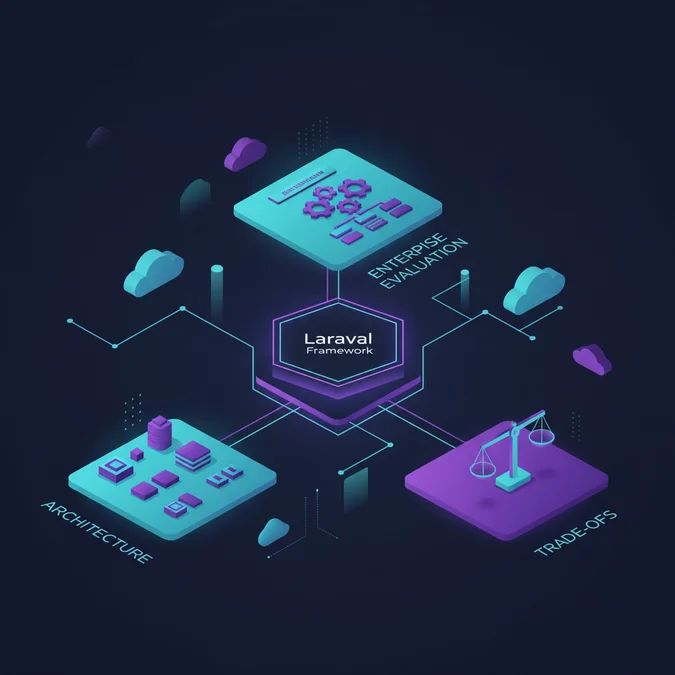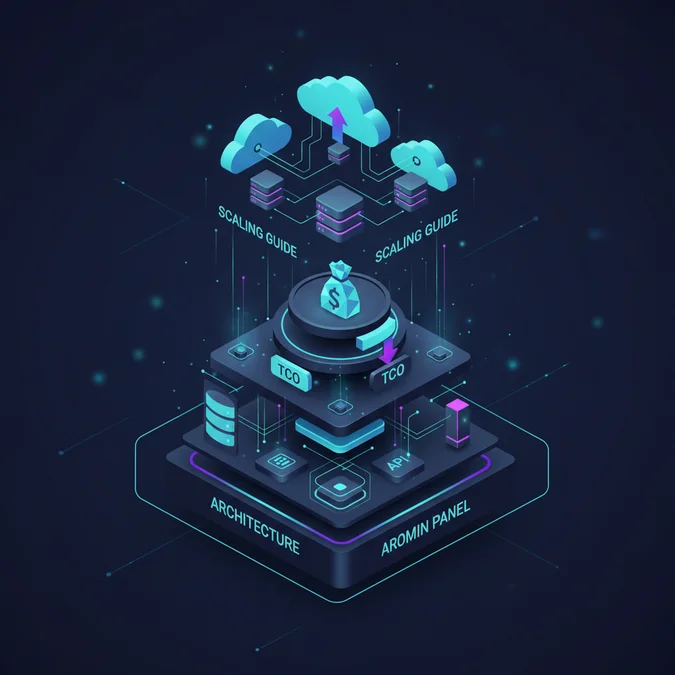

An application-based system architecture structures business logic, state management, and execution lifecycles around a self-contained application instance rather than relying on fragmented scripts, generic infrastructure hooks, or distributed micro-routines. Within modern Laravel development, an application-based approach unifies service container bindings, routing dispatchers, and contextual configuration into a cohesive runtime pipeline.
Why do engineering leadership teams consistently struggle with maintainability regressions as monolithic Laravel codebases expand past 200,000 lines of code? The culprit is rarely PHP or framework limits. Instead, teams slide into script-style fragmentation, scattering database operations across unstructured controllers and breaking service boundaries. Transitioning to an application-based design forces explicit domain isolation, deterministic dependency resolution, and predictable performance envelopes across web, queue, and CLI workloads.
This technical breakdown deconstructs the application-based paradigm in Laravel. We examine container mechanics, boot cycles, runtime lifecycle management, and tactical patterns that protect velocity while preventing technical debt.
Core Mechanics of the Application-Based Architecture
In an application-based model, the primary orchestrator is the framework container itself, initialized as a discrete, contextual runtime instance. Unlike traditional script-based PHP setups where global state persists ad hoc across includes, an application-based platform treats the Laravel Illuminate\Foundation\Application object as the single authority for dependency contracts, event dispatching, and request-response lifecycles.
The system execution flow relies on a strictly sequenced bootstrapping protocol. The web server routes incoming traffic to public/index.php, which instantiates the application, binds key contracts, and resolves the HTTP kernel. This architecture isolates runtime side effects within explicit boundaries.
<php

declare(strict_types=1);

namespace App\Architecture;

use Illuminate\Contracts\Foundation\Application as ApplicationContract;
use Illuminate\Support\ServiceProvider;

final class CoreRuntimeManager
{
 public function __construct(
 private readonly ApplicationContract $app
 ) {}

 /**
 * Register core infrastructure bindings with contextual scoping.
 */
 public function bootstrapDomain(): void
 {
 // Enforce concrete bindings strictly via explicit interfaces
 $this->app->singleton(
 \App\Domain\Orders\Contracts\OrderProcessorInterface:class,
 \App\Domain\Orders\Services\SynchronousOrderProcessor:class
 );
 }
}
This foundational architecture ensures that every functional domain, from customer invoicing to warehouse logistics, operates within a structured sandbox governed by application service providers.
Service Container Lifecycles: Singletons, Bindings, and Context
The core engine of an application-based design is the Inversion of Control (IoC) container. Architectural failures often trace back to a misunderstanding of resolution lifecycles, specifically the mechanical differences between ephemeral bindings, singletons, and scoped instances.
In standard FastCGI executions, singletons live only for the duration of a single HTTP request. However, when utilizing long-running runtime environments like Laravel Octane (running RoadRunner or Swoole), singletons persist across thousands of requests. An application-based design requires strict awareness of object lifecycles to prevent memory leaks and shared state contamination across requests.
| Binding Type | Creation Frequency (FPM) | Persistence in Octane / Long-Running | Risk Profile |
|---|---|---|---|
bind() |
New instance per container resolution | Recreated every call within the same request | High CPU overhead if instantiated frequently |
singleton() |
One instance per HTTP worker lifecycle | Persists across concurrent requests | Severe memory leaks and cross-request state bleeding |
scoped() |
One instance per request, then destroyed | Flushed between distinct worker cycles | Safe, optimal balance for transactional state |
To establish safe memory retention boundaries, developers must leverage contextual scoping, ensuring that request-specific state is never coupled to shared singletons.
Structuring Domain Boundaries Within an Application-Based Codebase
Monolithic applications frequently degrade into anti-patterns when code is organized strictly by layer (all controllers together, all models together) rather than by business domain. An application-based model uses modular domain isolation to maintain code clarity and organizational boundaries as team sizes scale.
Instead of relying on the default flat Laravel directory structure, mature teams organize their logic into modular slices where each domain encapsulates its own models, service providers, actions, and custom exception types. This reduces cognitive load and prevents unexpected cascade failures when schemas evolve.
- Actions: Single-purpose execution classes (e.g.
CreateInvoiceAction) containing isolated business logic. - Data Transfer Objects (DTOs): Typed payloads that decouple presentation layer requests from the internal domain model.
- Domain Contracts: PHP interfaces that enforce strict boundaries between domain domains, preventing circular dependencies.
Adopting these boundaries requires discipline during testing. Maintaining reliable service contracts across large modules demands rigorous validation patterns, as detailed in our guide on implementing unit testing patterns across enterprise architectures.
Runtime Execution Contexts: Web, Queues, and Scheduled Workers
An application-based framework executes across distinct runtime profiles: HTTP requests, asynchronous queues, and CLI scheduled tasks. Each execution context exhibits unique failure modes, memory limitations, and concurrency constraints.
Understanding how the application initializes under different inputs prevents edge-case bugs. For example, the Request lifecycle object does not exist during an Artisan CLI run, meaning any domain code that implicitly queries request()->ip() will break in queue worker threads.
<php

declare(strict_types=1);

namespace App\Infrastructure\Context;

use Illuminate\Contracts\Foundation\Application;

final class ExecutionContextValidator
{
 public function __construct(private readonly Application $app) {}

 public function resolveClientIdentifier(): string
 {
 // Defend against missing HTTP contexts during queue and console processing
 if ($this->app->runningInConsole()) {
 return 'cli-worker-session';
 }

 return (string) $this->app->make('request')->header('X-Client-ID', 'anonymous');
 }
}
Engineering leaders must enforce that domain services remain agnostic of the execution context, receiving clean primitives rather than relying on HTTP globals.
State Management and Thread Safety in Long-Running Kernels
Running Laravel applications inside long-running process managers like FrankenPHP, Swoole, or RoadRunner demands a complete reassessment of application-based state. In these environments, PHP does not reboot between requests. The master application container remains resident in server RAM.
When a developer injects the application container or an HTTP request instance into a singleton, the system retains the first user’s authentication and session tokens indefinitely. Subsequent requests handled by that worker thread may inherit that privileged context, causing critical security vulnerabilities.
- Never inject the container directly into singletons: Always pass factories or rely on explicit parameter injection per invocation.
- Clear transient listeners: Reset event listeners and model event hooks after each cycle.
- Utilize sandbox providers: Register services that store client state inside Laravel Octane’s
warm()orflush()hooks.
Strict adherence to stateless design patterns allows systems to handle thousands of requests per second per core while eliminating thread-safety concerns.
Application-Based Configuration and Environment Isolation
Enterprise applications frequently suffer from silent configuration drift between development, staging, and multi-region production deployments. In an application-based design, environment resolution must be deterministic and executed strictly during the boot pipeline.
A recurring vulnerability in high-traffic platforms is calling the env() helper directly outside configuration files. Once the configuration cache is generated via php artisan config:cache, all .env files are bypassed, causing env() calls in runtime domain code to return null.
# Standard production build pipeline execution
composer install --no-dev --optimize-autoloader
php artisan config:cache
php artisan route:cache
php artisan view:cache
php artisan event:cache
By treating configuration as a compiled, immutable artifact within the application container, engineering teams eliminate race conditions and decouple deployment assets from mutable host environments.
Database Connection Management and Pool Contention
In traditional PHP-FPM architectures, every incoming HTTP request opens and closes a dedicated connection to the relational database. As microservices and web worker fleets scale horizontally, the underlying database quickly hits its maximum connection limits, leading to connection timeouts and service outages.
Adopting an application-based persistence strategy requires managing connection pools, query connection lifecycles, and transaction scopes deterministically.
| Metric | PHP-FPM Default | Application-Managed Worker Pool |
|---|---|---|
| Connection Lifecycle | Opens on boot, closes on request termination | Persisted across thousands of requests |
| Handshake Overhead | High (TCP + TLS renegotiation every request) | Near-zero (reused existing open sockets) |
| Max DB Connections Required | Directly matches maximum concurrent web processes | Fixed pool size matched to database CPU cores |
| Risk of Stale Transactions | Zero (FPM drops all state automatically) | Moderate (requires explicit rollback on unhandled errors) |
To safely manage persistent pools, developers must wrap critical mutations in explicit transactions with automated rollbacks when exceptions occur.
Middleware Pipelines and Request Filtering Mechanics
The HTTP Kernel in Laravel processes incoming traffic through an onion-style middleware pipeline. In an application-based architecture, middleware should act solely as a gateway filter, enforcing operational contracts like authentication, rate limiting, and telemetry injection without polluting domain services.
Placing substantive business logic inside middleware is an anti-pattern. Middleware should only accept, inspect, transform, or reject the incoming pipeline, delegating actual data processing to controllers and domain handlers.
<php

declare(strict_types=1);

namespace App\Http\Middleware;

use Closure;
use Illuminate\Http\Request;
use Symfony\Component\HttpFoundation\Response;

final class EnforceRequestContract
{
 public function handle(Request $request, Closure $next): Response
 {
 // Enforce technical invariants prior to domain execution
 if (!$request->hasHeader('X-Trace-Context')) {
 return response()->json([
 'error' => 'Missing required tracing headers.'
 ], 400);
 }

 return $next($request);
 }
}
Keeping the pipeline strictly defensive guarantees consistent execution boundaries across all web entry points.
Technical Debt in Application-Based Laravel Implementations
Technical debt in Laravel systems is rarely caused by external package failures. It primarily stems from structural shortcuts, such as the misuse of Eloquent active record queries directly in views, missing boundary contracts, and unchecked facade usage throughout the domain layer.
Facades provide a convenient static interface to underlying container bindings. However, over-relying on facades inside deep business logic tightly couples code to the global application state, making isolated unit testing complex and fragile.
- Facade Coupling: Replace global facade calls with constructor dependency injection to maintain explicit interfaces.
- God Models: Extract complex query scopes, mutators, and relationship lookups into dedicated repository or query classes.
- Unbounded Event Dispatching: Ensure events represent completed occurrences rather than hidden command pipelines that trigger circular updates.
Adopting structured design frameworks helps prevent architectural erosion. Structuring engineering phases around formal software development principles, such as those covered in our analysis of engineering lifecycles and software architecture, ensures long-term system stability.
Scalability Bottlenecks and Optimization Tactics
When scaling an application-based setup, the primary bottlenecks are CPU-bound serialization overhead, cache fragmentation, and inefficient query hydration. Resolving these bottlenecks requires addressing code execution paths directly rather than simply throwing more compute resources at the infrastructure.
Eloquent models instantiate several internal tracking properties per database record, including mutation trackers, relation arrays, and casting configurations. Hydrating 10,000 Eloquent models to generate an export can easily consume hundreds of megabytes of RAM, triggering PHP garbage collection stalls.
- Leverage Lazy Collections: Use cursor pagination and generator streams to process large datasets with minimal memory footprints.
- Defer Unused Service Providers: Mark non-critical framework service providers as deferred to reduce bootstrapping latency on every request.
- Utilize Native Route and Event Caching: Ensure all production container bindings run on pre-compiled AST graphs.
These operational practices keep memory consumption flat and execution times predictable even as system throughput scales exponentially.
Explore Laravel Basics and Foundation Architecture
Mastering modern, application-based design is a continuous journey that begins with understanding core framework fundamentals, dependency injection pipelines, and predictable request lifecycles.
[Explore our complete Laravel, Basics directory for more guides.](/topics/topics-laravel-basics/)
Reviewing our collection of architectural analyses will equip your engineering team to construct robust, high-performance Laravel platforms designed for scale.
An application-based architecture provides the foundation for stable, enterprise-scale Laravel platforms. By moving beyond script-oriented habits and adopting strict lifecycle scoping, clean domain isolation, and deterministic container management, teams can build systems that scale cleanly without technical debt.
Modern engineering leadership requires balancing speed with architectural rigor. Prioritizing explicit dependencies, thread-safe service contracts, and robust execution pipelines ensures your application remains resilient, maintainable, and high-performing as business demands expand.