
In modern distributed systems, the transition from monolithic architectures to granular services introduces significant complexity at the perimeter. The primary challenge is not just service discovery, but maintaining a consistent security posture, load balancing, and protocol adaptation across a fragmented service landscape.
Successfully scaling these systems requires a decoupling of client-facing concerns from backend business logic. By implementing a robust entry point, engineering teams can offload cross-cutting concerns, ensuring that microservices focus exclusively on their domain tasks while the infrastructure layer handles the heavy lifting of traffic orchestration.
Core Mechanics of the Api Gateway Pattern
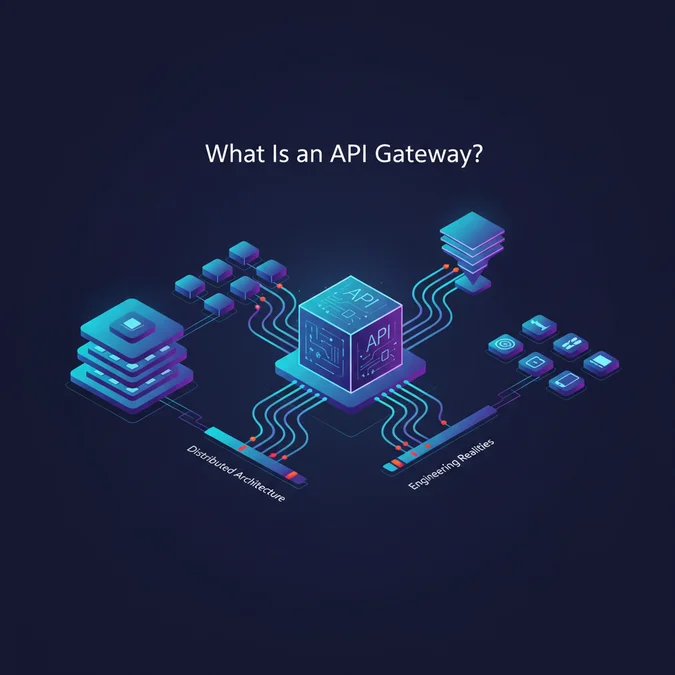
The api gateway pattern functions as a reverse proxy that sits between your clients and your collection of microservices. It acts as the traffic cop, ensuring that requests are routed, authenticated, and transformed before they ever reach the internal network.
The gateway is not merely a router. It is a programmable layer that provides a unified interface for external clients, effectively masking the internal complexity of your distributed system.
By abstracting the backend topology, the gateway allows teams to refactor, migrate, or scale individual services without requiring changes to client-side code. This central control point is essential for implementing rate limiting, SSL termination, and request logging consistently across every service endpoint.
Designing High Performance Api Gateway Microservices
When architecting api gateway microservices, the gateway must be treated as a critical path component. A poorly configured gateway becomes a single point of failure and a latency bottleneck. Design decisions must balance throughput requirements against the overhead of intensive request processing.
| Design Metric | High-Scale Consideration | Impact |
|---|---|---|
| Concurrency Model | Non-blocking I/O | Low memory overhead |
| Policy Execution | Edge-side caching | Reduced backend latency |
| Request Payload | Streaming vs Buffering | Memory utilization |
To achieve high performance, favor asynchronous, event-driven architectures within the gateway. By offloading authentication verification to local caches rather than external identity providers on every request, you can significantly reduce the P99 latency of your API surface.
Traffic Routing and Protocol Translation Benchmarks
Understanding the performance trade-offs between different routing strategies is vital for production stability. Below is a comparison of common gateway implementations based on typical high-load scenarios.
| Implementation | Routing Latency (ms) | Throughput (req/sec) | Resource Overhead |
|---|---|---|---|
| Ingress Controller | 1.2ms | 85,000 | Minimal |
| Full API Gateway | 4.5ms | 45,000 | Moderate |
| Service Mesh Proxy | 3.8ms | 30,000 | High |
The data demonstrates that while full API gateways provide richer features like protocol translation and complex request transformation, they come with a measurable latency penalty compared to simple ingress controllers. Architectural decisions should align with the specific protocol requirements of your client base.
Production Grade Configuration and Deployment
Modern Kubernetes clusters utilize the Gateway API, which offers a more expressive and portable way to manage traffic than traditional Ingress resources. Below is a standard configuration for a route-based traffic split.
apiVersion: gateway.networking.k8s.io/v1
kind: HTTPRoute
metadata:
 name: service-routing
spec:
 parentRefs:
 - name: internal-gateway
 rules:
 - matches:
 - path:
 type: PathPrefix
 value: /api/v1/orders
 backendRefs:
 - name: order-service
 port: 8080
Deployment Checklist
- Enable automated health checks for all backend services.
- Configure circuit breakers to prevent cascading failures.
- Implement request rate limiting at the gateway level.
- Ensure TLS termination is offloaded to the edge.
Observability and Failure Mode Analysis
Monitoring a gateway requires deep integration with distributed tracing. When a gateway experiences a 500-error, the system must fail gracefully to preserve the health of downstream services.
- Trace propagation: Inject unique trace IDs at the gateway to track requests across the entire call stack.
- Circuit Breaking: If the error rate for a specific service exceeds the threshold, the gateway must trip the circuit to avoid resource exhaustion.
- Fallback mechanisms: Serve cached responses or static error messages when the primary service is unreachable.
- Automated Alerting: Configure thresholds based on P99 latency spikes rather than simple error counts.
Factors That Affect Development Cost
- Infrastructure complexity
- Traffic volume and throughput requirements
- Protocol translation complexity
- Security policy enforcement needs
Cost varies significantly based on whether you choose managed cloud gateway services or self-hosted open-source solutions.
Frequently Asked Questions
What is the primary benefit of the api gateway pattern in microservices?
The api gateway pattern serves as a single entry point for client requests, offloading cross-cutting concerns like authentication, SSL termination, and request transformation. This simplifies client-side logic and centralizes security policies, allowing backend services to remain decoupled from external client requirements.
How do api gateway microservices differ from a service mesh?
An api gateway manages north-south traffic, handling external requests before they reach your internal network. A service mesh manages east-west traffic, facilitating secure communication between services internally. They are complementary; the gateway handles the perimeter, while the mesh manages granular service-to-service interactions.
Successful implementation of api gateway microservices relies on balancing feature richness with performance overhead. By centralizing cross-cutting concerns, you create a cleaner, more maintainable architecture that can evolve alongside your business requirements.
As you move toward production, prioritize observability and failure resilience. A well-designed gateway is the difference between a system that scales linearly and one that collapses under the weight of its own complexity.