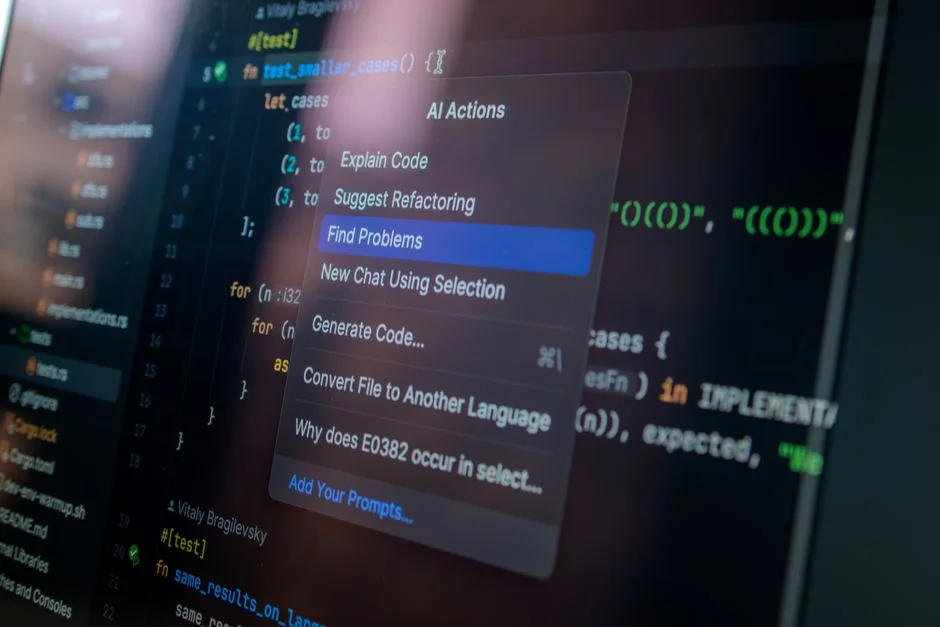
For small business owners and CTOs, the conversation around AI has shifted from curiosity to a requirement for operational survival. However, the market is saturated with generic advice that ignores the technical realities of data infrastructure, security, and long-term maintenance. Implementing AI is not merely about subscribing to an API; it is about building a scalable data pipeline that feeds your business logic.
This article provides a technical roadmap for integrating AI into your existing software ecosystem. We focus on practical, high-impact implementations—such as custom LLM agents for customer support or automated data classification—while avoiding the common pitfalls of over-engineering or premature adoption.
Defining the Technical Scope of AI Integration
Before writing a single line of code, you must define the scope. Most small businesses fail because they attempt to build “general” AI tools rather than solving specific, high-friction bottlenecks. In practice, this means identifying a narrow dataset or a repetitive workflow that can be augmented by a Large Language Model (LLM) or a predictive model.
A typical integration stack for a small business involves:
- Data Layer: A structured database (PostgreSQL/MySQL) storing your business context.
- Orchestration Layer: A backend framework like Laravel or Next.js that manages API calls to AI models.
- Interface Layer: The frontend component (React) where users interact with the AI-driven insights.
Practical Implementation: Connecting to LLM APIs
Integrating an LLM into your business application typically happens via a REST API. The key is to avoid exposing your API keys on the client side. Instead, route all AI requests through your secure server-side application.
Here is a basic example using a Laravel backend to handle a query:
// Example: Sending a prompt to an AI service via Laravel
public function getAIResponse(Request $request) {
  $response = Http::withToken(config('services.ai.key'))
    ->post('https://api.openai.com/v1/chat/completions', [
      'model' => 'gpt-4',
      'messages' => [['role' => 'user', 'content' => $request->input('prompt')]]
    ]);
  return response()->json($response->json());
}
This pattern ensures your API keys remain hidden and allows you to log requests for auditing and cost control.
Tradeoffs: Off-the-Shelf vs. Custom AI Models
One of the primary decisions you will face is whether to use an existing model via API or to fine-tune a smaller model on your private data. This is a classic tradeoff between cost, control, and privacy.
- API-based (e.g., OpenAI, Anthropic): Low upfront cost, rapid deployment. Tradeoff: You are dependent on a third-party vendor’s uptime, pricing, and data privacy policies.
- Custom/Fine-tuned Models: Greater data privacy and tailored performance. Tradeoff: Significantly higher engineering overhead, hardware requirements, and ongoing maintenance costs.
For most small businesses, starting with a RAG (Retrieval-Augmented Generation) architecture using an API is the recommended path. It allows you to ground the model in your specific business data without the complexity of training a model from scratch.
Security and Data Governance
AI integration introduces new attack vectors. When sending your business data to an external provider, you must ensure you are not violating data privacy regulations like GDPR or HIPAA. Always sanitize inputs to prevent prompt injection attacks, where a user might attempt to trick your AI into leaking sensitive information or bypassing system instructions.
Best Practices:
- Never send PII (Personally Identifiable Information) to public models unless you have a Zero-Data Retention agreement.
- Implement rate limiting on your API endpoints to prevent excessive billing from malicious actors.
- Use a schema validation library to ensure the AI’s output conforms to your application’s expected data structure.
Decision Framework: When to Implement AI
Do not implement AI just to follow a trend. Use this framework to justify the investment:
- High Frequency/Low Value: If a task is repetitive and manual, it is a prime candidate for automation via AI.
- High Complexity/High Value: If a task requires synthesizing large amounts of internal data to make a decision, AI can act as a force multiplier for your team.
- Low Frequency/High Complexity: These tasks are rarely worth the cost of AI integration, as the development time will exceed the time saved.
If your current infrastructure is not digitized, focus on digitizing your processes first. AI cannot solve problems if your data is locked in spreadsheets or paper files.
Factors That Affect Development Cost
- API usage costs
- Data processing and cleaning
- Custom development hours
- Security and compliance audits
- Infrastructure scaling
Costs vary significantly based on the complexity of the data pipeline and the frequency of API calls required for your specific business logic.
Frequently Asked Questions
How do I integrate AI into my small business?
Start by identifying a specific, repetitive task, such as customer support inquiries or data entry. Then, build a secure backend service that connects your internal database to an AI model via an API, ensuring that all data transfers are monitored and secure.
What is the 30% rule for AI?
The 30% rule is a heuristic suggesting that AI should aim to automate roughly 30% of a specific job role’s tasks to provide significant productivity gains without replacing the human element entirely. It emphasizes augmentation over total replacement.
What is the best AI to use for a small business?
There is no single ‘best’ AI; the choice depends on your technical requirements. For most businesses, established models like GPT-4 or Claude via API offer the best balance of performance and ease of integration for custom applications.
AI integration for small business is an iterative process. It requires a stable foundation of clean data and a modular software architecture that allows you to swap or upgrade AI providers as the technology evolves. By focusing on specific, high-impact workflows rather than general automation, you can achieve measurable ROI while maintaining the security and integrity of your operations.
If you need expert guidance on architecting your AI integration or building the necessary custom software to support it, reach out to the team at NR Studio. We specialize in developing scalable, secure software solutions tailored to the needs of growing businesses.
Ready to Build a Custom Solution?
NR Studio specializes in custom software built around your workflow. Tell us what you’re building and we’ll walk through your options together.