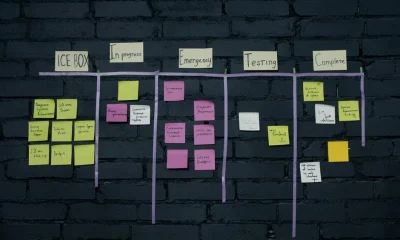

Software testing, for developers, is not merely a quality assurance gate; it is an intrinsic engineering discipline that underpins the reliability, security, and scalability of modern cloud-native systems. Effective testing ensures that individual components, integrated services, and the overarching infrastructure function as intended under various conditions, preventing costly failures in production environments. Developers must embrace testing as a core responsibility, designing systems with testability in mind from inception.
The traditional perception of testing as a post-development activity often leads to significant technical debt, delayed releases, and critical production incidents. In a world of distributed systems, microservices, and continuous deployment, a reactive testing approach is insufficient. Developers, particularly those involved in architecting and implementing cloud solutions, must adopt a proactive, shift-left testing mindset. This involves writing tests concurrently with code, automating testing processes, and embedding quality checks throughout the entire software development lifecycle, from local development to production monitoring.
This guide explores the essential facets of software testing from a developer’s perspective, emphasizing strategies and tools critical for constructing and maintaining robust, high-performance cloud architectures. We will cover various testing methodologies, their practical application, and how they integrate into modern CI/CD pipelines, ensuring that the systems developers build are not just functional, but inherently resilient and reliable.
Integrating Testing into the Developer Workflow: A Cloud Architect’s Mandate
Software testing for developers involves an iterative process of validating code, components, and system interactions to ensure they meet functional and non-functional requirements, prevent regressions, and uphold system integrity across the development and deployment lifecycle. From a cloud architect’s perspective, this mandates embedding quality assurance directly into every phase of development, treating tests as first-class citizens alongside production code.
For a developer operating within a cloud-native paradigm, testing transcends simple code verification; it encompasses validating infrastructure configurations, deployment strategies, and the resilience of distributed services. The goal is to catch issues as early as possible, reducing the cost of defect remediation and accelerating delivery cycles. This ‘shift-left’ approach means developers are responsible for designing testable code, writing comprehensive tests, and ensuring these tests execute reliably within automated pipelines. It is a fundamental shift from delegating quality to a separate QA team towards a shared ownership model where developers are the primary custodians of quality.
Consider a microservices architecture deployed on AWS using services like Lambda, SQS, and DynamoDB. A developer’s testing responsibilities extend beyond the business logic of a single Lambda function. They must also ensure the correct configuration of SQS queues, the resilience of DynamoDB tables, and the appropriate IAM permissions. This requires a deep understanding of how each component interacts and the potential failure modes within a distributed system. The focus shifts from isolated unit tests to a layered testing strategy that covers units, integrations, and the infrastructure itself. Automation is paramount; manual testing cannot keep pace with the velocity of cloud deployments. Developers must instrument their code and infrastructure for continuous validation, leveraging tools that can simulate real-world conditions and detect anomalies before they impact end-users. This proactive stance is not just about finding bugs; it’s about building confidence in every commit and every deployment, ensuring that architectural decisions translate into stable, performant systems.
The cultural aspect is equally important. Fostering a testing culture means providing developers with the right tools, training, and time to write effective tests. It also means establishing clear expectations around test coverage, test quality, and the integration of tests into the CI/CD pipeline. When developers own the testing process, they gain a deeper understanding of their code’s behavior, edge cases, and dependencies, leading to more robust designs and fewer production incidents. This ownership is particularly critical in cloud environments where misconfigurations or unexpected service interactions can have cascading effects. By embracing testing as an integral part of their craft, developers contribute directly to the overall system reliability and operational excellence, which are non-negotiable in modern cloud architectures. This proactive engagement also facilitates faster debugging, as issues are often identified closer to their source, reducing the mean time to resolution (MTTR) for any problems that do arise. The investment in developer-led testing pays dividends in reduced operational overhead, improved system stability, and enhanced developer productivity over the long term.
Furthermore, the architect’s perspective emphasizes the importance of testability as a design principle. A system that is easy to test is often a system that is well-designed, modular, and maintainable. This involves practices like dependency injection, clear interface definitions, and separation of concerns, which simplify the process of isolating components for testing. When developers actively consider how their code will be tested while writing it, they naturally gravitate towards cleaner, more decoupled designs. This foresight reduces the effort required for future maintenance and feature development, creating a virtuous cycle of quality and efficiency. The shift-left paradigm is not just about moving testing earlier; it’s about making testing an inherent part of the design and implementation process, ensuring that systems are born resilient rather than having resilience bolted on as an afterthought. This systemic approach is foundational to building high-quality software in complex, distributed cloud environments.
Unit Testing: The Bedrock of Code Reliability and Architectural Integrity
Unit testing forms the most granular layer of the testing pyramid, focusing on individual, isolated units of code, such as functions, methods, or classes. For developers, writing unit tests is a critical practice for ensuring the correctness of their logic, catching regressions, and providing immediate feedback on code changes. From an architectural standpoint, strong unit test coverage for core business logic ensures that the fundamental building blocks of a system are sound, which is essential for the stability of larger, integrated components.
Effective unit tests are characterized by their speed, isolation, and determinism. They should execute quickly, run independently of external dependencies (like databases, network services, or file systems), and produce the same result every time. To achieve this isolation, developers frequently employ techniques such as mocking, stubbing, and faking. Mocks are simulated objects that record interactions, allowing verification of behavior. Stubs provide canned answers to method calls, while fakes are simpler implementations of interfaces that can be used in tests. These techniques enable developers to test their code in isolation, focusing purely on the logic of the unit under test without the complexities of its collaborators.
Consider a `UserService` in a Python application that depends on a `UserRepository` to interact with a database. A unit test for a method like `UserService.createUser(user_data)` would mock the `UserRepository` to ensure that `createUser` correctly validates input and calls the appropriate repository method, without actually touching a database. This allows for rapid test execution and precise identification of issues within the `UserService`’s logic. Adhering to the FIRST principles of unit testing (Fast, Independent, Repeatable, Self-validating, Timely) is paramount for maintaining a healthy and useful test suite. A unit test that takes too long to run, depends on external state, or yields inconsistent results quickly loses its value and encourages developers to skip running tests.
# Example: Python Unit Test with Mocking
import unittest
from unittest.mock import MagicMock

# Assume these are defined elsewhere
class User:
    def __init__(self, name, email):
        self.name = name
        self.email = email

class UserRepository:
    def save(self, user):
        raise NotImplementedError

    def find_by_email(self, email):
        raise NotImplementedError

class UserService:
    def __init__(self, user_repository):
        self.user_repository = user_repository

    def create_user(self, name, email):
        if not name or not email:
            raise ValueError("Name and email cannot be empty")
        if self.user_repository.find_by_email(email):
            raise ValueError("User with this email already exists")
        new_user = User(name, email)
        self.user_repository.save(new_user)
        return new_user

class TestUserService(unittest.TestCase):
    def setUp(self):
        self.mock_user_repository = MagicMock(spec=UserRepository)
        self.user_service = UserService(self.mock_user_repository)

    def test_create_user_success(self):
        # Configure mock to return None for find_by_email, indicating no existing user
        self.mock_user_repository.find_by_email.return_value = None

        user = self.user_service.create_user("John Doe", "john.doe@example.com")

        self.assertIsInstance(user, User)
        self.assertEqual(user.name, "John Doe")
        self.assertEqual(user.email, "john.doe@example.com")
        # Verify that save was called with the correct user object
        self.mock_user_repository.save.assert_called_once()
        # Verify that find_by_email was called once with the correct email
        self.mock_user_repository.find_by_email.assert_called_once_with("john.doe@example.com")

    def test_create_user_empty_fields(self):
        with self.assertRaisesRegex(ValueError, "Name and email cannot be empty"):
            self.user_service.create_user("", "")
        # Ensure no repository methods were called if validation fails
        self.mock_user_repository.save.assert_not_called()
        self.mock_user_repository.find_by_email.assert_not_called()

    def test_create_user_email_exists(self):
        # Configure mock to return a user, indicating email already exists
        self.mock_user_repository.find_by_email.return_value = User("Jane Doe", "john.doe@example.com")

        with self.assertRaisesRegex(ValueError, "User with this email already exists"):
            self.user_service.create_user("John Doe", "john.doe@example.com")
        # Ensure save was not called if user already exists
        self.mock_user_repository.save.assert_not_called()
        self.mock_user_repository.find_by_email.assert_called_once_with("john.doe@example.com")

if __name__ == '__main__':
    unittest.main()
From an architectural perspective, high-quality unit tests contribute significantly to maintainability and refactoring efforts. When developers need to modify a component, a robust suite of unit tests acts as a safety net, quickly signaling if changes introduce unintended side effects. This confidence allows for more aggressive refactoring, which is crucial for evolving systems and adapting to new requirements without accumulating technical debt. Furthermore, well-written unit tests serve as executable documentation, illustrating how individual components are intended to be used and behave. This is particularly valuable in complex systems where understanding the nuances of various modules can be challenging. By ensuring the correctness of individual units, developers lay a solid foundation upon which more complex integration and system tests can be built, contributing to the overall stability and reliability of the entire cloud architecture. This practice aligns with the principles of Usability in Software Engineering: Architecting for Developer Experience and Maintainability, as testable code is inherently more maintainable and understandable.
Integration Testing: Validating Inter-Service Communication and Data Flow
Integration testing moves beyond isolated units to verify the interactions between different components or services within a system. For developers, this means ensuring that modules communicate correctly, data flows as expected across boundaries, and external dependencies are properly integrated. In cloud architectures, which often comprise numerous decoupled services, robust integration testing is paramount for identifying issues that arise from service contracts, network latency, or data format mismatches.
The scope of integration tests can vary. They might test the interaction between a service and its database, two microservices communicating via an API, or a service integrating with a third-party API. The key challenge is to manage external dependencies effectively. Instead of mocking everything, integration tests often use real instances of dependencies, albeit often in a controlled, isolated test environment. For example, a service interacting with a database might use an in-memory database, a test container (like Docker Compose), or a dedicated test instance of the actual database to ensure realistic interaction without impacting production data or incurring high costs.
Contract testing is a specialized form of integration testing that is particularly valuable in microservices architectures. It focuses on verifying that the interactions between two services (a consumer and a provider) adhere to a defined contract, typically an API specification. The consumer defines its expectations of the provider’s API, and these expectations are then verified against the provider’s actual implementation. Tools like Pact enable developers to generate consumer-driven contracts, which are then run against the provider’s codebase. This ensures that changes in one service do not inadvertently break another, providing early feedback and preventing integration issues from reaching production. This is especially critical for maintaining stability in complex distributed systems where services are developed and deployed independently.
# Example: Pact Contract Definition (consumer side)
# This YAML defines the expected interaction for a 'get user' endpoint
provider_states:
  - name: a user with ID 123 exists
request:
  method: GET
  path: /users/123
  headers:
    Accept: application/json
response:
  status: 200
  headers:
    Content-Type: application/json
  body:
    id: 123
    name: "John Doe"
    email: "john.doe@example.com"
When dealing with cloud-native services, developers often need to test interactions with AWS SQS, SNS, S3, or Azure Service Bus. Instead of making actual calls to live cloud resources during development, which can be slow and costly, developers can use local emulators or test doubles. Tools like LocalStack provide a local cloud service emulator that can mimic AWS services, allowing integration tests to run entirely offline. This approach significantly speeds up the feedback loop and reduces the reliance on shared test environments, which can often be a bottleneck. The goal is to create a testing environment that is as close to production as possible, without incurring the overheads or risks of using production resources.
The benefits of robust integration testing from a cloud architect’s perspective are immense. It uncovers interface defects, validates data transformation logic, and ensures that the system’s components work harmoniously. This layer of testing is crucial for identifying performance bottlenecks or unexpected latency issues that only manifest when services interact. By catching these issues during development, before deployment to higher environments, developers can ensure that the architectural choices made for scalability and resilience are indeed effective. It also provides confidence that the overall system design, including communication protocols and data schemas, is sound. Without thorough integration tests, a system built from individually correct units can still fail spectacularly when deployed as a whole, undermining the reliability of the entire cloud infrastructure. This layer directly contributes to the overall stability and predictability of the distributed system, making it an indispensable part of a developer’s testing regimen.
End-to-End Testing: Simulating User Journeys and System Behavior
End-to-end (E2E) testing validates the entire application flow from the user’s perspective, simulating real user interactions with the system, including the user interface, backend services, databases, and any integrated third-party systems. For developers, E2E tests are crucial for confirming that all layers of the application stack work together harmoniously, providing a high-level assurance of overall system functionality and user experience. In a cloud environment, E2E tests are particularly challenging due to the distributed nature of services and the potential for transient network issues or external API dependencies.
The primary goal of E2E testing is to verify critical business workflows. For a web application, this might involve a user registering, logging in, performing an action (e.g., placing an order), and receiving a confirmation. These tests interact with the application through its public interfaces, such as a web browser or a public API endpoint, without relying on internal implementation details. This makes them resilient to refactoring within individual services, but also slower and more brittle than unit or integration tests due to their reliance on the entire system being operational.
Popular frameworks for E2E web testing include Selenium, Cypress, Playwright, and Puppeteer. These tools allow developers to write scripts that automate browser interactions, assert page elements, and verify backend responses. When selecting an E2E testing framework, developers should consider factors like ease of setup, debugging capabilities, cross-browser compatibility, and integration with CI/CD pipelines. For API-driven applications, tools like Postman or custom scripts using HTTP clients can be used to simulate client interactions and validate API responses across multiple services.
// Example: Cypress E2E Test for a login flow
describe('Login Feature', () => {
  beforeEach(() => {
    cy.visit('http://localhost:3000/login'); // Visit the login page
  });

  it('should allow a user to log in successfully', () => {
    cy.get('input[name="email"]').type('test@example.com');
    cy.get('input[name="password"]').type('password123');
    cy.get('button[type="submit"]').click();

    // Assert that the user is redirected to the dashboard or a success message is shown
    cy.url().should('include', '/dashboard');
    cy.contains('Welcome, test@example.com').should('be.visible');
  });

  it('should display an error for invalid credentials', () => {
    cy.get('input[name="email"]').type('invalid@example.com');
    cy.get('input[name="password"]').type('wrongpassword');
    cy.get('button[type="submit"]').click();

    // Assert that an error message is displayed
    cy.contains('Invalid credentials').should('be.visible');
    cy.url().should('include', '/login'); // User should still be on the login page
  });

  it('should handle network errors gracefully', () => {
    // Intercept network requests and simulate a failure
    cy.intercept('POST', '/api/login', { statusCode: 500, body: { message: 'Server Error' } }).as('loginRequest');

    cy.get('input[name="email"]').type('test@example.com');
    cy.get('input[name="password"]').type('password123');
    cy.get('button[type="submit"]').click();

    cy.wait('@loginRequest');
    cy.contains('Server Error').should('be.visible');
  });
});
From a cloud architect’s perspective, E2E tests provide the ultimate validation of the deployed system. They confirm that all cloud services, networking configurations, and security policies are correctly configured and allow users to complete their tasks. Running E2E tests in ephemeral, production-like environments provisioned through Infrastructure as Code (IaC) ensures that the testing closely mimics the actual deployment. This requires careful consideration of test data management, environment provisioning, and the ability to clean up resources after tests complete. While E2E tests are slower and more resource-intensive, they are indispensable for catching integration-level issues that unit and integration tests might miss, such as UI rendering problems, complex data flow issues across multiple microservices, or external service dependencies. They act as a final quality gate before a release, providing confidence that the entire system delivers the intended user experience. However, due to their cost and fragility, E2E tests should be used judiciously, focusing on the most critical user paths rather than attempting to cover every possible scenario. A balanced testing strategy typically places E2E tests at the apex of the testing pyramid, with a larger base of unit and integration tests providing faster and more granular feedback.
Furthermore, E2E tests are invaluable for verifying the robustness of deployment processes and rollback strategies. By running these tests against freshly deployed environments, developers can confirm that new infrastructure changes or application versions integrate seamlessly. This is particularly important for verifying the success of blue/green deployments or canary releases. If E2E tests fail after a deployment, it provides an immediate signal to halt the rollout or trigger an automated rollback, minimizing potential impact on users. This deep integration into the deployment pipeline elevates E2E testing from a mere quality check to a critical operational safety mechanism, directly supporting the reliability and availability goals of the cloud architecture.
Performance and Load Testing: Ensuring System Resilience Under Duress
Performance and load testing are critical for developers building cloud-native applications, as they assess how a system behaves and performs under varying workloads. These tests go beyond functional correctness, focusing on non-functional requirements such as responsiveness, stability, scalability, and resource utilization. From a cloud architect’s viewpoint, understanding a system’s performance characteristics under stress is essential for designing resilient, cost-effective, and horizontally scalable infrastructures that can meet anticipated demand.
Load testing involves subjecting the system to a specific, expected number of concurrent users or requests over a period to determine its behavior under normal and peak conditions. The goal is to identify bottlenecks, measure response times, and observe resource consumption (CPU, memory, network I/O). For example, a developer might simulate 1,000 concurrent users interacting with an API for an hour to see if the system maintains acceptable response times and error rates.
Stress testing pushes the system beyond its normal operating capacity to identify its breaking point and how it recovers from extreme conditions. This helps determine the system’s robustness and error handling capabilities under overload. A common scenario might involve gradually increasing the load until the system begins to fail, then observing how it degrades and recovers.
Soak testing (or endurance testing) evaluates the system’s performance and stability over an extended period under a typical load. This helps uncover issues like memory leaks, resource exhaustion, or database connection pool depletion that might not appear during shorter tests. For cloud services, this is particularly relevant for long-running processes or stateful applications.
Developers leverage various tools for these tests. Open-source options like Apache JMeter, k6, and Locust allow for scripting complex load scenarios and distributed test execution. Cloud-native solutions, such as AWS Load Generator or Azure Load Testing, integrate directly with cloud infrastructure, simplifying the process of generating large-scale traffic and monitoring performance metrics. When conducting these tests, developers should focus on key metrics:
- Response Time: How long it takes for a system to respond to a request.
- Throughput: The number of requests processed per unit of time.
- Error Rate: The percentage of requests that result in an error.
- Resource Utilization: CPU, memory, disk I/O, and network usage of servers and databases.
- Latency: The delay before a transfer of data begins following an instruction.
The results of performance tests directly inform architectural decisions. If a service experiences high latency under load, it might indicate a need for more efficient database queries, better caching strategies, or horizontal scaling of compute resources (e.g., adding more EC2 instances or increasing Lambda concurrency limits). If stress testing reveals a cascading failure, it points to a lack of proper circuit breakers, bulkheads, or retry mechanisms, which are critical for fault tolerance in distributed systems. Developers must analyze these results to identify bottlenecks and implement optimizations, such as optimizing database indexes, leveraging content delivery networks (CDNs), or implementing asynchronous processing patterns.
// Example: k6 script for a simple load test
import http from 'k6/http';
import { check, sleep } from 'k6';

export const options = {
  stages: [
    { duration: '30s', target: 20 }, // Simulate 20 concurrent users for 30 seconds (ramp-up)
    { duration: '1m', target: 50 },  // Simulate 50 concurrent users for 1 minute (peak load)
    { duration: '30s', target: 0 },  // Ramp down to 0 users
  ],
  thresholds: {
    http_req_duration: ['p(95)<500'], // 95% of requests must complete within 500ms
    http_req_failed: ['rate<0.01'],    // Error rate must be less than 1%
  },
};

export default function () {
  const res = http.get('https://api.example.com/products');
  check(res, { 'status is 200': (r) => r.status === 200 });
  sleep(1);
}
Integrating performance tests into the CI/CD pipeline ensures that performance regressions are caught early. Automated performance tests can run on every significant code change or before major deployments, providing continuous feedback on system health. This proactive approach allows developers to address performance issues iteratively rather than discovering them during a critical production event. From a cloud architect’s perspective, these tests validate the elasticity and resilience of the chosen infrastructure. They ensure that the system can scale effectively in response to increased demand and gracefully degrade or recover when faced with extreme conditions, which is a core tenet of building highly available and reliable cloud services. Without dedicated performance testing, developers risk deploying systems that buckle under real-world traffic, leading to poor user experience, reputation damage, and potentially significant operational costs due to inefficient resource usage or frequent outages. This makes performance testing an indispensable part of the development and architectural validation process.
Security Testing: Proactive Vulnerability Identification and Mitigation
Security testing is a specialized form of testing that aims to identify vulnerabilities and weaknesses in software that could be exploited by malicious actors. For developers, integrating security testing throughout the development lifecycle, often referred to as ‘shifting security left,’ is paramount. This proactive approach ensures that security considerations are embedded from the initial design phase through implementation and deployment, rather than being an afterthought. From a cloud architect’s perspective, secure code is fundamental to building a secure cloud environment, protecting data, and maintaining compliance.
Several types of security testing are relevant for developers:
- Static Application Security Testing (SAST): SAST tools analyze source code, bytecode, or binary code without executing the application. They identify potential vulnerabilities like SQL injection, cross-site scripting (XSS), buffer overflows, and insecure cryptographic practices. SAST tools can be integrated into IDEs or CI/CD pipelines, providing immediate feedback to developers as they write code.
- Dynamic Application Security Testing (DAST): DAST tools test the application in its running state, simulating attacks from the outside. They interact with the application through its web interface or API, identifying vulnerabilities that might only appear during runtime, such as misconfigurations, authentication flaws, or session management issues.
- Software Composition Analysis (SCA): SCA tools identify and analyze open-source components, libraries, and dependencies used in an application. They detect known vulnerabilities (CVEs) in these components, assess their licenses, and help manage software supply chain risks. Given the heavy reliance on open-source libraries in modern development, SCA is critical for maintaining a secure codebase.
- Interactive Application Security Testing (IAST): IAST combines elements of SAST and DAST, analyzing code from within the running application. It provides more accurate results than SAST and DAST alone by understanding the application’s runtime context.
- Penetration Testing (Pen Testing): Conducted by ethical hackers, pen testing simulates real-world attacks to identify exploitable vulnerabilities in a deployed system. While often performed by dedicated security teams, developers benefit from understanding common attack vectors and remediation strategies.
Developers should integrate SAST and SCA tools into their local development environment and CI/CD pipelines. Tools like SonarQube, Bandit (for Python), ESLint (for JavaScript), and Dependency-Check can automate these checks. This allows for rapid identification and remediation of security flaws before they are committed to the main codebase or deployed to production. Configuring these tools to enforce security policies and fail builds on critical vulnerabilities ensures that security debt does not accumulate.
# Example: SAST scan integration in a GitHub Actions workflow
name: Security Scan
on:
  push:
    branches: [ main ]
  pull_request:
    branches: [ main ]
jobs:
  sast:
    runs-on: ubuntu-latest
    steps:
    - uses: actions/checkout@v3
    - name: Run Bandit SAST scan (Python example)
      uses: python/setup-python@v4
      with:
        python-version: '3.9'
    - run: pip install bandit
    - run: bandit -r . -f html -o bandit-report.html || true # Allow failure to generate report
    - name: Upload Bandit report
      uses: actions/upload-artifact@v3
      with:
        name: bandit-report
        path: bandit-report.html
From a cloud architect’s perspective, security testing is not just about the application code but also about the underlying infrastructure. This includes validating IAM policies, network security groups, S3 bucket policies, and encryption settings. Misconfigurations in cloud infrastructure are a common source of security breaches. Tools like AWS Config, Cloud Custodian, or Prowler can help developers and operations teams continuously audit cloud configurations against security best practices and compliance standards. Ensuring that the application adheres to the principle of least privilege, both in its code and its cloud resource access, is a fundamental architectural mandate.
By actively participating in security testing, developers gain a deeper understanding of common attack patterns and secure coding practices. This knowledge feeds back into their design process, leading to more inherently secure applications. The goal is to build security into the fabric of the software and its surrounding infrastructure, making it resilient against evolving threats. This aligns with the principles of Security-First Architecture for Guest Feedback Management Software, where security is an integral design consideration. Proactive security testing is an investment that mitigates risks, protects sensitive data, and maintains user trust, which are critical for any successful cloud-based service.
Infrastructure as Code (IaC) Testing: Validating Cloud Deployments
In modern cloud environments, infrastructure is provisioned and managed through code, a practice known as Infrastructure as Code (IaC). Tools like Terraform, AWS CloudFormation, and Ansible allow developers and operations teams to define, provision, and update infrastructure resources programmatically. Just as application code requires rigorous testing, IaC configurations also demand a comprehensive testing strategy to ensure reliability, security, and consistency of cloud deployments. From a cloud architect’s perspective, IaC testing is fundamental to achieving predictable and repeatable infrastructure, minimizing configuration drift, and preventing costly production outages due to misconfigurations.
IaC testing involves several layers:
- Linting and Static Analysis: This is the first line of defense, checking IaC files for syntax errors, adherence to coding standards, and potential security vulnerabilities or misconfigurations before deployment. Tools like `terraform validate`, `cfn-lint` (for CloudFormation), `ansible-lint`, and `Checkov` (for security and compliance) perform static analysis. They can identify issues such as unencrypted S3 buckets, overly permissive IAM policies, or incorrect resource types, providing immediate feedback to developers.
- Unit Testing for IaC: While not traditional unit tests, these tests verify individual IaC modules or components in isolation. For Terraform, tools like Terratest (Go-based) or Kitchen-Terraform (Ruby-based) allow developers to write tests that provision a small piece of infrastructure, assert its properties (e.g., check if a security group has the correct ingress rules), and then destroy it. These tests ensure that reusable IaC modules behave as expected.
- Integration Testing for IaC: These tests validate the interaction between multiple IaC modules or between IaC and application deployments. For example, ensuring that an EC2 instance provisioned by one Terraform module can correctly access a database provisioned by another. This often involves deploying a complete stack to a temporary, isolated cloud environment, running assertions against the deployed resources, and then tearing it down.
- Policy as Code: This involves defining security, compliance, and operational policies as code and enforcing them across IaC deployments. Tools like OPA (Open Policy Agent), Sentinel (for Terraform Enterprise), or AWS Organizations Service Control Policies (SCPs) allow architects to define rules (e.g., “all S3 buckets must be encrypted,” “no public IP addresses for EC2 instances”) that prevent non-compliant infrastructure from being provisioned. These policies act as automated guardrails, ensuring adherence to organizational standards.
Integrating IaC testing into the CI/CD pipeline is crucial. Every pull request that modifies IaC should trigger linting, static analysis, and potentially unit/integration tests in a dedicated sandbox environment. This ensures that infrastructure changes are validated before merging to the main branch and certainly before deployment to production. The feedback loop must be fast, enabling developers to quickly iterate on their infrastructure definitions.
// Example: Terratest (Go) for a simple S3 bucket
package test

import (
	"fmt"
	"testing"

	"github.com/gruntwork-io/terratest/modules/aws"
	"github.com/gruntwork-io/terratest/modules/terraform"
	"github.com/stretchr/testify/assert"
)

func TestTerraformS3Bucket(t *testing.T) {
	// Use defer to ensure Terraform destroy is called even if tests fail
	defer terraform.Destroy(t, terraform.With     Options(t, &terraform.Options{
		TerraformDir: "../terraform/s3_bucket",
	}))

	// Construct the terraform options with default retryable errors to handle the most common
	// retryable errors encountered when deploying infrastructure in the cloud.
	terraformOptions := terraform.With     Options(t, &terraform.Options{
		// The path to where your Terraform code is located
		TerraformDir: "../terraform/s3_bucket",
		// Variables to pass to our Terraform code using -var options
		Vars: map[string]interface{}{
			"bucket_name": fmt.Sprintf("terratest-s3-%s", aws.Get      RandomStableSuffix(t)),
			"region":      aws.Get      RandomStableRegion(t, []string{"us-east-1", "us-west-2"}, nil),
		},
	})

	// This will run 'terraform init' and 'terraform apply'.
	terraform.InitAndApply(t, terraformOptions)

	// Run 'terraform output' to get the value of an output variable
	bucketName := terraform.Output(t, terraformOptions, "bucket_name")

	// Verify the S3 bucket exists and has the expected properties
	aws.AssertS3BucketExists(t, terraformOptions.Vars["region"].(string), bucketName)
	assert.False(t, aws.IsS3BucketPublic(t, bucketName), "Bucket should not be public")
	aws.AssertS3BucketVersioningEnabled(t, terraformOptions.Vars["region"].(string), bucketName)
}
The benefits of robust IaC testing extend beyond mere error prevention. It fosters a culture of reliability and security by design. Developers become more confident in deploying infrastructure changes, knowing that automated tests have validated their configurations. This reduces the fear of infrastructure changes, allowing for faster iteration and innovation. Furthermore, well-tested IaC contributes directly to disaster recovery and business continuity plans, as the infrastructure can be reliably re-provisioned from tested code. From an architectural perspective, IaC testing is a cornerstone of building truly resilient, observable, and auditable cloud environments, ensuring that the deployed infrastructure consistently matches the intended design and operational requirements. It bridges the gap between application development and infrastructure management, enabling a unified approach to quality across the entire cloud stack, which is a critical aspect of effective Software Design Steps: An Architect’s Guide to Building for Scale.
Continuous Integration and Continuous Delivery (CI/CD) Pipelines for Automated Testing
Continuous Integration (CI) and Continuous Delivery (CD) pipelines are the backbone of modern software development, automating the entire process from code commit to deployment. For developers, these pipelines are not just automation tools; they are the central nervous system for executing automated tests, providing rapid feedback, and ensuring that only high-quality, validated code reaches production. From a cloud architect’s perspective, a robust CI/CD pipeline is essential for achieving agility, reliability, and scalability in cloud-native applications, acting as an automated quality gate for every change.
A well-structured CI/CD pipeline integrates various testing stages:
- Build Stage: Compiles code, runs static analysis (linters, SAST tools), and performs basic syntax checks. This is the first point where immediate feedback on code quality and potential issues is provided.
- Unit Test Stage: Executes all unit tests. This stage should be fast, providing feedback typically within minutes. Failing unit tests immediately halt the pipeline, preventing broken code from progressing.
- Integration Test Stage: Runs integration tests, often deploying temporary test environments (e.g., using Docker containers or local cloud emulators) to validate inter-service communication and data flow. This stage may take longer than unit tests but is still designed for relatively quick execution.
- Security Scan Stage: Integrates DAST and SCA tools to scan the built artifact or deployed application for runtime vulnerabilities and known issues in dependencies.
- Performance Test Stage: Executes a subset of performance or load tests to catch performance regressions early. This might be a lighter version of full-scale performance tests, run on a dedicated test environment.
- E2E Test Stage: Runs end-to-end tests against a fully provisioned, production-like environment. This stage provides the highest level of confidence but is typically the slowest and most resource-intensive.
- Deployment Stage (CD): If all tests pass, the pipeline automatically deploys the validated artifact to staging, pre-production, and eventually production environments, often using strategies like blue/green deployments or canary releases.
The key principle is automation. Every code change pushed to the version control system triggers the CI/CD pipeline, executing the relevant tests automatically. This eliminates manual errors, ensures consistency, and provides developers with immediate feedback on the impact of their changes. If any stage of the pipeline fails, the build is marked as unstable or failed, and developers are notified. This ‘fail-fast’ approach prevents defective code from moving further down the pipeline, significantly reducing the cost and effort of remediation.
# Example: Simplified GitHub Actions workflow for CI/CD with testing stages
name: CI/CD Pipeline
on:
  push:
    branches: [ main ]
  pull_request:
    branches: [ main ]
jobs:
  build-and-test:
    runs-on: ubuntu-latest
    steps:
    - uses: actions/checkout@v3
    - name: Set up Node.js
      uses: actions/setup-node@v3
      with:
        node-version: '18'
    - name: Install dependencies
      run: npm ci

    - name: Run Unit Tests
      run: npm test -- --coverage

    - name: Run Linting and SAST (e.g., ESLint)
      run: npm run lint

    - name: Build Application
      run: npm run build

  deploy-staging:
    needs: build-and-test
    if: github.ref == 'refs/heads/main'
    runs-on: ubuntu-latest
    environment: staging
    steps:
    - uses: actions/checkout@v3
    - name: Deploy to Staging (e.g., AWS S3 + CloudFront)
      run: |
        aws s3 sync ./build s3://staging-bucket-name --delete
        aws cloudfront create-invalidation --distribution-id E1234567890 --paths "/*"

    - name: Run Integration Tests on Staging
      run: npm run test:integration -- --env=staging

    - name: Run E2E Tests on Staging
      run: npm run test:e2e -- --env=staging

  deploy-production:
    needs: deploy-staging
    if: success() && github.ref == 'refs/heads/main' && github.event_name == 'push'
    runs-on: ubuntu-latest
    environment: production
    steps:
    - uses: actions/checkout@v3
    - name: Deploy to Production (e.g., AWS S3 + CloudFront)
      run: |
        aws s3 sync ./build s3://production-bucket-name --delete
        aws cloudfront create-invalidation --distribution-id E9876543210 --paths "/*"
From a cloud architect’s perspective, CI/CD pipelines enable the consistent application of architectural patterns and governance policies. They ensure that infrastructure changes (IaC) are tested alongside application code, preventing configuration drift and security vulnerabilities. The pipeline can also be instrumented to collect metrics on test execution time, coverage, and success rates, providing valuable insights into the health of the codebase and the effectiveness of the testing strategy. This data-driven approach allows architects to continuously refine the testing strategy and optimize the pipeline for speed and reliability. By automating the testing and deployment process, CI/CD pipelines empower developers to deliver features faster and with higher confidence, directly contributing to the agility and competitive advantage of the organization. They transform testing from a bottleneck into an accelerator, making it an indispensable component for any cloud-native development effort.
Test Environments and Data Management: Strategies for Realistic Validation
Effective software testing, especially in complex cloud architectures, relies heavily on well-managed test environments and realistic test data. For developers, the ability to consistently provision and tear down isolated, production-like environments is crucial for accurate test execution and reliable results. From a cloud architect’s perspective, carefully designed test environment strategies minimize resource waste, ensure test integrity, and prevent contamination between different testing phases, ultimately leading to higher confidence in deployments.
The goal is to create test environments that closely mirror production without incurring the same costs or risks. This often involves a hierarchy of environments:
- Local Development Environment: A developer’s workstation, using local mocks, containers (e.g., Docker Compose), or lightweight emulators (e.g., LocalStack for AWS services) to run unit and some integration tests rapidly.
- Ephemeral/Sandbox Environments: Dynamically provisioned, short-lived environments for running integration, E2E, and performance tests for a specific feature branch or pull request. These environments are automatically created when a branch is opened and destroyed once the branch is merged or closed. Tools like Terraform and Kubernetes can automate the provisioning and de-provisioning of these environments.
- Staging/Pre-production Environment: A stable, long-lived environment that is as close to production as possible, used for final E2E testing, user acceptance testing (UAT), and performance baselining before a production release. This environment typically uses the same cloud services and configurations as production.
Managing test data is equally critical. Tests often fail not because of code defects, but because of incorrect, inconsistent, or insufficient test data. Strategies for test data management include:
- Seeding: Populating databases with a consistent set of baseline data for each test run. This ensures that tests start from a known state.
- Data Generation: Creating synthetic data that mimics production data characteristics (e.g., data types, distributions, relationships) but contains no sensitive information. Faker libraries are commonly used for this.
- Data Anonymization/Masking: For cases where production data must be used (e.g., in staging environments for UAT), sensitive information is obfuscated or replaced to comply with privacy regulations.
- Database Snapshots/Rollbacks: Using database features to quickly revert the database to a clean state after each test or test suite. This ensures test isolation and repeatability.
# Example: Docker Compose for a local test environment
version: '3.8'
services:
  app:
    build: .
    ports:
      - "8080:8080"
    environment:
      DATABASE_URL: postgres://user:password@db:5432/testdb
    depends_on:
      - db
  db:
    image: postgres:13
    environment:
      POSTGRES_DB: testdb
      POSTGRES_USER: user
      POSTGRES_PASSWORD: password
    volumes:
      - ./init.sql:/docker-entrypoint-initdb.d/init.sql # Seed initial data
From a cloud architect’s perspective, the design of test environments directly impacts the efficiency and reliability of the entire development process. Utilizing IaC (e.g., Terraform, CloudFormation) to define and provision test environments ensures consistency and repeatability. Parameterizing IaC templates allows for easy customization of environments for different testing needs (e.g., smaller instances for unit tests, larger ones for performance tests). Implementing automated cleanup routines for ephemeral environments prevents resource sprawl and minimizes cloud costs. The architect must also consider network isolation and security for test environments, ensuring they do not inadvertently expose sensitive data or interfere with production systems. This includes careful management of IAM roles and security groups specific to test environments.
Furthermore, developers benefit from self-service capabilities for provisioning test environments. Tools that allow developers to spin up their own isolated environments on demand reduce dependencies on central operations teams, accelerating development and testing cycles. This approach fosters a DevOps culture where developers have more control and responsibility over their testing infrastructure. By investing in robust test environment and data management strategies, organizations can significantly improve the quality of their software, reduce the time to market for new features, and build confidence in their cloud deployments, which is a critical aspect of building for scale.
Observability and Monitoring as a Feedback Loop for Testing
While testing primarily focuses on pre-production validation, the insights gained from observability and monitoring in production environments provide a crucial feedback loop for developers, informing and enhancing their testing strategies. From a cloud architect’s perspective, robust observability is not just for operational troubleshooting; it’s an extension of the testing process, allowing developers to understand how their software truly behaves under real-world conditions and identify gaps in their existing test suites.
Observability, encompassing metrics, logs, and traces, allows developers to ask arbitrary questions about the state of their system without needing to pre-configure specific monitoring points. This deep visibility into the runtime behavior of applications and infrastructure offers several benefits for testing:
- Identifying Unknown Edge Cases: Production monitoring often reveals scenarios, user behaviors, or external system interactions that were not anticipated or covered by pre-production tests. These insights can then be used to create new, more comprehensive tests.
- Validating Test Assumptions: Observability can confirm whether the assumptions made during performance testing (e.g., typical load, resource utilization patterns) align with actual production behavior. Discrepancies indicate a need to adjust test parameters.
- Detecting Performance Regressions: Continuous monitoring helps detect subtle performance degradations that might have slipped through automated performance tests, especially those caused by complex interactions or long-running processes.
- Understanding Failure Modes: When incidents occur in production, detailed logs and traces help developers pinpoint the root cause, which can then be replicated and fixed with a new, specific test case. This ensures the bug does not recur.
- Measuring Test Effectiveness: By correlating production issues with test coverage, developers can assess the effectiveness of their test suites and identify areas where more rigorous testing is needed.
Developers should integrate instrumentation into their code from the outset. This includes logging meaningful events, emitting custom metrics, and implementing distributed tracing. Cloud-native platforms provide powerful tools for this: AWS CloudWatch for logs and metrics, AWS X-Ray for tracing; Azure Monitor for logs and metrics, Application Insights for tracing; Google Cloud Operations Suite (formerly Stackdriver) for logging, monitoring, and tracing. Leveraging these services enables developers to gain a holistic view of their application’s health and performance.
# Example: Basic logging and metric emission in Python with AWS CloudWatch (Boto3)
import logging
import os
import boto3

# Configure basic logging
logger = logging.getLogger(__name__)
logger.setLevel(logging.INFO)

# Initialize CloudWatch client
cloudwatch = boto3.client('cloudwatch', region_name=os.environ.get('AWS_REGION', 'us-east-1'))

def process_order(order_id, item_count):
    try:
        # Simulate order processing logic
        logger.info(f"Processing order: {order_id} with {item_count} items.")

        # Emit a custom metric
        cloudwatch.put_metric_data(
            Namespace='MyApp/Orders',
            MetricData=[
                {
                    'MetricName': 'ItemsProcessed',
                    'Value': item_count,
                    'Unit': 'Count',
                    'Dimensions': [
                        {
                            'Name': 'Service',
                            'Value': 'OrderProcessor'
                        },
                    ]
                },
            ]
        )

        # Simulate a potential error
        if item_count > 100:
            raise ValueError("Order too large for single processor")

        logger.info(f"Order {order_id} processed successfully.")
        return True
    except Exception as e:
        logger.error(f"Error processing order {order_id}: {e}")
        # Emit an error metric
        cloudwatch.put_metric_data(
            Namespace='MyApp/Orders',
            MetricData=[
                {
                    'MetricName': 'OrderProcessingErrors',
                    'Value': 1,
                    'Unit': 'Count',
                    'Dimensions': [
                        {
                            'Name': 'Service',
                            'Value': 'OrderProcessor'
                        },
                    ]
                },
            ]
        )
        return False

# Example usage
process_order("ORD-001", 5)
process_order("ORD-002", 120) # This will trigger an error
From an architectural standpoint, designing for observability means ensuring that every service, every API call, and every critical transaction generates sufficient telemetry. This requires standardized logging formats, consistent metric naming conventions, and proper correlation IDs for tracing requests across distributed services. Architects play a vital role in establishing these standards and ensuring that the necessary tools and processes are in place. The data gathered from observability platforms can then be used to refine automated tests, create new synthetic monitoring checks, and even drive chaos engineering experiments to proactively test system resilience. By closing the loop between production behavior and development testing, developers can continuously improve the quality and reliability of their cloud applications, fostering a culture of continuous learning and improvement. This feedback mechanism is indispensable for building and maintaining robust systems in dynamic cloud environments, directly contributing to system stability and user satisfaction.
Testing in Production: Controlled Rollouts and Feature Flags
While comprehensive pre-production testing is essential, the ultimate test of any software occurs in production, under real-world conditions with actual user traffic. ‘Testing in Production’ (TiP) is a strategy that acknowledges this reality, advocating for controlled, incremental validation of changes directly in the live environment. For developers, TiP is not an excuse to skip earlier testing stages; rather, it’s an advanced technique for gaining confidence in deployments and mitigating risks that are impossible to fully replicate in staging environments. From a cloud architect’s perspective, TiP, when implemented judiciously, is a powerful mechanism for progressive delivery, ensuring high availability and rapid iteration.
Key techniques for implementing Testing in Production include:
- Canary Deployments: A small subset of user traffic is routed to the new version of the application, while the majority of users continue to use the stable version. Developers monitor key metrics (error rates, latency, resource utilization) for the canary group. If the new version performs well, traffic is gradually shifted until all users are on the new version. If issues arise, traffic can be quickly reverted to the old version.
- Blue/Green Deployments: Two identical production environments (‘blue’ for the current version, ‘green’ for the new version) are maintained. The new version is deployed to the ‘green’ environment, tested thoroughly in isolation, and then traffic is switched from ‘blue’ to ‘green’ typically by updating a load balancer or DNS entry. This provides an instant rollback mechanism if problems are detected.
- Feature Flags (or Feature Toggles): These allow developers to enable or disable specific features or code paths at runtime, without deploying new code. This enables A/B testing, controlled rollouts to specific user segments, and quick disabling of problematic features in production. Developers can use feature flags to test new features with a small internal group before exposing them to all users.
- Dark Launches/Shadow Traffic: New features are deployed to production but are not exposed to users. Instead, production traffic is mirrored or replayed against the new feature/service, and its behavior is observed without impacting live users. This helps validate performance and functional correctness under real load.
- A/B Testing: A specific form of TiP where different versions of a feature or UI element are presented to different user segments to measure their impact on user behavior and business metrics. This is more about product experimentation than traditional quality assurance but relies on similar infrastructure and deployment mechanisms.
Implementing TiP requires a robust observability stack (metrics, logs, traces) to monitor the health and performance of the new version in real-time. Automated alerts and dashboards are critical for detecting anomalies quickly. Developers must define clear success criteria and rollback procedures before initiating any TiP strategy. The ability to rapidly revert a deployment or disable a feature flag is paramount for minimizing the impact of any unforeseen issues.
// Example: Basic Feature Flag implementation (conceptual)
public class FeatureToggleService {
    private static final Map FEATURE_FLAGS = new HashMap<>();

    static {
        // These would typically be loaded from a configuration service or database
        FEATURE_FLAGS.put("NEW_CHECKOUT_FLOW", false); // Disabled by default
        FEATURE_FLAGS.put("RECOMMENDATION_ENGINE", true); // Enabled by default
    }

    public static boolean isFeatureEnabled(String featureName) {
        return FEATURE_FLAGS.getOrDefault(featureName, false);
    }

    // Method to dynamically update flags (e.g., via admin console or API)
    public static void setFeatureEnabled(String featureName, boolean enabled) {
        FEATURE_FLAGS.put(featureName, enabled);
    }
}

// Usage in application code
public class OrderService {
    public void processOrder(Order order) {
        if (FeatureToggleService.isFeatureEnabled("NEW_CHECKOUT_FLOW")) {
            // Use new checkout flow logic
            System.out.println("Using new checkout flow");
        } else {
            // Use old checkout flow logic
            System.out.println("Using old checkout flow");
        }
        // ... rest of order processing
    }
}
From a cloud architect’s perspective, TiP strategies are deeply intertwined with deployment automation and infrastructure design. They require a highly automated CI/CD pipeline, immutable infrastructure, and robust traffic routing capabilities (e.g., using API Gateways, Service Meshes like Istio, or load balancers with weighted routing). The architecture must support running multiple versions of services concurrently and provide mechanisms for rapid scaling and rollback. While TiP introduces additional complexity, its benefits are significant: faster time to market for features, reduced risk of major outages, and the ability to validate changes under the most realistic conditions. It allows developers to deploy with confidence, knowing that they have the controls in place to observe, react, and revert if necessary. This approach moves beyond simply finding bugs to continuously validating the system’s resilience and adapting to real-world demands, which is a hallmark of highly mature and reliable cloud operations.
Architecting for Testability: Design Principles for Robust Systems
The effectiveness of any testing strategy is profoundly influenced by the underlying architectural design of the software. For developers, ‘architecting for testability’ means consciously making design choices that facilitate easier, more comprehensive, and more reliable testing throughout the development lifecycle. From a cloud architect’s perspective, building testable systems from the ground up is not an optional luxury; it is a fundamental requirement for achieving maintainability, scalability, and long-term resilience in complex cloud environments.
Key design principles that enhance testability include:
- Modularity and Loose Coupling: Break down the system into small, independent modules or services with well-defined interfaces. Loosely coupled components have minimal dependencies on each other, making them easier to test in isolation. This is a core tenet of microservices architectures. When a component is loosely coupled, changes to its internal implementation are less likely to break other parts of the system, simplifying testing and reducing regression risks.
- Dependency Injection (DI): Instead of components creating their own dependencies, dependencies are provided (injected) from the outside. This allows developers to easily swap out real dependencies with test doubles (mocks, stubs, fakes) during testing, achieving true isolation for unit tests. DI frameworks (e.g., Spring for Java, Autofac for .NET, various patterns in Python/Node.js) automate this process.
- Clear Separation of Concerns: Each module or service should have a single, well-defined responsibility. Separating business logic from infrastructure concerns (e.g., database access, networking, UI) makes each layer easier to test independently. For instance, testing a service’s business logic should not require a live database connection; the data access layer can be mocked.
- Pure Functions: Functions that produce the same output for the same input and have no side effects are inherently easy to test. They are deterministic and do not depend on external state, simplifying test setup and assertions.
- Avoid Global State and Singletons: Global state and singleton patterns can introduce hidden dependencies and make tests non-deterministic. It becomes difficult to reset the system to a known state between tests, leading to flaky tests and complex setups.
- Idempotency: Designing operations to be idempotent means that performing the same operation multiple times has the same effect as performing it once. This is crucial for distributed systems and message processing, as it simplifies retry logic and makes integration tests more robust against transient failures.
- Configuration Externalization: Externalize configuration parameters (e.g., database connection strings, API keys, feature flag states) from code. This allows developers to easily configure test environments with different settings without recompiling or redeploying code.
When developers design their code with these principles in mind, writing tests becomes a natural and less burdensome activity. Testable code is typically more readable, maintainable, and robust. It inherently forces cleaner interfaces and reduces complexity, which are desirable qualities for any software system. For example, a service designed with dependency injection allows its core logic to be unit-tested without needing to spin up an entire database or external API, providing fast feedback loops during development.
// Example: TypeScript with Dependency Injection for testability

// Interface for a data repository
interface IUserRepository {
    getUserById(id: string): Promise;
    saveUser(user: User): Promise;
}

// Concrete implementation using a database
class DbUserRepository implements IUserRepository {
    async getUserById(id: string): Promise {
        // Actual database query logic
        console.log(`Fetching user ${id} from DB`);
        return { id, name: "John Doe", email: "john@example.com" }; // Simulate DB result
    }
    async saveUser(user: User): Promise {
        // Actual database save logic
        console.log(`Saving user ${user.id} to DB`);
        return user;
    }
}

// Service that depends on the repository
class UserService {
    private userRepository: IUserRepository;

    constructor(userRepository: IUserRepository) {
        this.userRepository = userRepository;
    }

    async getUserDetails(userId: string): Promise {
        return this.userRepository.getUserById(userId);
    }

    async registerUser(name: string, email: string): Promise {
        const newUser = { id: Math.random().toString(36).substring(2, 9), name, email };
        return this.userRepository.saveUser(newUser);
    }
}

// --- Testing the UserService ---

// Mock implementation for testing
class MockUserRepository implements IUserRepository {
    private users: Map = new Map();

    constructor() {
        this.users.set("123", { id: "123", name: "Test User", email: "test@example.com" });
    }

    async getUserById(id: string): Promise {
        return this.users.get(id) || null;
    }
    async saveUser(user: User): Promise {
        this.users.set(user.id, user);
        return user;
    }
}

// Unit test for UserService using the mock
async function testUserService() {
    const mockRepo = new MockUserRepository();
    const userService = new UserService(mockRepo);

    // Test getUserDetails
    const user = await userService.getUserDetails("123");
    console.assert(user?.name === "Test User", "getUserDetails failed");

    // Test registerUser
    const newUser = await userService.registerUser("Jane Doe", "jane@example.com");
    console.assert(newUser.name === "Jane Doe", "registerUser failed");
    console.assert(await mockRepo.getUserById(newUser.id) !== null, "New user not saved in mock");

    console.log("UserService tests passed!");
}

testUserService();

// --- Production usage ---
// const realRepo = new DbUserRepository();
// const productionUserService = new UserService(realRepo);
// productionUserService.getUserDetails("some-id").then(user => console.log(user));
From a cloud architect’s perspective, designing for testability directly contributes to the overall reliability and operational efficiency of the system. It reduces the complexity of managing and debugging distributed systems, as issues can be isolated and identified more quickly. Architecting for testability also facilitates automation, allowing for more comprehensive CI/CD pipelines and faster deployment cycles. By embracing these design principles, developers build systems that are not only functional but also adaptable, maintainable, and inherently resilient, capable of evolving with changing business requirements and technological landscapes. This proactive approach to design ensures that quality is not an add-on but an intrinsic property of the software from its inception, which is crucial for scalable cloud solutions.
Common Pitfalls in Developer Testing and How to Avoid Them
While software testing is indispensable for developers, several common pitfalls can undermine its effectiveness, leading to false confidence, wasted effort, or critical bugs slipping into production. Recognizing and actively avoiding these traps is crucial for building reliable cloud-native applications. From a cloud architect’s perspective, these pitfalls often indicate systemic issues in development practices or architectural design that need to be addressed proactively.
Here are some common pitfalls developers encounter in testing and strategies to mitigate them:
- Insufficient Test Coverage: Relying solely on a high percentage of code coverage as a metric without considering the quality of tests. High coverage might still miss critical business logic paths or edge cases if tests are superficial. Focus on **meaningful coverage** that validates requirements and covers critical paths, not just lines of code.
- Flaky Tests: Tests that sometimes pass and sometimes fail without any code change. Flakiness often stems from reliance on external state, race conditions, improper test isolation, or timing issues. Flaky tests erode trust in the test suite, leading developers to ignore test failures. Prioritize fixing flaky tests immediately; if a test is flaky, it’s broken.
- Over-reliance on End-to-End Tests: Placing too much emphasis on E2E tests at the expense of unit and integration tests. E2E tests are slow, brittle, and expensive to maintain. They should form the apex of the testing pyramid, covering critical user journeys, while the bulk of testing should be done at lower, faster levels.
- Lack of Test Isolation: Tests that depend on the outcome or state of other tests. This makes tests non-deterministic and difficult to debug. Each test should be able to run independently and in any order, always starting from a known, clean state.
- Ignoring Non-Functional Requirements: Focusing only on functional correctness and neglecting performance, security, scalability, and resilience testing. These non-functional aspects are critical for cloud applications and often lead to major production incidents if not adequately tested.
- Poor Test Data Management: Using inconsistent, outdated, or sensitive production data in tests. This can lead to privacy breaches, non-repeatable tests, and inaccurate results. Implement robust test data management strategies (seeding, anonymization, generation) to ensure clean, relevant, and secure data.
- Slow Test Suites: A test suite that takes too long to run discourages developers from running tests frequently. This breaks the fast feedback loop of CI/CD. Optimize tests for speed by ensuring proper isolation, using in-memory databases or mocks where appropriate, and parallelizing test execution.
- Complex Test Setup and Teardown: Tests that require elaborate manual setup or cleanup procedures are cumbersome and prone to errors. Automate environment provisioning and teardown using Infrastructure as Code (IaC) and containerization to ensure repeatability and efficiency.
- Lack of Observability in Test Environments: Inability to diagnose why tests fail in non-production environments. Just like production, test environments need adequate logging, metrics, and tracing to quickly pinpoint the root cause of failures, preventing long debugging cycles.
- Neglecting Infrastructure Testing: Forgetting to test IaC configurations, network policies, and cloud service integrations. Misconfigured infrastructure can be just as detrimental as buggy application code in a cloud-native setup.
From a cloud architect’s perspective, avoiding these pitfalls requires not just technical solutions but also cultural shifts and process improvements. It means advocating for a balanced testing pyramid, investing in robust CI/CD pipelines, and providing developers with the tools and training necessary to write high-quality, maintainable tests. Establishing clear testing standards and integrating them into code reviews and architectural reviews helps enforce best practices. By proactively addressing these common issues, developers can build more reliable software, reduce operational overhead, and accelerate delivery, ultimately contributing to a more stable and efficient cloud ecosystem. This holistic approach ensures that quality is ingrained at every level, from individual code units to the entire cloud infrastructure.
For developers operating within today’s complex cloud landscapes, software testing is an indispensable engineering discipline, not an optional add-on. By embracing a shift-left mindset and integrating various testing methodologies across the development lifecycle, developers become primary custodians of quality, reliability, and security. From granular unit tests to comprehensive end-to-end scenarios, and from validating application logic to verifying infrastructure as code, each testing layer plays a critical role in building resilient and scalable cloud architectures.
The proactive identification of defects, performance bottlenecks, and security vulnerabilities through automated testing within robust CI/CD pipelines significantly reduces the cost of remediation and accelerates delivery. Furthermore, designing for testability, leveraging intelligent test data management, and utilizing production observability as a feedback loop ensures that systems are not only functional but also adaptable and maintainable. By continuously refining their testing strategies and avoiding common pitfalls, developers contribute directly to the operational excellence and long-term success of cloud-native applications.
As you navigate the intricacies of cloud development, remember that the investment in rigorous, developer-led testing pays dividends in reduced technical debt, enhanced system stability, and ultimately, a superior user experience. Prioritize quality from conception to deployment, and your systems will be better prepared to meet the demands of a dynamic digital world.
Explore our complete Software Development, Outsourcing directory for more guides.
NR Studio builds custom web apps, mobile apps, SaaS platforms, and internal tools for growing businesses. If you’re working through a technical decision, feel free to reach out — no commitment required.