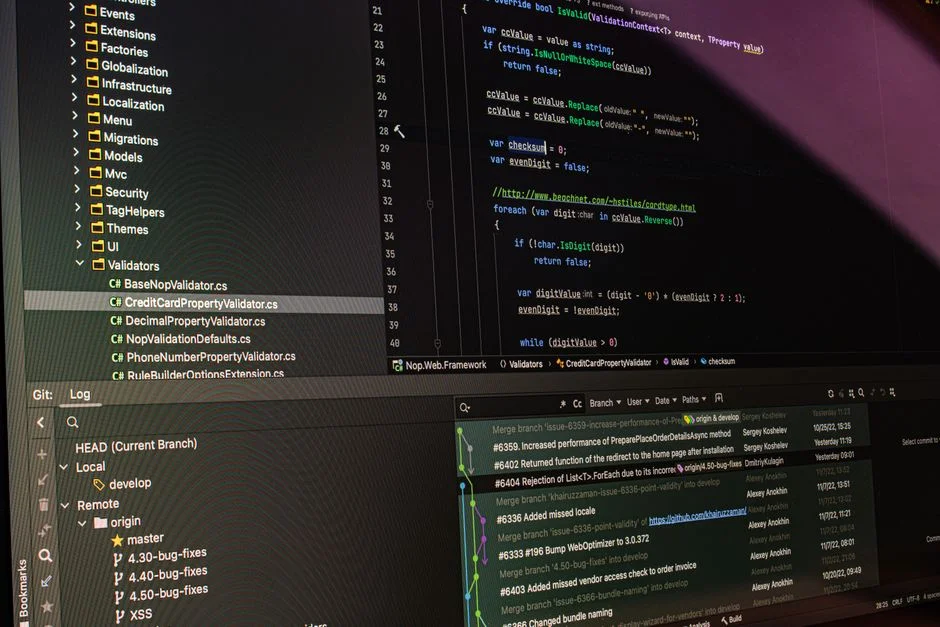

A critical feature deployment grinds to a halt, sabotaged by an unforeseen side effect in a seemingly unrelated module. A promising new engineer, brilliant in interviews, spends their first three months mired in confusion, struggling to make a meaningful contribution. Your team’s velocity is erratic, sprint planning feels like guesswork, and the shadow of technical debt looms larger with every release. These are not isolated incidents; they are symptoms of a systemic problem: the absence of robust, enforced software development standards.
For many, the term “standards” conjures images of bureaucratic red tape and stifled creativity. This is a fundamental misunderstanding. In a high-performance engineering organization, standards are not constraints; they are enablers. They represent the collective wisdom of your team, codified into a framework that promotes predictability, reduces cognitive load, and creates the necessary conditions for both system and team scalability. They are the difference between a collection of individual contributors and a cohesive, high-velocity engineering unit.
This guide moves beyond the superficial debate over formatting rules. We will dissect the strategic pillars of effective software development standards, from architectural principles and security protocols to testing strategies and CI/CD automation. We will explore how to establish these standards not as top-down mandates, but as living documents that empower developers, accelerate delivery, and directly reduce the total cost of ownership (TCO) of your software assets.
Beyond ‘Good Code’: The Business Case for Engineering Standards
The justification for implementing software development standards transcends the technical purity of the codebase. For a CTO, the true metrics of success are business outcomes: speed to market, operational stability, cost efficiency, and the ability to scale. Standards are the engineering mechanism to achieve these objectives. They are a strategic investment in mitigating risk and maximizing the long-term value of your technology assets.
Reducing Onboarding Friction and Time-to-Productivity
Consider the onboarding cost of a new engineer. This isn’t just their salary; it’s the cumulative time spent by senior engineers mentoring them, the productivity dip in the surrounding team, and the opportunity cost of delayed feature work. In an environment without standards, a new hire must first reverse-engineer the unwritten rules, personal preferences, and historical quirks of the codebase. Every file they open presents a new dialect of the same programming language. This process can take months.
Standardization creates a common, explicit language. A new developer encountering a well-defined project structure, consistent naming conventions, and a documented API design pattern can orient themselves exponentially faster. The cognitive load shifts from deciphering how the code is written to understanding what the code does. This dramatically shortens the time-to-first-commit and, more importantly, the time-to-impactful-contribution, directly improving the ROI on your hiring efforts.
Improving Development Velocity and Predictability
Unpredictable velocity is a hallmark of teams lacking standards. When every developer solves similar problems in unique ways, integration becomes a constant source of friction. The effort required to merge two features is no longer just the sum of their individual complexities; it’s compounded by the cognitive overhead of reconciling disparate approaches. This leads to blown estimates, delayed releases, and a breakdown in trust between engineering and the rest of the business.
Standards, such as mandated design patterns for state management or a universal structure for API responses, create predictable interfaces between components and between developers. This decoupling allows for true parallel development. Engineers can work on different parts of the system with a high degree of confidence that their work will integrate smoothly. The result is a more consistent, predictable burn-down chart and a development lifecycle that the business can rely on.
Lowering Total Cost of Ownership (TCO)
The majority of a software application’s cost is incurred after its initial release. Maintenance, bug fixes, and feature enhancements constitute the bulk of the TCO. A codebase without standards is brittle and expensive to maintain. Every change requires an archeological dig to understand the original author’s intent. Fear of breaking unknown dependencies leads to defensive, patchwork coding, which further exacerbates the problem.
Standards make code more discoverable, readable, and maintainable. When a bug arises, a developer familiar with the standard error handling and logging mechanisms can pinpoint the issue faster. When a new feature is requested, they can identify the correct extension points within the architecture without needing to refactor entire modules. This efficiency gain, compounded over years and across the entire engineering team, leads to a significant reduction in long-term TCO.
Enabling Team and Architectural Scalability
Scalability has two facets: technical and organizational. While architectural patterns address the former, standards are critical for the latter. You cannot scale a 50-person engineering department with the same ad-hoc processes that worked for a 5-person startup. As teams grow and split, standards become the connective tissue that ensures consistency and prevents the organization from fracturing into isolated, inefficient silos.
A standardized approach to microservices, for example—defining communication protocols (e.g., gRPC vs. REST), service discovery mechanisms, and observability requirements—allows new teams to spin up new services that plug seamlessly into the existing ecosystem. Without these standards, you create a distributed monolith, where the complexity of inter-service communication becomes an insurmountable bottleneck. Standards are the blueprint for sustainable organizational growth.
Pillar 1: Enforcing Consistency with Coding Standards
The most fundamental layer of software development standards is the coding standard itself. Often misunderstood as a trivial debate over cosmetic preferences, its true purpose is to eliminate cognitive overhead and establish a baseline of predictability across the entire codebase. When code is stylistically consistent, developers can read and understand it faster, freeing up mental cycles to focus on the underlying business logic.
Automating Style with Linters and Formatters
Manual enforcement of coding standards is a fool’s errand. It’s time-consuming, prone to error, and a frequent source of unproductive arguments during code reviews. The modern solution is to automate this process entirely using linters and formatters.
- Linters (e.g., ESLint for JavaScript/TypeScript, PHP_CodeSniffer for PHP): These tools analyze source code to programmatically find stylistic errors, anti-patterns, and potential bugs. They are configured with a ruleset that defines the team’s agreed-upon standard. For example, a rule might enforce the use of `===` over `==` in JavaScript to prevent type coercion bugs, or mandate that all class methods have explicit visibility (`public`, `private`, `protected`) in PHP.
- Formatters (e.g., Prettier, PHP-CS-Fixer): While linters find problems, formatters fix them automatically. They parse your code and reprint it according to a very opinionated set of rules, handling details like line length, indentation, and quote style.
The key is to integrate these tools directly into the development workflow. By using pre-commit hooks (e.g., with Husky and lint-staged), you can ensure that no code that violates the standard is ever committed to the repository. This shifts the conversation in pull requests away from trivial style comments and toward substantive architectural and logical feedback.
// Example .eslintrc.js configuration for a React/TypeScript project
module.exports = {
  parser: '@typescript-eslint/parser',
  extends: [
    'plugin:react/recommended',
    'plugin:@typescript-eslint/recommended',
    'plugin:prettier/recommended', // Must be last to override other configs
  ],
  parserOptions: {
    ecmaVersion: 2020,
    sourceType: 'module',
    ecmaFeatures: {
      jsx: true,
    },
  },
  rules: {
    // Example of a custom rule: Disallow default exports
    'import/no-default-export': 'error',
    // Enforce explicit return types on functions
    '@typescript-eslint/explicit-module-boundary-types': 'warn',
  },
  settings: {
    react: {
      version: 'detect',
    },
  },
};
Naming Conventions: The Power of Self-Documenting Code
Clear, consistent naming conventions are one of the most powerful tools for creating self-documenting code. When a developer can infer the purpose, type, and scope of a variable or function from its name alone, the need for verbose comments diminishes.
A comprehensive naming standard should cover:
- Variables & Functions: `camelCase` for variables and functions (e.g., `const userProfile = fetchUserProfile();`).
- Classes & Components: `PascalCase` for classes and React components (e.g., `class UserManager {…}`, `function UserProfileCard() {…}`).
- Constants: `SCREAMING_SNAKE_CASE` for true constants whose values never change (e.g., `const API_TIMEOUT_MS = 5000;`).
- Boolean Prefixes: Prefixing boolean variables with `is`, `has`, or `should` makes `if` statements read like plain English (e.g., `if (isUserAuthenticated) {…}`).
- Function Naming: Use verb-noun pairs for functions that perform actions (e.g., `getUser()`, `calculateTotal()`, `saveSettings()`). For event handlers, use a `handle` or `on` prefix (e.g., `handleClick()`, `onSubmit()`).
These are not just suggestions; they should be documented and, where possible, enforced by linting rules. Consistency here drastically reduces the time spent deciphering code.
Comments and Documentation: When and How
A common misconception is that good code needs no comments. A better principle is that code should be as self-documenting as possible, with comments reserved for explaining the why, not the what.
- BAD (explains the ‘what’): `// Increment i by 1
i++;` - GOOD (explains the ‘why’): `// We must process the items in reverse order to avoid issues with array index shifting during deletion.
for (let i = items.length – 1; i >= 0; i–) {…}`
Standards should be established for API documentation using tools like JSDoc for TypeScript/JavaScript or PHPDoc for PHP. This allows you to generate formal documentation directly from your source code and provides rich intellisense in modern IDEs. The standard should mandate that all public functions, classes, and modules have a documentation block explaining their purpose, parameters, and return values.
Pillar 2: Architectural Principles and Design Patterns
If coding standards govern the syntax and style of individual lines of code, architectural principles and design patterns govern how those lines are organized into coherent, maintainable, and scalable systems. Without this higher-level guidance, even a codebase with perfect formatting can devolve into a “Big Ball of Mud”—a tightly coupled, fragile monolith where every change has unpredictable ripple effects.
Defining Your Architectural Paradigm
The first step is to make a conscious, documented decision about the primary architectural paradigm for your application. This choice has profound implications for how teams are structured, how services are deployed, and how the system evolves over time.
- Layered Monolith: A common and often appropriate choice for many applications. The key is to enforce strict boundaries between layers (e.g., Presentation, Business Logic, Data Access). A standard must explicitly forbid the Data Access Layer from directly calling the Presentation Layer. This discipline prevents the monolith from collapsing into an unmanageable tangle.
- Microservices: A powerful pattern for large, complex systems, but one that introduces significant operational overhead. Architectural standards for a microservices environment are non-negotiable and must cover service boundaries (how to decide what constitutes a service), inter-service communication (REST vs. gRPC vs. message queues), data consistency strategies (e.g., Saga pattern), and service discovery.
- Serverless (Functions as a Service): This approach demands standards around function granularity (a function should do one thing well), state management (since functions are stateless), and managing the complexity of dozens or hundreds of deployed functions (e.g., using frameworks like the AWS CDK or Serverless Framework).
The chosen paradigm must be documented in a living architecture decision record (ADR) that explains not only what was chosen but why it was chosen over the alternatives.
Mandating Key Design Patterns
Within the overarching architecture, design patterns provide reusable solutions to common problems. Standardizing on a set of key patterns creates a shared vocabulary and ensures that developers solve similar problems in similar ways, enhancing predictability and maintainability.
Examples of areas to standardize:
- State Management (Frontend): In a complex React application, will you use component state, Context API, or a dedicated library like Redux or Zustand? A standard should guide developers on when to use each, preventing a chaotic mix of state management strategies.
- Dependency Injection (Backend): In frameworks like Laravel or NestJS, the service container and dependency injection are core concepts. Standards should mandate their use to promote loose coupling and testability. Hard-coding dependencies (`new MyService()`) should be explicitly forbidden and caught in code review.
- Repository Pattern: This pattern decouples your business logic from the data persistence mechanism. A standard that requires all database interactions to go through a repository interface makes it vastly easier to swap out the underlying database, mock data for testing, or add a caching layer.
// Example of a standardized Repository interface in TypeScript

// The interface defines the contract for any user repository.
// Business logic will only ever interact with this interface, not a concrete implementation.
export interface IUserRepository {
  findById(id: string): Promise;
  findByEmail(email: string): Promise;
  save(user: User): Promise;
  delete(id: string): Promise;
}

// Concrete implementation for Prisma/PostgreSQL
// This class is hidden from the business logic via dependency injection.
export class PrismaUserRepository implements IUserRepository {
  constructor(private readonly prisma: PrismaClient) {}

  async findById(id: string): Promise {
    return this.prisma.user.findUnique({ where: { id } });
  }

  // ... other method implementations
}
Folder and File Structure
A standardized, logical folder structure is a map to your codebase. It allows a developer to quickly locate code and understand the high-level organization of the application without having to read a single line of implementation. The standard should be prescriptive and tailored to your chosen framework and architecture.
For a Next.js application, a standard might look like this:
- `/app`: All routes, layouts, and pages, following the App Router conventions.
- `/components`: Reusable React components, further subdivided into `ui` (dumb, presentational components like buttons and inputs) and `features` (complex components with business logic).
- `/lib`: Core application logic, helper functions, and client-side SDKs.
- `/hooks`: Custom React hooks.
- `/types`: Global TypeScript type definitions.
- `/styles`: Global CSS files.
Deviating from this structure should require justification. This consistency ensures that any developer on the team can navigate any part of the project with minimal friction.
Pillar 3: A Rigorous and Tiered Testing Strategy
A comprehensive testing strategy is not merely about finding bugs; it is a critical standard that provides a safety net for refactoring, enables continuous integration, and serves as living documentation for the system’s behavior. An effective strategy is not a monolith but a tiered pyramid, with different types of tests providing different forms of feedback at varying levels of granularity and speed.
The Testing Pyramid: A Balanced Portfolio
The testing pyramid is a classic model that illustrates a healthy distribution of tests. The standard should be to invest most heavily in tests at the bottom of the pyramid, which are fast, cheap, and isolated, with progressively fewer tests as you move up.
- Unit Tests (Base of the Pyramid): These form the foundation. They test a single function, method, or component in isolation. They are fast to write and run, providing near-instant feedback to developers. Standards should mandate a minimum code coverage percentage (e.g., 80%) for business-critical logic, and this should be automatically checked in the CI pipeline. All new logic should be accompanied by unit tests.
- Integration Tests (Middle of the Pyramid): These tests verify that several units work together correctly. For example, testing that a service layer method correctly calls a repository, which in turn interacts with a test database. They are slower and more complex than unit tests but are crucial for catching issues at the boundaries between components. Your standards should define how to manage test environments and seed data for these tests.
- End-to-End (E2E) Tests (Top of the Pyramid): E2E tests simulate a real user’s journey through the application. They use browser automation tools like Cypress or Playwright to click buttons, fill out forms, and assert that the UI behaves as expected. They are the most brittle and slowest tests to run, so they should be used judiciously to cover critical user paths like user registration, login, and the checkout process.
Standardizing Testing Tools and Frameworks
To ensure consistency, the organization must standardize on a specific set of testing tools. A chaotic mix of different testing frameworks within the same project increases the learning curve for developers and makes it difficult to maintain the test suite.
A typical standardized stack might look like this:
| Technology | Unit Testing | Integration Testing | E2E Testing | Mocking |
|---|---|---|---|---|
| React/Next.js | Jest / Vitest + React Testing Library | React Testing Library (with MSW) | Cypress / Playwright | Jest Mocks / MSW |
| Laravel/PHP | PHPUnit | PHPUnit (with in-memory SQLite) | Laravel Dusk | Mockery |
| Node.js/Express | Jest / Vitest | Supertest | Cypress / Playwright | Jest Mocks |
The standard should not only name the tools but also provide a boilerplate or template repository that includes a pre-configured testing setup, demonstrating how to write each type of test.
Test-Driven Development (TDD) as a Process Standard
For critical or complex parts of the system, you may choose to standardize on Test-Driven Development (TDD) as a development process. TDD follows a short, repetitive cycle: write a failing test that defines a desired improvement or new function, then write the minimum production code necessary to make the test pass, and finally refactor the new code to acceptable standards.
While enforcing TDD across the board can be counterproductive, mandating it for modules that handle complex business rules, financial calculations, or security logic can be highly effective. It forces developers to think through requirements and edge cases before writing a single line of implementation code, often leading to simpler, more robust designs. The process itself becomes a standard for quality assurance.
// TDD Example with Jest: Red-Green-Refactor

// 1. RED: Write a failing test for a new function `calculateCartTotal`
test('calculateCartTotal should return the sum of all item prices', () => {
  const cartItems = [
    { name: 'Product A', price: 10, quantity: 2 }, // total 20
    { name: 'Product B', price: 5.5, quantity: 1 }, // total 5.5
  ];
  // The function doesn't exist yet, so this will fail.
  expect(calculateCartTotal(cartItems)).toBe(25.5);
});

// 2. GREEN: Write the simplest possible code to make the test pass.
function calculateCartTotal(items) {
  return items.reduce((total, item) => total + (item.price * item.quantity), 0);
}

// 3. REFACTOR: The code is simple enough, but we could add type safety (in TypeScript)
// or handle edge cases like an empty array.
// Add a new test for the edge case, then modify the code.

test('calculateCartTotal should return 0 for an empty cart', () => {
  expect(calculateCartTotal([])).toBe(0);
});
Pillar 4: Version Control and Branching Strategy
Version control, specifically Git, is the backbone of modern collaborative software development. However, simply using Git is not enough. A standardized branching strategy is essential for managing concurrent development, isolating experimental work, and ensuring a stable, deployable main branch at all times. Without a clear strategy, the repository’s history can become a tangled mess of confusing merge commits, making it impossible to track features or revert bugs effectively.
Standardizing on a Branching Model
The most important standard is to choose and enforce a single branching model across the organization. The two most prevalent models are GitFlow and Trunk-Based Development. The choice between them depends on your release cadence, team size, and risk tolerance.
GitFlow: For Scheduled Release Cycles
GitFlow is a robust model that uses a set of long-lived and short-lived branches to manage the development lifecycle. It is particularly well-suited for projects with scheduled releases (e.g., mobile apps, installed software).
- `main` (or `master`): This branch represents the production-ready state. Code is never committed directly here. It only receives merges from `develop` (for a new release) or `hotfix` branches.
- `develop`: This is the primary integration branch for new features. All feature branches are merged into `develop`. Nightly builds or CI builds are typically run against this branch.
- `feature/*`: For every new feature, a branch is created from `develop` (e.g., `feature/user-authentication`). When the feature is complete, it’s merged back into `develop`.
- `release/*`: When `develop` has enough features for a release, a `release` branch is created (e.g., `release/v1.2.0`). This branch is used for final testing, bug fixing, and documentation. No new features are added.
- `hotfix/*`: If a critical bug is found in production (`main`), a `hotfix` branch is created from `main`. The fix is committed here, then merged back into both `main` and `develop`.
The standard should clearly document this flow, and repository settings can be configured to protect the `main` and `develop` branches from direct pushes.
Trunk-Based Development: For Continuous Deployment
Trunk-Based Development (TBD) is a simpler model favored by teams practicing continuous integration and continuous deployment (CI/CD). All developers commit to a single branch, the `trunk` (typically `main`).
- Developers create short-lived feature branches from `main`.
- These branches must be merged back into `main` within a short period (e.g., a few hours or a day).
- Because all work integrates into `main` frequently, the risk of large, complex merge conflicts is drastically reduced.
- This model relies heavily on a comprehensive automated test suite and feature flags. Incomplete features are merged into `main` but hidden behind a feature flag so they don’t affect users in production.
TBD promotes a high-velocity, CI-focused culture. The standard here involves strict rules about the lifespan of branches and mandatory use of feature flags for any non-trivial change.
Commit Message Standards: Creating a Searchable History
A Git log should be a clear, readable history of the project’s evolution. Vague commit messages like “fixed bug” or “wip” are useless. A standard for commit messages is crucial for debugging, code archeology, and automated changelog generation.
A widely adopted standard is Conventional Commits. It proposes a simple structure for commit messages:
<type>(<scope>): <subject>

<body>

<footer>- type: Defines the kind of change (`feat` for a new feature, `fix` for a bug fix, `chore` for build changes, `docs`, `style`, `refactor`, `test`).
- scope (optional): The part of the codebase affected (e.g., `api`, `auth`, `ui`).
- subject: A short, imperative-mood description of the change.
- body (optional): A more detailed explanation of the change, including the ‘why’.
- footer (optional): For referencing issue tracker IDs (e.g., `Fixes: #123`).
Example: `feat(auth): implement password reset flow via email`
This structure is not just for readability; it’s machine-readable. Tools can use these messages to automatically determine a new version number (a `feat` bumps the minor version, a `fix` bumps the patch version) and generate release notes.
Pull Request (PR) / Merge Request (MR) Templates
The final gatekeeper before code is merged is the Pull Request. To ensure PRs are reviewed efficiently and consistently, a standardized PR template should be enforced. This template, typically a markdown file in the `.github` or `.gitlab` directory, pre-populates the PR description with sections that the author must fill out.
A good template includes:
- Summary of Changes: What does this PR do?
- Link to Issue/Ticket: What task does this PR complete?
- Testing Strategy: How was this change tested? (e.g., unit tests added, manual testing steps).
- Screenshots/GIFs: For any UI changes.
- Deployment Notes: Are there any new environment variables or migration scripts required?
This standard ensures that the reviewer has all the context they need to perform a thorough review without having to ask for basic information, speeding up the entire cycle.
Pillar 5: Security Standards and Secure SDLC
In an era of constant cyber threats, security cannot be an afterthought or a final checklist item. It must be integrated into every phase of the software development lifecycle (SDLC). A Secure SDLC standard shifts security from a reactive, penetration-testing-focused activity to a proactive, continuous process. This approach, often called DevSecOps, makes security a shared responsibility of the entire development team, not just a siloed security department.
Threat Modeling in the Design Phase
Before a single line of code is written, security standards should mandate threat modeling for any new significant feature or service. Threat modeling is a structured process of identifying potential security threats, vulnerabilities, and mitigations.
A common and effective methodology is STRIDE, which prompts teams to consider:
- Spoofing: Can an attacker impersonate a legitimate user or system?
- Tampering: Can an attacker modify data in transit or at rest?
- Repeatability (or Replay): Can an attacker intercept and resubmit a valid request?
- Information Disclosure: Can an attacker gain access to sensitive data they are not authorized to see?
- Denial of Service: Can an attacker make the system unavailable to legitimate users?
- Elevation of Privilege: Can an attacker gain higher-level permissions than they were assigned?
By systematically analyzing a new feature against these categories, teams can proactively design controls (e.g., using JWTs to prevent spoofing, implementing checksums to prevent tampering) rather than trying to bolt them on after development is complete. The output of this exercise should be documented in an ADR or the feature’s technical specification.
Secure Coding Checklists and Static Analysis (SAST)
While linters check for style, Static Application Security Testing (SAST) tools scan source code for known vulnerability patterns. These tools are the automated enforcement arm of your secure coding standards.
Standards should include a checklist of common vulnerabilities to avoid, based on resources like the OWASP Top 10. This includes:
- Input Validation: Never trust user input. All data from external sources must be validated for type, length, format, and range.
- Output Encoding: To prevent Cross-Site Scripting (XSS), all data rendered in the UI must be properly context-aware encoded.
- Parameterized Queries: The standard must be to use parameterized queries or prepared statements for all database interactions to prevent SQL Injection. Raw SQL string concatenation must be forbidden.
- Authentication and Authorization: Clear standards on password hashing (e.g., Argon2 or bcrypt), session management, and implementing role-based access control (RBAC).
SAST tools like Snyk, Veracode, or the open-source SonarQube can be integrated directly into the CI pipeline. A build can be configured to fail if a high-severity vulnerability is detected, preventing vulnerable code from ever being merged.
// BAD: Vulnerable to SQL Injection
$unsafe_id = $_GET['id'];
$pdo->query("SELECT * FROM users WHERE id = $unsafe_id");

// GOOD: Standard-compliant use of a parameterized query
$safe_id = $_GET['id'];
$stmt = $pdo->prepare('SELECT * FROM users WHERE id = :id');
$stmt->execute(['id' => $safe_id]);
$user = $stmt->fetch();
Dependency Scanning and Software Composition Analysis (SCA)
Modern applications are built on a foundation of open-source libraries. A single project can have hundreds of direct and transitive dependencies, each representing a potential attack vector. A vulnerability in a third-party package is a vulnerability in your application.
Software Composition Analysis (SCA) tools (e.g., GitHub’s Dependabot, npm audit, Snyk Open Source) automate the process of scanning these dependencies against known vulnerability databases. Your security standard must mandate:
- Regular Scans: SCA scans must be run as part of every CI build and on a regular schedule (e.g., nightly) to catch newly disclosed vulnerabilities in existing dependencies.
- Alerting and Triage: A clear process for who receives alerts for new vulnerabilities and how they are triaged based on severity (CVSS score) and exploitability in the context of your application.
- Patching SLA: A Service Level Agreement for patching vulnerabilities. For example, critical vulnerabilities must be patched within 72 hours, high within 14 days, etc. This creates accountability and ensures that security debt doesn’t accumulate. For a deeper dive into formal security frameworks, our guide on the ISO 27001 implementation checklist provides a structured approach to information security management.
Dynamic Analysis (DAST) and Penetration Testing
While SAST analyzes code at rest, Dynamic Application Security Testing (DAST) tools test the running application for vulnerabilities. DAST tools act like a malicious user, probing the application for weaknesses like XSS, SQLi, and insecure server configurations. Tools like OWASP ZAP can be integrated into the CI/CD pipeline to run automated scans against a staging environment after every successful deployment. This provides another layer of defense by catching issues that may not be visible in the source code alone.
Finally, the standard should include periodic manual penetration testing by a third-party security firm, especially for high-risk applications. This provides a level of expert analysis that automated tools cannot match and serves as an independent audit of the effectiveness of your overall Secure SDLC.
Pillar 6: CI/CD Pipeline and Automation Standards
A Continuous Integration and Continuous Deployment (CI/CD) pipeline is the engine that automates the enforcement of many of the standards discussed so far. It is the assembly line that takes a developer’s committed code and transforms it into a tested, secure, and deployable artifact. Standardizing the structure and stages of this pipeline is critical for achieving consistent, reliable, and rapid software delivery.
The Anatomy of a Standard CI/CD Pipeline
While the specific tools may vary (GitHub Actions, GitLab CI, Jenkins), the logical stages of a well-structured pipeline are universal. A standard should define these stages and the quality gates at each step. A developer should not be able to merge or deploy code that has not passed every preceding stage.
A typical pipeline for a web application would include:
- Commit Stage: Triggered on every push to a feature branch. Runs the fastest checks.
- Lint & Format: Ensure code adheres to style guides.
- Unit Tests: Run the full suite of fast, isolated tests. A minimum code coverage threshold must be met.
- Build Stage: Triggered after the commit stage succeeds.
- Compile/Transpile: Convert TypeScript to JavaScript, SASS to CSS, etc.
- Create Artifact: Build a Docker image or a compiled binary. The artifact should be versioned and stored in a registry (e.g., Docker Hub, AWS ECR).
- Test Stage: Runs more comprehensive, slower tests against the built artifact.
- Integration Tests: Spin up dependent services (like a database in a Docker container) and run tests that verify component interactions.
- Security Scans: Run SAST and SCA scans on the source code and dependencies. High-severity findings must fail the pipeline.
- Deploy to Staging Stage: Triggered on a successful merge to the main development branch (e.g., `develop`).
- Deploy: Push the versioned artifact to a staging environment that mirrors production.
- Run E2E Tests: Execute automated end-to-end tests (e.g., with Cypress) against the staging environment.
- Run DAST Scan: Perform a dynamic security scan on the live staging application.
- Deploy to Production Stage: This final stage should be a manually triggered or carefully controlled automatic process.
- Approval Gate: Require manual approval from a tech lead or product manager before deploying.
- Deployment Strategy: Use a safe deployment strategy like Blue/Green or Canary to minimize risk.
- Smoke Tests: After deployment, run a small set of critical E2E tests against production to verify the deployment was successful.
- Rollback: The pipeline must have a simple, one-click mechanism to roll back to the previously known-good version if the smoke tests fail or monitoring reveals a problem.
Infrastructure as Code (IaC)
The environment in which your application runs—servers, databases, load balancers, firewalls—should be managed with the same rigor as your application code. Infrastructure as Code (IaC) is the practice of defining and managing infrastructure using configuration files, which are then version-controlled in Git. This is a critical standard for achieving reproducible and consistent environments.
Tools like Terraform, Pulumi, or AWS CloudFormation allow you to declare your desired infrastructure state. This provides several advantages:
- Consistency: Eliminates
Pillar 7: API Design and Documentation Standards
In any distributed system, whether it’s a frontend communicating with a backend or microservices communicating with each other, the Application Programming Interface (API) is the contract. A poorly designed, inconsistent, or undocumented API is a primary source of integration friction, bugs, and wasted development time. Establishing firm standards for API design is essential for building a scalable and maintainable ecosystem.
Choosing a Specification: OpenAPI vs. GraphQL
The first standard to set is the language you will use to define your APIs. This provides a single source of truth that can be used to generate documentation, client SDKs, and even server-side boilerplate code.
- OpenAPI (formerly Swagger): This is the industry standard for describing RESTful APIs. An OpenAPI specification file (in YAML or JSON format) defines every endpoint, its parameters, request/response bodies, authentication methods, and status codes. This contract-first approach allows frontend and backend teams to work in parallel. The frontend team can mock the API based on the spec, while the backend team implements it.
- GraphQL: For applications with complex data requirements or many different types of clients (e.g., web, mobile, IoT), GraphQL offers a powerful alternative. Instead of many endpoints, GraphQL exposes a single endpoint that accepts queries. It has a strongly typed schema that defines all possible data and operations. This allows clients to request exactly the data they need and nothing more, preventing over-fetching.
Your standard should be to choose one of these and use it for all new services. A hybrid approach is possible but should be carefully considered, as it increases cognitive load for developers who need to understand both systems.
RESTful API Design Standards
If you choose REST, your standards must go beyond the OpenAPI spec and define conventions for consistency.
- Resource Naming: Use plural nouns for resource collections (e.g., `/users`, `/products`). Use the resource ID for specific instances (e.g., `/users/123`).
- HTTP Verbs: Enforce the correct use of HTTP methods for CRUD operations.
- `GET`: Retrieve resources. Should be safe and idempotent.
- `POST`: Create a new resource.
- `PUT`: Replace an existing resource entirely. Idempotent.
- `PATCH`: Partially update an existing resource.
- `DELETE`: Remove a resource.
- Status Codes: Mandate the use of specific and accurate HTTP status codes. Don’t just return `200 OK` or `500 Internal Server Error` for everything. Use `201 Created` after a successful POST, `204 No Content` after a successful DELETE, `400 Bad Request` for client-side validation errors, `404 Not Found`, etc.
- JSON Payload Structure: Standardize the shape of your JSON responses. A common practice is to wrap all responses in a consistent envelope, which is especially useful for handling errors.
// Standard success response { "status": "success", "data": { "user": { "id": "12345", "name": "Jane Doe" } } } // Standard error response { "status": "fail", "data": { "email": "Email address is already in use." } }- Versioning: Decide on a versioning strategy from the beginning. The most common approach is URI versioning (e.g., `/api/v1/users`). This allows you to introduce breaking changes in a new version (`v2`) without breaking existing clients.
API Documentation and Discovery
An API is useless if no one knows how to use it. The standard must be that all APIs are documented. Using a specification like OpenAPI makes this easy. Tools like Swagger UI or Redoc can take your `openapi.yaml` file and automatically generate beautiful, interactive API documentation.
This documentation should be:
- Discoverable: Hosted at a well-known URL (e.g., `api.yourcompany.com/docs`).
- Always Up-to-Date: The generation of documentation should be part of the CI/CD pipeline. If the code and the documentation diverge, the build should fail.
- Actionable: Interactive documentation allows developers to make live API calls directly from their browser, drastically speeding up experimentation and debugging.
For a microservices architecture, a central API gateway or service mesh can also provide a unified discovery point, presenting a single, coherent API surface to external clients even if it’s composed of dozens of backend services.
Pillar 8: Observability and Monitoring Standards
Once your application is in production, you cannot fly blind. Hope is not a strategy. Observability is the practice of instrumenting your application to emit signals that allow you to understand its internal state from the outside. It’s more than just monitoring; it’s about being able to ask arbitrary questions about your system’s behavior without having to ship new code. A robust observability standard is your insurance policy against prolonged outages and mysterious performance degradation.
An effective observability strategy is built on three pillars: Logs, Metrics, and Traces.
Standard 1: Structured Logging
Plain text log messages are difficult to parse, filter, and analyze at scale. The standard must be to use structured logging, where logs are written as JSON objects with key-value pairs.
- BAD (Unstructured): `[2022-10-27 10:30:15] ERROR: Failed to process payment for user 123. Error: Card declined.`
- GOOD (Structured): `{“timestamp”: “2022-10-27T10:30:15Z”, “level”: “error”, “message”: “Payment processing failed”, “userId”: “123”, “orderId”: “abc-987”, “error”: “Card declined”}`
Structured logs can be ingested by platforms like Datadog, Splunk, or the ELK Stack (Elasticsearch, Logstash, Kibana) and become instantly searchable and aggregatable. You can easily find all errors for a specific user, calculate the rate of a particular error, or create dashboards based on log data.
The standard should define:
- Log Levels: A clear definition of what constitutes `DEBUG`, `INFO`, `WARN`, `ERROR`, and `FATAL`.
- Mandatory Context: Every log entry must include key context, such as a request ID, user ID (if applicable), and application/service name. This allows you to correlate logs across different services.
- No Sensitive Data: A strict rule, enforced by code review and automated tools, that no PII (Personally Identifiable Information) or other sensitive data like passwords or API keys are ever written to logs.
Standard 2: Application and System Metrics
Metrics are time-series numerical data that represent the health and performance of your system. They are aggregated, cheaper to store, and better for dashboards and alerting than logs.
Your standards should define a core set of metrics to be collected from every application and server:
- System Metrics (The RED Method):
- Rate: The number of requests per second the service is handling.
- Errors: The number of failed requests per second.
- Duration: The distribution of latency for requests (e.g., p50, p90, p99).
- System Resources (The USE Method):
- Utilization: The percentage of a resource that is busy (e.g., CPU utilization).
- Saturation: The degree to which a resource has extra work it can’t service, often queued (e.g., load average, queue length).
- Errors: The number of error events for the resource (e.g., disk I/O errors).
- Business Metrics: These are specific to your application, such as sign-ups per hour, carts created, or revenue processed. Instrumenting these allows you to correlate technical performance with business impact.
Tools like Prometheus (for collection) and Grafana (for visualization) are the open-source standard. Managed services like Datadog or New Relic provide an all-in-one solution. The key is to standardize on a platform and a set of dashboards that provide a single pane of glass view into system health.
Standard 3: Distributed Tracing
In a microservices architecture, a single user request can trigger a cascade of calls across dozens of services. When that request is slow or fails, logs and metrics alone may not be enough to pinpoint the bottleneck. Distributed tracing solves this problem.
When a request enters the system, it is assigned a unique trace ID. This trace ID is propagated in the headers of every subsequent downstream call (both internal and external). Each service adds its own `span` (representing a unit of work) to the trace. The result is a complete, flame-graph visualization of the entire request lifecycle, showing how much time was spent in each service and in each operation within that service.
Trace: A-B-C-D (User clicks 'Checkout')

[----------------- Request 123 (250ms) -----------------]
  [-- Span A: Frontend API Gateway (245ms) --]
    [-- Span B: Order Service (150ms) --]
      [-- Span C: Payment Service (100ms) --]
      [-- Span D: Inventory Service (30ms) --]
    [-- Span E: Notification Service (80ms) --]
The standard should be to adopt an OpenTelemetry-compatible tracing library. OpenTelemetry is a vendor-neutral standard for instrumentation, so you can switch backend analysis tools (like Jaeger, Zipkin, or Honeycomb) without re-instrumenting your code. The standard should mandate that all services are instrumented to propagate trace headers and emit spans for their primary operations.
Pillar 9: Defining the Development Methodology
How your team organizes its work, plans sprints, and manages projects is as much a standard as any technical rule. A well-defined development methodology provides the rhythm and process for the entire engineering organization, ensuring that work flows from idea to deployment in a predictable and efficient manner. Without this, even the most technically proficient teams can be crippled by chaos, miscommunication, and constantly shifting priorities.
The choice of methodology is a foundational decision that impacts everything from daily stand-ups to long-range roadmapping. The two dominant paradigms are Agile and Waterfall, each with distinct strengths and weaknesses. A deep dive into their differences is essential, and our technical comparison of Agile vs. Waterfall development offers CTOs a framework for making this choice.
Standardizing on an Agile Framework
For most modern software development, some form of Agile is the de facto standard due to its emphasis on iterative development, customer feedback, and adaptability. However, simply saying “we are Agile” is not a standard. You must choose and formalize a specific framework.
- Scrum: This is a highly prescriptive framework based on short, time-boxed iterations called sprints (typically 1-4 weeks). It defines specific roles (Product Owner, Scrum Master, Development Team), events (Sprint Planning, Daily Scrum, Sprint Review, Sprint Retrospective), and artifacts (Product Backlog, Sprint Backlog). Standardizing on Scrum means committing to these roles and ceremonies. The standard should define the sprint length, the definition of “Done” for a story, and how story points are estimated.
- Kanban: This is a more flexible, flow-based approach. It focuses on visualizing the workflow (e.g., on a Trello or Jira board with columns like To Do, In Progress, In Review, Done) and limiting Work in Progress (WIP). The primary goal is to optimize the flow of value from left to right. Standardizing on Kanban involves defining the workflow stages, setting WIP limits for each stage (a crucial step to prevent bottlenecks), and establishing a cadence for planning and retrospectives.
- Scrumban: A hybrid approach that uses the sprint structure of Scrum for planning and retrospectives but uses the visual workflow and WIP limits of Kanban for managing the work within a sprint.
The chosen framework should be documented, and all teams should be trained on its principles and practices to ensure everyone is speaking the same process language.
The Definition of ‘Done’ (DoD)
One of the most powerful but often overlooked standards in an Agile process is a clear, unambiguous Definition of ‘Done’. This is a checklist that a user story must satisfy before it can be considered complete. A weak DoD is a primary cause of technical debt and rework.
A robust DoD is a quality gate that should be standardized across all teams:
- Code is complete and adheres to all coding standards.
- Unit and integration tests are written and passing, with required code coverage met.
- Code has been peer-reviewed and approved.
- Code has been successfully merged into the main development branch.
- CI pipeline is green.
- Feature is documented (both in-code and user-facing, if applicable).
- Product Owner has accepted the story.
- The feature is deployed to a staging environment.
When a developer says a task is “done,” everyone in the organization knows exactly what that means. It removes ambiguity and ensures a consistent level of quality for all work.
Standardizing Project Management Tooling
To support the chosen methodology, you must standardize on a project management tool. Using a mix of Jira, Trello, and Asana across different teams creates information silos and makes it impossible to get a high-level view of project progress.
The standard should be to select a single tool (e.g., Jira) and configure it to match your chosen methodology. This includes:
- Standardized Workflows: The states a ticket can move through should match your Kanban board or Scrum process.
- Ticket Templates: Create templates for different issue types (Story, Bug, Task) with required fields to ensure all necessary information is captured upfront.
- Dashboard and Reporting: Set up standardized dashboards for tracking key Agile metrics like velocity (for Scrum) or cycle time and lead time (for Kanban). These metrics are crucial for process improvement and predictable forecasting.
This standardization provides a single source of truth for all work, enabling transparency and data-driven decision-making for both engineering leadership and business stakeholders.
Implementing and Evolving Standards: A Governance Framework
Establishing a comprehensive set of software development standards is a significant achievement, but it is only half the battle. Standards that are not adopted, enforced, and periodically reviewed are nothing more than shelfware. The implementation and ongoing governance of these standards are critical to their success. A top-down, dictatorial approach is likely to be met with resistance and resentment. A successful strategy involves collaboration, automation, and a clear process for evolution.
The Standards Guild or Center of Excellence (CoE)
For larger organizations, a formal body should be responsible for owning the standards. This can be a “Standards Guild,” a “Platform Team,” or a “Center of Excellence.” This is not a committee that dictates rules from an ivory tower. It should be a cross-functional group of respected senior engineers from different teams.
The responsibilities of this group include:
- Facilitating Consensus: When a new standard is proposed (e.g., adopting a new testing library), this group facilitates the discussion, runs proofs-of-concept, and builds consensus among the engineering teams.
- Maintaining Documentation: They are the curators of the central standards documentation, ensuring it is clear, up-to-date, and easily accessible.
- Creating Tooling and Templates: They are responsible for building the tools that make it easy to follow the standards. This includes creating template repositories, configuring linters, building CI/CD pipeline templates, and writing PR templates. The goal is to make the path of least resistance the standard path.
- Monitoring Adoption: The group should track metrics on the adoption and effectiveness of standards. For example, they can build dashboards to show code coverage trends, linter violation rates, or CI/CD pipeline success rates across all projects.
The RFC (Request for Comments) Process
Standards should be living documents that evolve with technology and the team’s understanding. To manage this evolution, a formal process is needed. A Request for Comments (RFC) process, borrowed from the history of internet standards, is an excellent model.
The process works as follows:
- Proposal: Any engineer who wants to propose a new standard or change an existing one writes a formal document. This RFC outlines the problem, the proposed solution, the rationale, the trade-offs considered, and the implementation plan.
- Review: The RFC is submitted as a pull request to a central repository (e.g., `company/engineering-standards`). This triggers a review period where all engineers are invited to comment, ask questions, and suggest alternatives directly on the pull request.
- Decision: After a set review period (e.g., two weeks), the Standards Guild reviews the feedback and makes a final decision. The decision (accepted, rejected, or deferred) is documented with a clear explanation.
- Implementation: If accepted, the RFC becomes the official standard, and the guild or a designated team is responsible for implementing it (e.g., updating linters, changing CI pipelines).
This process makes the evolution of standards a transparent, collaborative, and well-documented affair. It gives every engineer a voice and ensures that changes are well-reasoned and not made on a whim.
Onboarding and Continuous Education
Standards are only effective if everyone knows what they are. The onboarding process for new engineers must include a dedicated module on the company’s software development standards. New hires should be given access to the documentation and walked through the key principles and tools.
Education shouldn’t stop at onboarding. Regular lunch-and-learn sessions, tech talks, or workshops can be used to reinforce existing standards or introduce new ones. For example, if the team adopts a new security standard, a workshop could be held to demonstrate common vulnerabilities and how the new standard helps prevent them.
By treating standards as a core part of the engineering culture and investing in their governance and evolution, you transform them from a static rulebook into a dynamic system that continuously improves the quality, velocity, and predictability of your software delivery.
Measuring the Impact of Software Development Standards
Implementing a rigorous set of software development standards requires a significant investment of time and effort. As a CTO, you must be able to justify this investment by demonstrating its tangible impact on the engineering organization and the business. This requires moving beyond anecdotal evidence and establishing a set of key performance indicators (KPIs) that can be tracked over time. These metrics provide objective proof of the value of your standards and highlight areas for further improvement.
DORA Metrics: The Gold Standard for DevOps Performance
The DevOps Research and Assessment (DORA) metrics are a set of four research-backed indicators that are widely considered the gold standard for measuring the performance of a software delivery organization. The consistent application of development standards directly and positively influences all four.
- Deployment Frequency: How often does your organization successfully release to production? Elite performers deploy on-demand, multiple times per day. Standards in CI/CD, testing, and branching strategy are prerequisites for increasing deployment frequency safely.
- Lead Time for Changes: How long does it take to get a commit from version control into production? This measures the efficiency of your entire delivery pipeline. Elite performers have a lead time of less than one hour. Automation, standardized testing, and efficient code review processes all contribute to reducing this time.
- Mean Time to Recovery (MTTR): How long does it take to restore service after a production failure? This measures the resilience of your system. Elite performers recover in less than one hour. Standards in observability (making it easy to find the root cause), IaC (allowing for quick environment rebuilds), and safe deployment strategies (enabling fast rollbacks) are critical for a low MTTR.
- Change Failure Rate: What percentage of deployments to production result in a degraded service and require remediation? This measures the quality and stability of your release process. Elite performers have a change failure rate of less than 15%. A robust, tiered testing strategy, secure coding standards, and gated CI/CD pipelines are the primary levers for reducing this rate.
By tracking these four metrics, you can create a balanced scorecard that shows how your standards are improving both velocity (Frequency, Lead Time) and stability (MTTR, Change Failure Rate).
Measuring Team and Codebase Health
In addition to the high-level DORA metrics, you can track more granular indicators of team and codebase health.
Metric What It Measures How Standards Help Tools Code Coverage The percentage of your codebase covered by automated tests. A standardized testing strategy with minimum coverage requirements. Jest, PHPUnit, Codecov CI/CD Pipeline Success Rate The percentage of pipeline runs that complete successfully. Stable test suites and reliable build scripts. A low rate indicates flaky tests or brittle builds. GitHub Actions, GitLab CI Pull Request Lifecycle Time from PR creation to merge; number of comments per PR. Clear PR templates and coding standards reduce back-and-forth on trivial issues. Git-based analytics tools New Hire Time to First Commit The time it takes for a new engineer to get their first meaningful code change merged. Standardized onboarding, clear documentation, and consistent code structure reduce learning curves. HR data + Git history Bug Rate / Escaped Defects The number of bugs reported by users in production per release or per time period. Secure coding standards, SAST/DAST, and a rigorous testing pyramid. Jira, Sentry, Bugsnag Technical Debt Ratio The ratio of time spent on fixing bugs and maintenance vs. building new features. All pillars of standards contribute to reducing rework and building more maintainable code. Time tracking in Jira Communicating Value to the Business
The final step is to translate these technical metrics into business value. Don’t just report to the CEO that “our lead time for changes is down 30%.” Instead, frame it in terms they understand: “By streamlining our development process, we can now deliver new features to customers 30% faster than we could last quarter, allowing us to respond more quickly to market demands.”
Similarly, a reduction in the change failure rate and MTTR can be framed as “We’ve improved the stability of our platform, leading to a 50% reduction in customer-impacting outages and protecting our brand reputation and revenue.” By connecting your engineering standards directly to these business outcomes, you demonstrate their strategic importance and secure ongoing support for your initiatives.
Common Pitfalls and Anti-Patterns in Standardization
While the benefits of software development standards are clear, the path to implementing them is fraught with potential pitfalls. Well-intentioned efforts can backfire, leading to slower development, frustrated engineers, and a culture of resentment rather than one of quality. Recognizing these common anti-patterns is the first step toward avoiding them and ensuring your standardization initiative is a success.
Anti-Pattern 1: The Ivory Tower Architect
This anti-pattern occurs when standards are created in a vacuum by a small group of architects or senior leaders and then handed down as a mandate to the development teams. This approach ignores the valuable, on-the-ground context that developers possess. It often results in standards that are overly theoretical, impractical for daily work, or that fail to solve the most pressing problems faced by the team.
The Fix: Embrace a collaborative, bottom-up approach. Use a Standards Guild composed of practicing engineers from various teams. Implement an RFC process that allows anyone to propose changes and gives everyone a voice in the review. The role of leadership is not to dictate standards but to facilitate the process and empower the team to create and own them.
Anti-Pattern 2: Weaponizing the Linter
Automated linters and formatters are powerful tools for consistency, but they can be misused. An overly zealous configuration with hundreds of pedantic rules can create constant noise and frustration. When developers spend more time fighting the linter than writing code, the tool has become a hindrance, not a help. Similarly, using minor linting violations as a primary topic of criticism in pull requests creates a negative and unproductive review culture.
The Fix: Start with a widely accepted, sensible default configuration (e.g., `eslint:recommended`, `prettier`). Only add or customize rules to solve a specific, recurring problem that has been discussed by the team. Automate formatting completely with tools like Prettier and run it in a pre-commit hook. This removes stylistic debates from the equation entirely, allowing code reviews to focus on what matters: logic, architecture, and correctness.
Anti-Pattern 3: Cargo Culting Standards
This happens when a team adopts a set of standards from another company (e.g., Google’s C++ Style Guide, Airbnb’s JavaScript Style Guide) without understanding the context and rationale behind them. A standard that works well for a massive organization with thousands of engineers may be overly burdensome for a 10-person startup. Adopting microservices because “Netflix does it” without understanding the immense operational complexity is a classic example of this anti-pattern.
The Fix: Treat external standards as inspiration, not scripture. For every rule or principle you consider adopting, ask: “What problem does this solve for us, right now?” Start with a minimal set of standards that address your team’s most significant pain points. It is better to have a small set of universally adopted and understood standards than a comprehensive encyclopedia of rules that are ignored.
Anti-Pattern 4: Sacrificing Pragmatism for Purity
Standards are guidelines, not immutable laws of physics. There will always be edge cases and situations where deviating from a standard is the pragmatic choice. A culture that punishes any deviation, no matter how well-justified, can lead to engineers building convoluted solutions just to stay within the lines, or worse, hiding their workarounds.
The Fix: Build flexibility into your governance process. The standard should be the default, but there should be a clear, lightweight process for documenting exceptions. This could be as simple as requiring a comment in the code or a note in a pull request explaining why the deviation was necessary. This maintains accountability while allowing for the professional judgment that senior engineers are hired for. The goal is consistency, not absolute uniformity at the expense of common sense.
Anti-Pattern 5: Forgetting the ‘Why’
When standards are presented as a list of rules without context, they feel arbitrary and bureaucratic. Developers are more likely to follow standards when they understand the underlying principles and the problems they are designed to prevent. Simply stating “All public methods must have JSDoc blocks” is less effective than explaining, “We require JSDoc blocks on public methods because it allows us to auto-generate our API documentation and ensures that IDEs provide better autocompletion for other developers, saving everyone time.”
The Fix: Make documentation a first-class citizen. Every standard should be accompanied by a rationale. The RFC process is excellent for this, as the proposal document itself serves as the historical record of the ‘why’. During onboarding and training, focus as much on the principles behind the standards as the rules themselves.
Explore the Software Development — Outsourcing Directory
You’ve seen how robust software development standards form the bedrock of a high-performing engineering team. These principles are universal, whether your team is in-house, remote, or a hybrid model. This guide is part of a larger collection of resources designed to help CTOs and business leaders navigate the complexities of building and managing software projects effectively.
To continue your journey and explore related topics on team structures, project methodologies, and vendor collaboration, we invite you to browse our central knowledge hub. It’s filled with in-depth articles and practical guides to help you make informed strategic decisions.
[Explore our complete Software Development — Outsourcing directory for more guides.](/topics/topics-software-development-outsourcing/)
Software development standards are not about restricting creativity or imposing bureaucracy. They are a strategic framework for transforming a group of individual developers into a cohesive, high-velocity engineering organization. By systematically codifying best practices across coding style, architecture, testing, security, and process, you create a system that is predictable, scalable, and cost-effective over the long term. The pillars we’ve discussed—from automated linting and design patterns to secure SDLC and observability—are the building blocks of this system.
The implementation is a journey, not a destination. It requires a commitment to collaboration, automation, and continuous improvement. By establishing a governance framework, measuring your progress with concrete metrics like the DORA framework, and avoiding common pitfalls, you can cultivate a culture of quality and discipline. This investment pays dividends in reduced technical debt, faster time-to-market, and a more resilient, maintainable software portfolio that can evolve with your business.
If you’re looking to establish or refine the engineering standards within your organization, the task can feel daunting. Our team of experienced engineers has guided numerous businesses through this process. We can help you audit your current practices, define standards that fit your unique context, and implement the automation to enforce them. Schedule a free, no-obligation 30-minute discovery call with our tech lead to discuss how we can help you build a foundation for engineering excellence.
NR Studio builds custom web apps, mobile apps, SaaS platforms, and internal tools for growing businesses. If you’re working through a technical decision, feel free to reach out — no commitment required.
References & Further Reading
- Commit Stage: Triggered on every push to a feature branch. Runs the fastest checks.