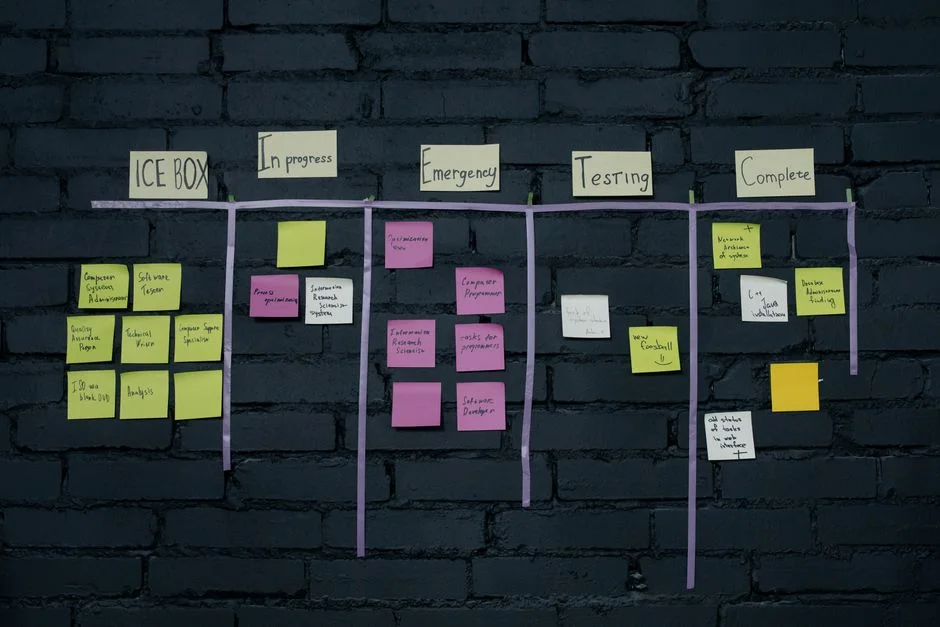

Sprint-based development is not a mechanism for making engineers code faster. It does not magically resolve architectural dependencies, eliminate technical debt, or guarantee a feature will be delivered on a specific calendar date. Its primary function, from an engineering standpoint, is to be a structured framework for managing uncertainty and complexity. Sprints impose a time-box—a fixed duration—forcing difficult but necessary conversations about scope, technical feasibility, and the very definition of “done.”
Many teams adopt the ceremonies—the planning meetings, the daily stand-ups, the retrospectives—but fail to grasp the underlying engineering principles that make sprints effective. They treat story points as hours and velocity as a measure of productivity, leading to burnout and brittle systems. The reality is that sprints are a tool for iterative refinement and risk mitigation. They provide a predictable cadence for integrating and shipping code, but only if the team has the discipline to define and adhere to rigorous technical standards within each cycle.
This article examines sprint software development not from a project manager’s Gantt chart, but from the perspective of the engineers building the system. We will analyze the core components of a sprint as engineering processes: the sprint goal as an API contract, the Definition of Done as a CI/CD pipeline policy, and the daily stand-up as a distributed systems synchronization event. The goal is to move beyond the agile buzzwords and into the concrete technical practices required to make sprints work in a production environment.
The Sprint Goal: An API Contract for Development
In system design, an API contract defines a strict boundary between services. It specifies inputs, outputs, and behaviors, allowing independent development and evolution on either side of the boundary. The Sprint Goal should be viewed through the same lens: it is a high-level API contract between the development team and the business stakeholders for a given time-box. It specifies the value to be delivered, not the exhaustive list of tasks to be completed.
A poorly formed Sprint Goal, such as “Complete tickets JIRA-123, JIRA-145, and JIRA-156,” is analogous to a leaky abstraction. It exposes implementation details (the tickets) rather than the intended outcome. This encourages a transactional, checklist-driven approach where the focus is on closing tickets, not on delivering a cohesive, valuable increment. The team may complete all three tickets, but if the resulting features don’t integrate properly or fail to solve the user’s problem, the sprint has failed despite appearances.
A well-formed Sprint Goal, by contrast, defines a clear, verifiable outcome. For example:
- Weak Goal: “Work on user profile page.”
- Strong Goal: “Allow authenticated users to upload, crop, and save a new profile avatar, which will be visible across the application in real-time.”
This strong goal functions as a technical contract. It implies specific deliverables: an API endpoint for file uploads, a backend process for image manipulation, database schema changes to store the avatar URL, and a frontend component that reflects the update. It sets a clear success criterion for the sprint’s output. The team can then derive the necessary tasks (the implementation details) to fulfill this contract. This distinction is critical for maintaining focus and allows the team to make intelligent trade-offs during the sprint. If an unforeseen issue arises, the team can ask: “Does this alternative approach still fulfill the contract of the Sprint Goal?” This prevents scope creep and ensures the team remains aligned on the primary objective.
Sprint Planning: Decomposing Complexity, Not Just Estimating Time
Sprint Planning is often misunderstood as an exercise in estimation and time management. For an engineering team, its primary purpose is technical decomposition and dependency analysis. A user story like “As a user, I want to receive a notification when my order ships” seems simple, but it represents a complex cross-cutting concern. A thorough decomposition during planning is what separates a successful sprint from one that ends in a half-finished feature and integration hell.
The process involves breaking the story down into vertical slices of functionality that can be completed independently. For the order shipment notification, this decomposition might look like this:
- Database: Add a `notification_preferences` table linked to the `users` table. Add a `last_notified_at` timestamp to the `orders` table to prevent duplicate notifications.
- Backend (API): Create a new endpoint, `PUT /api/v1/users/me/notification-preferences`, that allows users to opt in or out of shipment notifications. This requires validation, authentication, and database interaction.
- Backend (Worker): When an order’s status changes to ‘shipped’, an event (e.g., `OrderShipped`) is published to a message queue like RabbitMQ or AWS SQS. A separate worker process consumes this event.
- Notification Service: The worker process checks the user’s notification preferences. If enabled, it formats and sends an email via a third-party service (e.g., SendGrid) and/or a push notification via a service like Firebase Cloud Messaging.
- Frontend: A new settings component must be built in the user’s account area, allowing them to toggle their notification preferences. This component will call the new `PUT` endpoint.
This level of detail during planning achieves several critical goals. First, it exposes hidden complexity and dependencies. The team immediately sees that this single story touches the database, the API, a message queue, a background worker, and the frontend. Second, it allows for more accurate—though still relative—sizing. The team isn’t estimating the story as a single blob of work; they are collectively assessing the effort required for each distinct technical task. Finally, it enables parallel work where possible and highlights the critical path. The database changes must be done first, but frontend and backend work can often proceed in parallel using a tool like OpenAPI to define the API contract between them.
The Daily Stand-up: A Distributed Systems Sync Operation
The daily stand-up is frequently miscast as a status report for management. Its true engineering value is as a high-frequency synchronization mechanism for a distributed system—the development team. In a distributed computing environment, nodes must communicate to maintain a consistent state and coordinate actions. In a development team, engineers must communicate to resolve dependencies, identify integration conflicts, and adapt to unforeseen technical challenges.
A productive, engineering-focused stand-up centers on three implicit questions from the perspective of the work itself, not just the person:
- What progress has been made toward the Sprint Goal? This is not about listing completed tasks. It’s about communicating integration points. For example: “The `OrderShipped` event is now being published to the `dev` queue. The payload schema is documented in the pull request. The notification worker team can start consuming it.”
- What are the immediate next steps and are there dependencies? This is about forward-looking coordination. “I’m starting on the image-cropping component today. The API endpoint for the upload isn’t deployed to staging yet, so I’ll be using a mock service until it’s ready. Is there an ETA on that deployment?”
- What are the blockers or discovered risks? This is the most critical part. A blocker is anything preventing progress. “I’m blocked. The third-party shipping API is returning 500 errors. I’ve opened a ticket with them, but we need a fallback plan if they can’t resolve it today. Should we build a stubbed response for now to unblock the frontend?” This is not a complaint; it is a request for collaborative problem-solving.
This approach transforms the meeting from a series of individual status updates into a tactical session for managing the flow of work. It helps identify bottlenecks early. If one engineer is consistently blocked or waiting on others, it may indicate a flaw in the sprint plan’s dependency mapping or a resource constraint. The goal is to keep the entire system (the team) moving forward efficiently toward the shared objective, much like a load balancer distributes traffic to prevent any single server from becoming overwhelmed.
The Definition of Done (DoD): A CI/CD Pipeline as Policy
The Definition of Done (DoD) is the single most important artifact for ensuring quality and predictability in a sprint-based workflow. A weak DoD—like “Code complete”—is meaningless and leads to technical debt and integration failures. A strong DoD is a rigorous, enforceable contract that a piece of work must satisfy before it can be considered complete. From a backend engineering perspective, the best way to enforce the DoD is to codify it directly into the CI/CD pipeline.
The DoD should not be a document that gathers dust. It should be a series of automated checks that provide immediate feedback. A pull request is not ready for review until the pipeline is green. A comprehensive DoD for a backend service might include:
- Static Analysis: Code must pass linting (e.g., ESLint, PHP_CodeSniffer) and static analysis (e.g., Psalm, PHPStan, SonarQube) checks with zero new high-severity issues.
- Unit Test Coverage: All new code must be covered by unit tests, and the overall project coverage must not decrease. A typical target is >90% line coverage.
- Integration Tests: The feature must be covered by integration tests that verify its interaction with the database, cache, and other internal services. These tests must pass.
- Database Migrations: Any schema changes must be written as reversible migration scripts. These scripts must be peer-reviewed.
- API Specification: If the change affects an API, the OpenAPI (Swagger) specification file must be updated to reflect the new endpoints, request bodies, or responses.
- Security Scans: The code must pass automated security scans for common vulnerabilities (e.g., OWASP Top 10) using tools like Snyk or Dependabot.
- Performance Checks: For critical endpoints, automated performance tests might run to ensure the change does not introduce a latency regression.
- Successful Deployment to Staging: The feature branch must be successfully built, containerized, and deployed to a staging environment that mirrors production.
When the DoD is automated, it ceases to be a matter of opinion or corner-cutting. A developer cannot merge their code because they “think it’s done.” It is only done when the automated, impartial pipeline declares it so. This transforms the DoD from a subjective checklist into an objective, repeatable process that gates the integration of new code, protecting the stability of the main branch and ensuring every sprint increment is genuinely shippable.
Managing Technical Debt Within a Sprint
Technical debt is the implied cost of rework caused by choosing an easy (limited) solution now instead of using a better approach that would take longer. Sprints, with their fixed time-boxes, can create immense pressure to incur debt to meet a deadline. A mature engineering team does not pretend that technical debt doesn’t exist; they manage it explicitly and strategically within the sprint framework.
The Technical Debt Quadrant
Not all technical debt is created equal. It’s useful to categorize it:
- Deliberate and Prudent: “We need to ship this feature for a major trade show. We will use polling instead of WebSockets for real-time updates for now, and we’ll create a ticket to refactor it in the next quarter.” This is a conscious business and technical trade-off.
- Deliberate and Reckless: “Let’s just hardcode these values. We’re behind schedule.” This is cutting corners with no plan to fix it, often due to pressure or carelessness.
- Accidental and Prudent: “We just learned a better way to handle this type of data transformation. The old way isn’t wrong, but the new way is much more efficient.” This is debt created through the natural evolution of technology and team knowledge.
- Accidental and Reckless: A junior developer implements a feature with a naive algorithm (e.g., O(n²)) that works for 10 records but will crash the system with 10,000. This is debt born of inexperience.
The goal within a sprint is to avoid reckless debt and to make all deliberate debt visible and planned. When a team decides to take on deliberate, prudent debt, the work is not complete when the feature is shipped. The work is complete when a new ticket is created, detailed, and added to the backlog to address the compromise. The ticket should include the context of the decision, the risks of not addressing the debt (e.g., “Polling at high frequency will overload the server once we exceed 1,000 concurrent users”), and a proposed solution.
Allocating Capacity for Debt Repayment
The most effective way to prevent debt from spiraling out of control is to allocate a fixed percentage of each sprint’s capacity to paying it down. This is often called the “refactoring budget” or “engineering excellence” allocation. A common practice is to reserve 15-20% of the team’s story points for work that doesn’t deliver new features but improves the health of the codebase. This could include refactoring a complex module, upgrading a library, improving test coverage, or automating a manual deployment step. This work is planned, estimated, and demonstrated in the Sprint Review just like any other feature. By making debt repayment a regular, non-negotiable part of every sprint, teams ensure the long-term viability and maintainability of the product.
The Sprint Review: A Technical Demo, Not a Slide Deck
The Sprint Review is the formal event where the development team demonstrates the work completed during the sprint to stakeholders. In many organizations, this devolves into a PowerPoint presentation by a project manager. This is a missed opportunity. For an engineering team, the Sprint Review is the acceptance test for the sprint’s output. The most effective reviews are live demonstrations of working software, running in a production-like environment (e.g., staging).
A live demo is unforgiving and brutally honest. It proves that the work is not just “code complete” on a developer’s machine, but that it is integrated, deployed, and functional. It is the ultimate validation of the Definition of Done. If the demo fails—a crash, a bug, an unexpected behavior—it’s not a moment of failure for an individual, but a valuable data point for the entire team. It exposes gaps in testing, misunderstandings in requirements, or environmental differences between development and staging.
Structure of an Engineering-Led Sprint Review
- Restate the Sprint Goal: Begin by reminding everyone of the “API contract” for the sprint. “The goal for this sprint was to allow users to upload, crop, and save a new profile avatar.”
- Demonstrate the Happy Path: The engineer who built the core feature should drive the demo. They walk through the primary user flow, showing the feature working as intended. This is not a polished marketing video; it’s a raw, authentic walkthrough.
- Show the Edge Cases: This is where the technical rigor becomes apparent. “Now, let’s see what happens if I try to upload a 50MB TIFF file instead of a JPEG.” The application should gracefully handle this, perhaps with a clear error message. “What if I try to upload a file that isn’t an image?” The system’s validation and error handling are demonstrated live.
- Discuss Technical Implementation (Briefly): The engineer can briefly touch on the architecture. “To achieve this, we added a new endpoint that streams the upload to an S3 bucket. A Lambda function is triggered on upload to generate thumbnails. This decouples the image processing from the API request, so the user gets a fast response.” This provides stakeholders with a glimpse of the system’s quality and scalability without getting lost in the weeds. A great example of this in practice is how a system for custom software for retail operations might demonstrate a new inventory update feature, showing how it propagates from the point-of-sale to the warehouse system in near real-time.
- Gather Feedback: The primary purpose of the review is to elicit feedback from stakeholders. Is this what they envisioned? Does it solve the problem? This feedback is the primary input for the next Sprint Planning session.
By treating the Sprint Review as a live, technical demonstration, the team builds trust and transparency. Stakeholders see tangible progress, and the development team receives high-quality, immediate feedback on their work, creating a tight feedback loop that is essential for agile development.
Sprint Retrospective: Root Cause Analysis for Process Bugs
If the Sprint Review is the acceptance test for the product, the Sprint Retrospective is a debugging session for the development process. Its purpose is to inspect the previous sprint and identify improvements for the next one. A common failure mode for retrospectives is to become a complaint session with no actionable outcomes. An engineering-led retrospective, however, treats process problems like software bugs. The goal is to perform a root cause analysis and create a concrete plan to fix them.
Instead of vague statements like “We need to communicate better,” a technical retrospective drills down into specific events. Let’s say a critical bug was discovered in production just after the sprint deployment. The analysis should follow a structured, blameless approach:
The 5 Whys for Process Failures
- The Problem: A null pointer exception in the new reporting module caused downtime for 15 minutes.
- Why? #1: The code attempted to dereference a user object that was null.
- Why? #2: The function that returned the user object failed to handle the case where a user ID from an external system didn’t exist in our database.
- Why? #3: The integration test for this module only used valid user IDs that were known to exist. It didn’t test for this specific edge case.
- Why? #4: Our Definition of Done for integration tests doesn’t explicitly require testing for invalid or non-existent foreign keys.
- Why? #5: We assumed that data coming from the external system would always be clean and valid, which was a flawed assumption about the system boundary.
This analysis shifts the focus from “Who wrote the buggy code?” (blame) to “What part of our process allowed this bug to reach production?” (systemic weakness). The outcome is not disciplinary action; it is a concrete process improvement.
The action item from this retrospective would be: “Update the team’s Definition of Done to require that all integration tests for services interacting with external systems include at least one test case for handling invalid or missing foreign data. Assign this to [Engineer X] to update the wiki and add a checklist item to our pull request template.” This creates a specific, measurable, achievable, relevant, and time-bound (SMART) improvement that directly prevents a whole class of similar bugs from occurring in the future. This is how high-performing teams use the retrospective to incrementally improve their development engine, sprint after sprint.
Velocity and Burndown Charts: System Metrics, Not Performance Reviews
Velocity and burndown charts are among the most misused and misunderstood metrics in sprint-based development. When used by management as a tool for performance evaluation or for making hard-deadline predictions, they become toxic. From an engineering perspective, these charts are not measures of individual productivity; they are system-level metrics that describe the behavior and predictability of the development process.
Velocity: A Measure of Throughput, Not Speed
Velocity is the average number of story points the team completes in a sprint. Story points themselves are a relative, unitless measure of effort, complexity, and uncertainty—not a proxy for hours. A story worth 5 points is not expected to take 5 hours; it is simply expected to be more complex or uncertain than a story worth 3 points.
The primary engineering value of velocity is capacity planning. If a team has a stable velocity of around 40 points per sprint, it means they can confidently pull about 40 points of work into the next sprint. It’s a tool for forecasting the *capacity* of the next sprint, not for predicting the completion date of a feature six months away.
A fluctuating velocity is a signal that the system is unstable. The retrospective should investigate why. Was there a holiday? Did a key team member leave? Was the team pulled into a fire-drill to fix a production issue? Or, more technically, did we underestimate the complexity of integrating with a new API? A sudden drop in velocity is a diagnostic tool, an indicator that something has perturbed the system and warrants investigation. A sudden, sustained increase might mean the team is getting better at estimating, or it might mean they are inflating estimates or cutting quality—another signal to investigate.
Burndown Chart: Visualizing Flow and Impediments
The sprint burndown chart tracks the remaining work (in story points) against time. The ideal chart shows a steady downward trend, reaching zero by the end of the sprint. In reality, the chart provides a real-time visualization of the sprint’s health.
| Burndown Chart Pattern | Engineering Interpretation |
|---|---|
| The Cliff (Flat for most of the sprint, then a sharp drop at the end) |
Indicates work is not being marked as ‘Done’ until the very end. This often means stories are too large (not decomposed enough) or that there’s a bottleneck in the final stages, like QA testing or code review. |
| The Plateau (The line goes flat for several days) |
The team is blocked. This could be a technical impediment (a critical service is down), a dependency on another team, or a lack of clarity on requirements. It’s a visual alarm that the daily stand-up should have already flagged. |
| The Re-burn (The line goes up instead of down) |
Scope has been added to the sprint after it started. This is a cardinal sin of sprint management and indicates a failure in the Sprint Planning process or external pressure corrupting the sprint. |
| The Ideal Slope (A reasonably steady downward trend) |
Indicates a good flow of work. Small, well-defined tasks are being completed and integrated throughout the sprint. This is the sign of a healthy, predictable process. |
For engineers, these charts are not for management; they are for the team. They provide a shared, objective view of the process, helping the team to self-correct and improve its own predictability. When used correctly, they are diagnostic tools for process improvement, not weapons for performance management.
Handling Bugs and Production Issues in Sprints
Production issues do not respect the neat boundaries of a sprint. A critical bug that impacts customers must be addressed immediately, regardless of the current sprint plan. How a team handles these interruptions is a key indicator of its process maturity. There are two primary schools of thought, each with different implications for workflow and predictability.
Approach 1: The Interrupt Buffer (Kanban-style Lane)
This is a highly effective approach for teams that experience a frequent, but manageable, stream of urgent tasks. The team deliberately allocates a portion of its capacity each sprint to handle unplanned work. This can be visualized as a separate “fast lane” or “expedite lane” on their task board.
- Capacity Allocation: The team analyzes historical data. If, on average, they spend 15% of their time on production support and urgent bugs, they will only commit to 85% of their typical velocity for planned sprint work. This 15% buffer is reserved for the unknown.
- Workflow: When a critical bug comes in, it doesn’t derail the sprint; it is the first item pulled into the pre-allocated buffer. A designated on-call engineer or a rotating “firefighter” might be responsible for picking up these tasks first.
- Advantages: This method protects the planned sprint work. The core team can remain focused on the Sprint Goal, minimizing context switching. It makes the cost of unplanned work explicit and quantifiable. If the buffer is consistently overflowing, it’s a clear signal of underlying quality issues that need to be addressed in retrospectives.
- Disadvantages: It can be inefficient if the volume of urgent tasks is low, as the buffered capacity may go unused. It also requires the discipline not to fill the buffer with non-urgent tasks just because it’s available.
Approach 2: The Sprint-Stopper (Abort and Re-plan)
This approach is reserved for truly catastrophic issues—a major security breach, system-wide data corruption, or a bug that makes the product unusable for a majority of customers. In these rare cases, the current sprint is considered a wash.
- Procedure: The Product Owner, in consultation with the lead engineers, makes the formal decision to cancel the sprint. All hands are moved to resolving the critical issue.
- Aftermath: Once the fire is out, the team conducts an immediate, emergency retrospective focused solely on the incident. Then, a new Sprint Planning session is held to create a new, realistic plan for the remainder of the time-box, taking into account the work already done and the new reality of the system.
- Advantages: It acknowledges the severity of the situation and provides the team with the singular focus required to resolve a crisis. It avoids the pretense of trying to make progress on sprint goals when the entire system is on fire.
- Disadvantages: This is a drastic, high-cost measure. It completely destroys the predictability of the sprint and can be demoralizing if it happens frequently. Canceling a sprint should be an exceedingly rare event. If it happens more than once or twice a year, it points to severe, systemic problems in quality assurance, deployment processes, or architectural stability. This can be especially critical in complex systems like those for architecting livestock tracking software, where a production bug could have significant real-world consequences.
Most mature teams use a hybrid approach: an interrupt buffer for the common “P1” bugs, and the cancellation option as a nuclear button they hope to never press.
Scaling Sprints: Challenges in Multi-Team Environments
The sprint framework is relatively straightforward for a single, co-located team working on a monolithic application. The complexity multiplies exponentially when multiple teams are working on different components of a larger system, such as a microservices architecture. Scaling sprints effectively requires solving for dependencies, communication, and integration—classic distributed systems problems.
Dependency Management: The Critical Path
When Team A’s feature depends on an API being built by Team B, their sprints must be coordinated. If Team B fails to deliver the API on time, Team A’s sprint is effectively blocked. Several patterns have emerged to manage this cross-team dependency:
- The Internal Open Source Model: The codebase is open to all teams. If Team A needs a change in Team B’s service, they are empowered to make the change themselves via a pull request. Team B’s role shifts from being a feature factory to being maintainers and reviewers of their service. This requires a high degree of trust, shared coding standards, and robust CI/CD to prevent teams from breaking each other’s services.
- API Contracts and Mock Servers: Early in the planning phase, the teams agree on an API contract using a tool like OpenAPI. Team B uses this contract to guide their development. Team A uses the same contract to generate a mock server. This allows Team A to build and test their frontend or service against the mock, completely decoupling their development cycle from Team B’s. The only integration point is when the real API becomes available, and it should, in theory, match the contract perfectly.
- Feature Toggles (Flags): Code from all teams is integrated and deployed to production continuously, but new, incomplete features are hidden behind feature toggles. A feature that spans three services can be deployed with the toggle ‘off’. Once all three teams have completed their work, the toggle can be switched on, instantly enabling the feature. This decouples deployment from release and dramatically reduces integration risk.
The Scrum of Scrums: A Meta-Standup
To manage coordination at scale, a common pattern is the “Scrum of Scrums.” This is a higher-level meeting where a representative from each team (often a tech lead) meets, typically two or three times a week. The format mirrors the daily stand-up, but the focus is on inter-team issues:
- Progress: What has our team accomplished that might impact other teams?
- Next Steps: What are we starting that other teams might need to be aware of?
- Impediments: What dependencies are blocking us? Is Team C’s staging environment down? Is Team D’s API not conforming to the agreed-upon contract?
The Scrum of Scrums is not a status meeting for upper management. It is a tactical, problem-solving session for the technical representatives of the teams. Its purpose is to identify and resolve integration points and dependencies before they derail the sprints of multiple teams. Successfully scaling sprint-based development is less about project management frameworks and more about adopting technical practices—like robust API contracts, feature toggles, and shared code ownership—that enable teams to work autonomously while contributing to a cohesive whole.
Explore Our Resources
At NR Studio, we focus on the engineering principles that underpin successful software development, whether it’s for a startup or an enterprise. The practices discussed here are part of a larger strategy for building maintainable, scalable, and reliable systems.
[Explore our complete Software Development — Outsourcing directory for more guides.](/topics/topics-software-development-outsourcing/)
Ultimately, adopting sprint-based development is a commitment to a disciplined, iterative engineering process. It is not a silver bullet. Sprints provide a rhythm and a set of ceremonies that force technical and product conversations to happen at a regular cadence. They create feedback loops at every level: the daily stand-up for tactical course correction, the sprint review for product validation, and the retrospective for process improvement.
For engineers, the value is not in the ceremonies themselves, but in the technical practices they encourage. A well-executed sprint process demands clear API contracts, automated Definitions of Done, explicit management of technical debt, and rigorous dependency mapping. When these engineering fundamentals are in place, sprints become a powerful engine for delivering high-quality, valuable software in a predictable and sustainable manner. Without them, sprints are merely a frustrating exercise in chasing arbitrary deadlines.
NR Studio builds custom web apps, mobile apps, SaaS platforms, and internal tools for growing businesses. If you’re working through a technical decision, feel free to reach out — no commitment required.
References & Further Reading