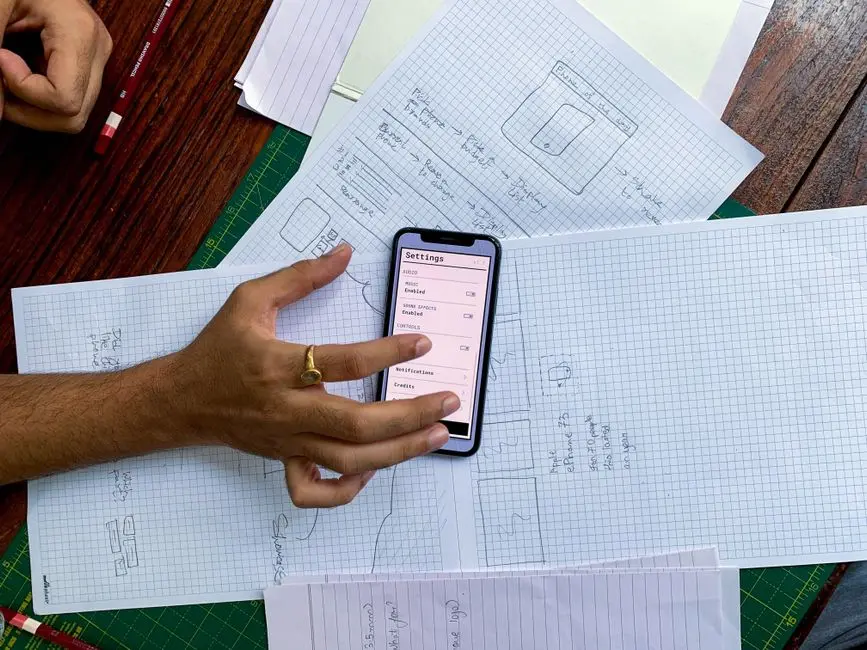
Transitioning from a static mobile app wireframe to a functional, production-ready codebase is the most critical phase in the product lifecycle. For many founders, the wireframe represents a vision of user experience, but the jump to development requires translating that vision into a rigorous technical architecture. This process demands more than just writing code; it involves defining data models, choosing the right tech stack, and establishing a scalable communication layer between your frontend and backend systems.
This guide outlines the technical transition from design artifacts to deployed software. We will examine the necessary documentation, architectural decisions, and development workflows required to ensure your application is maintainable, performant, and secure. Whether you are working with an internal team or an external partner like NR Studio, understanding this transition is vital to avoiding common pitfalls that lead to technical debt and delayed time-to-market.
From Wireframe to Technical Specification
A wireframe is a structural blueprint, not a technical specification. Before writing a single line of code, you must convert your wireframes into a functional requirements document (FRD). This bridge ensures that developers understand the business logic hidden behind every button, modal, and input field.
- Define State Transitions: Identify how the application behaves when a user moves between screens. Does the app need to persist state? What happens if the network drops?
- Data Mapping: Every UI element must map to a database schema. If your wireframe shows a user profile, your technical spec must define the
userstable, including fields likeid,email,profile_picture_url, andcreated_at. - Component Inventory: Break down the wireframe into atomic components. This allows your frontend team to build a library of reusable UI elements (e.g., buttons, form inputs) rather than hardcoding unique instances for every screen.
Choosing the Right Technology Stack
The choice of tech stack is often the most significant long-term decision you will make. For modern mobile applications, the trade-off typically lies between cross-platform frameworks and native development. At NR Studio, we prioritize maintainability and development velocity.
Trade-off: Using React Native or Flutter allows for a single codebase across iOS and Android, significantly reducing maintenance costs. However, if your app requires heavy hardware access or complex GPU-intensive graphics, native Swift or Kotlin development may be necessary to meet performance benchmarks.
For the backend, we recommend a robust framework like Laravel for its expressive syntax and built-in security features. When combined with a React or Next.js frontend, you create a cohesive ecosystem that is easy to scale and secure.
Designing the Data Layer and API Architecture
Your mobile app is essentially a thin client that interacts with a central source of truth. A well-designed REST API is the backbone of this interaction. You must avoid the mistake of coupling the frontend directly to the database.
Consider the following structure for your API documentation using OpenAPI/Swagger to ensure consistency:
// Example schema definition for a user object

{

  "type": "object",

  "properties": {

    "id": { "type": "integer" },

    "username": { "type": "string" },

    "email": { "type": "string" }

  }

}
By defining your API contract before development begins, your frontend and backend teams can work in parallel, mocking the API responses until the actual endpoints are implemented.
Security and Performance Considerations
Security cannot be an afterthought. From the moment you move from wireframe to development, you must implement authentication strategies such as OAuth2 or JWT (JSON Web Tokens). Furthermore, performance is measured by more than just load times; it is about perceived speed and data efficiency.
- Caching: Implement intelligent caching strategies on the client side to minimize redundant API calls.
- Database Indexing: Ensure your backend database queries are indexed correctly to prevent latency as your user base grows.
- Input Validation: Never trust the client. Perform rigorous server-side validation on every incoming request to mitigate SQL injection and cross-site scripting (XSS) risks.
The Development Lifecycle: Iteration and Testing
Development should follow an iterative approach. Avoid the ‘big bang’ release. Instead, break your wireframes into functional modules and deploy them as they are completed. This allows for continuous user feedback and early detection of bugs.
Your testing suite should include:
- Unit Testing: Testing individual functions and business logic.
- Integration Testing: Verifying that the API communicates correctly with the database.
- End-to-End (E2E) Testing: Simulating real user flows to ensure the wireframe-to-app transition works as intended in a production-like environment.
Managing Project Scope and Budget
Scope creep is the primary reason for project failure. When you move from wireframe to development, stick to your MVP (Minimum Viable Product). Every ‘nice-to-have’ feature adds complexity, increases the testing surface, and delays your time-to-market. Budget for the ‘unknowns’—technical challenges that only reveal themselves during implementation, such as third-party API limitations or complex edge cases in user authentication.
Factors That Affect Development Cost
- Feature complexity and custom logic
- Number of third-party integrations
- Design fidelity and animation requirements
- Backend infrastructure needs
- Testing and QA rigor
Total development costs vary significantly depending on the scope of features and the seniority of the engineering team required to handle complex technical requirements.
Frequently Asked Questions
How long does it typically take to go from wireframe to launch?
The timeline varies based on feature complexity, the size of your team, and the depth of integrations. A standard MVP typically takes several months, covering architecture design, development, rigorous testing, and deployment preparation.
Can I start development before the wireframe is 100% complete?
It is generally not recommended. While you can begin backend architecture work early, starting frontend development with incomplete wireframes leads to significant rework, wasted resources, and inconsistent user experiences.
How do I decide between native and cross-platform development?
Choose cross-platform frameworks like React Native if you need to reach both iOS and Android markets quickly with a single codebase. Choose native development if your application requires heavy hardware integration, high-performance graphics, or complex platform-specific features.
Turning a wireframe into a successful mobile application is a rigorous engineering process that demands precision, clear communication, and a solid architectural foundation. By prioritizing a well-defined API, choosing the right stack, and adhering to an iterative development methodology, you minimize risk and maximize the potential of your product.
If you are ready to move your project from the design phase to production, NR Studio provides the technical expertise to guide you through this transition. We specialize in building scalable, high-performance mobile and web solutions. Reach out to us to discuss your vision and ensure your development path is built for long-term growth.
NR Studio builds custom web apps, mobile apps, SaaS platforms, and internal tools for growing businesses. If you’re working through a technical decision, feel free to reach out — no commitment required.