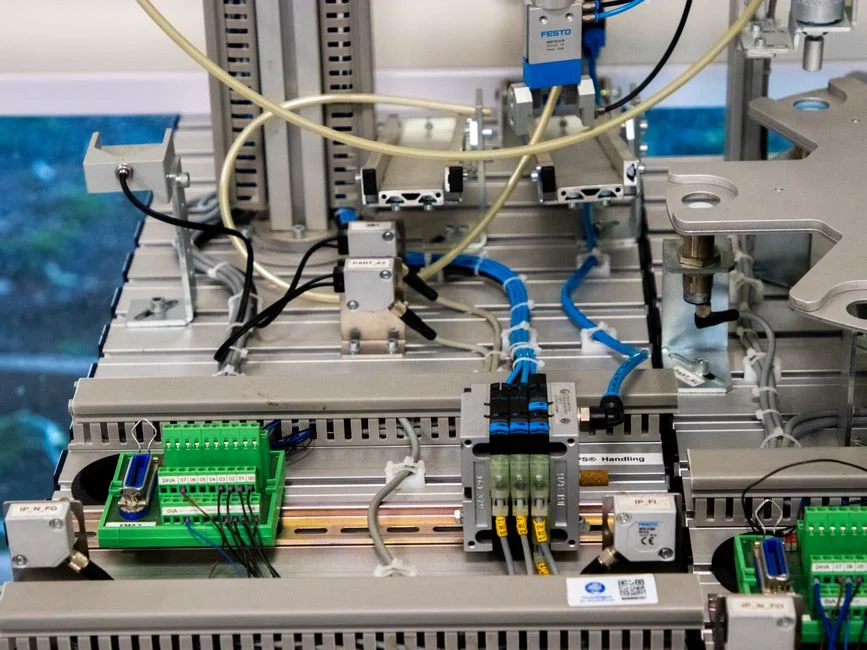

It is a common misconception that 5G private networks function as a direct, plug-and-play replacement for existing local area network infrastructures in manufacturing plants. In reality, a 5G private network cannot magically resolve poor software architecture, nor can it compensate for inadequate edge computing resources or lack of robust data synchronization protocols. Deploying 5G in a factory floor is not merely about signal propagation or radio access network (RAN) configuration; it is an exercise in complex systems integration that requires a deep understanding of latency budgets, deterministic packet delivery, and the orchestration of containerized workloads.
For manufacturing environments, the primary value of private 5G lies in its ability to support high-density device connectivity and ultra-reliable low-latency communication (URLLC). However, these benefits are only realized if the supporting software stack—from the kernel-level network drivers to the cloud-native orchestration layer—is meticulously engineered to handle the specific throughput demands of autonomous mobile robots (AMRs) and real-time sensor arrays.
The Intersection of RAN and Edge Orchestration
At the architectural core of any 5G private network lies the interaction between the Radio Access Network and the multi-access edge computing (MEC) platform. Unlike standard public cellular networks that prioritize broad coverage and throughput for mobile handsets, private manufacturing networks must be tuned for deterministic latency. This requires a shift from traditional monolithic network management toward a disaggregated, software-defined architecture. The RAN (Radio Access Network) must be configured to utilize Time Sensitive Networking (TSN) standards, which ensure that control packets for industrial machinery are prioritized over telemetry data or software update streams.
When deploying this infrastructure, engineers must account for the physical constraints of the manufacturing floor. Signal interference from heavy machinery, concrete shielding, and metallic structures necessitates a dense deployment of small cells. Each cell serves as a node that must be integrated into a unified management plane. Using Kubernetes-based orchestration, we can deploy 5G user plane functions (UPF) directly at the edge. This placement minimizes the round-trip time (RTT) for critical decision-making loops. By keeping data processing physically close to the robotic controller, we reduce the dependency on centralized cloud resources, thereby preventing potential bottlenecks during peak network utilization periods. The integration of 5G with local compute clusters requires a sophisticated CNI (Container Network Interface) capable of bridging the gap between cellular radio resource management and standard Ethernet-based local traffic. This synergy allows for the seamless migration of stateful workloads across different nodes without losing connection persistence, a requirement for high-availability manufacturing lines.
Deterministic Data Flow and Protocol Mapping
Manufacturing automation relies on industrial protocols such as PROFINET, EtherCAT, and OPC UA. Implementing these over a 5G interface introduces the challenge of protocol translation and jitter management. The 5G air interface is inherently stochastic, meaning packet arrival times can fluctuate. To achieve the determinism required for motion control, we implement a translation layer that encapsulates industrial frames into 5G user-plane packets while maintaining strict quality-of-service (QoS) identifiers. This mapping is vital because if the 5G core treats a motion control command with the same priority as a file transfer, the resulting jitter will likely trigger safety shutdowns in the robotic systems.
Software architects must design the integration layer to handle packet fragmentation and reassembly at the edge, ensuring that the integrity of the original industrial protocol is preserved. We utilize hardware-accelerated packet processing, often leveraging DPDK (Data Plane Development Kit), to ensure that the user plane functions can keep up with the wire-speed requirements of modern production lines. Furthermore, the design must account for the transition between 5G and wired Ethernet backbones. By utilizing 5G-TSN integration, we effectively extend the deterministic nature of the wired network into the wireless domain. This approach requires precise synchronization of clocks across the entire fabric, typically achieved through PTP (Precision Time Protocol) running over the 5G control plane. This ensures that every sensor sample and motion command is timestamped with microsecond accuracy, providing the foundation for high-speed, closed-loop control systems.
Scaling Infrastructure with Cloud-Native Principles
The scalability of a private 5G network is not measured by the number of radios installed, but by the elasticity of the underlying software stack. We treat the 5G core and the associated application services as a collection of microservices managed by orchestrators like Kubernetes. This allows for horizontal scaling: as the number of IoT sensors and automated guided vehicles (AGVs) increases, the system can dynamically spin up additional UPF instances or distribute the workload across a cluster of edge servers. This design avoids the trap of building a static, fixed-capacity network that becomes a technical debt item within months of installation.
High availability is achieved through redundant control plane functions and multi-homed connectivity to the manufacturing backbone. In a production environment, downtime costs are immense; therefore, the software architecture must implement stateful failover mechanisms. If a primary edge computing node fails, the secondary node must assume the state of the 5G session without causing a disconnect for the connected devices. This is achieved by maintaining a shared state database across the cluster, using high-performance distributed key-value stores. By adopting a GitOps workflow, we ensure that every configuration change to the network or the application layer is versioned, tested, and automated, reducing the risk of human error during updates. This infrastructure-as-code approach is essential for maintaining consistency across multiple factory sites, ensuring that the same network policies and security configurations are applied uniformly across the entire enterprise.
Security Architecture and Network Slicing
Security in a private 5G network is fundamentally different from standard Wi-Fi or public cellular security. It begins with Zero Trust Architecture (ZTA). Every device, whether a PLC (Programmable Logic Controller) or an industrial camera, must be authenticated and authorized before it can access the network resources. We utilize network slicing to create isolated virtual networks atop the same physical infrastructure. For example, we can allocate one slice exclusively for safety-critical control traffic, ensuring it is logically and performance-isolated from a second slice used for general environmental monitoring or video analytics.
This isolation is enforced at the software level within the 5G core. By implementing strict firewall rules and identity-based access control, we ensure that a compromised sensor cannot laterally move to the robotic control system. Furthermore, the use of 5G-native encryption protocols provides a robust layer of protection for data in transit. We also incorporate continuous monitoring of the network traffic patterns. By applying machine learning models at the edge, we can detect anomalies in device behavior—such as a sensor suddenly attempting to communicate with an external IP address—and automatically quarantine the device. This proactive security stance is mandatory in modern manufacturing, where the convergence of IT and OT (Operational Technology) exposes factory equipment to traditional cybersecurity threats that were previously isolated by air-gapping.
Data Synchronization and Edge-to-Cloud Integration
While the private 5G network manages local traffic, the integration with enterprise-level cloud platforms is necessary for predictive maintenance and long-term data analytics. The key is to avoid backhauling every raw data point to the cloud, which would saturate the uplink and introduce unnecessary cost. Instead, we implement a tiered data processing strategy. The edge layer performs real-time filtering, aggregation, and inference. Only summarized insights or anomalous events are forwarded to the centralized cloud via a secure, managed gateway. This approach optimizes the bandwidth usage of the 5G uplink while ensuring that the central enterprise systems remain informed.
We utilize standardized message brokers to facilitate communication between the edge and the cloud. By implementing persistent message queues, we ensure that data is not lost even if the connection to the external cloud is temporarily interrupted. The architecture must also support bidirectional communication, allowing the cloud to push configuration updates or machine learning model refinements back to the edge. This feedback loop is essential for evolving the automation system. We ensure that the software deployed at the edge is compatible with the container orchestration tools used in the cloud, allowing for seamless CI/CD pipelines that can push updates from the developer’s environment directly to the factory floor. This unified approach to software development and deployment is what allows manufacturing firms to iterate on their automation strategies with high velocity.
Handling Interference and Physical Layer Constraints
The physical environment of a manufacturing facility is characterized by high levels of electromagnetic interference (EMI) and signal attenuation. Unlike an office environment, where walls are thin and equipment is static, a factory floor is a dynamic landscape of moving metal objects, motors, and high-voltage power lines. Architects must perform detailed RF (Radio Frequency) modeling to determine optimal antenna placement and beamforming configurations. Beamforming allows the system to focus radio signals toward specific devices, effectively increasing the signal-to-noise ratio and mitigating the effects of reflections caused by metallic surfaces.
Furthermore, we must account for the Doppler shift effects on moving assets like AGVs. The 5G protocol is designed to handle high-speed mobility, but the configuration of the handover parameters is critical. If a device moves between cells, the system must perform an instantaneous handover to prevent packet drops. We configure the network to support soft handovers where possible, ensuring that the connection to the previous cell is only terminated after the new connection is established. This level of fine-tuning is only possible through deep software-level control of the RAN parameters. By continuously monitoring the signal quality metrics (RSRP, RSRQ) and adjusting the cell parameters in real-time, we maintain a consistent communication environment that is resilient to the physical chaos of the production floor.
Orchestrating Complex Device Ecosystems
The sheer diversity of devices in a modern factory—from low-power IoT sensors to heavy-duty autonomous robots—poses a significant management challenge. Each device type has different requirements for latency, battery life, and throughput. A 5G private network must support multiple device profiles simultaneously. This is where the flexibility of the 5G Core (5GC) is essential. We use network slice selection policies to map specific device types to the appropriate slice. For example, sensors that report temperature only once per minute are mapped to a massive machine-type communication (mMTC) slice, which is optimized for power efficiency and high device density, rather than latency.
Conversely, the robotic controllers are mapped to the URLLC slice. The orchestration layer must be intelligent enough to handle device provisioning and onboarding at scale. We utilize automated device management protocols to ensure that every device is correctly configured and patched. This prevents the network from becoming cluttered with unmanaged, insecure devices. By maintaining a centralized device registry that integrates with our configuration management tools, we can track the health and status of every node on the network. This comprehensive visibility is essential for troubleshooting and ensuring that the factory automation remains operational at all times. When a device malfunctions, the system can automatically identify the root cause, whether it is a radio connectivity issue, a software bug, or a hardware failure, allowing for rapid resolution.
Continuous Integration and Deployment for Industrial Systems
The traditional approach to industrial software—where updates are infrequent and manual—is insufficient for the fast-paced requirements of modern manufacturing. We advocate for a CI/CD pipeline that includes automated testing of the network configuration itself. Before any change is pushed to the production environment, it is validated in a digital twin simulation. This simulation replicates the RF environment and the traffic load of the factory, allowing us to predict the impact of configuration changes on the network performance. This rigorous validation process minimizes the risk of production outages.
Our deployment strategy utilizes immutable infrastructure patterns. Instead of updating existing services, we deploy new versions of the network functions alongside the old ones and perform a controlled traffic switch-over. If any performance degradation is detected, the system can automatically roll back to the previous version. This requires a high degree of observability. We implement distributed tracing and real-time monitoring of all network functions, collecting metrics on latency, packet loss, and throughput. By analyzing these metrics, we can optimize the network configuration over time, ensuring that the automation system continues to perform at its peak. This data-driven approach allows us to treat the network as a living system that evolves with the requirements of the production line.
Building Future-Proof Industrial Fabric
To ensure the longevity of a 5G private network, the architecture must be inherently modular. Technology standards in 5G are evolving rapidly, with new releases (like 3GPP Release 17 and beyond) introducing features such as improved positioning accuracy and support for time-sensitive communication. By building on top of a modular, containerized foundation, we ensure that individual components of the network stack can be upgraded without requiring a complete system overhaul. This modularity extends to the hardware as well; by using generic, off-the-shelf server hardware for the MEC and core functions, we avoid vendor lock-in and can take advantage of the latest CPU and GPU performance improvements.
As we look toward the future, the integration of AI-driven network management will become increasingly important. We are currently implementing predictive analytics models that can anticipate network congestion or hardware failures before they occur. By analyzing historical performance data, these models can trigger preemptive maintenance or traffic rerouting, ensuring that the automation system remains highly available. This proactive management, combined with a strong commitment to open standards and interoperability, creates a future-proof foundation for industrial automation. [Explore our complete Software Development directory for more guides.](/topics/topics-software-development/)
Implementing 5G private networks for manufacturing automation is a rigorous technical endeavor that demands a deep synthesis of radio engineering, cloud-native software architecture, and industrial protocol expertise. By focusing on deterministic communication, modular edge orchestration, and robust security frameworks, manufacturers can create a resilient backbone for their automated processes. The complexity of these systems requires a disciplined approach to development and maintenance, ensuring that the network evolves in tandem with the production requirements.
If you are planning an industrial 5G deployment and need guidance on architecting your edge infrastructure or optimizing your network for high-reliability automation, our team is available to help. Please reach out to consult with our lead technical architect for a 30-minute discovery session to discuss your specific infrastructure needs.
NR Tech Studio builds custom web apps, mobile apps, SaaS platforms, and internal tools for growing businesses. If you’re working through a technical decision, feel free to reach out — no commitment required.