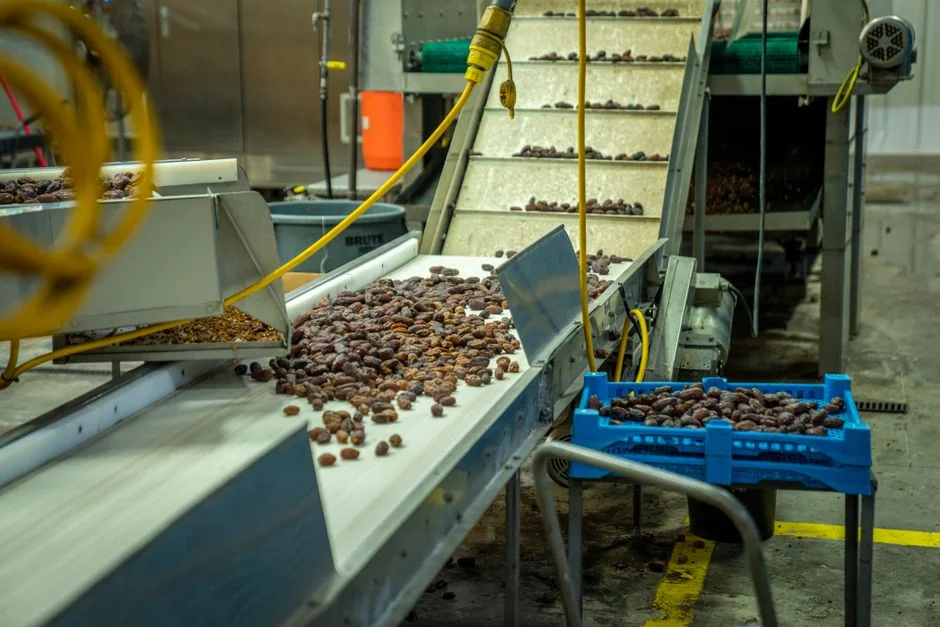

Food processing facilities operate under extreme pressure to maintain consistency, safety, and regulatory compliance. The manual inspection of high-speed production lines is fundamentally flawed due to human fatigue, inconsistent judgment, and the sheer volume of data passing through conveyor belts. When a batch of contaminants slips through or weight deviations go unnoticed, the result is not just a loss of inventory; it is a significant brand reputation risk and a potential public health crisis.
Integrating machine learning into these environments is no longer a futuristic vision; it is a critical operational requirement for companies looking to survive in an increasingly automated landscape. However, the path from a proof-of-concept to a production-grade system is fraught with challenges, including sensor calibration, edge computing latency, and the integration of legacy PLC systems with modern cloud infrastructure. This guide evaluates the architectural decisions, vendor selection criteria, and technical constraints required to deploy high-accuracy computer vision and predictive analytics for food safety.
Architectural Design for Real-Time Inspection
The core of an effective machine learning system in food processing is the ability to process data at the edge. Relying on cloud-based inference for real-time defect detection is a recipe for failure due to network jitter and latency. Instead, we architect systems using an edge-heavy approach where high-frame-rate cameras are connected to local industrial PCs (IPCs) running containerized inference engines. The architecture must prioritize the ingestion of visual data, often at 60+ frames per second, where the system must identify foreign objects, discoloration, or packaging defects within milliseconds.
We utilize a distributed architecture where the edge device performs the heavy lifting—running optimized models (e.g., YOLOv8 or EfficientDet) converted to TensorRT or ONNX formats for maximum speed. The local controller then communicates with the Programmable Logic Controller (PLC) via industrial protocols such as Modbus TCP or OPC-UA to trigger rejection mechanisms. This decoupling ensures that even if the facility loses internet connectivity, the quality control line continues to operate without interruption. A primary consideration here is the data pipeline: raw images are too heavy to store indefinitely, so we implement a tiered storage strategy. Only anomalous frames are offloaded to a central server for model retraining and auditing, while standard images are discarded after verification to save bandwidth and storage costs.
When designing these pipelines, we must account for the harsh environment of food processing plants. This involves selecting hardware with IP67-rated enclosures, vibration-resistant mounting, and thermal management systems that prevent the IPCs from overheating in wash-down areas. From a software perspective, the integration layer must support asynchronous data logging to ensure that every rejection event is timestamped and correlated with the specific batch metadata from the plant’s ERP system. This provides a complete audit trail that is critical for meeting HACCP and FSMA compliance standards.
Data Acquisition and Model Training Strategies
Training accurate models for food quality requires a massive, diverse dataset that captures every edge case the production line might encounter. A common failure point is training models on high-quality studio images, which fail miserably when deployed in a real facility under varying lighting conditions, steam, or product orientation changes. We recommend a data-first strategy that involves collecting thousands of images directly from the production floor, including ‘normal’ product samples and various types of defects—even if those defects have to be artificially induced for training purposes.
Data augmentation techniques such as synthetic blur, brightness adjustment, and rotation are essential but insufficient on their own. We emphasize the use of transfer learning, starting with pre-trained models on large datasets like COCO, and then fine-tuning them on the specific food items being processed. This dramatically reduces the amount of labeled data required. For instance, in a bakery environment, detecting a slightly burnt cookie requires a model that understands texture and color gradients, not just object boundaries. We implement active learning cycles where the model flags ‘uncertain’ images to human operators, who then label those specific instances to improve the model’s performance in real-time.
Version control for these models is as important as version control for your codebase. Using tools like DVC (Data Version Control) alongside Git allows us to track which version of the training data resulted in which model weights. This is crucial for regulatory compliance; if a batch is recalled, you must be able to prove exactly how the inspection model was performing at that specific point in time. We also implement automated testing pipelines that run against a ‘golden dataset’ of images every time the model is updated, ensuring that improvements in one area (e.g., detecting metal fragments) do not cause regressions in another (e.g., detecting packaging misalignment).
Integration with Existing ERP and Manufacturing Systems
A machine learning system that exists in isolation is an operational silo. To truly realize value, the inspection system must be deeply integrated with the plant’s existing ERP (Enterprise Resource Planning) and MES (Manufacturing Execution System). When the vision system detects a recurring defect, it should automatically alert the line supervisor and log the incident against the current work order. This level of automation allows for real-time process adjustments—for example, if a slicer starts producing uneven cuts, the system can trigger a slowdown or a maintenance alert before the defect rate exceeds the threshold.
Integration is typically achieved through secure REST APIs or message brokers like RabbitMQ or Kafka. We often see facilities using legacy software that lacks modern API endpoints. In these scenarios, we build custom middleware to interface with the legacy database or PLC communication modules. The middleware acts as a translator, converting raw inspection events into structured JSON payloads that the ERP can digest. This requires careful consideration of data schemas; the inspection data must include metadata like batch ID, timestamp, line number, and sensor health status to be useful for long-term trend analysis.
Security is a non-negotiable aspect of this integration. Since the inspection system is connected to the production network, it must be isolated from external threats. We implement strict firewall rules, VPN access for remote monitoring, and encrypted communication channels. Furthermore, the system must be designed for high availability. If the integration layer fails, the inspection system should default to a ‘fail-safe’ mode where it remains active locally, buffering data until the connection to the ERP is restored. This ensures that even during network outages, the quality control process remains robust and compliant.
Vendor Selection and Build vs Buy Tradeoffs
When deciding whether to build a custom solution or purchase a commercial off-the-shelf (COTS) system, food processors must consider their internal technical capacity. Building a custom system allows for deep customization and ownership of the intellectual property, which can be a significant advantage if your product line is highly specialized. However, it requires a dedicated team of data scientists and DevOps engineers to maintain the system. Conversely, COTS systems offer faster deployment but often come with rigid interfaces and significant ongoing licensing costs.
For many mid-sized facilities, a hybrid approach is the most sustainable. You might purchase the hardware and core vision software from a specialized vendor while building custom integration layers and reporting dashboards in-house. This allows you to leverage the vendor’s expertise in hardware calibration while keeping control over how the data is used within your organization. When evaluating vendors, prioritize those who provide open APIs and do not lock you into a proprietary ecosystem. You should always ask for references from similar food processing environments, as the challenges of a produce packing facility are vastly different from those of a poultry or dairy processor.
The following table outlines the key considerations for the build vs buy decision:
| Factor | Custom Build | COTS Solution |
|---|---|---|
| Development Time | 6–12 months | 1–3 months |
| Customization | Unlimited | Limited to vendor roadmap |
| Maintenance | High (Internal team) | Low (Vendor support) |
| IP Ownership | Full | None |
| Cost Structure | High upfront / Low recurring | Low upfront / High recurring |
Ultimately, the decision should be driven by your long-term operational strategy. If quality control is a core differentiator for your brand, the investment in a custom system is often justified by the ability to iterate on the product and refine the inspection criteria in ways that generic solutions cannot accommodate. If your goal is simply to meet baseline regulatory requirements, a COTS system may provide the necessary functionality with a lower risk profile.
Financial Analysis and Cost Models
The cost of implementing machine learning for quality control varies widely based on the complexity of the deployment. A basic system involving a single inspection station might cost between $30,000 and $50,000 for hardware and initial software configuration, while a multi-line, enterprise-wide deployment can easily exceed $500,000. It is essential to distinguish between capital expenditures (CAPEX) for hardware and operating expenses (OPEX) for cloud infrastructure, model updates, and maintenance.
We generally categorize costs into three buckets: hardware (cameras, lighting, IPCs), software engineering (custom model development, integration), and operational maintenance (data storage, retraining). For custom software development, firms typically charge based on project scope or time-and-materials. A custom integration project involving complex ERP connectivity usually requires 400 to 800 hours of development time. For specialized machine learning engineering, rates range from $150 to $250 per hour depending on the seniority of the engineers involved.
The following table provides a breakdown of typical cost models:
| Model | Best For | Typical Cost Structure |
|---|---|---|
| Fixed-Price Project | Well-defined pilot projects | Milestone-based payments |
| Time and Materials | Complex integration/R&D | Hourly/Daily rates |
| Subscription/SaaS | Ongoing maintenance/Cloud | Monthly/Annual fees |
Beyond the initial development, you must account for the hidden costs of model drift. Over time, as products change or lighting degrades, the model’s accuracy will naturally decline. This necessitates a regular schedule of model retraining and validation, which typically requires a retainer agreement with your software partner. Expect to allocate roughly 15-20% of your initial development budget annually to keep the system optimized and secure. Neglecting this maintenance is the most common reason these projects fail to deliver a long-term return on investment.
Monitoring and Observability
Once an ML system is deployed, the work is far from over. Effective monitoring and observability are vital for ensuring the system remains accurate and reliable. We implement comprehensive logging that tracks not just the system’s performance, but also the health of the hardware. This includes monitoring GPU temperatures, CPU utilization, and frame capture rates. If the system starts to lag, it is often due to an accumulation of temporary files or a memory leak in the inference engine, which can be caught early if the right metrics are in place.
We use tools like Prometheus and Grafana to visualize these metrics in real-time. For the machine learning component specifically, we track ‘drift’ metrics. If the distribution of input images changes significantly from the training data—for example, if a new packaging material is introduced that the model hasn’t seen before—the system should trigger an alert. This allows the team to intervene before the model starts making incorrect classifications. We also maintain a ‘human-in-the-loop’ dashboard where operators can review a sample of the model’s decisions, providing a continuous stream of feedback that is used to improve the system’s performance.
Observability also extends to the communication layer. We monitor the latency between the inspection event and the PLC trigger. If this latency increases, it could indicate a network bottleneck or a delay in the ERP’s response time. By having full visibility into the entire stack, we can troubleshoot issues in minutes rather than hours. This proactive approach to maintenance ensures that the inspection line remains a reliable component of the manufacturing process rather than a point of failure.
Regulatory Compliance and Data Governance
In the food industry, compliance is non-negotiable. Systems must adhere to standards set by organizations like the FDA or the European Food Safety Authority. This requires that every decision made by an automated system be traceable. If an automated system rejects a product, there must be a record of why that decision was made. This is known as ‘explainable AI’. We ensure our models are not black boxes; we use techniques like Grad-CAM to visualize which parts of an image the model focused on when making a decision. This allows human inspectors to verify the model’s logic.
Data governance is equally critical. You must have a clear policy on data retention and privacy. If you are capturing images of the production line, you must ensure that no sensitive information—such as employee faces or proprietary production secrets—is inadvertently stored in a way that violates privacy regulations. All data should be encrypted at rest and in transit. We recommend implementing a strict data lifecycle policy where only the necessary data is kept for the duration required by law, after which it is securely purged.
Finally, we emphasize the importance of validation. Before a new model is deployed to the production line, it must undergo a rigorous validation process. This involves running the model against a test set that simulates worst-case scenarios, such as low-light conditions or high-speed production spikes. The results of this validation must be documented and signed off by the quality control department. This rigorous approach not only ensures compliance but also builds trust in the system among the plant floor staff, who are the ultimate users of the technology.
Scaling and Future-Proofing
The initial deployment of a machine learning system is usually just the beginning. As the business grows, you may need to scale the system to additional production lines or even across multiple facilities. A well-architected system is designed with horizontal scalability in mind. By using containerization and orchestration tools like Kubernetes, we can deploy the same inspection software to new lines with minimal configuration changes. This ensures consistency across the entire organization, allowing for centralized management of model updates and performance monitoring.
Future-proofing also involves staying ahead of the technology curve. We design our systems to be hardware-agnostic where possible, using software layers that can easily switch between different camera types or processing hardware as better technology becomes available. This prevents vendor lock-in and allows you to upgrade your hardware without having to rewrite your entire software stack. We also keep a close eye on emerging trends like multimodal learning, which combines visual data with other sensor inputs like temperature, pressure, or acoustic data to provide a more holistic view of product quality.
Ultimately, the goal is to create a digital foundation that supports continuous improvement. By treating your quality control system as a software product rather than a static piece of machinery, you can iterate, improve, and scale. This mindset shift is what separates companies that successfully leverage AI from those that struggle with pilot purgatory. By focusing on modular architecture, robust data pipelines, and clear governance, you can build a system that evolves alongside your production needs and provides a durable competitive advantage.
Integrating with the Broader Software Ecosystem
When implementing these systems, it is vital to remember that they are part of a larger, complex digital ecosystem. The ability to push data into a central data warehouse or a business intelligence platform allows for long-term trend analysis that can inform strategic decisions. For example, by correlating quality control data with supplier performance metrics, you might discover that a specific supplier’s raw materials consistently lead to higher defect rates, allowing for more informed procurement decisions. This level of data-driven insight is only possible if your inspection system is designed to share its data in a standardized, accessible format.
We also encourage our clients to think about the user experience for the plant floor staff. The most accurate model in the world will fail if the interface is difficult to use or if it produces too many false positives that lead to ‘alert fatigue’. We design custom dashboards that provide clear, actionable information, allowing operators to quickly understand what is happening on the line and take appropriate action. By involving the operators in the design process, we ensure that the technology serves them, not the other way around. This collaborative approach leads to higher adoption rates and a more successful implementation.
For those looking to deepen their technical capabilities, we provide comprehensive resources on managing these complex deployments within modern development environments. [Explore our complete Software Development directory for more guides.](/topics/topics-software-development/)
Factors That Affect Development Cost
- Hardware complexity (camera count, lighting)
- Integration complexity with existing PLC/ERP
- Custom model training and labeling requirements
- Ongoing maintenance and model drift management
Total costs vary significantly based on the number of production lines and the level of custom integration required.
The implementation of machine learning for quality control in food processing is a significant undertaking that requires a balance of technical rigor, operational awareness, and strategic planning. By prioritizing edge-based architectures, robust data pipelines, and seamless integration with existing ERP systems, food processors can significantly reduce defect rates and improve overall product safety. The key is to avoid the temptation to treat these projects as simple software installations; instead, they should be viewed as long-term investments in digital infrastructure that require ongoing maintenance, validation, and governance.
As the industry continues to evolve, the ability to rapidly adapt to new quality standards and production challenges will become a critical differentiator. By adopting a modular and scalable approach to software development, companies can ensure their systems remain relevant and effective, providing a solid foundation for future growth and innovation in the food processing sector.
NR Tech Studio builds custom web apps, mobile apps, SaaS platforms, and internal tools for growing businesses. If you’re working through a technical decision, feel free to reach out — no commitment required.