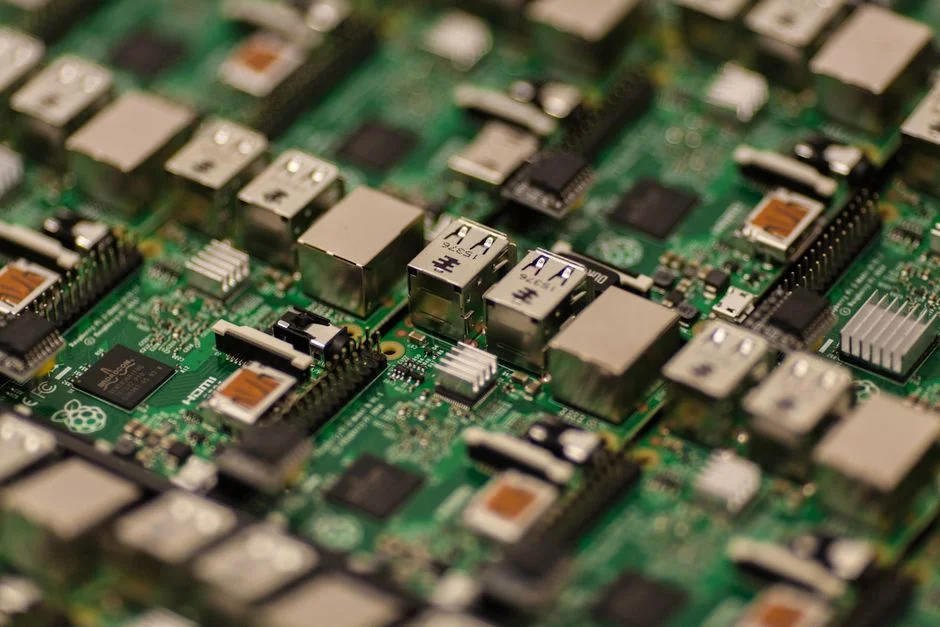

In 2026, the convergence of operational technology (OT) and information technology (IT) has matured into a complex, interconnected ecosystem where industrial IoT (IIoT) devices serve as the backbone of critical infrastructure. The rapid adoption of edge computing, 5G connectivity, and autonomous machinery has expanded the attack surface exponentially, moving security concerns far beyond simple perimeter defense. As industrial environments increasingly rely on interconnected APIs for data telemetry and control, the risk landscape has shifted toward sophisticated, persistent threats targeting the integrity of industrial control systems (ICS) and supervisory control and data acquisition (SCADA) networks.
This article provides an expert-level technical guide for security engineers tasked with hardening IIoT architectures. We will move past generic advice, focusing instead on granular implementation strategies for authentication, encryption, and network isolation, ensuring your infrastructure remains resilient against evolving threat vectors in an era of heightened geopolitical and cyber-adversarial risk.
Architectural Foundation for IIoT Resilience
At the architectural level, the primary failure in IIoT deployments is the lack of proper segmentation between legacy OT environments and modern IT networks. An IIoT gateway, if improperly configured, acts as a bridge for lateral movement, allowing attackers to pivot from an internet-facing endpoint to a programmable logic controller (PLC). To mitigate this, we must enforce strict network micro-segmentation. Using software-defined networking (SDN) or virtual local area networks (VLANs), traffic between the IIoT sensor layer and the application layer must be explicitly governed by a stateful firewall.
Furthermore, the integration of a zero-trust security model is no longer optional. Every request originating from an IIoT device must be authenticated and authorized, regardless of whether the device resides inside the internal network. By treating the internal network as untrusted, we force the implementation of mutual TLS (mTLS) for every connection, ensuring that both the client and server verify each other’s certificates against a private certificate authority (CA). This prevents rogue devices from masquerading as legitimate sensors and injecting false data into your telemetry streams.
Design considerations must also account for hardware-level security. Every IIoT device should ideally be equipped with a Trusted Platform Module (TPM) or a secure element to store cryptographic keys. Hardcoding credentials in firmware is a legacy practice that exposes systems to mass compromise. By utilizing hardware-backed identity, you ensure that even if a device is physically compromised, the attacker cannot easily extract the private keys necessary to impersonate the device within your API infrastructure.
Hardening API Authentication and Authorization
When IIoT devices communicate with central cloud systems, they almost exclusively rely on REST APIs or MQTT brokers. Securing these endpoints requires a robust authentication strategy that avoids the pitfalls of static API keys. In 2026, the gold standard remains OAuth 2.0 with the Client Credentials grant type, specifically tailored for machine-to-machine (M2M) communication. By issuing short-lived JSON Web Tokens (JWT), you limit the blast radius if a token is intercepted during transmission. However, the implementation of JWTs must be done correctly; you must enforce signature validation using RS256 or ES256 and ensure that the token’s ‘exp’ (expiration) claim is strictly enforced on the server side.
Beyond authentication, authorization must be enforced via fine-grained Role-Based Access Control (RBAC) or Attribute-Based Access Control (ABAC). An IIoT sensor should only have ‘write’ access to the specific telemetry endpoint it reports to, and it should never have ‘read’ or ‘delete’ access to other sensors’ data. This principle of least privilege is critical for preventing data exfiltration if a single sensor node is compromised. When integrating these systems, follow the rigorous standards established when securing fintech applications, where audit logs and immutable record-keeping are mandatory for compliance and forensic analysis.
Moreover, rate limiting and throttling are essential for API security. Industrial systems often suffer from ‘chatty’ protocols where a misconfigured device might flood an API endpoint, leading to a self-inflicted Denial of Service (DoS) attack. Implement token bucket algorithms on your API Gateway to ensure that each device stays within its defined traffic quota. If a device exceeds its threshold, the gateway must drop the connection and alert the security operations center (SOC) for potential anomalous behavior analysis.
Encryption Standards and Data Integrity
Data integrity in IIoT goes beyond simple encryption at rest; it involves ensuring that the data has not been altered in transit or while stored in the database. For transit, TLS 1.3 is the baseline requirement. You must disable all legacy ciphers (such as AES-CBC or any RC4-based suites) that are susceptible to known cryptographic attacks. In constrained environments where TLS might introduce too much latency, consider using Datagram Transport Layer Security (DTLS) for UDP-based telemetry protocols.
For data at rest, use Advanced Encryption Standard (AES) with 256-bit keys. However, encryption is only as strong as your key management strategy. Do not store encryption keys in the same environment as the database. Use a dedicated Hardware Security Module (HSM) or a cloud-native Key Management Service (KMS) to rotate keys automatically every 90 days. If you are managing your own containerized workloads to handle this data, ensure you are following established container security protocols to prevent unauthorized access to the application environment that processes these sensitive data streams.
Integrity checks using HMAC (Hash-based Message Authentication Code) should be performed on every payload sent by an IIoT device. By appending an HMAC signature generated with a secret key shared only between the device and the backend, you can verify that the data was not tampered with by a man-in-the-middle. This is particularly crucial for command-and-control (C2) messages sent to machinery, where an unauthorized modification could lead to physical damage or safety hazards.
Addressing Vulnerabilities in Firmware and OTA Updates
The lifecycle management of IIoT devices is a primary vector for security breaches. Firmware updates are often neglected, leaving devices running outdated, vulnerable code for years. Your strategy must include a robust Over-the-Air (OTA) update mechanism that is cryptographically signed. Before a device accepts a firmware update, it must verify the signature of the image against a public key burned into the device’s read-only memory. If the signature is invalid, the update must be rejected, and the device should enter a safe, restricted state.
Vulnerability scanning for IIoT firmware is complex because these devices often run proprietary or highly customized Linux distributions. You must implement Software Bill of Materials (SBOM) tracking to maintain an inventory of every library and dependency used in your firmware. When a new CVE (Common Vulnerabilities and Exposures) is announced for a component like OpenSSL or BusyBox, your SBOM allows you to instantly identify which devices in your fleet are affected. This proactive approach is far superior to reactive patching after an incident has occurred.
Furthermore, ensure that the update server itself is hardened. It should be a dedicated, isolated service that only accepts signed requests from authorized management consoles. Never expose the OTA update endpoint to the public internet. Use internal, authenticated channels for distributing updates to edge gateways, which then propagate the updates to the end-node devices via a secure, local discovery protocol.
Monitoring and Incident Response for IIoT
In an industrial environment, traditional IT monitoring tools are often insufficient. You need a dedicated Security Information and Event Management (SIEM) system capable of parsing industrial protocols like Modbus, OPC-UA, and BACnet. Anomalous behavior detection is key here; if a PLC that typically transmits 10KB of data every minute suddenly starts transmitting 500MB of data to an external IP, the system must automatically isolate that device from the network.
Incident response (IR) plans for IIoT must be distinct from standard IT IR plans. In an industrial setting, availability is often prioritized over confidentiality, but safety is the ultimate priority. Your IR plan should include ‘fail-safe’ modes where, upon detecting a security breach, the machine enters a state that prevents physical damage while maintaining enough connectivity to allow for remote diagnostics by authorized personnel. This requires close collaboration between IT security teams and OT maintenance engineers.
Regular penetration testing and red-teaming exercises must specifically include the IIoT layer. Do not just test your web applications; test your gateways, your MQTT brokers, and the physical access ports on your devices. Use tools like Nmap for network discovery and specialized industrial vulnerability scanners to identify misconfigured services that might be running on default ports. These exercises provide the empirical data needed to refine your security posture continually.
Managing API Lifecycle and Versioning
Managing the lifecycle of APIs in an industrial context presents unique challenges. Since IIoT devices are often deployed in hard-to-reach locations, you cannot easily force a firmware update to accommodate a breaking API change. Therefore, you must adopt a strict API versioning strategy. Use URI versioning (e.g., /api/v1/telemetry) to ensure that legacy devices can continue to communicate with the backend even after you introduce new features in v2.
API documentation is also a security asset. By maintaining an up-to-date OpenAPI (formerly Swagger) specification, you allow your security team to perform automated contract testing and static analysis on your API definitions. This helps identify insecure patterns—such as endpoints that accept overly broad inputs or lack proper authentication—before they are deployed to production. Documenting expected inputs and outputs also helps in detecting anomalies; if a device sends a payload that deviates from the schema defined in your OpenAPI file, it should be treated as a potential injection attempt.
When deprecating an API, provide a long sunset period, typically 12 to 24 months, to allow for the gradual decommissioning or updating of older hardware. Use API monitoring tools to track which devices are still hitting deprecated endpoints, and proactively reach out to the field teams responsible for those devices. This visibility is essential for maintaining a clean, secure, and manageable API surface area.
Authentication and Identity for Edge Gateways
Edge gateways act as the ‘brain’ of the IIoT network, aggregating data from multiple sensors and communicating with the cloud. Because they hold more processing power than end-sensors, they are higher-value targets for attackers. Securing these gateways requires a multi-layered approach. Beyond standard password-based authentication, you must enforce Multi-Factor Authentication (MFA) for any administrative access, whether it is physical access via a console port or remote access via SSH.
For machine-to-machine identity, use X.509 certificates generated by a private PKI (Public Key Infrastructure). Each gateway should have a unique identity certificate that it uses to authenticate with the central management system. If a gateway is physically stolen or tampered with, you can revoke its certificate in the PKI, effectively cutting it off from the entire network instantly. This is a critical capability that static credentials simply cannot provide.
Furthermore, ensure that the gateway’s operating system is minimal. Remove all unnecessary services, compilers, and shells. Use a read-only root filesystem where possible, so that even if an attacker gains shell access, they cannot persist their presence by modifying system binaries. This ‘hardening by removal’ strategy is highly effective in reducing the attack surface of edge infrastructure.
Securing WebSocket and Real-Time Connections
Many industrial applications require real-time monitoring, which often leads to the use of WebSockets. While WebSockets are efficient, they are notoriously difficult to secure because they bypass traditional request-response firewall inspection. To secure WebSocket connections, you must perform the initial handshake over an HTTPS connection to establish a secure, encrypted tunnel. Once the connection is upgraded to WebSocket, you must continue to validate the session token, as WebSockets can remain open for days or weeks.
Implement heartbeat mechanisms to detect ‘zombie’ connections that may have been hijacked. If a connection remains silent for a specific period, the server should force a re-authentication. Additionally, treat all data sent over the WebSocket as untrusted. Just as you would with a standard REST API, validate the structure and content of every message received from the client. Use a strict JSON schema validator to ensure that the payloads conform to expected patterns, preventing buffer overflow or injection attacks.
Finally, monitor WebSocket traffic for patterns indicative of reconnaissance or data scraping. Since WebSockets are persistent, they are ideal for attackers to maintain a low-and-slow presence. By analyzing the traffic volume and the frequency of messages, you can identify unauthorized data exfiltration early in the attack lifecycle.
Compliance and Data Governance
Industrial IoT deployments must adhere to various international standards, such as IEC 62443, which provides a framework for secure industrial automation and control systems. Compliance is not just a checkbox; it is a way to ensure that your security practices align with industry-recognized best practices. Conduct regular audits of your infrastructure against these standards to identify gaps in your security controls.
Data governance is equally critical. You must define clear policies regarding data ownership, retention, and access. In an industrial context, data often contains sensitive intellectual property regarding production processes. Ensure that your cloud storage solutions are configured with strict access policies and that data is encrypted at rest using customer-managed keys. Never store raw sensor data in public buckets; ensure that access is strictly controlled via IAM (Identity and Access Management) roles that adhere to the principle of least privilege.
Finally, document everything. In the event of an audit or a security incident, your ability to provide a clear, timestamped trail of who accessed what data and when is essential. Use centralized logging to collect logs from all your IIoT devices, gateways, and API endpoints, and ensure these logs are immutable and stored in a secure location for the duration required by your regulatory obligations.
The Role of API Development in IIoT Security
Ultimately, the security of an IIoT ecosystem is only as strong as the APIs that bind it together. Your API development process must incorporate security from the start. This means using static analysis security testing (SAST) tools to scan your code for vulnerabilities during the build phase and dynamic analysis security testing (DAST) to test your running APIs for common flaws like SQL injection or cross-site scripting. By exploring our complete API Development — API Security directory, you can gain deeper insights into these methodologies and how to apply them to your specific industrial use cases.
Remember that security is a continuous process, not a final destination. In 2026, the threats are more automated and more persistent than ever before. By building a culture of security within your engineering team, where every line of code is treated as a potential vulnerability, you can build IIoT systems that are not just functional, but inherently resilient. Focus on automation, observability, and strict adherence to proven security standards to protect your infrastructure against the risks of tomorrow.
Frequently Asked Questions
What is the biggest risk to IIoT security in 2026?
The biggest risk is the lack of proper network segmentation between legacy operational technology and modern IT networks. This allows attackers to pivot from an internet-facing device to critical industrial control systems.
How can I secure legacy IIoT devices that cannot be patched?
You should place these devices behind a modern edge gateway that handles authentication, encryption, and traffic filtering on their behalf. Treat the device as untrusted and isolate it in a restricted network segment.
Why is mTLS important for IIoT communication?
Mutual TLS ensures that both the client device and the server verify each other’s identity using digital certificates. This prevents unauthorized devices from spoofing connections and injecting malicious data.
Is an API Gateway necessary for IIoT deployments?
Yes, an API Gateway is essential for centralizing authentication, implementing rate limiting, and providing a single point of observability for all incoming traffic from IIoT devices.
Securing industrial IoT environments in 2026 requires a shift toward proactive, defense-in-depth strategies that prioritize identity, encryption, and continuous monitoring. As the lines between OT and IT continue to blur, the responsibility for securing these systems rests on the shoulders of engineers who understand both the physical implications of a breach and the digital complexities of modern API-driven architectures.
We encourage you to review your current infrastructure against the principles outlined in this guide. If you have questions about implementing these standards or need assistance with your architecture, please reach out to our team or subscribe to our newsletter for the latest technical insights on securing complex software systems.
NR Tech Studio builds custom web apps, mobile apps, SaaS platforms, and internal tools for growing businesses. If you’re working through a technical decision, feel free to reach out — no commitment required.