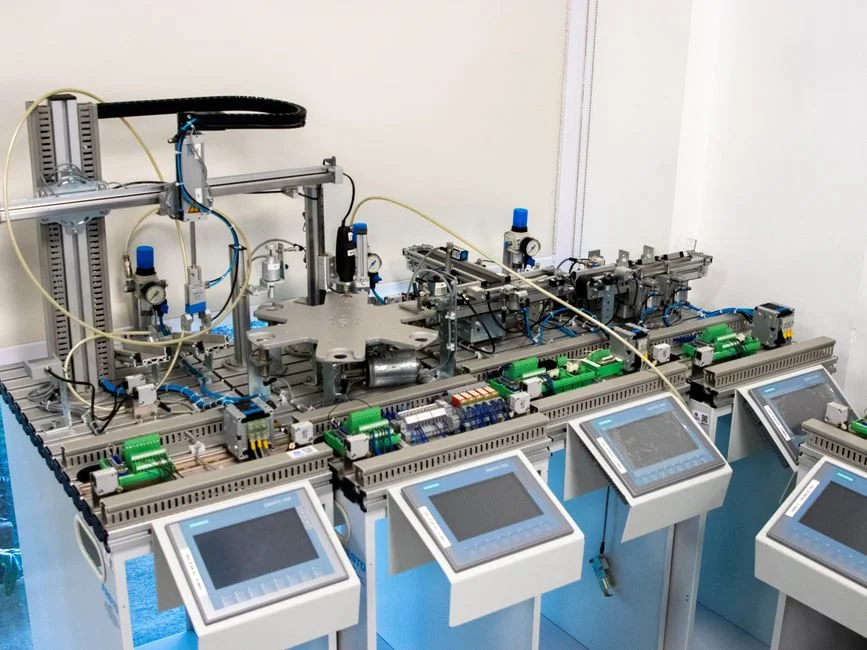

Predictive maintenance has transitioned from a theoretical industrial optimization strategy to a mandatory operational requirement for manufacturers aiming to maintain competitive margins. In the current landscape, the ability to predict equipment failure before it occurs is no longer just about preventing downtime; it is about protecting the integrity of the entire supply chain. Manufacturers are increasingly turning to custom-built software solutions to bridge the gap between raw sensor data and actionable intelligence, often utilizing robust frameworks like Laravel to handle complex data streams.
The financial commitment required to deploy these systems is substantial, often leading to confusion among CTOs and operations managers regarding the true Total Cost of Ownership (TCO). Unlike basic software deployments, predictive maintenance requires a fusion of hardware integration, data engineering, and machine learning model development. This guide provides a granular breakdown of the financial landscape, helping you navigate the complexities of budgeting for industrial-grade predictive analytics.
The Real Cost of Data Infrastructure and Sensor Integration
The foundation of any predictive maintenance initiative is the ingestion layer. You cannot predict failure if you cannot measure the health of your machinery. This requires a robust IoT infrastructure capable of handling high-frequency telemetry data. When calculating the cost of this phase, you must account for hardware acquisition, edge computing devices, and the development of the backend ingestion services. Laravel, when paired with high-performance databases like MySQL or time-series alternatives, serves as an excellent orchestrator for this data, but the initial architecture must be designed to avoid bottlenecks.
For a medium-sized manufacturing facility, the cost of the initial sensor rollout and the development of the data ingestion layer typically ranges between $40,000 and $85,000. This includes the configuration of MQTT brokers, the development of secure API endpoints, and the implementation of real-time data validation logic. If you are considering the long-term maintenance of these systems, you might find parallels in our guide on evaluating the total cost of ownership for digital infrastructure, as the principles of technical debt and maintenance apply equally to industrial IoT.
Failure to invest in high-quality ingestion services often leads to ‘data rot,’ where the volume of incoming telemetry overwhelms the storage layer, leading to increased costs in cloud storage and compute power. We recommend a phased approach: start by instrumenting the most critical 20% of your assets. This limits initial capital expenditure while providing a proof-of-concept that demonstrates ROI to stakeholders before scaling to the entire facility.
Custom Laravel Development vs. Off-the-Shelf SaaS Platforms
When selecting a platform, manufacturers often face a choice: subscribe to a generic SaaS product or invest in a custom-built solution. SaaS platforms offer lower upfront costs but often trap businesses in long-term licensing fees and limited customization. Conversely, a custom Laravel-based platform provides full ownership of the intellectual property and the ability to integrate directly with your existing ERP or CRM systems. From a CTO’s perspective, the decision hinges on whether your maintenance requirements are standardized or if they require highly specific, domain-aware algorithms.
A custom solution typically requires a development investment between $60,000 and $150,000 for a production-ready MVP. While this is significantly higher than a monthly subscription, it removes the recurring cost of seat-based licensing. Furthermore, custom platforms allow for specialized features like custom reporting modules, specific regulatory compliance logging, and internal security protocols that off-the-shelf software cannot provide. To understand the risks of building versus buying, we suggest reviewing the technical due diligence checklist to ensure your team is prepared for the complexities of managing a custom-built environment.
| Feature | SaaS Model | Custom Laravel Development |
|---|---|---|
| Upfront Cost | Low | High |
| Recurring Fees | High | Low |
| Customization | Restricted | Unlimited |
| Ownership | None | Full |
The Economics of Machine Learning and Model Training
Predictive maintenance is fundamentally a data science problem. The cost of training machine learning models is frequently underestimated. You need to hire or contract data engineers who can clean, label, and analyze your historical maintenance logs. This process is time-intensive and requires significant compute resources. Implementing a pipeline in Laravel that triggers retraining cycles based on new data input is a sophisticated task that requires expert-level PHP and Python integration.
On average, the model development and training phase costs between $50,000 and $120,000. This cost is driven by the need for high-quality data scientists and cloud compute resources during the training phase. It is critical to establish a testing framework for these models to ensure they do not produce false positives, which can lead to unnecessary shutdowns and expensive labor costs. For insights into ensuring the quality of your software, you might find our analysis on the cost of automated testing versus manual quality assurance highly relevant to the predictive model validation process.
Remember that model drift is a real phenomenon. Over time, your machinery’s behavior changes, and your models will need to be retrained to remain accurate. This is an ongoing operational expense, not a one-time cost. Budgeting for an annual ‘model refresh’ cycle, typically costing 15-20% of the initial development budget, is essential for maintaining accuracy in your predictions.
Infrastructure Scalability and Cloud Hosting Costs
As you scale your predictive maintenance system from one machine to an entire plant, your cloud infrastructure costs will increase exponentially. Storing high-resolution vibration, temperature, and pressure data requires a sophisticated database strategy. Using a Laravel framework, you can implement efficient caching layers and queue systems like Redis or Amazon SQS to handle the throughput. However, cloud vendors charge heavily for data ingress and long-term storage.
For a typical mid-sized manufacturing installation, monthly cloud hosting costs for the predictive maintenance backend range from $1,500 to $4,000. This includes managed database services, container orchestration (such as AWS ECS or Kubernetes), and monitoring tools. If you are scaling to multiple sites, these costs will naturally rise. It is vital to optimize your database schema early to avoid the ‘cost explosion’ associated with storing irrelevant data points. Much like the planning required for a complex platform, as detailed in our guide on the cost of building a marketplace, the architecture you choose during the first phase dictates your operational burn rate for years to come.
We advise implementing a data lifecycle policy. Keep high-resolution raw data in ‘cold storage’ (like AWS S3 Glacier) for compliance, while keeping only aggregated, actionable data in your primary hot storage. This simple architectural decision can reduce your monthly cloud bill by up to 40%.
Labor Costs and Talent Acquisition
The personnel required to maintain a predictive maintenance system are specialized. You need developers who understand both the manufacturing domain and the technical stack (Laravel, TypeScript, MySQL). Finding this talent is difficult, and retaining them is more expensive. Many firms choose to outsource this development to specialized agencies to avoid the high overhead of building an internal team from scratch.
Hiring a senior developer with the necessary expertise often commands a salary in the range of $140,000 to $180,000 annually. When you factor in benefits, office space, and recruitment fees, the true cost of an internal hire is closer to $220,000. Alternatively, engaging an external firm to manage the development and maintenance of your predictive platform can provide a more predictable cost structure. A retainer for a dedicated team of engineers can range from $15,000 to $30,000 per month, depending on the complexity of the ongoing feature development and system optimization requirements.
Consider the velocity of your project. If you have an aggressive timeline, an external team often provides immediate access to a full cross-functional group—including designers, QA, and backend engineers—allowing you to reach deployment in months rather than years.
Managing Technical Debt and System Evolution
Technical debt in a predictive maintenance system is dangerous. A poorly architected data pipeline can lead to missed failure signals, resulting in catastrophic equipment damage. As you iterate on your software, you must allocate at least 20% of your development budget to refactoring and performance tuning. This is not optional; it is the cost of ensuring that your system remains reliable under heavy load.
When we build systems for our clients, we prioritize modularity. By using Laravel’s robust service container and event-driven architecture, we ensure that individual components can be updated without disrupting the entire pipeline. This reduces the long-term cost of maintenance significantly. However, even with the best architecture, you will eventually face the need for system upgrades. Plan for a major version migration every 18 to 24 months. This ensures that your dependencies remain secure and that your system can take advantage of the latest performance improvements in the underlying frameworks.
Monitoring and observability are also critical components of managing technical debt. You should invest in tools like Sentry, New Relic, or Datadog to track system health. These tools typically add $500 to $1,500 to your monthly operational costs, but they provide the visibility necessary to identify and fix performance bottlenecks before they impact your manufacturing output.
Regulatory Compliance and Data Security Costs
Manufacturing environments are increasingly targets for cybersecurity threats. Protecting your predictive maintenance data is not just a best practice; it is often a regulatory requirement if your equipment is connected to larger industrial networks. Implementing advanced encryption, multi-factor authentication, and intrusion detection systems adds to the total cost of your implementation.
Expect to budget an additional $10,000 to $25,000 for initial security hardening and compliance audits. Ongoing security maintenance, including penetration testing and dependency patching, will add another $5,000 to $10,000 annually. These are essential costs that protect your intellectual property and prevent the massive financial losses associated with industrial espionage or ransomware attacks. Never cut corners on security; the cost of a breach far outweighs the cost of prevention.
Furthermore, ensure that your development team is well-versed in secure coding practices. Using frameworks like Laravel provides a strong security baseline, but developers must still implement secure API authentication (using OAuth2 or Sanctum) and sanitize all incoming data streams. Security is an ongoing process, not a one-time setup.
Performance Benchmarks and Operational ROI
To justify the cost of implementing predictive maintenance, you must track performance benchmarks. How many hours of unplanned downtime have been saved? What is the reduction in spare parts inventory costs? These metrics are the key to calculating your ROI. A successful deployment should pay for itself within 18 to 24 months by reducing maintenance costs by 15-30% and increasing equipment uptime by 5-10%.
We suggest setting up a custom dashboard that tracks these KPIs in real-time. A well-built dashboard, integrated directly into your Laravel backend, allows management to see the financial impact of the system at a glance. This visibility is crucial for securing future budget cycles and demonstrating the value of your ongoing investment in digital transformation. When presenting these metrics to stakeholders, focus on the cost-avoidance benefits: the cost of a single major machine failure often exceeds the total annual cost of the predictive maintenance system.
By quantifying the ‘cost of doing nothing,’ you can make a compelling business case for the investment. Predictive maintenance is not just an IT project; it is a strategic manufacturing initiative that directly impacts the bottom line.
Scaling Challenges and Multi-Site Deployment
Scaling predictive maintenance across multiple manufacturing sites presents unique challenges. You are no longer just dealing with one set of machines; you are managing a distributed network of sensors, edge devices, and local servers. This requires a centralized management platform that can handle varying connectivity conditions and local data processing needs. The cost of this complexity is significant, requiring a robust DevOps strategy and a highly scalable backend architecture.
For multi-site deployments, you should expect to increase your initial budget by 50-100% to account for infrastructure standardization and cross-site data synchronization. This includes the cost of deploying local edge gateways that can process data offline, ensuring that your predictive models continue to function even if the connection to the central server is intermittent. Laravel’s queueing capabilities are particularly useful here, allowing you to buffer data locally and synchronize it with the cloud when connectivity is restored.
The management of these distributed systems requires a dedicated team of site reliability engineers. While this adds to the operational cost, it is the only way to ensure the long-term viability of a multi-site predictive maintenance program. Scalability is not just about adding more servers; it is about creating a resilient, distributed system that can adapt to the realities of a global manufacturing footprint.
Final Considerations for CTOs and Technical Leaders
Implementing predictive maintenance is a long-term commitment that requires a clear vision and a disciplined approach to budgeting. By focusing on modular architecture, investing in quality talent, and prioritizing security and scalability, you can build a system that delivers substantial competitive advantages. Do not rush the planning phase; the decisions you make regarding your technology stack and data strategy today will dictate the success of your operations for years to come.
Explore our complete Laravel — Cost & Hiring directory for more guides.
Factors That Affect Development Cost
- Number of machines and sensors
- Complexity of machine learning models
- Data ingestion frequency
- Cloud storage and egress requirements
- Custom development vs. platform licensing
Costs vary significantly based on the number of assets instrumented and the complexity of the data processing requirements.
Predictive maintenance is a significant investment, but when executed correctly, it transforms the manufacturing process from a reactive model to a proactive, data-driven operation. By understanding the granular costs of sensor integration, custom development, model training, and long-term infrastructure, you can build a roadmap that maximizes ROI and minimizes risk.
Ready to build a robust predictive maintenance platform for your manufacturing operations? Contact NR Tech Studio to build your next project and leverage our expertise in Laravel and industrial software engineering.
Get a Project Estimate
Every project has a different scope. Share your requirements and we’ll give you a realistic breakdown within 48 hours.