
Imagine learning to perform complex neurosurgery by reading a manual—it is like trying to learn how to swim by studying the physics of water displacement from a textbook. You understand the theory, but you lack the kinetic intuition required to navigate the medium. Spatial computing functions as the bridge between theoretical knowledge and physical mastery, acting as a digital simulator that maps three-dimensional environments into a reactive, interactive workspace. By blending the physical world with high-fidelity digital overlays, it allows trainees to manipulate biological structures in real time without the catastrophic consequences of real-world error.
In the context of healthcare, this technology moves beyond traditional screen-based learning. It creates a sandbox where anatomical fidelity meets algorithmic responsiveness. As CTOs and technical leaders, we must view spatial computing not merely as a visualization tool, but as a sophisticated data-processing engine that requires precise hardware-software orchestration. This article examines the architectural requirements, integration challenges, and technical strategies for deploying spatial computing systems within medical training environments, focusing on building systems that offer high availability, low latency, and clinical-grade accuracy.
The Architectural Foundation of Spatial Healthcare Systems
At the architectural level, spatial computing for medical training relies on a multi-layered stack that necessitates seamless synchronization between spatial sensing, rendering engines, and anatomical databases. Unlike standard web applications where the primary data flow is request-response, spatial systems operate in a continuous loop of sensor data ingestion, environmental mapping, and frame-buffered rendering. The core requirement is maintaining a frame rate consistent with human perception to avoid motion sickness, which in a clinical training scenario, translates to a constant 90Hz or higher refresh rate. This requires a robust backend capable of handling high-frequency telemetry from headsets, haptic gloves, and tracking sensors.
We typically implement this using a distributed architecture where the heavy rendering is offloaded to edge servers or high-performance computing nodes, keeping the local client lightweight. The data pipeline must utilize optimized protocols to minimize jitter in the spatial coordinates transmitted between the user’s device and the server. If the latency between a trainee’s hand movement and the corresponding movement of a virtual scalpel exceeds 20 milliseconds, the cognitive disconnect renders the training ineffective. Consequently, our infrastructure design prioritizes low-latency networking, often leveraging WebRTC or proprietary UDP-based streaming protocols to ensure synchronization across multiple concurrent users in a shared virtual operating room environment.
Anatomical Fidelity and Data Modeling
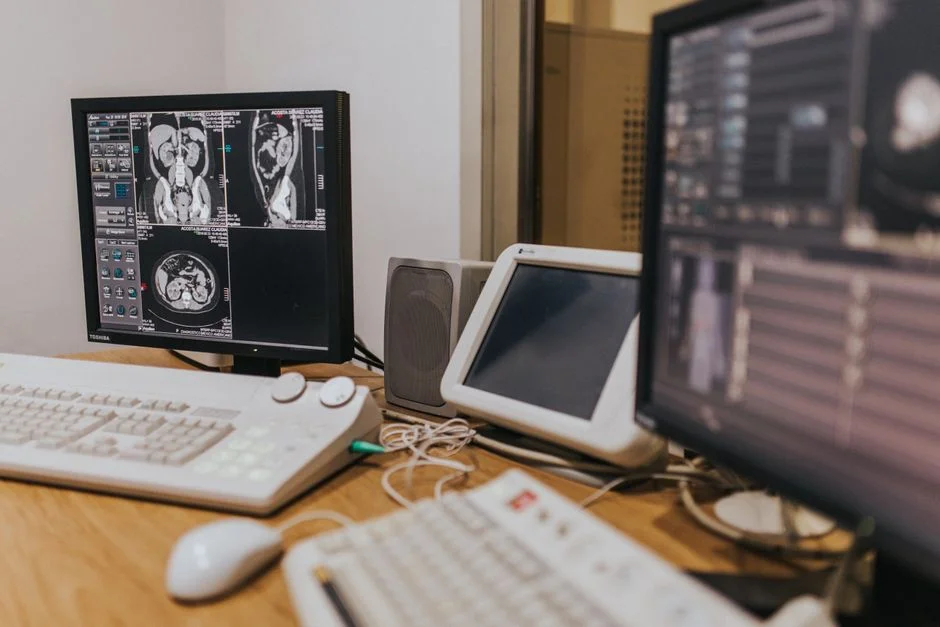
The utility of spatial computing in healthcare hinges on the accuracy of the underlying 3D models. Standard 3D assets used in gaming are insufficient for medical training; we require high-resolution volumetric data derived from DICOM (Digital Imaging and Communications in Medicine) files. Translating a patient’s CT scan or MRI into an interactive, spatial-ready mesh involves a complex pipeline of segmentation and decimation. We must ensure that the structural integrity of the organ is maintained while optimizing the geometry for real-time rendering. This is where the intersection of AI and spatial computing becomes vital, as automated segmentation algorithms can significantly reduce the engineering time required to prepare these assets.
Beyond geometry, the data model must incorporate physiological behavior. It is not enough to render a heart; the model must react to simulated interventions. This requires integrating state machines into the 3D objects themselves, where each node of the mesh carries metadata regarding its physical properties—such as elasticity, vascular density, and response to pressure. By treating anatomical models as data-driven entities rather than static graphics, we enable a more realistic training experience. Developers should prioritize modular asset architectures that allow for the programmatic injection of pathological conditions, enabling instructors to toggle between a healthy organ and one with specific anomalies during a simulation session.
Latency Management and Edge Computing
In spatial computing, the concept of ‘presence’ is entirely dependent on the system’s ability to minimize input-to-photon latency. In a healthcare training environment, where precision is paramount, any lag in the spatial environment can lead to incorrect muscle memory formation. Traditional cloud architectures often introduce too much overhead, leading us to favor edge computing deployments. By placing the compute resources physically closer to the training facility, we reduce the round-trip time for sensor data processing. This setup allows for the rendering of high-density medical visualizations that would otherwise be impossible on standalone mobile hardware.
Furthermore, we must manage the concurrency of data streams. A typical training session might involve multiple participants, each with their own tracking telemetry, all needing to see the exact same state of the patient model. This requires a centralized synchronization engine that acts as the ‘source of truth’ for the spatial environment. Implementing a robust state-synchronization protocol is essential to ensure that if one student makes an incision, the change is propagated to all other participants in the session with sub-millisecond drift. We often employ techniques such as delta compression, where only the changes in the spatial state are transmitted, significantly reducing bandwidth requirements while maintaining high session fidelity.
Integrating Haptic Feedback for Kinetic Learning
While visual immersion is crucial, spatial computing in healthcare is incomplete without haptic feedback. The ‘feel’ of a procedure—the resistance of tissue, the vibration of a surgical drill, or the pulse of an artery—is essential for developing the psychomotor skills required for surgery. Integrating haptic hardware requires a secondary, high-frequency control loop that operates independently of the visual rendering thread. This loop must run at 1000Hz to provide the tactile resolution necessary for the user to perceive the difference between various types of biological materials.
From a technical implementation standpoint, this necessitates a hardware abstraction layer that can interface with diverse haptic devices, from simple force-feedback pens to sophisticated exoskeleton gloves. Our approach involves creating a middleware layer that maps the physics engine’s collision data to the haptic device’s actuators. This ensures that the developer does not need to rewrite the interaction code for every new piece of hardware, fostering a more scalable development cycle. We also document the force-feedback profiles as distinct data objects, allowing medical experts to calibrate the ‘feel’ of a simulation without needing to touch the core codebase, effectively separating the medical domain knowledge from the engineering implementation.
Security and Data Privacy in Medical Simulations
Healthcare applications are governed by stringent regulatory frameworks, and spatial computing environments are no exception. When we process patient-specific anatomical data to create training scenarios, we must ensure that all data is anonymized and encrypted according to HIPAA and GDPR standards. Even if the data is synthetic, the pipelines used to generate it must be secure. A significant risk in spatial computing is the unintended leakage of spatial telemetry—data about how a student interacts with a model can reveal cognitive patterns or behavioral traits that should be protected as personal information.
Our security architecture focuses on a zero-trust model where every data packet, whether it represents a hand movement or a patient record, is authenticated and authorized. We implement end-to-end encryption for the communication channels between the headset and the server, ensuring that even if a session is intercepted, the underlying medical data cannot be reconstructed. Furthermore, we advocate for the use of isolated, ephemeral instances for each training session. Once a simulation concludes, the instance is destroyed, and all volatile state data is purged from memory, minimizing the attack surface and ensuring that no residual data persists between training sessions.
Scalability and Multi-User Coordination
As training programs expand, the ability to scale from a single user to a distributed classroom becomes a core engineering challenge. Scaling spatial computing systems requires an architecture that can handle the exponential increase in network traffic as more users join a session. We utilize a pub-sub (publish-subscribe) messaging model to manage the state updates, which allows the system to efficiently broadcast the state of the virtual environment to all connected clients without overwhelming the server. This is critical when hosting large-scale workshops where dozens of medical students are collaborating on a single virtual procedure.
We also implement dynamic load balancing to distribute the computational load across a cluster of servers based on real-time usage metrics. If a specific region of the virtual environment becomes too complex, the system automatically allocates more compute power to that segment. This elastic approach ensures that the training environment remains responsive regardless of the number of concurrent participants. Furthermore, we design our systems to be platform-agnostic, enabling a mix of high-end tethered headsets and standalone mobile devices to participate in the same session, with the system automatically downscaling the visual fidelity for less powerful hardware while maintaining the core interaction logic.
Iterative Development and Testing Cycles
The complexity of spatial computing necessitates a shift toward a highly iterative development lifecycle. Traditional testing methodologies are insufficient; we must incorporate ‘spatial unit testing,’ where we programmatically verify the interaction logic within the 3D space. For instance, we write automated tests that simulate a hand moving through a specific path to ensure that the collision detection and haptic response trigger correctly at every coordinate. This prevents regressions in the interaction logic that could otherwise go unnoticed during manual testing.
Continuous Integration (CI) pipelines must be adapted to handle 3D assets and large binary files, which are common in spatial projects. We use specialized version control strategies for our assets, often leveraging systems like Git LFS (Large File Storage) to manage the high-resolution meshes and textures. Our QA process includes a mix of automated performance profiling—monitoring frame times and memory usage—and expert review sessions where medical professionals test the simulation for clinical accuracy. This feedback loop is integrated directly into the engineering workflow, allowing us to pivot quickly based on the needs of the medical educators.
Managing Technical Debt in Spatial Applications
Technical debt in spatial computing often manifests as ‘hard-coded’ interactions that are difficult to adapt to new hardware or updated medical protocols. To mitigate this, we enforce a strict separation of concerns between the rendering layer, the physics simulation layer, and the medical logic layer. By modularizing these components, we ensure that an update to the graphics engine (e.g., migrating from one version of a rendering framework to another) does not break the underlying physiological simulation. This modularity is the key to maintaining long-term project viability.
We also prioritize the use of open standards where possible, such as OpenXR, to avoid vendor lock-in. By building our interaction logic on top of standardized APIs, we insulate our codebase from the rapid turnover of hardware manufacturers. This approach allows us to swap out headsets or haptic devices with minimal refactoring. Regular code audits and architectural reviews are mandatory to identify and address bottlenecks in the data pipeline, ensuring that the system remains performant as it grows in complexity and feature density.
The Role of AI in Simulation Optimization
Artificial Intelligence is no longer just an add-on; it is a fundamental component of modern spatial training. We use AI to drive the ‘intelligence’ of the virtual patients. Instead of scripted interactions, our simulations use behavior trees and machine learning models to simulate realistic patient reactions to the student’s actions. If a student administers a drug, the AI calculates the physiological response based on the patient’s simulated vitals, making the training environment dynamic and unpredictable, which is essential for developing critical thinking skills.
Furthermore, AI-driven analytics track the student’s performance in real time. By analyzing the telemetry data from the spatial devices, our systems can identify precise moments where a student struggles, such as hesitation in movement or incorrect pressure application. This data is fed back into the training module to provide personalized feedback and adaptive curriculum adjustments. This closed-loop system—where the simulation adapts to the user’s skill level—is the next frontier in medical education, and it requires a high degree of integration between spatial sensing and backend intelligence.
Interoperability with Existing Clinical Systems
A training system that exists in a vacuum is rarely effective. To be truly useful, spatial computing tools must integrate with the hospital’s existing ecosystem, including Learning Management Systems (LMS) and Electronic Health Records (EHR). We design our spatial platforms with robust API layers that allow for seamless data exchange. When a student completes a simulation, their performance metrics are automatically pushed to the LMS, providing educators with a comprehensive view of their progress.
Integrating with EHR systems allows us to pull real, anonymized patient data into the simulation, enabling students to practice on complex cases derived from actual clinical encounters. This requires a deep understanding of healthcare data standards like HL7 FHIR (Fast Healthcare Interoperability Resources). By ensuring our spatial platforms speak the language of clinical IT, we reduce the friction for adoption and provide a more cohesive educational experience that bridges the gap between the virtual lab and the real-world clinic.
Future-Proofing Spatial Training Infrastructure
The rapid pace of advancement in spatial hardware means that today’s cutting-edge device will be obsolete in three years. To future-proof our infrastructure, we focus on hardware-agnostic software architectures. We build our applications using cross-platform frameworks that can be deployed to a variety of targets, from high-end VR workstations to light-weight AR glasses. This flexibility ensures that our clients can upgrade their hardware without having to rebuild their entire training software library.
We also keep a close eye on the development of cloud-based spatial streaming, which promises to offload all heavy processing to the cloud, allowing even the most basic devices to access high-fidelity simulations. By designing our systems to be ‘cloud-native’ from the start, we position our clients to take advantage of these advancements as they become mainstream. Our goal is to create a sustainable, evolving ecosystem that grows alongside the technology, ensuring that our clients’ investment in software development continues to deliver value over the long term.
Conclusion and Further Resources
Spatial computing represents a fundamental shift in how we approach healthcare training. By moving from two-dimensional representations to three-dimensional, interactive environments, we unlock new possibilities for skill acquisition and precision. However, as we have explored, this shift requires a rigorous commitment to architectural integrity, data security, and performance optimization. The success of these systems depends on the seamless integration of hardware sensors, high-fidelity anatomical data, and intelligent backend logic.
As the technology matures, the focus will increasingly shift toward scalability and interoperability, ensuring that these powerful tools can be deployed widely and integrated into the daily workflows of medical institutions. The technical challenges are significant, but the potential for improving patient outcomes through better-prepared clinicians is immense. [Explore our complete Software Development directory for more guides.](/topics/topics-software-development/)
The integration of spatial computing into medical training is a complex engineering endeavor that demands a balance between high-fidelity rendering, low-latency data processing, and strict clinical compliance. By focusing on modular architectures and hardware-agnostic design, we can build training systems that are both resilient to technological change and highly effective at improving clinical outcomes. As we continue to refine these tools, the synergy between AI, haptics, and spatial visualization will define the next generation of medical education.
We encourage you to reach out to our team at NR Tech Studio to discuss how your organization can leverage custom software solutions to implement advanced training simulations. Stay informed on the latest developments in medical technology by checking our blog regularly for technical insights and architectural deep dives.
NR Tech Studio builds custom web apps, mobile apps, SaaS platforms, and internal tools for growing businesses. If you’re working through a technical decision, feel free to reach out — no commitment required.