
Edge computing in IoT is not a panacea for poor network architecture; it cannot replace the need for robust, centralized data governance, nor can it eliminate the fundamental physics of signal propagation. It is a distributed architectural paradigm, not a magic box that solves synchronization issues by default. Many engineering teams mistakenly believe that moving processing to the edge removes the necessity for cloud-based orchestration, which is a dangerous misconception that leads to fragmented data silos and significant technical debt.
At its core, edge computing in IoT refers to the practice of processing data near the source of generation—the ‘edge’ of the network—rather than relying exclusively on a distant, centralized cloud server. By performing computation, filtering, and aggregation locally on IoT gateways or embedded devices, systems can drastically reduce the volume of telemetry data transmitted over wide-area networks. This article provides a deep dive into how this shift in topology directly minimizes bandwidth consumption while enhancing operational reliability in resource-constrained environments.
The Architectural Shift from Centralized to Distributed Processing
Traditional IoT architectures follow a strictly centralized model: sensors collect raw data, transmit it over the public internet to a cloud platform, and wait for a response. While this simplifies the initial development lifecycle, it creates massive bottlenecks as the number of nodes scales. When thousands of sensors transmit high-frequency telemetry data—such as vibration analysis in a factory or video feeds in a retail environment—the cumulative bandwidth load often exceeds available throughput, leading to packet loss and latency spikes. Edge computing addresses this by introducing a middle layer of intelligence.
By deploying compute-capable hardware between the sensor array and the cloud, engineering teams can implement a ‘filter-first’ strategy. Instead of streaming raw vibration data at 10kHz, an edge device can perform a Fast Fourier Transform (FFT) locally, identify anomalies based on predefined thresholds, and transmit only the summary statistics or the specific failure event to the cloud. This reduces the data payload by orders of magnitude, effectively turning a continuous stream into a series of sparse, high-value events. This shift requires a paradigm change in how we think about data ownership and state management, as the edge device now acts as the primary authority for real-time decision-making.
Bandwidth Optimization through Intelligent Data Aggregation
Bandwidth in IoT is not merely a cost factor; it is a physical constraint that dictates the lifespan of battery-powered sensors and the stability of remote industrial deployments. When a device operates on cellular networks (LTE-M, NB-IoT), the energy cost of transmitting a single byte is significantly higher than the cost of local computation. By performing data aggregation at the edge, we minimize radio uptime, which is the primary driver of power consumption in remote field assets. For instance, instead of sending 60 individual temperature readings per hour, an edge gateway can perform a time-weighted average and transmit a single record, reducing radio transmission cycles by 98%.
Furthermore, intelligent edge processing allows for protocol translation and payload optimization. Many legacy industrial sensors use verbose protocols like Modbus or OPC-UA which are inefficient for wide-area transmission. An edge gateway can convert these legacy protocols into compact binary formats like Protocol Buffers (protobuf) or MessagePack before sending them over MQTT. This dual-layer approach—reducing the frequency of transmission and optimizing the wire-format efficiency—is the cornerstone of bandwidth conservation in modern distributed systems.
Latency Reduction and Real-time Determinism
Latency is the silent killer of industrial automation. In a centralized model, a round-trip time (RTT) to the cloud and back can range from 100ms to several seconds, which is unacceptable for closed-loop control systems. If a robotic arm detects an obstruction, it must halt immediately; waiting for a cloud confirmation is not an option. Edge computing provides the low-latency determinism required for such safety-critical tasks by keeping the control logic as close to the hardware as possible.
By moving the control loop to the edge, we achieve sub-millisecond response times, independent of network congestion or provider outages. This local autonomy ensures that the system maintains operational integrity even when the backhaul connection is intermittent. From an engineering perspective, this requires designing for ‘disconnected operations,’ where the edge node maintains a local cache or a local database (such as SQLite or specialized time-series storage) to ensure that no data is lost during periods of network instability. The design trade-off here is increased complexity in local state synchronization, as the edge must eventually reconcile its state with the cloud once connectivity is restored.
Security Implications of Distributed Intelligence
Security in edge computing is fundamentally different from traditional cloud security. In a centralized model, you secure the perimeter of your data center. In an edge-first model, the perimeter is distributed across thousands of physical locations, each of which is potentially vulnerable to physical tampering. This necessitates a ‘zero-trust’ approach to edge device management. Every piece of code running on the edge must be cryptographically signed, and the device hardware itself should ideally include a Trusted Platform Module (TPM) or Secure Element to protect sensitive keys.
Furthermore, the edge device acts as a security gateway. By terminating TLS connections at the edge rather than the sensor, we can perform deep packet inspection (DPI) to identify malicious traffic patterns before they hit the internal network. This prevents compromised sensors from participating in distributed denial-of-service (DDoS) attacks against the cloud infrastructure. However, this increases the management burden, as you are now responsible for patching and updating operating systems and container runtimes across a massive, geographically dispersed fleet of devices. Effective observability is mandatory here; you must be able to monitor the health and security posture of these devices in real-time to avoid massive technical debt.
Modern Use Cases in Industrial IoT (IIoT)
In the manufacturing sector, edge computing is primarily used for predictive maintenance. By analyzing vibration, acoustic, and thermal data locally, edge gateways can detect the early signs of bearing failure or motor misalignment. These systems often use lightweight machine learning models, such as TensorFlow Lite or ONNX Runtime, to perform inference on streaming sensor data. Transmitting this raw data to the cloud would be prohibitively expensive and unnecessary, as the raw signals are only useful for the initial training of the model, not for day-to-day operation.
Similarly, in the logistics industry, edge computing is deployed in smart containers to monitor the integrity of cold-chain goods. These devices must operate on limited satellite or cellular bandwidth while maintaining a continuous log of environmental conditions. By processing the sensor data locally, the system can trigger immediate alerts for temperature excursions while only sending periodic summaries to the central dashboard. This combination of local alerting and sparse reporting allows for long-term deployments in areas with poor network coverage, which would be impossible with a standard cloud-only approach.
The Role of Containerization and Orchestration at the Edge
Managing software at the edge is notoriously difficult without proper tooling. The industry has converged on containerization (Docker) and orchestration (K3s, MicroK8s) as the standard way to deploy and manage applications on edge hardware. Containerization provides an immutable environment, ensuring that the application behaves exactly the same on a developer’s machine as it does on a remote gateway. This significantly improves developer velocity and reduces the ‘it works on my machine’ class of bugs that plague hardware-heavy projects.
Orchestration, on the other hand, allows you to treat a fleet of thousands of edge devices as a single cluster. You can push updates, monitor logs, and restart failed services from a central control plane. This is critical for scaling. Without orchestration, you would be forced to manually SSH into devices to update firmware, which is a recipe for disaster. When designing these systems, prioritize a declarative configuration approach where the desired state of the edge fleet is stored in a Git repository, and the orchestrator handles the reconciliation process. This minimizes human error and provides a clear audit trail for every change made to the distributed system.
Hardware Constraints and Resource Management
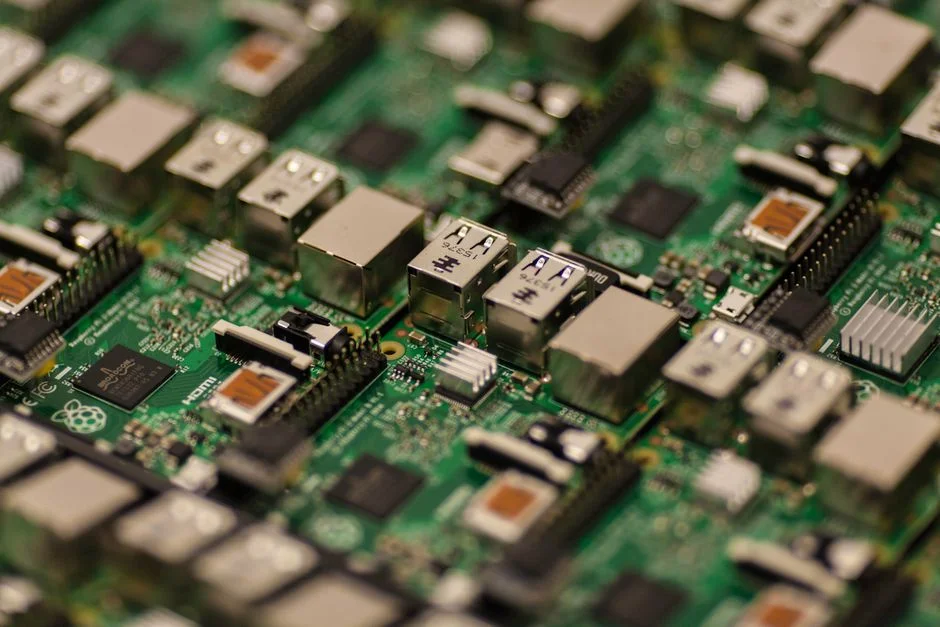
Edge devices are not miniature cloud servers; they are constrained by CPU, RAM, and power availability. Choosing the right hardware is a critical design decision. For simple telemetry collection, a low-power microcontroller (MCU) running RTOS might suffice. For complex signal processing or running machine learning inference, you likely need an embedded Linux platform with an ARM-based SoC and potentially a dedicated Neural Processing Unit (NPU). Understanding the thermal envelope and power budget of your hardware is essential, as these devices are often deployed in unventilated or harsh environments.
When writing software for these devices, you must be extremely conscious of resource utilization. Memory leaks that might be acceptable in a cloud-native microservice can cause a kernel panic on an embedded device, leading to a total loss of connectivity. Use memory-efficient languages like C, C++, or Rust where performance is critical, and reserve higher-level languages like Python or Node.js only for non-critical management tasks. Always implement watchdog timers to automatically reboot the device in the event of a hang, as physical access for a hard reset is rarely an option in remote deployments.
Data Governance and Lifecycle Management
In an edge-first architecture, the data lifecycle becomes more complex. You must decide what data stays on the edge, what gets aggregated, and what is discarded. This is a business policy decision that has significant technical implications. You need to implement a robust data retention policy that accounts for intermittent connectivity. If a device loses its backhaul link, it should buffer critical events to local storage, but it must eventually prune this data to prevent storage exhaustion.
Furthermore, you need to establish a clear pipeline for model training. While inference happens at the edge, the initial models are usually trained in the cloud using historical data. You need a way to push updated model weights to the edge devices without requiring a full firmware flash. This requires a well-defined API for model updates and a validation step to ensure that the new model performs correctly before it is fully promoted to production. Without this lifecycle management, your edge devices will quickly become obsolete as the accuracy of your models drifts over time.
Monitoring and Observability in Distributed Systems
Observability is arguably the most difficult aspect of edge computing. You cannot simply rely on standard APM tools designed for cloud data centers. You need a telemetry pipeline that can handle intermittent connectivity and low bandwidth. Consider using a push-based model for metrics, where edge devices periodically report their health status to a central collector. Use lightweight protocols like Prometheus remote write or custom UDP-based telemetry to minimize the impact on your already constrained bandwidth.
You must also monitor the ‘black box’ aspects of the system. Track not just application metrics, but also device-level metrics like CPU temperature, disk usage, and network signal strength. If a device starts showing high CPU usage, it might indicate a runaway process that needs to be killed by the orchestrator. If the signal strength drops, you might need to adjust the data reporting frequency dynamically to save power. This level of granular visibility is what separates a robust, production-ready edge deployment from a brittle, prototype-stage project.
Understanding Software Development for IoT
Building resilient IoT systems requires a deep understanding of both hardware and software constraints. When you move beyond simple sensor reading into complex edge logic, the development process demands a focus on reliability, security, and maintainability. It is not enough to write code that works; you must write code that survives in environments you cannot easily access. This is why standardizing your development workflow is so vital for long-term success. [Explore our complete Software Development directory for more guides.](/topics/topics-software-development/)
Factors That Affect Development Cost
- Device hardware capability requirements
- Complexity of local data processing logic
- Scale of the edge device fleet
- Maintenance of containerized orchestration environments
Costs vary significantly based on the hardware tier and the depth of custom software integration required for local inference.
Frequently Asked Questions
What is the role of edge computing in IoT?
The role of edge computing in IoT is to process data locally near the source of generation. This reduces the need to transmit large volumes of raw data to the cloud, enabling lower latency and better bandwidth management.
What are the primary benefits of edge computing for reducing latency and bandwidth costs?
Edge computing reduces bandwidth by filtering and aggregating data locally, sending only critical insights to the cloud. It reduces latency by keeping control loops local, avoiding the round-trip delay to a centralized data center.
What are examples of edge computing?
Examples include predictive maintenance in factories where vibration sensors analyze data locally, and smart cameras that perform object detection on-device before sending alerts to the cloud.
What does edge IoT mean?
Edge IoT refers to the integration of computing and storage resources directly into the IoT devices or gateways. This allows these devices to perform tasks that were previously reserved for the cloud.
Edge computing is a strategic necessity for any IoT deployment that aims to scale beyond a few dozen nodes. By pushing intelligence to the edge, you not only solve the immediate problems of bandwidth and latency, but you also create a more resilient and autonomous system that is less reliant on the availability of the cloud. However, this shift introduces significant complexity in orchestration, security, and lifecycle management, which must be addressed through rigorous engineering practices and robust tooling.
As you move forward with your IoT initiatives, keep the focus on the trade-offs between local autonomy and cloud-based orchestration. Every line of code running at the edge is a potential liability that requires maintenance, patching, and monitoring. By prioritizing simplicity, modularity, and containerization, you can build an edge architecture that provides real business value without incurring the crushing weight of unmanageable technical debt.
NR Tech Studio builds custom web apps, mobile apps, SaaS platforms, and internal tools for growing businesses. If you’re working through a technical decision, feel free to reach out — no commitment required.