The 2025 Stack Overflow Developer Survey highlights a critical trend: small engineering teams are increasingly burdened by cognitive overhead, with over 60% of developers citing fragmented communication as the primary inhibitor to velocity. As we move into 2026, the shift toward autonomous workflows and AI-assisted task orchestration is not merely an optional upgrade; it is a necessity for maintaining operational integrity in lean environments. When teams transition from manual ticketing to AI-driven project management, they often encounter systemic architectural failures that stem from poor tool selection and lack of integration strategy.
This article explores the technical landscape of project management for small teams, focusing on the integration of Large Language Models (LLMs) and automated agentic workflows. We will dissect the architectural pitfalls that lead to data silos, security vulnerabilities inherent in third-party API integrations, and the technical requirements for mapping complex development lifecycles into modern, AI-enhanced interfaces. Our objective is to provide a blueprint for establishing a resilient project management environment that scales with your technical debt rather than contributing to it.
Architectural Pitfalls in Tool Integration
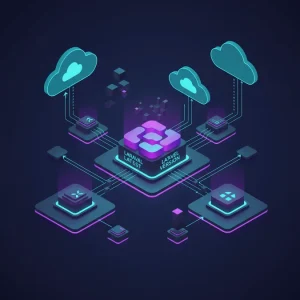
The most significant technical mistake small teams make is the tight coupling of their project management infrastructure with external SaaS platforms without a middleware abstraction layer. When your task management system is directly hardcoded into your CI/CD pipelines via brittle REST API calls, any change in the vendor’s schema triggers a cascading failure across your deployment environment. A robust architecture requires a decoupled approach where project metadata is synchronized through a centralized event bus or a custom-built API gateway.
Consider the scenario where a team attempts to automate status updates based on code commits. Without an intermediate service—such as a webhook handler that validates and sanitizes incoming payloads—the project management tool becomes a potential vector for injection attacks. Furthermore, small teams often neglect the state consistency of their data. When multiple AI agents are tasked with updating ticket status, race conditions often occur. Implementing a distributed lock manager or ensuring idempotent API operations is crucial. If you are struggling with these complexities, you might find it helpful to look into building a structured AI pipeline for document ingestion, as the principles of data normalization apply directly to managing project requirements and technical documentation.
Finally, avoid the trap of ‘tool sprawl’ where disparate systems (e.g., Jira, GitHub, Slack, and Notion) are connected through a web of unmanaged Zapier-like automations. This creates an unobservable black box. Instead, aim for a unified event schema where every project-related action is logged in a centralized database before being propagated to the UI. This ensures that when your team grows, you can easily migrate to more enterprise-grade solutions without losing historical context or breaking your automation chain.
Security Implications of AI-Driven Workflows
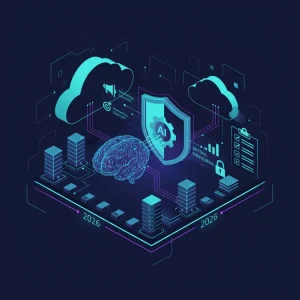
Integrating Large Language Models into project management tools introduces non-trivial security risks, specifically regarding data leakage and prompt injection. When you connect an AI agent to your private task repository, you are effectively providing an LLM access to your internal roadmaps, security vulnerabilities, and proprietary logic. If the underlying model is not configured for zero-data-retention, your intellectual property could be used to train future iterations of public models. Always verify that your project management tool supports private API endpoints and that you have strict data governance policies in place when utilizing services like the Claude API or OpenAI API.
Another common oversight is the lack of granular access control when exposing project data to AI agents. A common mistake is granting an agent ‘admin’ scope when ‘read-only’ or ‘limited-write’ permissions would suffice. This is particularly dangerous when using agents to automate documentation or sprint planning. You must implement a principle of least privilege, ensuring that every automated agent has a unique service account with restricted scopes. For teams handling sensitive data, especially in regulated industries, considering the nuances of securing AI integrations for sensitive workflows can provide a necessary framework for evaluating vendor compliance and data safety.
Furthermore, monitor for prompt injection attacks where malicious code commits or comments are crafted to manipulate the AI’s behavior. If your project management tool uses an LLM to summarize tickets or generate code reviews, it is vulnerable to attackers injecting instructions that could leak sensitive information or trigger unauthorized state changes. Always sanitize inputs before they are processed by an LLM and implement human-in-the-loop verification for any automated action that modifies production infrastructure or external-facing documentation.
The Role of Vector Databases in Project Contextualization
In 2026, the most effective project management tools will leverage Retrieval Augmented Generation (RAG) to provide context-aware assistance. By indexing your team’s historical pull requests, technical documentation, and post-mortem reports into a vector database, you enable your AI agents to provide highly relevant answers to complex queries. However, the implementation of this architecture is often botched by teams that fail to consider the embedding latency and the quality of their data retrieval pipelines.
You must ensure that your vector database is updated in real-time as tasks evolve. If the context window of your LLM is populated with stale data—such as architecture decisions that have since been superseded—the AI will hallucinate, leading to catastrophic technical debt. This is where evaluating the trade-offs between custom AI integration and off-the-shelf solutions becomes vital for small teams. Often, a custom-built RAG pipeline using a lightweight vector store like Pinecone or Weaviate provides more stability than relying on the proprietary, opaque RAG implementations found in generic project management suites.
To maintain high accuracy, focus on your metadata tagging strategy. Simply embedding raw text is insufficient; you must store context-rich metadata—such as the developer who wrote the code, the project phase, and the associated technical requirements—alongside your vectors. This allows for filtering before the search process, significantly reducing the noise in the retrieved context. When the AI has access to a structured, high-fidelity knowledge graph of your project, it becomes a force multiplier for your engineering team, capable of surfacing hidden dependencies and predicting delivery delays with remarkable accuracy.
Scaling Through Autonomous Agentic Workflows
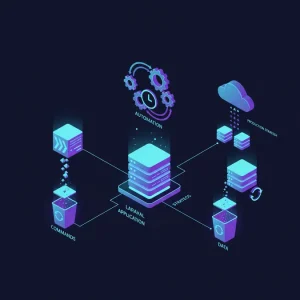
Autonomous agents represent the next evolution in project management. Rather than just tracking tasks, these agents can actively participate in the development lifecycle by triaging bug reports, generating test cases, and updating documentation. However, the transition to agentic workflows requires a fundamental shift in how teams define ‘work’. You must move away from static tickets and toward dynamic, goal-oriented objectives. This requires a high level of discipline in defining clear acceptance criteria that an AI can interpret.
When designing these workflows, ensure that your agents are built with observability in mind. You must be able to trace every decision an agent makes back to the underlying prompt and context. If an agent mislabels a high-priority bug, you need to identify whether the failure was due to a poor prompt, insufficient context, or a flaw in the model’s reasoning. This level of transparency is essential for building trust within the team. For teams dealing with complex decentralized systems, understanding the underlying mechanisms of implementing robust technical strategies for distributed projects can offer insights into maintaining accountability and state management across autonomous systems.
Finally, do not underestimate the complexity of maintaining agentic state. If an agent is responsible for managing a sprint, it needs a persistent memory of previous decisions. Implementing a state machine that governs the agent’s behavior is often superior to letting the LLM maintain state through a long, unstructured chat history. By defining clear transitions and rules, you ensure that the agent remains predictable and aligned with the team’s engineering standards, preventing the ‘drift’ that often occurs in long-running AI tasks.
Observability and Monitoring for AI-Integrated Systems
When your project management tool is powered by AI, traditional monitoring tools are insufficient. You need observability that spans across the application layer, the LLM API calls, and the vector database queries. If a task fails to update or an AI agent provides an incorrect estimate, you must be able to inspect the entire execution trace. This involves logging the raw prompt, the model response, the latency of each step, and the token usage for cost analysis.
Implement a centralized logging system that aggregates these events. Use distributed tracing to link a user request—such as ‘summarize this sprint’—to the multiple API calls that fetch data from your project board, query the vector database, and generate the summary via the LLM. This visibility is critical for troubleshooting ‘AI hallucinations’ and performance bottlenecks. Without it, you are effectively debugging in the dark, unable to distinguish between a service outage, a model failure, or a data quality issue.
Furthermore, establish automated alerts for anomalous behavior. If your AI agent suddenly begins generating an abnormally high volume of API calls or if the sentiment of the responses shifts drastically, your system should flag these events for manual review. In a small team, you cannot afford to have an automated system silently corrupting your project data. Treat your AI infrastructure with the same level of rigor as your production environment, with comprehensive testing, staging environments, and deployment rollbacks.
Data Governance and Regulatory Compliance
For small teams in specialized industries like healthcare or finance, data governance is not just a best practice; it is a legal requirement. When using AI-integrated project management tools, you must ensure that your data handling complies with regulations like HIPAA or GDPR. This means that any PII (Personally Identifiable Information) or sensitive client data must be scrubbed before it enters an LLM’s context window. Implementing an automated PII redaction layer in your data pipeline is a necessary technical investment.
You must also manage the lifecycle of your data. If your project management tool stores data in a cloud-based vendor’s repository, you are responsible for ensuring that this data is encrypted at rest and in transit. Furthermore, you need to understand the vendor’s data retention policies. Can you delete your data permanently? What happens to your data if the vendor is acquired or goes bankrupt? These are critical questions that must be addressed during your initial technical assessment of any tool.
Finally, consider the auditability of your project management processes. In many regulated environments, you are required to maintain a clear trail of who made what decision and when. AI agents can complicate this, as it is not always clear who ‘authorized’ an action. Ensure that your system logs all AI-initiated actions with a clear reference to the human supervisor or the automated trigger that initiated the process. This audit trail is essential for compliance and for the internal review of project performance.
Technical Debt Management in the AI Era
The irony of using AI to manage software development is that it can inadvertently accelerate the accumulation of technical debt if not monitored correctly. AI agents are excellent at generating code and documentation, but they often lack the ‘big picture’ perspective that a senior engineer brings to a project. If you allow AI agents to manage your ticket backlog and prioritize tasks, you may find that they optimize for short-term velocity at the expense of long-term maintainability.
To combat this, your project management tool must be configured to prioritize technical debt reduction. Create specific task categories for refactoring, dependency updates, and documentation improvements. Ensure that your AI agents are instructed to flag tasks that increase complexity without providing clear business value. Use the AI to analyze your code quality metrics and automatically generate tickets for areas of the codebase that are becoming unmaintainable.
Moreover, foster a culture where the AI’s suggestions are treated as advice, not mandates. The final decision on architecture, refactoring, and prioritization must remain with the human engineering team. Use the AI to gather data, provide insights, and suggest improvements, but retain the human element in the decision-making process. This balanced approach ensures that you harness the power of AI without compromising the integrity of your software or the health of your engineering team.
Integration with CI/CD Pipelines
A project management tool is only as good as its integration with your deployment pipeline. In a modern development environment, your project board should be a live reflection of your CI/CD status. When a build fails, the relevant ticket should automatically move to a ‘blocked’ state. When a deployment to production succeeds, the associated task should be marked as ‘done’. This synchronization reduces the manual effort required to keep project records up to date.
To achieve this, build a custom integration layer between your project management system and your CI/CD platform (e.g., GitHub Actions, GitLab CI). Use webhooks to trigger updates in your project management system based on pipeline events. Ensure that these webhooks are authenticated and that the data payloads are validated to prevent unauthorized updates. This integration creates a single source of truth, allowing your team to see the real-time status of their work without constantly switching contexts between tools.
Furthermore, use your CI/CD data to feed your AI agents. By providing the AI with visibility into build logs, test results, and deployment history, you enable it to provide more accurate context-aware assistance. For example, if an AI agent is tasked with triaging a bug, it should have access to the logs of the failed build that identified the bug. This level of integration transforms your project management tool from a static tracker into a powerful, automated hub for your entire engineering operation.
Mastering the AI Integration Ecosystem
The landscape of AI integration is vast, and navigating it requires a strategic understanding of APIs, model capabilities, and data pipelines. As you build your project management stack, focus on modularity and interoperability. Avoid proprietary ecosystems that lock you into a single vendor’s AI models. Instead, design your architecture to be model-agnostic, allowing you to swap out LLMs as new, more capable models emerge.
Stay informed about the latest developments in the field by engaging with official documentation and technical communities. The speed of innovation in AI is unprecedented, and the tools that are considered ‘best’ today may be obsolete in six months. Maintain a flexible, learning-oriented approach to your infrastructure, and prioritize building internal expertise in AI integration rather than relying solely on external tools. By mastering the fundamental principles of data flow, security, and observability, you ensure that your team remains competitive regardless of which tools you choose to use.
For those looking to deepen their understanding of how these technologies intersect, you can explore our complete AI Integration — AI APIs & Tools directory for more guides. This resource provides a comprehensive overview of the strategies and technologies required to build resilient, AI-powered systems in the modern development landscape.
Frequently Asked Questions
How do I choose the best AI-integrated project management tool for my small team?
Focus on tools that offer open API access, robust integration with your existing CI/CD pipeline, and granular data governance controls. Avoid platforms that lock you into a single model provider or lack transparency regarding how your data is used for model training.
Is it safe to use AI for managing internal project tasks?
It can be safe if you implement strict data sanitization, use private API endpoints, and ensure that sensitive PII is redacted before being processed. Always review the vendor’s security documentation and ensure they support zero-data-retention policies.
What is the role of RAG in modern project management?
RAG enables your project management system to retrieve relevant historical context—such as past code changes and documentation—to provide accurate, AI-generated insights. It prevents hallucinations by grounding the model’s responses in your team’s specific data.
Selecting the right project management tools for a small, high-growth engineering team in 2026 requires moving beyond simple feature comparisons. It demands a rigorous focus on architectural resilience, security-first integration, and the strategic deployment of AI agents. By prioritizing a decoupled infrastructure, robust observability, and a human-in-the-loop approach to AI, you can build a project management environment that scales effectively and empowers your developers to focus on what matters most: shipping high-quality software.
The path forward involves continuous learning and the willingness to adapt your processes as both your team and the AI ecosystem evolve. By keeping your data clean, your integrations secure, and your decision-making processes transparent, you will create a foundation for long-term success that survives the rapid pace of change in the software industry.
NR Studio builds custom web apps, mobile apps, SaaS platforms, and internal tools for growing businesses. If you’re working through a technical decision, feel free to reach out — no commitment required.