Productized software services are not magic bullets for infinite scalability; they cannot override the fundamental constraints of algorithmic complexity, data consistency, or the overhead of distributed systems. When you transition from bespoke engineering to a productized model, you are essentially moving from a state of high-entropy custom development to a state of constrained, repeatable execution. This transition requires a rigid architectural foundation that enforces boundaries on what your service can and cannot do.
Many technical founders mistakenly believe that productization is merely a shift in sales strategy. In reality, it is a transformation of your engineering lifecycle. If your current codebase is not modular, strictly typed, and driven by automated configuration management, attempting to productize will lead to a catastrophic accumulation of technical debt. This article explores the engineering requirements necessary to build and sustain a productized software service without compromising on system integrity or long-term maintainability.
Standardizing the Infrastructure Lifecycle
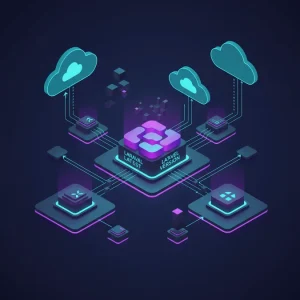
The foundation of any successful productized software offering lies in the standardization of the underlying infrastructure. When you offer a service that is repeatable, you must ensure that every instance—or every customer tenant—is deployed in a predictable, immutable environment. This is where Infrastructure as Code (IaC) becomes non-negotiable. By utilizing tools like Terraform or Pulumi, you define your stack in code, ensuring that the environment for Client A is identical to the environment for Client B, barring specific configuration parameters.
Consider the risks of configuration drift. In a manual deployment model, small differences in environment variables, database versions, or network policies eventually lead to ‘heisenbugs’ that only appear in specific customer environments. To mitigate this, you must adopt a strict CI/CD pipeline that treats infrastructure changes with the same rigor as application code. Every deployment should be triggered by a commit, validated by automated tests, and audited through a centralized logging system. For those managing complex deployments, understanding the nuances of navigating realistic development timeline expectations is crucial to ensuring that infrastructure provisioning does not become a bottleneck for your service delivery.
Furthermore, you must design your architecture to handle multi-tenancy effectively. Whether you choose a siloed database approach (one database per tenant) or a shared-schema approach (one database with tenant identifiers), the choice has massive implications for data isolation and backup recovery. For most productized services, a shared-schema approach requires rigorous row-level security (RLS) and strict application-level isolation to prevent cross-tenant data leakage. Failing to implement these controls at the architectural level early on will make future migration to a more secure model exponentially more expensive.
Managing Technical Debt in Repeatable Models
In custom software development, technical debt is often accepted as a byproduct of rapid iteration. In a productized service, however, technical debt is a compounding interest that can bankrupt your operational efficiency. Because you are selling a repeatable product, a single bug in your core engine is multiplied by the number of active customers. This creates a high-pressure environment where regression testing is not just a best practice—it is a survival mechanism.
To manage this, you must implement a robust testing pyramid. Unit tests ensure your internal logic remains sound, integration tests verify that your service interacts correctly with external APIs or databases, and end-to-end tests simulate the actual customer journey. When building for specific sectors, such as the educational landscape, you must also prioritize compliance and data governance as part of your technical debt management. For instance, strategic software development for the education sector requires a heightened focus on data privacy and role-based access control, which must be baked into the product architecture rather than patched on later.
Refactoring in a productized environment requires a ‘blue-green’ deployment strategy. By maintaining two identical production environments, you can route traffic to the updated version (green) while keeping the stable version (blue) on standby. This allows for near-zero downtime updates and provides an immediate rollback path if the new code introduces regressions. Without this capability, your ability to ship updates to your productized service will be severely constrained by the fear of breaking existing client instances.
Architecting for Multi-Tenant Scalability
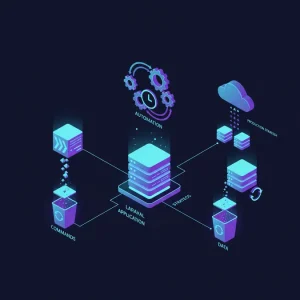
Scalability in productized services is rarely about raw processing power; it is about the ability to onboard new customers without increasing your operational overhead linearly. If your engineering team must manually intervene to provision a new customer, your service is not truly productized. You need an automated ‘onboarding engine’ that handles tenant creation, database migrations, and resource allocation programmatically.
The architecture should support horizontal scaling of the application layer. By containerizing your services using Docker and orchestrating them with Kubernetes, you can scale your compute resources based on real-time load. However, the database is often the ultimate bottleneck. Using a distributed database or a managed service that supports auto-scaling compute and storage is essential. You must also consider the impact of cold starts and connection pooling. If your service experiences bursty traffic, ensure that your connection pools are tuned to prevent database exhaustion during peak onboarding periods.
Monitoring is the final piece of the scalability puzzle. You cannot optimize what you do not measure. Implement comprehensive observability using tools like Prometheus and Grafana to track latency, error rates, and resource utilization per tenant. This granular visibility allows you to identify ‘noisy neighbors’—tenants that consume disproportionate resources—and take proactive measures to throttle or migrate them without affecting the rest of your user base.
The Role of API-First Development
An API-first approach is mandatory for any modern productized service. By defining your API contracts using OpenAPI or similar specifications before writing any code, you ensure that your front-end, back-end, and any third-party integrations are perfectly aligned. This decoupling allows you to iterate on your internal implementation without breaking the interfaces your customers rely on.
Versioning is the most critical aspect of API management. You should never force a breaking change on your clients. Instead, maintain multiple versions of your API and provide a clear deprecation policy. This gives your customers the time they need to migrate while allowing you to innovate on the backend. When working with non-profit organizations, the need for stable, long-term support is even more pronounced, as strategic software development for non-profit organizations often relies on minimal maintenance requirements and high reliability over extended periods.
Furthermore, consider the security implications of exposing APIs. Implement robust rate limiting, authentication via OAuth2 or OpenID Connect, and comprehensive logging for every API call. These controls protect your service from abuse and provide the audit trails necessary for compliance in regulated industries. An API-first architecture also facilitates easier integration with other SaaS tools, allowing your product to become part of a larger ecosystem, which significantly increases its value proposition.
Automating the Customer Feedback Loop
Feedback is the lifeblood of productized services, but it must be handled systematically. Instead of relying on manual email threads, integrate automated feedback loops directly into the application. This could take the form of in-app telemetry, user behavior analytics, or automated error reporting. When a user encounters an error, the system should automatically capture the state, the stack trace, and the user context, and route it to your engineering team for immediate triage.
This data-driven approach allows you to shift from reactive to proactive maintenance. If you notice a spike in errors related to a specific feature, you can address the root cause before a significant portion of your customer base is impacted. Furthermore, use this data to prioritize your roadmap. Productized services often suffer from ‘feature creep’ driven by individual customer requests. By analyzing usage data, you can distinguish between features that provide broad value and those that serve only a niche segment, allowing you to focus your engineering efforts where they provide the highest return.
Finally, ensure that your documentation is integrated into the development process. Use tools like Swagger to auto-generate documentation from your API definitions. When your documentation is always in sync with your code, you reduce the support burden on your engineering team and empower your customers to self-serve, which is a hallmark of a mature, scalable productized service.
Ensuring Data Integrity and Consistency
Data integrity is the most critical non-functional requirement in any software service. When you are managing data for multiple customers, a single corrupted database transaction can have cascading effects. You must implement robust transaction management and error handling at the application level. Always use database-level constraints (foreign keys, check constraints) to ensure data validity, and rely on application-level logic only as a secondary layer of defense.
Backups and disaster recovery must be automated and tested regularly. It is not enough to simply take daily snapshots; you must verify that those snapshots can be restored within an acceptable timeframe. Conduct regular ‘fire drills’ where you simulate a catastrophic failure and measure your recovery time objective (RTO) and recovery point objective (RPO). If your current processes cannot meet these targets, your productized service is fundamentally fragile.
For distributed architectures, consider the trade-offs between consistency, availability, and partition tolerance as defined by the CAP theorem. In most cases, you will want to prioritize consistency for financial or user data, which may require using distributed locking mechanisms or consensus algorithms like Raft or Paxos. While these add complexity, they are essential for preventing data anomalies that would erode customer trust.
Scaling Through Modular Architecture
As your service grows, a monolithic codebase will eventually become a liability. Transitioning to a modular architecture allows your team to work on different components of the service independently. By breaking your application into smaller, loosely coupled services (microservices or modular monoliths), you can deploy updates to one part of the system without risking the stability of the entire platform. This is vital for maintaining high velocity as your engineering team expands.
However, modularity comes with its own set of challenges, particularly regarding inter-service communication. Use asynchronous messaging patterns like RabbitMQ or Apache Kafka to decouple your services and handle bursts in traffic. This ensures that a failure in one service does not propagate to others, and it allows you to scale individual components based on their specific workload requirements. Keep in mind that distributed systems are inherently more complex to monitor and debug, so invest early in distributed tracing tools like Jaeger or Honeycomb.
When designing your modules, follow the principle of ‘bounded contexts’ from Domain-Driven Design (DDD). Each module should have a clear responsibility and a well-defined interface. This prevents the ‘spaghetti code’ that often plagues growing software projects and makes it easier to onboard new engineers, as they only need to understand the context of the module they are working on, rather than the entire system.
Security by Design in Productized Services
Security cannot be an afterthought in a productized service. Because you are holding data for multiple clients, you are a high-value target for attackers. Implement a ‘security by design’ philosophy where security controls are integrated into every stage of the development lifecycle. This includes static analysis of your code, dynamic analysis of your running services, and regular penetration testing.
Identity and Access Management (IAM) is paramount. Use industry-standard protocols like OAuth2 and OpenID Connect to manage user authentication and authorization. Ensure that your application enforces the principle of least privilege, both for users and for the system components themselves. Use secret management tools like HashiCorp Vault to store sensitive information like API keys and database credentials, and rotate these secrets regularly to minimize the impact of a potential breach.
Finally, maintain a rigorous patch management process. Whether it is your application dependencies or your underlying OS packages, ensure that you have a system to identify and remediate vulnerabilities as soon as they are disclosed. In a productized model, you are responsible for the security of your customers’ data; failing to keep your systems patched is a fundamental failure of your service obligations.
Foundational Resources for Architectural Growth
Building a successful productized service requires a deep understanding of both the technical and operational components. By leveraging established architectural patterns and maintaining a strict focus on system integrity, you can create a platform that scales efficiently and delivers long-term value. As you continue to refine your processes, remember that architectural decisions are rarely permanent, but they do have long-term consequences on your ability to iterate and grow.
For further guidance on building and scaling your software development operations, we encourage you to explore our comprehensive resources. [Explore our complete Software Development — Outsourcing directory for more guides.](/topics/topics-software-development-outsourcing/)
Factors That Affect Development Cost
- Infrastructure complexity
- Degree of automation
- Multi-tenancy model
- Compliance requirements
- Technical debt remediation
Development effort scales based on the desired level of self-service automation and infrastructure abstraction.
The shift to a productized software service is fundamentally an engineering challenge that demands a disciplined approach to architecture, automation, and security. By standardizing your infrastructure, managing technical debt with rigor, and adopting an API-first mindset, you can build a system that is both scalable and maintainable. This transformation requires moving away from the ‘quick fix’ mentality of custom development toward a model that values long-term stability and repeatable execution.
If you are looking to refine your development lifecycle or need an expert partner to help navigate the complexities of scaling your software service, we are here to support your growth. Stay tuned for more technical deep dives by joining our newsletter or browsing our latest architectural guides.
NR Studio builds custom web apps, mobile apps, SaaS platforms, and internal tools for growing businesses. If you’re working through a technical decision, feel free to reach out — no commitment required.