Vehicle Fleet Maintenance Tracking Software: A CTO’s Guide

Leo Liebert
NR Studio
7 min read

Vehicle fleet maintenance tracking software is a specialized enterprise application designed to capture, monitor, and analyze the operational health of a motorized asset portfolio. From a CTO’s perspective, this is not merely a digital logbook; it is a critical data-driven engine that directly influences the Total Cost of Ownership (TCO) of physical assets. By centralizing telemetry data, service schedules, and procurement workflows, organizations mitigate unplanned downtime, extend the lifecycle of high-value vehicles, and enforce strict adherence to safety compliance protocols.

Building or procuring such a system requires a deep understanding of hardware-software integration, real-time data ingestion, and complex relational modeling. When evaluating your technological path, you must reconcile the need for real-time observability with the realities of distributed system architecture. Whether you are managing light-duty delivery vans or heavy-duty construction machinery, the underlying software must prioritize data integrity, low-latency reporting, and robust API connectivity to your existing ERP or CRM infrastructure.

Architectural Pillars of Fleet Maintenance Systems

At the core of any high-performance fleet maintenance platform lies a robust Database Design capable of handling high-velocity time-series data. Vehicle telemetry—such as engine hours, mileage, and diagnostic trouble codes (DTCs)—creates an immense ingestion load. We recommend utilizing a hybrid storage strategy: PostgreSQL for relational data regarding assets and personnel, and a time-series optimized database (or a specialized extension like TimescaleDB) to handle the granular telemetry streams. This separation ensures that your primary application logic remains responsive even during high-volume data bursts.

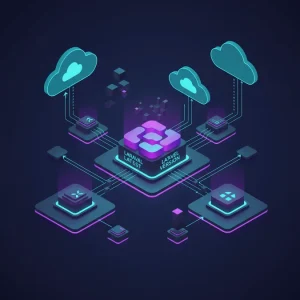
Furthermore, implementing SOLID Principles within your backend architecture is non-negotiable. As maintenance workflows evolve—from simple oil change alerts to predictive maintenance models utilizing machine learning—your system must remain modular. A tightly coupled architecture will result in significant technical debt, making it difficult to integrate new sensors or update compliance logic without triggering regression errors. We advocate for a service-oriented architecture (SOA) where the telemetry ingestion service is decoupled from the asset management dashboard. This allows you to scale your ingestion layer independently as your fleet grows, ensuring that your Software Scalability strategy aligns with your operational expansion.

When planning your development, it is helpful to consider how you present your requirements to stakeholders. If you are struggling to define the scope of your maintenance platform, it is worth reviewing how to articulate your technical vision effectively to ensure all stakeholders are aligned before a single line of code is written.

Operational Impact and Performance Benchmarks

The business value of fleet maintenance software is measured by the reduction in Mean Time To Repair (MTTR) and the improvement in Asset Availability. A well-architected system provides actionable insights rather than just raw data. For instance, by implementing automated triggers based on engine telemetry rather than static calendar intervals, companies can reduce unnecessary service visits by 15-20%. This shift from reactive to preventive, and eventually predictive maintenance, is the primary lever for controlling operational expenditure.

Performance benchmarks for such systems should focus on end-to-end latency. A technician in the field needs near-instant access to a vehicle’s maintenance history via a mobile interface. If the dashboard takes more than two seconds to load the latest inspection report, user adoption will plummet. We recommend leveraging CI/CD pipelines to automate performance regression testing. Every build should be stress-tested against synthetic datasets representing thousands of assets to ensure the system remains performant under load. Remember that technical excellence is not just about features; it is about the reliability of the system under field conditions where connectivity might be intermittent.

Before you commit to a specific development roadmap, you should consider the nuances of the discovery phase. Understanding what to expect in initial technical consultations can save you months of misalignment and help you identify potential bottlenecks in your proposed technical stack.

Cost Estimation and Financial Modeling

Developing a custom fleet maintenance solution involves significant upfront investment, but the long-term TCO is often lower than high-volume licensing fees for generic SaaS platforms. Below is a breakdown of cost models for a typical mid-sized enterprise implementation.

Model Scope Estimated Effort
MVP Development Core CRUD, basic telemetry ingestion, reports 400-600 hours
Advanced Integration ERP/CRM sync, real-time map tracking, ML alerts 800-1200+ hours
Enterprise Scalability Multi-region, high availability, custom IoT gateway 1500+ hours

The cost of development is heavily influenced by the complexity of your data integrations. If you require seamless connectivity with legacy hardware via CAN bus adapters, you must account for specialized firmware engineering. We typically see projects in this space range from $60,000 to over $250,000 depending on the integration density. Maintenance costs should also be factored in at roughly 15-20% of the initial development cost annually to cover cloud infrastructure, security patching, and ongoing feature updates.

Common Technical Pitfalls and Risk Mitigation

One of the most frequent failures in fleet software development is the underestimation of data quality. Sensors are inherently noisy; they produce erratic values, disconnect frequently, and suffer from interference. If your system lacks a robust data validation layer, your maintenance alerts will trigger false positives, leading to ‘alert fatigue’ among your maintenance staff. We recommend implementing a data cleaning pipeline using a middleware layer that filters out anomalies before they hit the primary database. This ensures that your business intelligence reports reflect reality.

Another pitfall is ignoring the offline-first requirement for mobile applications. Field technicians often work in remote areas with poor network coverage. Your mobile application must support local caching and asynchronous synchronization to ensure that inspection logs are captured correctly and uploaded once connectivity is restored. Failing to address these edge cases during the initial design phase creates a brittle user experience that hinders rather than helps your operations. Always prioritize a design that assumes network failure as a standard operating condition.

Strategic Roadmap for Long-term Success

To ensure your fleet maintenance software remains an asset rather than a liability, you must maintain a clear view of your technical debt. As your fleet grows, the initial logic you wrote for 100 vehicles may not support 10,000. Regularly scheduled code reviews and refactoring sessions are essential. Utilize containerization technologies like Docker and orchestration platforms like Kubernetes to manage your application lifecycle. This approach allows you to deploy updates with minimal downtime and scale individual services according to demand.

Furthermore, prioritize security from day one. Fleet data is sensitive; it contains location history and operational patterns that could be exploited. Implement rigorous authentication, role-based access control (RBAC), and end-to-end encryption for all data in transit. By treating your software as a high-security infrastructure component rather than a simple utility, you protect your company from both operational and reputational risks. As you navigate these complexities, remember that the goal is to build a system that is as durable as the vehicles it maintains.

Explore our complete Software Development — Cost & Estimation directory for more guides.

Factors That Affect Development Cost

  • Hardware integration complexity
  • Real-time telemetry volume
  • Offline-first mobile requirements
  • Cloud infrastructure and scaling needs
  • API complexity and third-party ERP synchronization

Costs vary significantly based on the number of concurrent data streams and the depth of custom hardware protocol integration required.

Designing a vehicle fleet maintenance tracking system is a complex engineering endeavor that demands a balance between immediate operational needs and long-term architectural stability. By focusing on robust data ingestion, modular service design, and a realistic TCO model, you can build a platform that genuinely enhances your fleet’s efficiency. The key is to avoid the trap of over-engineering early, while ensuring the foundation is extensible enough to handle future growth.

If you are currently planning your fleet management infrastructure, we invite you to take advantage of our specialized expertise. Our team provides an Architecture Review service designed to identify potential technical debt, validate your technology stack, and ensure your roadmap is aligned with your business goals. Let us help you build a resilient, scalable solution that stands the test of time.

NR Studio builds custom web apps, mobile apps, SaaS platforms, and internal tools for growing businesses. If you’re working through a technical decision, feel free to reach out — no commitment required.

References & Further Reading

Leave a Comment

Your email address will not be published. Required fields are marked *