In modern enterprise environments, the promise of autonomous AI agents is often stifled by a singular, paralyzing bottleneck: the tension between granting agents the agency to execute tasks and maintaining absolute control over internal system integrity. When an agent is empowered to query databases, trigger API deployments, or interact with private infrastructure, the risk surface increases exponentially. A misconfigured agent does not just fail a task; it risks cascading failures across your production environment.
Architecting a system where an AI agent can safely interact with internal tools requires moving beyond simple API key management. It involves establishing a robust, multi-layered security perimeter that treats the AI agent as a high-privilege service account while enforcing strict, deterministic guardrails. This article explores the technical infrastructure required to build this interface, focusing on credential isolation, request validation, and observability.
The Principle of Least Privilege in Agentic Workflows
The foundation of secure AI agent interaction is the strict application of the Principle of Least Privilege (PoLP). In traditional software development, developers use role-based access control (RBAC) to limit user permissions. When dealing with AI agents, this paradigm must be extended to machine-to-machine communication. An agent should never be granted a broad ‘read/write’ scope across your entire infrastructure. Instead, you must implement granular, function-specific scoped tokens.
Consider a scenario where an agent needs to update a customer record in your CRM. Rather than providing the agent with a global API key, you should create a dedicated service account that possesses permissions only for the specific endpoint required to perform that update. When you are optimizing your database schema to support these operations, ensure that the database user associated with the agent is restricted to specific tables or even stored procedures, preventing the agent from performing unauthorized DDL operations.
Furthermore, implementing a proxy layer between the AI agent and your internal tools allows you to inspect incoming requests. This proxy acts as a gatekeeper, verifying that the agent’s intent aligns with its current task. If an agent attempts to call an endpoint outside of its predefined ‘toolset,’ the proxy should reject the request and log a security event. This prevents ‘prompt injection’ attacks where a malicious or hallucinating agent might attempt to circumvent its original instructions to access sensitive administrative functions.
Implementing a Secure Gateway for Tool Interaction
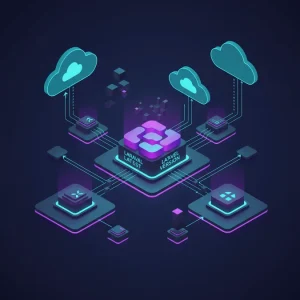
A secure gateway is the most critical component in your infrastructure when managing agentic tool access. This gateway serves as a centralized point of entry for all requests originating from an AI agent. By consolidating all tool calls through this gateway, you gain the ability to enforce authentication, rate limiting, and request sanitization. This is particularly relevant when you are transitioning from serverless to containers to handle the increased load and complexity of these intermediate request-processing layers.
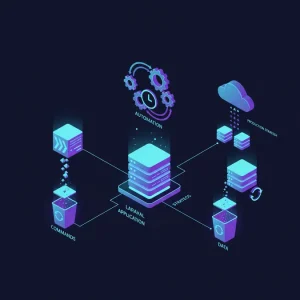
When an agent needs to perform an action, it should not communicate directly with the target internal service. Instead, it should emit a structured request to your API gateway. The gateway validates the request against a schema definition, such as an OpenAPI specification, ensuring that the parameters provided by the agent conform to expected types and ranges. This validation step is a primary defense against malformed requests that could otherwise cause unexpected behavior in downstream services.
For instance, if your agent is tasked with querying a analytics dashboard, the gateway ensures the agent only requests data within an authorized time range. By offloading this validation logic to the gateway, you keep the agent’s core code clean and focused on reasoning, while the infrastructure handles the heavy lifting of security compliance. This separation of concerns is essential for scaling complex AI integrations without introducing vulnerabilities at every node.
Isolating Agent Context with Ephemeral Infrastructure
To prevent cross-contamination and resource exhaustion, consider running agents within ephemeral, isolated environments. When an agent is tasked with a specific operation, you can spin up a containerized instance that exists only for the duration of that task. Once the task is completed, the environment is destroyed, ensuring that any residual state or unauthorized configuration changes do not persist. This approach is highly effective in managing hybrid cloud architecture where you need to maintain a strict separation between public-facing AI endpoints and private data-processing backends.
By leveraging container orchestration, you can define resource limits for each agent instance. This prevents an agent from consuming excessive CPU or memory, which could lead to a denial-of-service condition for other internal services. Furthermore, running agents in isolated networks ensures that they cannot communicate with internal endpoints that are not explicitly exposed to their VPC or subnet. This network-level isolation is a vital layer in the ‘defense-in-depth’ strategy required for enterprise-grade AI integration.
Additionally, you should implement a logging and auditing mechanism that captures every request and response between the agent and your tools. This audit trail is essential for debugging and forensic analysis in the event of an anomaly. If an agent behaves unexpectedly, you can review the sequence of events to determine whether the issue was a hallucination, a logic error in the agent’s instruction, or an attempt to exploit a vulnerability. Without comprehensive logging, it is nearly impossible to maintain visibility into the complex reasoning processes of modern LLMs.
Handling Sensitive Data with RAG and Vector Databases
When agents require access to large datasets, such as internal documentation or historical logs, RAG (Retrieval Augmented Generation) is the standard approach. However, RAG introduces its own set of security challenges. If an agent can query your entire vector database, it might gain access to sensitive information it is not authorized to see. To mitigate this, you must implement access-control-aware retrieval.
When you are developing strategies for sharding large databases, consider how this affects your vector search performance and security. Your vector database should support metadata filtering, allowing you to restrict search results based on the user or the agent’s permission level. Before the agent receives any context from the vector database, the retrieval layer should filter the results to ensure that only documents accessible to the agent’s current service role are returned.
Furthermore, ensure that the data stored in your vector database is encrypted at rest and in transit. This is particularly important when dealing with sensitive intellectual property or customer data. By combining RAG with strict metadata-based filtering, you can provide agents with the context they need to perform effectively without exposing the entirety of your internal knowledge base to a single, potentially compromised agent instance.
The Role of Human-in-the-Loop Verification
For high-stakes actions, such as modifying production database entries or initiating financial transactions, direct agentic execution should be forbidden. Instead, implement a ‘human-in-the-loop’ (HITL) workflow. In this model, the agent proposes an action, but the action is not executed until a human operator reviews and approves the request. This provides a critical safety net against AI hallucinations and logic errors that could have catastrophic consequences.
Your infrastructure should support a notification system that alerts authorized personnel when an agent requests a sensitive operation. This notification should include a summary of the agent’s reasoning, the proposed action, and the potential impact. Once approved, the system logs the approval and allows the agent to proceed. This approach not only provides security but also builds organizational trust in the AI system, as stakeholders can see exactly what the agent is doing and why.
When designing these workflows, focus on minimizing the friction for the human reviewer. If the approval process is too slow or complex, teams will be tempted to bypass it. Use intuitive dashboard interfaces that allow for quick review and authorization, ensuring that your security measures do not become a bottleneck for operational efficiency.
Monitoring and Detecting Anomalous Agent Behavior
Even with the most robust security controls in place, you must assume that failures will occur. Continuous monitoring is essential for identifying anomalous behavior before it escalates into a security incident. Use observability tools to track the ‘health’ of your agents, including metrics like request success rates, latency, and the frequency of tool usage. Unexpected spikes in specific tool calls can be an early indicator of a compromised agent or a logic loop.
Implement behavioral analysis to establish a baseline for your agent’s normal operations. If an agent suddenly starts querying databases at an unusual time or accessing endpoints it has never used before, your monitoring system should trigger an automatic alert or even temporarily suspend the agent’s access. This proactive approach to security allows you to address potential issues in real-time, rather than discovering them through retroactive audits.
Furthermore, consider implementing an anomaly detection model that specifically targets LLM-related risks, such as prompt injection attempts. By analyzing the input prompts and the subsequent output, you can identify patterns that suggest an attempt to manipulate the agent’s behavior. This requires a sophisticated observability stack that can process both structured logs and unstructured natural language data, providing you with a complete view of your agent’s activity.
Managing Authentication Tokens and Secrets
One of the most common failure points in AI integration is the insecure management of credentials. Never hardcode API keys or database credentials within your agent’s source code or configuration files. Instead, use a dedicated secrets management service, such as AWS Secrets Manager or HashiCorp Vault, to store and rotate credentials automatically. This ensures that even if an agent’s environment is compromised, the attacker does not gain long-term access to your internal systems.
When an agent needs to access a tool, it should request a short-lived token from your secrets manager. This token should have an expiration time that matches the expected duration of the task. By using short-lived tokens, you significantly reduce the window of opportunity for an attacker to misuse stolen credentials. Furthermore, ensure that your secrets management service provides detailed audit logs, allowing you to track which agent requested which secret and when.
When configuring these permissions, follow the principle of least privilege strictly. Each agent should have access only to the secrets necessary for its specific functions. If you find that an agent is accessing a wide range of secrets, it is a clear sign that you need to decompose the agent’s responsibilities into smaller, more specialized services. This architectural discipline is essential for maintaining a secure and manageable AI ecosystem.
Versioning and Rollback Strategies for Agent Logic
AI agents are inherently non-deterministic, which makes versioning and rollback strategies more complex than in traditional software. When you update an agent’s instructions or its underlying model, you must ensure that these changes do not introduce unintended side effects. Implement a robust versioning strategy for your prompts and agent logic, allowing you to quickly roll back to a known-stable state if an update causes performance degradation or security issues.
Before deploying a new version of an agent, run it through an extensive testing suite that simulates real-world interactions with your internal tools. This ‘sandbox’ testing is crucial for identifying potential hallucinations or logical errors before they impact your production environment. By maintaining a rigorous CI/CD pipeline for your agentic workflows, you can ensure that changes are thoroughly vetted and that the risk of regression is minimized.
Furthermore, consider implementing a ‘canary’ deployment strategy for your agents. By routing a small percentage of tasks to the new agent version, you can monitor its behavior in a real-world setting without exposing your entire system to potential risks. If the canary agent performs as expected, you can gradually increase its traffic, ensuring a smooth and controlled rollout of new capabilities.
Addressing Hallucinations and Non-Deterministic Outputs
Hallucinations—instances where an AI generates factually incorrect or nonsensical information—are a major challenge in agentic systems. When an agent has access to internal tools, a hallucination can lead to incorrect data modifications or unauthorized queries. To mitigate this, you must implement strong validation checks on both the inputs and outputs of the AI agent. Never trust the agent’s output implicitly; always verify that the result matches your expected schema and business logic.
Incorporate ‘reasoning checks’ into your agent’s workflow. Before the agent executes a tool call, force it to ‘think’ about the action and explain its reasoning. You can then use a secondary model or a deterministic validation script to verify that the reasoning is sound and that the proposed action is safe. This multi-step process adds latency, but it significantly reduces the risk of errors in sensitive operations.
Additionally, provide the agent with clear, unambiguous instructions and constraints. The more specific your prompts and tool definitions are, the less room the agent has for interpretation errors. By treating your agent’s instructions as a formal contract, you can enforce strict behavior and reduce the likelihood of unpredictable outputs.
Scalability Considerations for Agentic Systems
As you scale your AI integration to support thousands of concurrent agentic tasks, you will inevitably face bottlenecks in your infrastructure. Ensure that your API gateway, authentication service, and logging systems are designed for high throughput and low latency. Use distributed systems principles to handle the increased load, such as implementing horizontal scaling for your request-processing layers and using caching to reduce the strain on your back-end services.
Consider the impact of agentic workflows on your database performance. If agents are frequently querying large datasets, you might need to implement read replicas or specialized caching strategies to ensure that the agent’s performance does not negatively impact your primary application. This is where a deep understanding of your storage layer becomes critical, as you must balance the need for real-time agent access with the stability of your production databases.
Finally, monitor the cost of your AI infrastructure, including the costs associated with model inference and the computational resources required for your agentic framework. By optimizing your prompts and using smaller, more efficient models for simpler tasks, you can maintain high performance while keeping your infrastructure costs within reasonable bounds. This requires a balanced approach that considers both the technical requirements and the operational realities of your business.
Integrating with Internal CI/CD Pipelines
To ensure consistency, your agentic development should mirror your existing software development lifecycles. Integrate your agent’s prompt management, tool definitions, and testing suites into your existing CI/CD pipelines. This ensures that every change to your agent’s capabilities is documented, tested, and deployed in a controlled manner, just like any other piece of production software. By treating your agentic code as first-class citizens in your development environment, you can maintain higher standards of quality and security.
Use automated testing to verify that your agent’s tool calls conform to your API specifications. If a developer changes an internal API, the agentic testing suite should immediately flag any incompatibility, allowing you to address the issue before it breaks the agent. This proactive approach to integration testing is essential for maintaining the stability of your AI-enabled systems as they evolve over time.
Finally, ensure that your deployment process includes clear rollback paths for your agentic configurations. If a new model update or prompt change leads to unexpected behavior, you should be able to revert to the previous version in seconds. This level of operational maturity is what separates robust, enterprise-grade AI integrations from experimental, unmanageable prototypes.
Additional Resources and Cluster Information
Building secure, reliable AI agents is an ongoing process of refinement and architectural discipline. As you continue to integrate AI into your internal tools, keep focusing on the fundamental principles of security, observability, and modularity. By building a solid foundation, you can unlock the true potential of AI agents while maintaining the integrity and availability of your critical business systems.
Explore our complete AI Integration — AI APIs & Tools directory for more guides.
Frequently Asked Questions
How do I secure AI agent access?
Secure AI agent access by applying the principle of least privilege, using scoped service accounts, routing requests through a validated API gateway, and implementing human-in-the-loop verification for sensitive operations.
What is the 30% rule in AI?
The 30% rule typically refers to the threshold of confidence or accuracy required before an AI system is permitted to perform autonomous actions, ensuring that human oversight is triggered when the AI’s certainty falls below this level.
How do AI agents access tools?
AI agents access tools by invoking predefined function calls or APIs provided in their environment, which are authenticated using temporary credentials and validated by a secure gateway before execution.
How to run AI agent safely?
Run AI agents safely by isolating them in containerized ephemeral environments, restricting their network access, and maintaining rigorous logging and observability to detect and respond to anomalous behavior in real-time.
Securing AI agent access to internal tools is not a one-time configuration but a continuous commitment to architectural rigor. By implementing the strategies discussed—ranging from granular access control and ephemeral environments to human-in-the-loop verification and proactive monitoring—you can safely empower your agents to drive significant operational efficiencies. The goal is to build a system where the agent is a reliable, bounded contributor to your infrastructure, rather than an unpredictable security risk.
As you refine your implementation, remember that the most secure systems are those that are designed with failures in mind. By maintaining comprehensive audit trails, robust testing pipelines, and clear rollback strategies, you ensure that your organization remains resilient even when facing the inherent uncertainties of modern AI technologies.
NR Studio builds custom web apps, mobile apps, SaaS platforms, and internal tools for growing businesses. If you’re working through a technical decision, feel free to reach out — no commitment required.