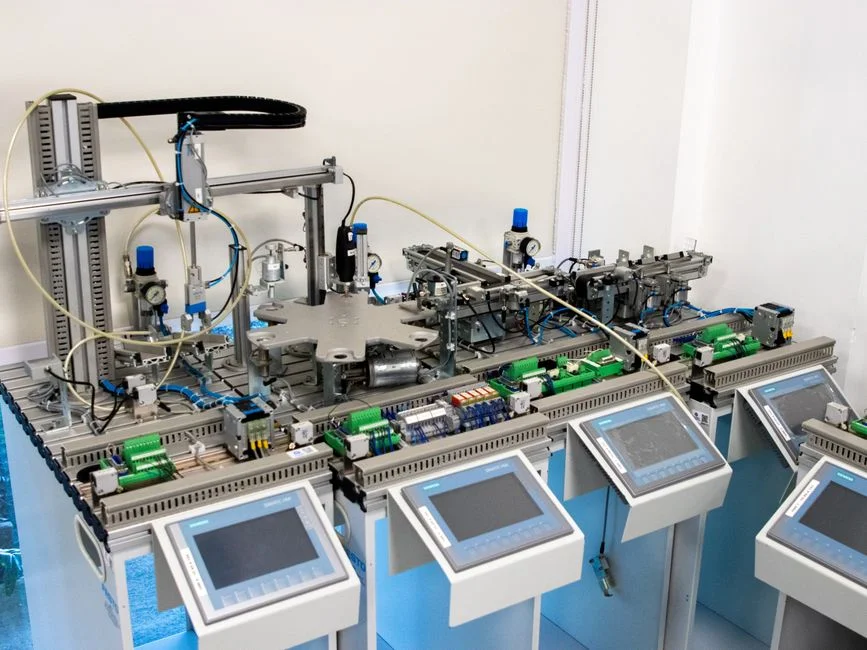

With the recent integration of real-time telemetry pipelines and event-driven architecture into modern manufacturing stacks, production scheduling software has evolved from static Excel-based Gantt charts into dynamic, reactive systems. As a CTO, I have observed that legacy systems often fail because they lack the ability to process high-velocity machine data alongside human-centric labor constraints. Today’s manufacturing environments require a departure from monolithic scheduling engines toward modular, service-oriented architectures that can handle the complexity of multi-line, multi-site operations.
This article examines the technical requirements for building or upgrading production scheduling software, specifically addressing the challenges of data synchronization, constraint-based optimization, and the need for robust API-first design. We move beyond basic CRUD operations to explore how custom software development enables true operational efficiency in the factory floor.
Architectural Foundations of Modern Scheduling Engines
At the core of any production scheduling system lies the conflict between deterministic planning and stochastic reality. A robust scheduling engine must bridge this gap by maintaining a high-fidelity state machine that reflects the current status of every workstation, tool, and operator. When designing these systems, we prioritize an event-driven architecture where every state change—such as a machine downtime incident or a raw material shortage—triggers an immediate re-evaluation of the schedule. This requires a sophisticated message broker, such as Apache Kafka or RabbitMQ, to ensure that the scheduling engine receives telemetry data with minimal latency.
The scheduling engine itself should be decoupled from the UI and the persistence layer. By utilizing a domain-driven design (DDD) approach, we can encapsulate complex scheduling heuristics within a dedicated service. This allows for the implementation of various algorithms—from simple Earliest Due Date (EDD) to complex genetic algorithms or simulated annealing for multi-objective optimization—without disrupting the broader ecosystem. As you begin to define these complex requirements, it is essential to document the logic behind these heuristics; a well-structured document is vital, and you can learn more about this process in our guide on how to write a software requirements document.
Furthermore, data integrity is paramount. In a factory setting, the scheduling software acts as the ‘source of truth’ for the shop floor. Therefore, the database schema must be optimized for temporal queries. We often recommend using PostgreSQL with specialized extensions for time-series data to track historical performance against planned schedules. This enables the system to perform predictive analytics, identifying bottlenecks before they manifest as missed deadlines or excessive work-in-progress (WIP) inventory.
Integrating Real-Time Machine Telemetry
The effectiveness of a production schedule is inversely proportional to the ‘information gap’ between the shop floor and the planning office. Modern factories generate massive amounts of data through PLC (Programmable Logic Controller) integration and IoT sensors. Integrating this telemetry into your scheduling software transforms the system from a passive planning tool into an active orchestration platform. This requires a robust middleware layer capable of translating raw machine protocols (like OPC-UA or Modbus) into normalized JSON events that your application can consume.
By ingesting real-time OEE (Overall Equipment Effectiveness) data, the scheduling engine can automatically adjust throughput projections. If a CNC machine reports a vibration anomaly, the system should immediately flag the potential for a maintenance window and re-sequence the pending jobs to mitigate the impact. This level of automation is only possible when the integration layer is built with high availability in mind. We emphasize the importance of implementing circuit breakers and retry policies when dealing with remote machine nodes to prevent a network glitch from cascading into a system-wide failure of your scheduling logic.
Additionally, the ingestion layer must be strictly typed. Using TypeScript across the entire stack—from the ingestion microservice to the frontend dashboard—ensures that the data contracts remain consistent. This prevents the ‘schema drift’ that often plagues industrial software projects, where undocumented changes in machine output formats break the scheduling engine’s inputs. When you engage in strategic software development services, we focus heavily on creating these resilient data pipelines that allow your factory to operate with maximum transparency and minimal manual oversight.
Constraint Satisfaction and Heuristic Optimization
Scheduling in a factory is a classic Constraint Satisfaction Problem (CSP). You are balancing machine availability, operator skill sets, tool wear, material availability, and customer deadlines. A naive approach using simple loops will quickly fail as the number of variables grows. To scale, you must utilize specialized solvers or custom heuristics that can prune the search space effectively. In our experience, off-the-shelf solvers often struggle with the specific ‘edge cases’ of custom manufacturing, such as non-linear setup times or dependent task sequences.
When building a custom engine, we recommend a hybrid approach. Use a constraint solver (such as Google OR-Tools) to find a feasible schedule, then apply a local search or simulated annealing heuristic to optimize that schedule for specific KPIs, such as minimizing makespan or maximizing resource utilization. The key is to expose the ‘weights’ of these objectives to the plant manager via a configuration interface. This allows the system to remain flexible as business priorities shift between speed-to-market and cost-efficiency.
The performance of these algorithms is highly dependent on the quality of the input data. If your machine capacity definitions are static, the solver will produce an ‘optimal’ schedule that is functionally useless. Therefore, the software must support dynamic capacity modeling. This means the engine should account for shift patterns, planned maintenance, and even historical performance variances. By modeling these as dynamic constraints rather than hard-coded constants, the system remains accurate even as the factory environment evolves over time.
API-First Design for Manufacturing Ecosystems
A production scheduling system does not exist in a vacuum; it must communicate with ERP, MES, and WMS platforms. An API-first development strategy is non-negotiable. By exposing your scheduling logic through a well-documented RESTful or GraphQL API, you enable modular growth. For instance, you might initially integrate with an existing ERP for inventory data, but later decide to build a custom inventory module. If your scheduling engine is properly decoupled through an API, this swap can occur without a total system rewrite.
The API layer also serves as the integration point for mobile applications. Floor supervisors often need to access the schedule from tablets or handheld devices. A reactive API that supports WebSockets allows the dashboard to update in real-time as the schedule changes, providing workers with immediate visibility into their next tasks. This reduces the time lost to manual communication and prevents the synchronization errors that occur when information is disseminated via paper reports or static email updates.
Security is a critical component of this API-first approach. Because your scheduling software contains sensitive operational data, you must implement granular role-based access control (RBAC). A machine operator should only see the tasks assigned to their workstation, while a plant manager requires a global view. By centralizing authentication and authorization at the API gateway level, you ensure that security policies are consistently applied across all interfaces, whether web, mobile, or third-party system integrations.
Handling Data Persistence and Temporal Queries
The temporal nature of production scheduling presents unique challenges for database design. A standard relational schema often struggles to answer questions like ‘What was the projected schedule for Line 4 at 10:00 AM on Tuesday, given the state of the system at that time?’ To support this, you need a versioned data model. Every time the schedule is recalculated, the system should generate a snapshot of the state. This allows for ‘what-if’ analysis, where planners can simulate different scenarios without altering the active production schedule.
We recommend using a combination of a relational database for core entity relationships (e.g., WorkOrder, Resource, Operator) and a time-series database for historical telemetry. This separation of concerns improves performance significantly. The relational database maintains the integrity of the planning objects, while the time-series store provides the high-throughput capability needed to analyze historical performance and identify trends in downtime or cycle times. This dual-database approach is a standard pattern in high-scale industrial software.
Indexing strategies must also be tailored to the scheduling domain. Queries that filter by time range and resource ID are the most frequent. By implementing composite indexes on these fields, you ensure that the UI remains responsive even as the dataset grows into millions of records. Furthermore, data archival strategies should be automated. You do not need to keep every minute of historical telemetry in your active production database. Moving older data to a cold storage solution like Amazon S3 or a compressed data lake ensures that your primary database remains lean and performant.
Scalability and Distributed Processing
As a factory adds more lines, sites, or products, the computational complexity of the scheduling engine increases exponentially. A monolithic application will eventually hit a wall where the time required to compute an optimal schedule exceeds the time available between production events. To scale, you must move toward a distributed architecture. This involves breaking the scheduling engine into smaller, independent services that can be scaled horizontally based on load.
For example, you might have one service dedicated to processing telemetry data, another to calculating capacity constraints, and a third to running the optimization algorithms. By deploying these services in containers (using Kubernetes), you can allocate more CPU resources to the optimization service during peak periods, such as when the weekly production plan is generated. This elasticity is vital for maintaining system performance without incurring unnecessary infrastructure costs during idle periods.
Furthermore, distributed processing allows for fault tolerance. If the telemetry ingestion service fails, the core scheduling engine can continue to operate using the last known good state. This ‘graceful degradation’ is a hallmark of robust software. By designing your system to handle service failures through message queues and asynchronous processing, you ensure that the factory floor never grinds to a halt due to a software bottleneck. This level of resilience is what distinguishes enterprise-grade manufacturing software from simple script-based solutions.
UI/UX Challenges in Industrial Environments
The user interface of a production scheduling system must be designed for high-density information display. Unlike consumer applications, which prioritize whitespace and minimalism, industrial dashboards must present complex, multi-dimensional data clearly. A Gantt chart is the standard for a reason, but it must be interactive. Users need to be able to drag-and-drop tasks, adjust constraints on the fly, and visualize the impact of these changes across the entire production line instantly.
Performance on the frontend is just as critical as on the backend. When rendering thousands of tasks in a Gantt chart, a naive DOM-based approach will cause the browser to freeze. You must use virtualized list rendering and efficient data structures to manage the visualization. Additionally, the UI must support offline-first capabilities. In many factory environments, network connectivity can be intermittent. By utilizing service workers and local storage (IndexedDB), the application can remain functional even when the network drops, syncing its state once connectivity is restored.
Accessibility in this context is not just about screen readers; it is about cognitive load. The UI should use color coding to highlight critical issues—such as overdue tasks or material shortages—without overwhelming the user with noise. Tooltips, modal dialogs for complex task editing, and clear error messaging are essential for ensuring that the system is usable by workers with varying levels of technical expertise. A well-designed UI reduces training time and increases the overall adoption rate of the software across the factory floor.
Ensuring Reliability and Maintenance
Reliability in a factory environment is measured by uptime. The scheduling software must be built with a comprehensive testing strategy that goes beyond standard unit tests. You need integration tests that simulate the flow of data from the shop floor, through the ingestion service, and into the scheduling engine. Furthermore, property-based testing can be used to ensure that the scheduling algorithms behave predictably under a wide range of edge cases, such as conflicting constraints or extreme resource shortages.
Monitoring and observability are equally important. You should implement distributed tracing to track a single work order as it moves through the system. If a scheduling conflict arises, you need to be able to trace back the decision-making process to identify which constraints caused the sub-optimal outcome. Tools like Prometheus for metrics and Grafana for visualization provide the visibility needed to proactively manage the system’s health. This allows your team to address potential issues before they cause downtime on the shop floor.
Finally, plan for the long term. Software maintenance is not just about fixing bugs; it is about evolving the system to meet changing business requirements. A modular architecture, clear documentation, and a disciplined CI/CD pipeline ensure that your team can update the scheduling logic or integrate new machines without introducing regressions. By investing in a maintainable codebase today, you avoid the technical debt that often forces factories to undergo painful, expensive system migrations in the future.
Strategic Integration and Growth
The journey toward an optimized, automated factory floor is iterative. It begins with clear requirements and a robust architecture, but it requires continuous refinement as operational needs change. Whether you are building from scratch or modernizing legacy infrastructure, the focus must remain on the data and the logic that drives your production decisions. By prioritizing decoupling, scalability, and real-time observability, you create a system that not only manages the current schedule but also provides the insights needed for future innovation.
Explore our complete Software Development — Outsourcing directory for more guides. This collection provides deep insights into the methodologies and technical standards we apply to complex industrial projects, helping you navigate the complexities of modern software engineering.
Factors That Affect Development Cost
- System complexity and integration requirements
- Number of concurrent workstations and lines
- Data volume and historical storage needs
- Algorithmic complexity for scheduling heuristics
- Deployment environment and high-availability needs
Development effort scales significantly with the level of real-time machine integration and the sophistication of the optimization engine.
Building production scheduling software for factories is a complex engineering task that demands a deep understanding of both software architecture and industrial operations. By focusing on event-driven design, real-time telemetry, and scalable constraint satisfaction, you can create a system that significantly enhances operational efficiency. The transition from manual or legacy processes to a custom, high-performance solution is a strategic investment in the future of your manufacturing capabilities.
If you are looking to audit your existing scheduling infrastructure or require a deep-dive architecture review for a new initiative, our team is ready to assist. We specialize in building resilient, high-scale systems that solve the most challenging problems in manufacturing. Let us help you ensure your software architecture is built to support your growth, mitigate risk, and drive long-term business value.
NR Tech Studio builds custom web apps, mobile apps, SaaS platforms, and internal tools for growing businesses. If you’re working through a technical decision, feel free to reach out — no commitment required.