WordPress, while ubiquitous, reaches a hard architectural ceiling when your business transitions from a content-driven blog to a high-concurrency, data-intensive application. As a Cloud Architect, I frequently encounter systems where the monolithic nature of WordPress—specifically its reliance on a synchronous execution model and a tight coupling between the application layer and the MySQL database—becomes the primary bottleneck for scaling. WordPress was designed as a document management system, not a distributed application framework. When your traffic spikes, the overhead of loading thousands of files and executing complex database queries for every page request creates latency that no amount of caching can fully mitigate.
The decision to migrate is rarely about the CMS itself, but about the infrastructure requirements of a growing enterprise. If you find yourself fighting against the WordPress execution lifecycle, dealing with plugin-induced race conditions, or struggling to implement a microservices architecture, you have hit the platform’s functional limit. This article explores the technical indicators that signal it is time to decouple your stack and move toward a more scalable, performant architecture that matches your business’s growth trajectory.
The Architectural Ceiling of Monolithic CMS Platforms
To understand why a growing business might consider moving away from WordPress, we must first analyze the fundamental constraints of its architecture. At its core, WordPress operates on a request-response cycle that is inherently blocking. When a user navigates to a URL, the server must bootstrap the entire CMS, load active plugins, query the database for content, process themes, and finally render the HTML. This is a linear process. Even with object caching (like Redis or Memcached), the sheer volume of PHP execution per request limits the number of concurrent users your origin server can handle before the CPU saturates.
In contrast, modern web development often utilizes asynchronous I/O and non-blocking event loops, which allow a single thread to handle thousands of concurrent connections. When comparing architectures, it is helpful to look at how different environments handle load, as seen in our analysis of Node.js Express vs Fastify. Unlike these frameworks, which are built for high throughput and horizontal scalability, WordPress requires significant overhead just to serve a static page. As your business grows, the cost of this overhead manifests as increased server bills, slower Time to First Byte (TTFB), and reduced ability to handle sudden traffic bursts without aggressive auto-scaling infrastructure.
Furthermore, the reliance on a single MySQL instance as a central source of truth for both application state and content leads to contention. As rows increase in the wp_posts and wp_postmeta tables, query complexity scales non-linearly. While you can mitigate this by optimizing your database schema, the platform’s design makes it difficult to implement read-write splitting or sharding at the application level. If your business requires high availability across multiple geographic regions, the monolithic database architecture of WordPress becomes a significant point of failure that is notoriously difficult to resolve in a distributed cloud environment.
Identifying the Inflection Point for Migration
Determining the right time to migrate is a data-driven process, not a subjective one. You should look for specific technical triggers that indicate your infrastructure is no longer serving your business needs. One primary indicator is the frequency of resource exhaustion. If your monitoring tools show consistent spikes in PHP-FPM worker saturation or high wait times on database locks, you are essentially paying for idle resources while your site struggles under load. Another common issue is the ‘White Screen of Death’ (WSOD), which often signals that a plugin conflict or memory limit has completely halted the execution path. For teams dealing with these, understanding the root cause is critical, as documented in our guide on troubleshooting the WordPress white screen of death.
Beyond performance, consider your development lifecycle. Growing businesses need robust CI/CD pipelines, automated testing, and environment parity. WordPress, by its nature, encourages ‘in-dashboard’ development, which is the antithesis of modern DevOps practices. If your team spends more time debugging plugin compatibility issues and database migration scripts than shipping features, the platform is actively hindering your growth. An enterprise-grade architecture should allow you to treat infrastructure as code and application state as versioned data, neither of which are native to the standard WordPress experience.
Lastly, evaluate your security surface area. In a monolithic CMS, a vulnerability in one third-party plugin can compromise the entire site. As your business scales, the risk profile of managing hundreds of dependencies becomes unsustainable. If you are reaching a point where you need to implement strict API-first access, granular authentication, and isolated microservices, you are already architecting a system that sits outside the capabilities of a standard WordPress installation. At this point, the platform ceases to be an asset and becomes a technical debt burden that restricts your architectural freedom.
Evaluating Alternatives: Decoupled and Headless Architectures
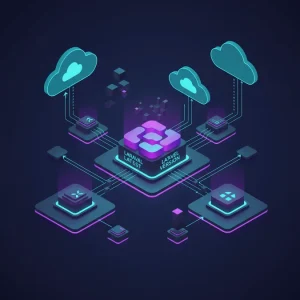
When you decide to move away from a monolithic CMS, the most logical path is often a transition to a decoupled or ‘headless’ architecture. This approach separates the content management layer from the presentation layer. By using a headless CMS or a structured API-driven back-end, you can leverage modern frontend frameworks like Next.js or React to serve content. This decoupling provides immense benefits: you can scale your frontend independently of your backend, implement edge-side rendering (ESR), and utilize a global Content Delivery Network (CDN) to serve static assets with minimal latency.
This shift allows you to choose the right tool for each job. For example, you might use a specialized headless CMS for content creation, a dedicated database service like Supabase or PostgreSQL for application data, and a fast, static-site generator for the frontend. This modularity is a hallmark of scalable system design. You no longer need to worry about PHP version conflicts or WordPress-specific security patches for your entire stack. Instead, you focus on securing individual API endpoints and optimizing data retrieval patterns. This is a vastly different paradigm than the one described in our analysis of WordPress vs. Squarespace, where the focus is on ease of use rather than architectural flexibility.
Implementing this transition requires a shift in mindset regarding data storage and retrieval. Instead of querying a monolithic MySQL database, you design your services to interact with a REST or GraphQL API. This allows for better caching strategies, such as invalidating specific data fragments rather than entire pages. It also enables you to integrate AI services or real-time analytics directly into your application layer without needing to build complex WordPress plugins that might slow down your entire site. The goal is to create a system that is resilient, observable, and capable of evolving as your business requirements change.
Infrastructure and Deployment Strategies for Scalable Systems
Once you move away from WordPress, your infrastructure strategy must shift from a ‘server-management’ mindset to a ‘cloud-native’ one. This involves leveraging managed services that handle the heavy lifting of high availability and auto-scaling. For instance, using AWS ECS (Elastic Container Service) or Google Cloud Run allows you to package your application in containers, ensuring that your environment is consistent from development to production. You are no longer managing Apache or Nginx configurations manually; you are defining your infrastructure as code using tools like Terraform or Pulumi, which provides a repeatable and version-controlled deployment process.
Horizontal scaling becomes a standard feature of your architecture. When traffic spikes, your orchestrator automatically spins up more instances of your application containers based on CPU or memory usage metrics. This prevents the downtime that often occurs with monolithic WordPress sites during high-traffic events. Furthermore, you can implement a multi-region deployment strategy to ensure low latency for your global user base. By utilizing a global load balancer, you can route traffic to the nearest healthy instance of your application, significantly improving the end-user experience.
Observability is another critical component of a professional-grade architecture. In a WordPress environment, debugging is often limited to reading error logs on a server. In a modern, decoupled system, you can implement centralized logging, distributed tracing, and real-time performance monitoring. Tools like Datadog or AWS CloudWatch allow you to visualize the entire request lifecycle across multiple services. This visibility is essential for identifying bottlenecks, monitoring database performance, and ensuring that your system remains performant as your traffic grows. You move from reactive troubleshooting to proactive performance management.
Security Implications of Decoupling
Security in a monolithic CMS is often a game of ‘patch management,’ where you are constantly responding to vulnerabilities in themes and plugins. When you decouple your architecture, you significantly reduce your attack surface. By moving to an API-first design, you can implement strict ingress and egress rules at the network level. You can use an API Gateway to handle authentication, rate limiting, and request validation, ensuring that only authorized traffic reaches your backend services. This provides a layered defense that is much more robust than the standard WordPress security model.
Furthermore, you can isolate your data storage from your application layer. By placing your database in a private subnet and only allowing access from your application services, you eliminate the risk of direct external exposure. You can also implement fine-grained access control using IAM (Identity and Access Management) roles, ensuring that each service has the minimum necessary permissions to perform its function. This ‘principle of least privilege’ is a cornerstone of cloud security and is significantly easier to enforce in a microservices architecture than in a monolithic one where everything runs under a single system user.
Finally, consider the benefit of static rendering. By serving your frontend as static assets via a CDN, you eliminate the possibility of server-side code execution vulnerabilities on the frontend. The only dynamic parts of your application are the API endpoints, which can be hardened, monitored, and protected by Web Application Firewalls (WAF). This separation of concerns means that even if a security flaw is discovered in one of your frontend components, the impact is isolated, and the underlying data layer remains protected. This architecture provides peace of mind that a growing business simply cannot achieve with a traditional CMS.
Monitoring and Observability in Modern Stacks
In a distributed system, observability is not optional—it is a requirement for survival. When you transition away from WordPress, you lose the simplicity of having everything in one place, but you gain the power of granular data. You need to implement a robust monitoring stack that includes metrics, logs, and traces. Metrics allow you to see high-level trends, such as request rates and error percentages. Logs provide the necessary detail to debug specific issues, and traces allow you to follow a single request as it travels through your various services, identifying exactly where latency is introduced.
For instance, using OpenTelemetry with a backend like Jaeger or Honeycomb allows you to trace requests across service boundaries. If a user complains about slow load times, you can look at the trace and see that the delay is caused by a slow database query in your user-profile service, rather than the frontend rendering. This level of clarity is impossible to achieve in a monolithic WordPress environment, where all code executes in a single process. You are essentially guessing where the bottleneck lies, often relying on plugins that add more overhead to the system.
Moreover, you should implement proactive alerting based on your performance metrics. Instead of waiting for a user to report that the site is down, your system should automatically notify your team when error rates exceed a certain threshold or when latency crosses a predefined SLA (Service Level Agreement). This allows you to resolve issues before they impact your business. By investing in observability, you transform your infrastructure from a ‘black box’ into a transparent system that you fully understand and control, which is essential for any business operating at scale.
The Role of API Integration in Enterprise Workflows
As your business grows, you will likely need to integrate with various third-party services—CRM platforms, payment gateways, marketing automation tools, and ERP systems. In WordPress, these integrations are typically handled via plugins, which are often poorly maintained and can introduce significant security and performance risks. When you migrate to a decoupled architecture, you treat these integrations as first-class citizens. You build dedicated integration services that communicate with these external APIs, ensuring that your core application remains performant and decoupled from the quirks of third-party vendors.
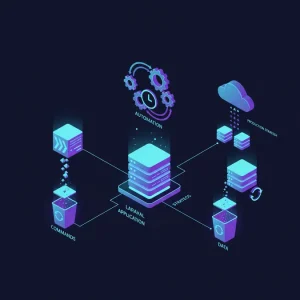
For example, if you are integrating a CRM, you can use an event-driven approach. When a user submits a form, your frontend sends the data to your API, which then places a message on a queue (like AWS SQS). A separate background worker then picks up the message and sends the data to your CRM. This ensures that the user’s experience is not blocked by the latency of the CRM’s API. If the CRM is down, the message stays in the queue and is retried later, preventing data loss. This level of reliability is difficult to achieve in WordPress without complex, error-prone custom development.
Furthermore, an API-first approach allows you to share data across multiple platforms. You might have a mobile app, a web app, and an internal dashboard, all consuming the same data from your API. You maintain one source of truth, reducing the risk of data inconsistency and simplifying your development workflow. This is a level of integration that is simply not possible with a monolithic CMS, where the data is trapped inside the WordPress database. By moving to an API-centric model, you empower your engineering team to build better, more integrated solutions that drive real business value.
Managing Data Migration and Consistency
Migrating away from WordPress is not just about moving code; it is about migrating your data. This is often the most challenging part of the process. Your content is likely stored in a variety of non-standard formats, such as shortcodes, serialized PHP arrays, and plugin-specific database tables. Before you can move this data to a modern database, you need to clean, transform, and normalize it. This involves creating a robust ETL (Extract, Transform, Load) pipeline that can handle the complexity of your existing data structure.
You should start by auditing your current database to understand what data is actually in use. Many WordPress sites contain years of ‘garbage’ data from uninstalled plugins, post revisions, and transient records. Use this migration as an opportunity to clean your data, ensuring that you only move what is necessary. Once you have a clean dataset, you can map it to your new schema. This might involve converting your content into a structured format like JSON or Markdown, which is much easier to manage in a headless CMS or a modern database.
Consistency is key during the migration process. You should perform multiple test migrations, verifying the data integrity at each step. Consider a ‘blue-green’ deployment strategy for your data: keep the old WordPress database running as the source of truth while you populate the new system, then switch over only when you are confident in the new data structure. This minimizes the risk of downtime and ensures that you can roll back if something goes wrong. A successful migration is a carefully planned engineering effort that prioritizes data integrity and business continuity above all else.
Our Commitment to High-Performance Architecture
At NR Studio, we specialize in helping growing businesses transition from monolithic CMS platforms to high-performance, scalable cloud architectures. We understand that your infrastructure is a competitive advantage, and we are committed to building systems that are not only fast but also resilient, secure, and easy to maintain. Whether you are dealing with performance bottlenecks, security concerns, or the limitations of your current platform, our team of experts can help you design and implement the right solution for your business.
We have extensive experience in building custom solutions using technologies like Laravel, Next.js, and Supabase, ensuring that your new stack is future-proof and capable of handling your growth. We don’t just write code; we architect systems that align with your business goals. Our approach is rooted in best practices, from infrastructure as code to automated testing and continuous deployment. We are here to support you at every stage of your journey, from the initial architectural assessment to the final deployment and beyond.
We invite you to reach out for a consultation to discuss your specific needs. If you are struggling with the constraints of your current platform, we can help you identify the right path forward. Please refer to our resource directory to see how we approach complex performance challenges. [Explore our complete WordPress — Performance directory for more guides.](/topics/topics-wordpress-performance/)
Factors That Affect Development Cost
- Data migration complexity
- Infrastructure architecture design
- Frontend framework implementation
- Backend API development
- CI/CD pipeline setup
Costs vary significantly based on the existing site size, the complexity of data migration, and the chosen target architecture.
Frequently Asked Questions
Is WordPress outdated in 2026?
WordPress is not ‘outdated,’ but it is limited by its monolithic architecture. For many businesses, it remains a perfectly functional tool, but it is not designed to support high-concurrency, complex, or data-intensive enterprise applications.
Why don’t big companies use WordPress?
Large companies often avoid standard WordPress for core business logic because it struggles with horizontal scaling, complex database interactions, and the security requirements of distributed, high-traffic systems.
Why are people moving away from WordPress?
Businesses migrate away from WordPress to gain better performance, improved security, and the ability to implement modern DevOps practices like CI/CD, which are difficult to achieve within the WordPress ecosystem.
Is WordPress good for small businesses?
WordPress is an excellent choice for small businesses that need a cost-effective, easy-to-manage platform for content and basic functionality. It becomes less suitable only as the business grows and requires more advanced, custom-built features.
Migrating away from WordPress is a major technical milestone that signals your business has outgrown its initial foundation. While the transition requires a significant investment in planning, data migration, and architectural design, the rewards—increased scalability, enhanced security, and a more robust development lifecycle—are essential for sustained growth. By moving to a decoupled, API-first architecture, you gain the freedom to build the exact system your business needs, unconstrained by the limitations of a monolithic CMS.
If you are ready to discuss your migration strategy, we are here to help. Our team of senior engineers can evaluate your current infrastructure and provide a roadmap for a successful transition. Contact us today to schedule a free 30-minute discovery call with our tech lead to discuss how we can help you scale your business with a high-performance, custom-built solution.
NR Studio builds custom web apps, mobile apps, SaaS platforms, and internal tools for growing businesses. If you’re working through a technical decision, feel free to reach out — no commitment required.