Technical Timeline and Architectural Milestones for Cloud Migration

Leo Liebert
NR Studio
10 min read

Cloud migration is not a simple file transfer; it is a fundamental re-engineering of your operational infrastructure. When organizations ask how long the transition takes, they are often conflating the duration of data replication with the complexity of refactoring legacy monolithic applications. A successful migration requires a deep understanding of state management, network latency, and the integration of distributed systems into a cloud-native ecosystem.

The timeline for moving to the cloud is determined by the depth of your architectural transformation. Whether you are performing a simple ‘lift-and-shift’ (rehosting) or a complete re-architecting (refactoring) to leverage serverless functions and managed container orchestration, the technical debt you carry will dictate the duration of your project. This guide outlines the phases of migration from a systems architecture perspective, detailing the operational hurdles that extend timelines and the technical strategies required to mitigate them.

Phase 1: Inventory and Dependency Mapping

Before a single byte is moved, the most time-consuming phase is the discovery of existing dependencies. In legacy environments, application state is often tightly coupled to the underlying physical hardware or specific OS configurations. You must map every hard-coded IP address, local file system dependency, and obscure database trigger that could break upon migration. This phase can take anywhere from two to six weeks depending on the documentation quality of your current stack.

We use automated tools to scan network traffic patterns to identify ‘hidden’ connections between services. If your application relies on internal SOAP APIs or legacy middleware that requires specific kernel modules, these must be documented as potential blockers. Failing to map these dependencies leads to catastrophic downtime during the cutover phase. You need to treat this as an architectural audit, ensuring that every service is identified, categorized, and evaluated for cloud compatibility.

Designing the Target Landing Zone

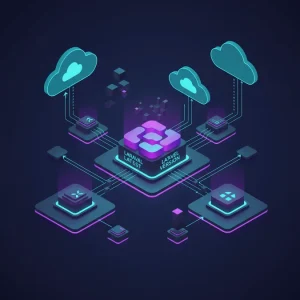
The ‘Landing Zone’ is the foundational environment within your cloud provider (AWS or GCP) where your resources will reside. This involves designing VPCs, subnets, routing tables, and security groups that mirror or improve upon your current network security posture. From a DevOps perspective, this is where you implement Infrastructure as Code (IaC) using tools like Terraform or Pulumi. You cannot rush this phase, as a poorly designed networking layer will introduce latency that ruins the performance of your migrated application.

Consider the requirements for high availability. Will you deploy across multiple Availability Zones (AZs)? Are you using Private Links to ensure that your database traffic never touches the public internet? These design decisions are critical. We recommend building the landing zone using modular templates so that your production, staging, and development environments are identical. This parity is essential for debugging issues during the migration process itself.

Database Migration and State Synchronization

Database migration is the most significant bottleneck in any migration project. If you are moving a multi-terabyte dataset, the physical time required for the initial dump and sync is fixed by your network bandwidth. However, the true challenge is maintaining data consistency during the transition. You will likely need to implement a ‘change data capture’ (CDC) mechanism to keep the source and target databases in sync while the application is still running in the old environment.

For SQL databases like MySQL or PostgreSQL, we often use managed services that handle replication streams. The duration of this phase is heavily influenced by the volume of write operations. If your application has high write throughput, you must account for the latency introduced by synchronous replication. Expect this phase to span several weeks of testing, validation, and performance tuning to ensure that the target database can handle the production load without unexpected locking or deadlocks.

Refactoring vs Rehosting: The Complexity Trade-off

The choice between rehosting and refactoring is the primary variable that changes the migration timeline from months to years. Rehosting (moving to virtual machines) is faster but ignores the benefits of cloud-native scaling. Refactoring (moving to containers or serverless) takes significantly longer because it requires rewriting parts of your codebase to be stateless. A stateless application is a prerequisite for horizontal scaling in a cloud environment.

When you shift to a containerized model using Kubernetes, you must rethink your deployment pipeline. This involves building CI/CD workflows that automatically test, package, and deploy your code. If your team is not experienced with Docker, the learning curve will add significant time to the project. However, the long-term gain in availability and operational agility makes this the preferred path for any business aiming to scale effectively.

The Cutover Strategy: Blue-Green Deployment

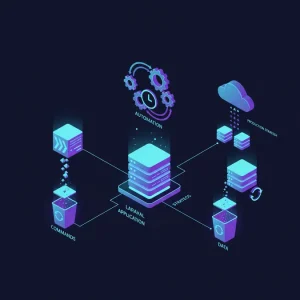
The actual cutover is the moment you switch traffic from the legacy environment to the cloud. We advocate for a Blue-Green deployment strategy. You run both environments in parallel, with the cloud environment acting as the ‘Green’ deployment. You route a small percentage of traffic to the cloud environment using a load balancer (like AWS ELB or an Ingress controller in Kubernetes) and monitor for errors, latency spikes, or data inconsistencies.

This strategy allows for an immediate rollback if a critical failure occurs. Because you are not performing a ‘big bang’ migration, the risk is distributed. However, this increases the total migration time because you are effectively maintaining two production environments simultaneously. You must ensure that your session management is handled correctly; if a user logs in on the legacy side, they should not be forced to log in again if their traffic is shifted to the cloud during a session.

Network Latency and Inter-Service Communication

One of the most overlooked aspects of migration is the change in network topology. In a physical data center, you might have had low-latency fiber connections between your application server and your database. In the cloud, these might be spread across different subnets or even regions. You must re-evaluate your inter-service communication protocols. Moving to gRPC or optimizing your API calls can mitigate the latency introduced by distributed cloud architectures.

If you are migrating a distributed system, you may need to implement a service mesh to handle service discovery and circuit breaking. This ensures that if one microservice fails in the cloud, it does not take down the entire application. These architectural adjustments are necessary to ensure that the cloud environment provides the performance gains you expect. Neglecting this will result in a ‘cloud-slow’ environment that performs worse than your original on-premise hardware.

Monitoring, Logging, and Observability

You cannot manage what you cannot see. Migrating to the cloud requires a complete overhaul of your monitoring stack. You need centralized logging, distributed tracing, and real-time metrics. Without these, troubleshooting a production issue in a distributed cloud environment is nearly impossible. Implementing tools like Prometheus, Grafana, or cloud-native monitoring services should happen in parallel with the migration of your application code.

The time required to configure these dashboards and alert thresholds is often underestimated. You need to define what ‘normal’ looks like in your new environment. This involves setting up anomaly detection for traffic patterns and ensuring that your logs are searchable and compliant with your data retention policies. This is not a secondary task; it is a core component of your operational readiness.

Security Compliance and Identity Management

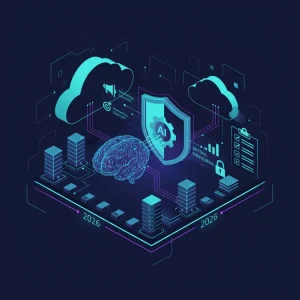
Cloud security is fundamentally different from perimeter-based security. You must implement a Zero Trust model, where identity is the new perimeter. This involves setting up IAM (Identity and Access Management) roles for every single service, ensuring that your application has the principle of least privilege. If your application code is compromised, the damage should be limited to the specific tasks that service is authorized to perform.

This phase includes auditing your secrets management. Hard-coding API keys or database credentials in your environment variables is a major vulnerability. Instead, you should move to a secure vault service. The time taken to transition to these modern security practices is substantial, as it requires coordination between developers, security teams, and operations. Do not skip this; a single misconfigured S3 bucket or open security group can compromise your entire migration effort.

Performance Benchmarking and Load Testing

Before you commit to a full-scale migration, you must conduct rigorous load testing. Use tools like k6 or Locust to simulate production traffic against your new cloud environment. You need to identify where your bottlenecks are—is it the database, the network, or the application code itself? This phase is essential for fine-tuning your auto-scaling policies.

If you find that your application is not scaling as expected, you need to investigate the horizontal scaling limits of your architecture. Are there shared resources that prevent you from adding more nodes? Is your database the bottleneck? The results of these tests will dictate the final configuration of your production environment. This benchmarking phase typically adds two to four weeks to the timeline, but it prevents costly post-migration performance issues.

The Role of Technical Debt

Technical debt is the hidden tax on your migration. If your legacy application has circular dependencies, undocumented business logic, or deprecated libraries, these will manifest as bugs during the migration. You must decide whether to fix these issues before, during, or after the migration. Fixing them during the migration is often the most efficient path, even if it adds to the initial project timeline.

We have observed that teams who attempt to ‘migrate as-is’ often end up in a cycle of constant firefighting. By addressing the underlying technical debt, you ensure that the application is truly cloud-ready. This might mean refactoring a legacy module into a microservice or updating your runtime environment to a modern, supported version. These are necessary investments in the long-term maintainability of your platform.

Integrating with Our Development Ecosystem

Migration is a complex engineering task that touches every layer of your stack. Whether you are dealing with database optimization, container orchestration, or security hardening, having an experienced team to guide your architecture is vital. We help businesses navigate these technical complexities to ensure a stable and performant cloud environment. [Explore our complete Software Development directory for more guides.](/topics/topics-software-development/)

Factors That Affect Development Cost

  • Application complexity and monolith size
  • Data volume and synchronization requirements
  • Level of refactoring versus rehosting
  • Existing technical debt
  • Required security and compliance standards

The duration of a migration is entirely dependent on the scope of architectural changes and the volume of data being moved.

Frequently Asked Questions

How long does cloud migration take?

Migration timelines vary significantly based on the size of your dataset and the complexity of your application architecture. Small projects can take a few months, while enterprise-level migrations involving legacy refactoring often span a year or more.

Should I migrate to the cloud?

Migration is recommended if you need to improve your application’s ability to scale horizontally, increase availability, or leverage managed services for better security and performance. It is a strategic decision that depends on your long-term technical goals.

What is the typical timeline for a cloud migration?

A typical timeline involves several weeks for discovery, followed by months of infrastructure design, database synchronization, and application refactoring. The duration is heavily influenced by how much code needs to be modified for cloud-native compatibility.

Cloud migration is a strategic engineering evolution, not a simple relocation of assets. The timeline is primarily a function of your architectural complexity, your reliance on legacy state, and your commitment to modernizing your deployment pipelines. By focusing on infrastructure as code, robust observability, and secure identity management, you can minimize the operational risks of the transition.

If you are planning a migration and want to ensure your architecture is optimized for cloud-native performance, we are here to help. Reach out to our team to schedule a free 30-minute discovery call with our tech lead to discuss your specific infrastructure requirements.

NR Studio builds custom web apps, mobile apps, SaaS platforms, and internal tools for growing businesses. If you’re working through a technical decision, feel free to reach out — no commitment required.

References & Further Reading

Leave a Comment

Your email address will not be published. Required fields are marked *