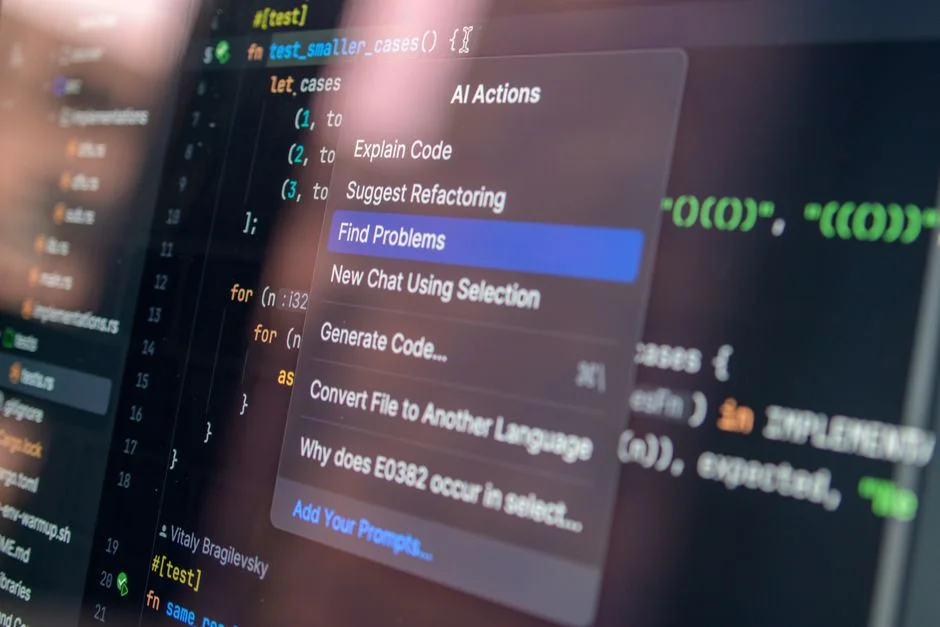

Code quality is not a mystical concept reserved for senior engineers; it is a fundamental business metric that directly correlates with the long-term viability of your startup. For a non-technical founder, code quality is the difference between a product that scales with your growth and one that collapses under the weight of its own technical debt. When you lack a technical background, assessing the health of your codebase might feel like trying to judge the structural integrity of a building while standing in the basement; you cannot see the steel beams, but you can certainly feel the floor shaking.
Evaluating your software requires shifting your focus from the visual interface to the operational processes. Quality in software development is defined by maintainability, testability, and adherence to industry standards. If your team cannot ship new features without breaking existing functionality, your code quality is failing the business. This guide provides the framework for non-technical leaders to audit, monitor, and influence the technical health of their products without needing to write a single line of code themselves.
Understanding the Business Impact of Technical Debt
Technical debt is the interest you pay on shortcuts taken during the development phase. When your team prioritizes speed over structural integrity, they create a backlog of ‘unpaid’ work that compounds over time. For a founder, this manifests as increased lead time for new features, frequent production outages, and an inability to pivot quickly. If a developer tells you that a simple change requires a two-week refactor, you are experiencing the direct cost of technical debt.
To assess this, ask your lead developer for the ‘Feature Velocity’ over the last six months. If the time required to implement similar features is increasing rather than decreasing, your codebase is likely becoming brittle. A healthy codebase should be modular, where changing one component does not force you to rewrite another. When components are tightly coupled, the system becomes a ‘big ball of mud’ that is impossible to maintain.
Consider the following indicators of high technical debt:
- High Bug Reoccurrence: The same bugs appear in different parts of the application repeatedly.
- Long Onboarding Times: New developers take more than two weeks to commit their first meaningful code change because the system is too complex to understand.
- Manual Testing Burdens: If your team relies on manual QA for every single deployment, they are not building automated test suites, which is a major red flag.
The cost of ignoring these indicators is exponential. In the early stages, technical debt might save you a month of development time, but it can eventually lead to a total rewrite, which is a catastrophic event for any startup. By monitoring the frequency of ‘hotfixes’ compared to planned feature work, you can gain a clear view of your team’s operational health.
The Role of Automated Testing in Quality Assurance
Automated testing is the single most important indicator of code quality that a non-technical founder can verify. If your team does not have a suite of unit and integration tests, you are effectively flying blind. Automated tests act as a safety net, ensuring that new code changes do not break existing functionality. Without these tests, your developers are forced to rely on manual verification, which is slow, error-prone, and unsustainable as your user base grows.
Ask your lead engineer to show you the ‘Test Coverage’ report. While 100% coverage is rarely practical, a project with less than 60-70% coverage in critical business logic areas is a significant risk. You should also inquire about their CI/CD (Continuous Integration and Continuous Deployment) pipeline. A robust pipeline will automatically run these tests every time a developer pushes code. If the tests fail, the code is blocked from reaching production.
The hierarchy of testing is vital for understanding your team’s maturity:
| Test Type | Purpose | Business Value |
|---|---|---|
| Unit Tests | Check individual functions | Prevents logic errors |
| Integration Tests | Check communication between modules | Ensures system stability |
| End-to-End (E2E) | Simulates user behavior | Protects core revenue flows |
When you demand automated testing, you are demanding a culture of accountability. Developers who write tests are forced to write cleaner, more modular code because they know their work will be validated automatically. This is a non-negotiable standard for any scalable SaaS product.
Evaluating Code Review Processes
The code review process is the gatekeeper of quality. It is the practice where one developer reviews the work of another before it is merged into the main codebase. As a founder, you should not be reading the code, but you should be auditing the *process* of the reviews. Ask to see a sample pull request (PR) on GitHub or GitLab. Are there comments from other developers? Are there discussions about the approach taken?
A healthy code review process should include:
- Constructive Feedback: Reviewers should point out potential issues, suggest improvements, and ask questions. A PR with no comments is a sign of a ‘rubber-stamp’ culture where quality is ignored.
- Adherence to Style Guides: The team should be using automated tools (linters) to enforce code style, so they don’t waste time debating formatting.
- Security Checks: Senior developers should be explicitly looking for common vulnerabilities like SQL injection or cross-site scripting during the review.
If your team is skipping code reviews to meet deadlines, you are sacrificing quality for short-term gain. This creates a ‘silo’ effect where only one person understands how a specific feature works. If that person leaves, you lose critical knowledge. Code reviews ensure that knowledge is shared across the entire team, reducing your dependency on individual contributors.
Financial Implications and Cost Models
Code quality is a financial variable. Investing in quality upfront reduces the Total Cost of Ownership (TCO) significantly. When building a product, you have three primary engagement models, each with different implications for code quality and budget management.
| Model | Focus | Quality Risk | Cost Structure |
|---|---|---|---|
| Hourly Engagement | Flexibility | High (if not managed) | Pay-as-you-go |
| Fixed Price | Scope | Very High (shortcuts) | Predictable but rigid |
| Dedicated Team | Long-term | Low (process-driven) | Monthly Retainer |
For a typical startup, a dedicated team model often yields the highest quality because the developers are invested in the long-term success of the product. Hourly engagements can lead to ‘churn and burn’ where developers prioritize billable hours over structural integrity. Fixed-price projects are the most dangerous for founders because they incentivize developers to cut corners to stay under the budget cap.
The cost of a technical audit, which is often necessary to uncover hidden debt, typically ranges between 40 to 80 hours of senior engineering time. At professional rates, this is a essential investment before scaling your infrastructure. If you are paying for developers but seeing no progress in the stability of your application, you are essentially paying for ‘cleanup’ rather than ‘growth’. Always allocate 15-20% of your development budget to maintenance and technical debt reduction to ensure your platform remains viable.
The Importance of Documentation and Knowledge Sharing
Code quality extends beyond the syntax; it includes how well the code is documented. If a developer cannot understand what a function does without reading every line of its implementation, the documentation is insufficient. Non-technical founders should look for a ‘README’ file in the project repository. It should explain how to set up the project, how to run tests, and where to find documentation for the API.
Documentation is your insurance policy. If your lead developer quits, poor documentation means your remaining team will spend months ‘reverse-engineering’ the product. This is a massive business risk. You should mandate that every new feature comes with updated documentation. This includes keeping your API documentation (like Swagger or OpenAPI) in sync with the actual code.
Furthermore, consider the use of architecture diagrams. A clear visual representation of how your services interact helps non-technical stakeholders understand the system. If your team cannot explain the architecture to you in plain English, they likely do not have a firm grasp of the system’s design themselves. For complex systems, having a living, updated document of the infrastructure is a sign of a mature, quality-focused engineering organization.
Managing Technical Scalability and Infrastructure
As your user base grows, your code must handle increased load. Scalability is not just about the code; it is about the architecture. A monolithic application may work for your first 1,000 users, but it might struggle as you reach 100,000. Evaluating scalability requires asking your team how they handle database growth and request volume.
When reviewing your infrastructure, ask about ‘monitoring’ and ‘alerting.’ Does the team know if the site is slow before the users report it? If they are relying on customer complaints to identify issues, your quality standards are too low. You need a system that tracks performance metrics and alerts the team to anomalies in real-time.
Consider the following scalability checkpoints:
- Database Indexing: Are queries optimized to prevent slow page loads as data grows?
- Caching Strategies: Are you using tools like Redis to reduce load on your primary database?
- Load Balancing: Is the application distributed across multiple servers to handle traffic spikes?
By asking these questions, you force your team to think about the long-term viability of the system rather than just the immediate feature request. If they cannot explain their scaling strategy, it is a clear sign that you need to bring in an experienced architect to review your current setup.
Recognizing Red Flags in Engineering Culture
Technical quality is a reflection of team culture. If your developers are burnt out, they will not write quality code. If there is no psychological safety, developers will be afraid to admit mistakes or point out flaws in the current architecture. As a founder, you must foster an environment where quality is rewarded, not just the speed of shipping.
Common red flags include:
- Hero Culture: One developer is the only person who knows how a critical part of the system works. This is a massive ‘bus factor’ risk.
- Blame Culture: When things break, the team looks for someone to blame instead of looking for the process failure that allowed the bug to occur.
- Feature Factory Mentality: The team is focused on hitting arbitrary deadlines rather than building a sustainable, tested, and reliable product.
When you encounter these red flags, you must address them immediately. A team that is not empowered to prioritize quality will eventually deliver a product that is too expensive to maintain and too fragile to scale. Your role is to set the business expectations, but you must empower your technical leadership to push back when deadlines threaten the integrity of the codebase.
Strategic Oversight and the Cluster Context
Managing software quality is an ongoing process of balancing business requirements with technical constraints. You do not need to be a coder to be a technical leader; you need to be a process optimizer. By demanding transparency in testing, code reviews, and infrastructure documentation, you ensure your startup remains on a stable foundation.
Remember that your primary goal is to ensure that the software supports your business objectives. If your current codebase is preventing you from reaching your goals, it is time for an audit. [Explore our complete Software Development directory for more guides.](/topics/topics-software-development/)
Factors That Affect Development Cost
- Project complexity
- Number of integrations
- Current state of technical debt
- Team seniority
- Infrastructure requirements
Costs for professional code audits vary significantly based on the size of the codebase and the depth of the required analysis, typically spanning a set range of engineering hours.
Reviewing code quality as a non-technical founder is about asking the right questions and establishing rigorous processes. You don’t need to read the code, but you do need to understand the health of the system through the lens of test coverage, code review culture, and documentation. By treating your codebase as a core business asset rather than a black box, you can mitigate long-term risks and ensure your product scales with your ambitions.
If you are concerned about the current state of your application or need an objective assessment of your technical foundation, we are here to help. Our team provides comprehensive architecture and code audits designed to identify technical debt and provide a clear roadmap for scaling. Contact NR Tech Studio today for a professional evaluation of your software’s health.
NR Tech Studio builds custom web apps, mobile apps, SaaS platforms, and internal tools for growing businesses. If you’re working through a technical decision, feel free to reach out — no commitment required.