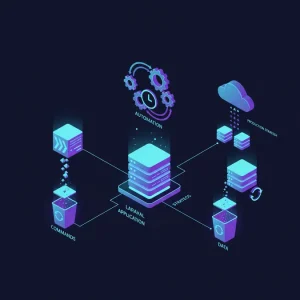
Building a Student Information System (SIS) is akin to designing the central nervous system of a biological organism. Just as the nervous system must process sensory input, coordinate motor responses, and maintain homeostasis across disparate organs, a robust SIS must ingest massive datasets from admissions, registrar offices, and faculty portals while ensuring real-time consistency across the entire educational ecosystem. If you fail to model the relationships between students, courses, and faculty correctly, the system will suffer from chronic latency and data integrity issues that cripple institutional operations.
Many organizations approach SIS development as a simple CRUD application, but this is a fundamental architectural error. An effective SIS requires a sophisticated relational design, high-availability caching, and granular access control. Whether you are considering Custom WordPress Development vs. Divi, or building a bespoke application from scratch, understanding the underlying data flow is paramount. This guide explores the technical rigors of SIS development, from relational schema design to performance optimization at scale.
Designing the Relational Schema for Academic Data
At the core of every SIS is a highly normalized relational database. Unlike standard CMS platforms, an SIS deals with complex many-to-many relationships that require strict referential integrity. When modeling students, courses, enrollments, and grades, you must ensure that your schema supports ACID compliance to prevent race conditions during registration periods. For example, when a student attempts to enroll in a course, the system must atomically check seat availability, verify prerequisites, and update the enrollment count. If these operations are not handled within a single transaction, you risk over-enrolling courses.
We often advocate for Strategic Database Development Services to ensure that indexing strategies are optimized for read-heavy operations, such as grade reporting, as well as write-heavy bursts during enrollment windows. Using a relational database like MySQL or PostgreSQL, you should structure your core tables to minimize join overhead. Avoid the common pitfall of storing serialized JSON blobs for primary academic data; instead, use strict schema definitions to enforce data types at the database level.
Consider the following schema structure for a basic enrollment module:
CREATE TABLE courses (id INT PRIMARY KEY, title VARCHAR(255), max_seats INT); CREATE TABLE enrollments (student_id INT, course_id INT, status ENUM('enrolled', 'waitlisted'), FOREIGN KEY (course_id) REFERENCES courses(id));
By enforcing foreign key constraints and utilizing appropriate indexes on student_id and course_id, you ensure that the database engine can perform lookups with O(log n) efficiency. Furthermore, when evaluating your backend, consider the performance trade-offs discussed in our analysis of Python vs PHP for Web Backend Development. PHP, specifically within the Laravel ecosystem, provides robust Eloquent ORM features that simplify these complex relationships while maintaining high performance, provided you are mindful of N+1 query problems.
Scalability Challenges and High-Concurrency Management
Student Information Systems face extreme traffic spikes, particularly during registration days where thousands of users hit the server simultaneously. Failing to design for these bursts will result in server crashes and institutional downtime. To mitigate this, you must implement a robust caching layer. Redis is the industry standard for caching active session data and course availability counts. By offloading frequently requested data from the primary database to an in-memory store, you significantly reduce the load on your SQL engine.
Beyond caching, consider the architectural benefits of Strategic Microservices Development Services if your institution requires a modular approach. Rather than having a monolithic application handle admissions, grading, and scheduling, you can decouple these domains into independent services that communicate via REST APIs or message queues. This isolation ensures that a performance bottleneck in the student portal does not impact the registrar’s ability to process transcripts.
When optimizing for scale, it is essential to follow the principles outlined in our guide on Warehouse Management System Development, which emphasizes partitioning and load balancing. You should also audit your API endpoints to ensure they are stateless. If you are leveraging WordPress, you might need to extend core functionality. Refer to our WordPress Shortcode Development Tutorial for insights into building custom UI components that remain performant under load. Always perform load testing using tools like JMeter or k6 to identify breaking points before the production launch.
Security, Compliance, and Data Integrity
An SIS handles sensitive PII (Personally Identifiable Information) and FERPA-regulated data. Security is not an afterthought; it must be baked into the architecture from the start. Your authentication system should support multi-factor authentication (MFA) and granular Role-Based Access Control (RBAC). A student should only see their own grades, while a professor should see their roster and a registrar should have administrative oversight. Implementing these permissions at the application level using middlewares is critical to preventing unauthorized access.
For institutions utilizing WordPress, you must be extremely cautious about plugin bloat and security vulnerabilities. When building specialized portals, avoid relying on third-party plugins that have not been vetted. Instead, utilize WordPress Child Theme Development to ensure your custom logic is separated from the core theme, making updates safer and more manageable. If your project involves complex user management, you might find our insights on WordPress for Membership Site Development highly relevant for handling user roles and restricted content.
Data integrity also requires an audit trail. Every change to a student record—from grade modifications to contact information updates—must be logged in an immutable audit table. This table should record the user ID, timestamp, the previous value, and the new value. This level of accountability is a regulatory requirement in many educational environments and is essential for troubleshooting data discrepancies that may arise over time.
The Discovery Phase: Aligning Stakeholder Needs
Before writing a single line of code, you must engage in a rigorous discovery process. Many SIS projects fail because the development team did not fully understand the nuances of the institution’s academic calendar, credit hour calculations, or unique degree audit requirements. A successful discovery phase involves interviewing department heads, registrars, and IT staff to map out current workflows and identify pain points.
We highly recommend reviewing How CTOs Should Structure a Discovery Phase Before Development Starts to ensure your team is aligned on technical requirements. This process helps in defining the scope, preventing feature creep, and setting realistic timelines. For instance, determining whether the system needs to integrate with existing legacy ERPs or payment gateways is a critical technical decision that impacts your entire API architecture.
During this phase, you should also evaluate whether to build a custom solution or integrate existing SaaS platforms. If you are building a custom portal, consider the total cost of ownership (TCO) as outlined in Strategic Ecommerce Website Development: A CTO’s Guide to Scalability and TCO. The lessons on scalability and maintenance are directly transferable to the educational sector, where systems must remain operational for years, if not decades.
SIS Development Pricing and Cost Models
SIS development projects vary significantly in scope, ranging from a custom student portal for a specialized training center to a full-scale institutional ERP. Costs are driven by the complexity of integrations, the volume of data migration, and the rigor of the security requirements. Below is a breakdown of common engagement models.
| Model | Typical Scope | Cost Implications |
|---|---|---|
| Hourly/Consulting | Feature additions, maintenance, audit | $150 – $300 per hour |
| Project-Based | Custom module development | $25,000 – $150,000+ |
| Fractional/Retainer | Ongoing support & optimization | $5,000 – $20,000 per month |
The cost of development is heavily influenced by the technical debt of your existing systems. If you are migrating data from a legacy platform, expect a higher percentage of the budget to be allocated to ETL (Extract, Transform, Load) processes. Furthermore, choosing between Vibe Coding vs Low-Code vs Custom Development will drastically alter your long-term maintenance costs. While low-code might appear cheaper initially, the technical limitations and vendor lock-in often result in higher TCO over a five-year period.
For institutions looking to scale, investing in custom development usually yields the highest ROI by ensuring the system perfectly mirrors institutional workflows. If you are considering an e-commerce integration for tuition payments, refer to our guide on WordPress for E-commerce Store Development to understand the best practices for secure transaction handling.
Integration Strategy: Connecting the SIS Ecosystem
An SIS never exists in a vacuum. It must integrate with Learning Management Systems (LMS), CRM platforms, and financial systems. Building these integrations requires a robust API strategy. RESTful APIs are the standard for modern SIS development, allowing for interoperability between disparate systems. When building these integrations, prioritize security by using OAuth2 or JWT for authentication.
When integrating with an LMS, you must ensure that student enrollment data is synced in real-time. This prevents the common issue where a student is enrolled in the SIS but cannot access their course materials in the LMS. Use webhooks to trigger updates immediately when a status changes in the database. This event-driven architecture is far more efficient than polling the database every few minutes, which creates unnecessary load.
Furthermore, ensure your API documentation is comprehensive. Use tools like Swagger or OpenAPI to provide clear documentation for internal and external developers. This reduces friction during the integration process and ensures that the system can evolve without breaking existing connections. If you find your integration needs growing, revisit our insights on Strategic Microservices Development Services to understand how to manage service-to-service communication effectively.
Maintenance and Long-Term System Lifecycle
The development of an SIS is only the beginning. Maintenance is where the true engineering challenge lies. As the academic landscape changes, your system must adapt. This means regular updates to the database schema, security patches, and performance optimizations. A system that is not maintained will quickly become a liability, both from a security perspective and an operational one.
We emphasize the importance of automated testing. Your CI/CD pipeline should include unit tests for business logic, integration tests for API endpoints, and end-to-end tests for critical user flows like registration. This ensures that new deployments do not introduce regressions. If you are using WordPress, keep your core and plugins updated, and follow best practices for WordPress Child Theme Development to ensure your custom code remains intact.
Finally, monitor your system performance continuously. Use APM (Application Performance Monitoring) tools to track latency, error rates, and resource utilization. Proactive monitoring allows you to identify bottlenecks before they impact students or faculty. A well-maintained SIS is an asset that grows with the institution, while a neglected one eventually requires a costly and painful replacement.
Technical Documentation and Knowledge Transfer
A common failure in custom software development is the lack of proper documentation. When the original developers move on, the institution is left with a “black box” system that no one dares to touch. You must maintain detailed technical documentation that covers the database schema, API specifications, and infrastructure configuration. This documentation should be accessible to all stakeholders and updated regularly.
In addition to technical docs, perform regular knowledge transfer sessions. Ensure that internal IT teams are trained on the system’s architecture and common troubleshooting procedures. This reduces reliance on external vendors and empowers your team to handle day-to-day operations. When using platforms like WordPress, document your custom hooks and filters to ensure future developers can work within your codebase without unintended side effects.
Invest in clear, version-controlled documentation. Use tools like Markdown, Confluence, or internal wikis to maintain a single source of truth. By treating documentation as a first-class citizen alongside your code, you ensure that the system remains maintainable throughout its entire lifecycle. This is particularly important when dealing with the high-stakes data managed by a Student Information System.
Mastering the WordPress Development Cluster
As you navigate the complexities of building a custom Student Information System, having a deep understanding of your chosen framework is essential. WordPress, when used with a professional engineering mindset, can be a powerful tool for building modular, scalable educational platforms. By utilizing the right architectural patterns, you can create a system that is both flexible and performant.
For further reading on best practices and advanced techniques within the WordPress ecosystem, we invite you to explore our comprehensive resource library. [Explore our complete WordPress — Development directory for more guides.](/topics/topics-wordpress-development/)
Factors That Affect Development Cost
- Project complexity and feature set
- Volume of legacy data migration
- Integration requirements with third-party APIs
- Security and compliance audit needs
- Ongoing maintenance and infrastructure support
Costs vary significantly based on whether the project is a custom enterprise solution or a modular extension of existing systems.
Building a Student Information System is a significant undertaking that requires a deep commitment to architectural excellence. By prioritizing relational integrity, scalability, and security, you can build a system that serves your institution for years to come. Whether you are building from scratch or extending an existing platform, the principles of modular design and proactive maintenance remain the same.
If you are ready to start your project, our team at NR Studio is here to help. We specialize in custom software development for growing businesses and educational institutions. Join our newsletter to stay updated on the latest engineering best practices or reach out to us for a consultation on your next project.
NR Studio builds custom web apps, mobile apps, SaaS platforms, and internal tools for growing businesses. If you’re working through a technical decision, feel free to reach out — no commitment required.