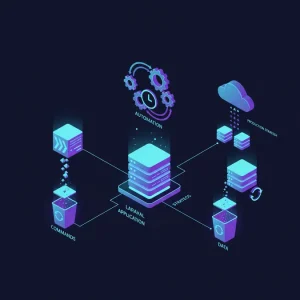
Historically, practice management software for therapists emerged from rudimentary desktop-based billing systems that lacked real-time synchronization. These legacy monolithic architectures were characterized by local database silos and manual data entry, which failed to address the dynamic nature of clinical workflows. As healthcare regulations evolved, the shift toward web-based, HIPAA-compliant ecosystems necessitated a fundamental transformation in how developers structure data pipelines and backend services.
Today, building robust software for mental health professionals requires a sophisticated approach to API-first design. We must move beyond basic CRUD operations to support complex scheduling, secure messaging, and sensitive clinical documentation. This article explores the engineering requirements for building such platforms, focusing on database normalization, secure data transmission, and the implementation of high-performance REST APIs to handle the intricate relationships between patient records, session logs, and billing cycles.
Designing Secure Data Models for Clinical Records
When constructing the data layer for therapist-focused platforms, the primary constraint is the integrity and confidentiality of Protected Health Information (PHI). A normalized relational database schema is essential to ensure that patient diagnostic data, session notes, and appointment history remain segregated while maintaining referential integrity. Developers should prioritize strict database constraints, such as foreign key relationships and check constraints, to prevent orphaned records that could lead to data inconsistencies during system audits.
Beyond standard schema design, implementing row-level security (RLS) is a non-negotiable requirement. For instance, in a multi-tenant environment, the application layer must ensure that a therapist can only access records associated with their specific practice ID. This is often achieved by embedding the tenant context into every database transaction. To ensure your endpoints are hardened against unauthorized access, refer to our guide on how to secure API endpoints. Furthermore, when documenting these complex schemas, adopting standard specifications like OpenAPI and Swagger documentation ensures that both frontend and backend teams maintain a single source of truth for data contracts.
Optimizing API Performance for Real-Time Scheduling
Therapy practice management requires high-concurrency handling for scheduling systems, where multiple users may attempt to book, reschedule, or cancel appointments simultaneously. A typical RESTful implementation must account for race conditions when checking slot availability. Using standard locking mechanisms within the database transaction—or employing optimistic concurrency control—is critical to prevent double-booking. When choosing between architectural styles for such high-demand endpoints, it is beneficial to weigh the benefits of different protocols; developers should analyze the GraphQL vs REST API comparison to determine which better suits their specific state-management needs.
Moreover, for systems requiring low-latency communication, understanding the underlying performance characteristics of your transport layer is vital. While REST is the industry standard for interoperability, some high-throughput internal services may benefit from gRPC, as discussed in our gRPC vs REST performance comparison. To ensure your API remains performant under load, it is essential to follow robust API testing best practices, which include load testing and stress testing scenarios that simulate high-volume booking spikes during peak morning hours.
Implementing Secure Messaging and Communication APIs
The integration of secure messaging within practice management software requires careful consideration of transport layer security (TLS) and end-to-end encryption. When building an internal messaging system, the backend must ensure that every message payload is encrypted at rest and in transit. For external communication channels, such as integrating messaging platforms, it is crucial to handle webhooks and API keys with extreme caution. For example, learning how to manage the WhatsApp Business API integration requires a deep understanding of session-based messaging and message delivery status tracking.
In the context of scaling these services, developers must prioritize security during credential management. Regularly updating and managing secrets is a standard operation; you can learn more about zero-downtime API key rotation to ensure that your communication services remain available while rotating sensitive keys. Additionally, for developers using modern Python-based backends for these integrations, utilizing FastAPI for building REST APIs provides the asynchronous capabilities necessary to handle multiple concurrent messaging requests without blocking the event loop.
Integrating AI for Clinical Documentation Assistance
Modern practice management platforms increasingly incorporate AI-driven features to assist therapists with clinical documentation and sentiment analysis. When integrating large language models (LLMs) into a production system, the decision to use managed APIs versus self-hosted models significantly impacts your architecture. For a deep dive into this decision, refer to our article on Open Source LLMs vs API-based LLMs for a startup. For many teams, leveraging established services like the Gemini API integration allows for rapid deployment of sophisticated summarization tools for clinical session notes.
However, AI integration must be treated with caution regarding data privacy. All clinical data sent to an LLM must be sanitized of PII/PHI before processing. This requires an abstraction layer in your API that handles data masking. Furthermore, verifying that these AI features work as expected requires rigorous validation. You should utilize tools such as how to test REST API with Postman to create automated test suites that confirm the AI-generated outputs adhere to clinical accuracy standards and formatting requirements.
API Development Directory
Mastering the complexities of practice management software requires a deep understanding of the broader API ecosystem. Whether you are focusing on authentication, performance tuning, or third-party integrations, these concepts form the backbone of scalable healthcare applications. [Explore our complete API Development — REST API directory for more guides.](/topics/topics-api-development-rest-api/)
Factors That Affect Development Cost
- Complexity of HIPAA compliance auditing
- Number of third-party healthcare integrations
- Database architecture for multi-tenancy
- AI model latency and token consumption
- Real-time messaging service scaling
Engineering costs vary significantly based on the depth of compliance features and the volume of concurrent clinical data processing required.
Developing practice management software for therapists is an exercise in balancing high-level functionality with rigid regulatory compliance. By focusing on robust database design, secure API communication, and the strategic implementation of AI-driven features, engineers can create systems that truly support the clinical workflow. The key is to maintain a modular architecture that allows for scaling while protecting the sensitive nature of the data involved.
We encourage you to continue refining your backend strategies by exploring our technical resources. If you found this architectural overview helpful, consider staying connected with our latest engineering deep dives by joining our technical newsletter.
NR Studio builds custom web apps, mobile apps, SaaS platforms, and internal tools for growing businesses. If you’re working through a technical decision, feel free to reach out — no commitment required.