Edge computing is frequently misunderstood as a panacea for network latency or a complete replacement for cloud infrastructure. It is critical to establish immediately: edge computing cannot solve systemic inefficiencies in your core application logic. If your database queries are poorly optimized or your API endpoints are bloated, migrating that code to an edge environment will not magically improve performance; it will simply make your technical debt more expensive to maintain. Edge computing is not a replacement for a robust cloud architecture, but rather a surgical tool for specific operational requirements where physical proximity to the user is the only viable path to success.
For founders, the temptation is to view edge computing as a way to bypass the complexities of distributed systems. In reality, it introduces new layers of orchestration, security, and data consistency challenges that require a sophisticated engineering team to manage. Understanding the trade-offs is essential before you commit your technical roadmap to a decentralized architecture. This guide explores the architectural realities of edge computing, distinguishing between marketing hype and actual business utility, and helps you determine when it is appropriate to invest in this paradigm versus sticking to traditional, centralized cloud patterns.
Defining the Edge: Beyond the Centralized Data Center
At its core, edge computing is the practice of processing data near the source of data generation rather than relying on a centralized data center located hundreds or thousands of miles away. In traditional cloud models, every request your user makes—whether it is an authentication check, a database fetch, or an image transformation—travels to a central region (like AWS us-east-1). This round-trip time, known as latency, is bounded by the speed of light and the number of network hops between your user and that server. When you have a mission-critical application, those milliseconds accumulate, impacting user experience and throughput.
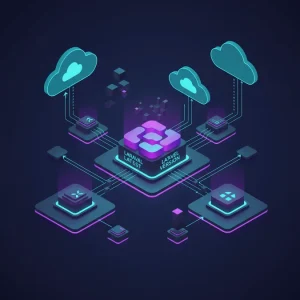
Edge computing shifts the execution of code to points of presence (PoPs) that are physically closer to your end users. Think of these as miniature, distributed data centers maintained by CDN providers or cloud platforms. By running logic at the edge, you reduce the physical distance data must travel. However, this is not a one-size-fits-all solution. For instance, if you are building complex systems, you might need to understand Architecting AI Agents: A Technical Deep Dive into Autonomous Systems for Business to see where edge processing fits into your broader AI strategy. Edge environments are constrained; they often run on lighter runtimes (like V8 isolates or WebAssembly) and do not have the same persistent file system or memory availability as a standard containerized application.
When evaluating your infrastructure, consider the difference between static content delivery and dynamic edge execution. Delivering a CSS file from the edge is trivial, but executing a complex authorization check that requires a lookup to a primary database is a significant architectural hurdle. If your team is struggling with current infrastructure, you might want to review Cloud Migration Checklist: A Technical Architecture Guide for Startups to ensure your foundation is solid before attempting edge-based optimizations. The primary constraint is data gravity: the difficulty of moving large datasets to the edge. If your application relies on a massive, unified state, the edge is rarely the right place for your primary application logic.
The Strategic Trade-off: Latency vs. Complexity
The primary business driver for edge computing is user experience, specifically in high-frequency scenarios like real-time bidding, IoT sensor data processing, or high-speed gaming. By placing logic at the edge, you can perform tasks such as A/B testing redirection, request header manipulation, or lightweight data validation without taxing your origin server. However, this comes at the cost of increased operational overhead. You are now managing a system that is distributed across dozens of global regions simultaneously. This introduces the ‘distributed state’ problem: how do you ensure that your edge nodes have the most up-to-date information without creating a bottleneck?
For founders, this is where many projects fail. If you are not careful, you end up with fragmented logic that is difficult to debug. When things go wrong in a distributed edge environment, logs are scattered, and tracing a single user’s journey across multiple edge nodes becomes a significant engineering challenge. This is why Business Dashboards: Which Metrics Are Actually Worth Tracking from a Security Perspective is vital; you need centralized observability for a decentralized system. If your team is not prepared to build or integrate advanced monitoring, you are effectively flying blind.
Furthermore, development velocity is impacted. Deploying code to the edge often involves different testing paradigms than traditional server-side code. If your developers are not accustomed to testing for global propagation times, you will encounter race conditions and cache invalidation bugs that are notoriously hard to reproduce. Before diving into this, ensure your team is aligned on best practices, perhaps by reviewing AI Code Review Checklist: Architectural Readiness for Production Deployment to ensure your deployment pipelines can handle the complexity of edge-ready codebases.
When Edge Computing Is the Wrong Choice
Not every application requires edge computing. In fact, for 90% of SaaS products, it is an unnecessary layer of complexity that increases the likelihood of downtime. If your application is a standard CRUD-based interface (Create, Read, Update, Delete), the latency added by a round-trip to a central region is usually negligible compared to the time it takes to execute complex SQL queries. If your application is struggling with performance, the bottleneck is almost always the database or inefficient API design, not the network latency of the HTTP request.
Before you force your team to adopt an edge-first architecture, consider if your underlying data interfaces are optimized. Using GraphQL Tutorial for Beginners: Building Scalable Data Interfaces can often do more for your performance than moving code to the edge. GraphQL allows you to fetch exactly the data you need, reducing payload size and eliminating the ‘over-fetching’ problem that plagues many REST implementations. When you combine efficient data fetching with a well-indexed database, you often find that you do not need the edge at all.
Additionally, if you are looking for investors, note that they are often wary of ‘over-engineered’ solutions. During due diligence, they look for simplicity and maintainability. You should be familiar with the Technical Red Flags Investors Look For During Due Diligence, which often include premature optimization and unnecessary architectural complexity. If you cannot justify the edge move with concrete business metrics, it is likely a red flag. Stick to proven, scalable cloud patterns unless you have a specific, data-backed requirement for sub-50ms response times globally.
The Role of Edge in AI and Machine Learning
Edge computing is becoming increasingly relevant as businesses look to integrate AI into their products. Specifically, ‘Edge AI’ involves running smaller, quantized machine learning models directly on edge devices or edge servers. This is essential for applications requiring privacy (data never leaves the user’s device) or immediate response (e.g., computer vision in a security camera). However, for most business software, the integration pattern is slightly different. You might use the edge to perform initial request filtering or to serve lightweight inference models while delegating heavy lifting to a centralized GPU cluster.
If your goal is to provide personalized experiences, consider how AI Integration for E-commerce Personalization: A Comprehensive Guide can be implemented. By processing user intent at the edge, you can serve personalized content instantly without waiting for a backend round-trip. This is a powerful use case for retail and e-commerce where every millisecond of latency translates directly into conversion rate drops. However, you must carefully manage the model versions being served at the edge to ensure consistency.
Similarly, for support automation, you can use the edge to handle initial triage of customer queries. Before passing a request to a heavy LLM or autonomous agent, you can perform lightweight entity extraction or intent classification at the edge. This can save significantly on compute costs for your primary AI infrastructure. If you are exploring this, look at AI Integration for Customer Support Automation: A Comprehensive Guide to see how to build a layered architecture where the edge acts as the first line of defense and intelligence.
Security Implications of Decentralized Infrastructure
Moving code to the edge expands your attack surface. In a centralized model, you have a clear ‘perimeter’ (your virtual private cloud or datacenter) where you can apply WAF rules, rate limiting, and intrusion detection. When you move code to the edge, you are essentially running your logic on shared infrastructure provided by a third party. This requires a shift in how you think about security. You are no longer just securing your server; you are securing your code across a distributed network of execution environments that you do not own.
If you rely on external help for this, be aware of the The Hidden Security Risks of Staff Augmentation for Technical Startups. If your team is not highly experienced in edge-specific security, you might inadvertently expose sensitive data or leave API keys accessible in edge environments where they should not be. You need to ensure that your edge functions are stateless and that they do not hold long-lived credentials or sensitive access tokens. Always use environment-specific secret management and ensure that your edge code adheres to strict least-privilege principles.
Furthermore, consider the impact on your user’s data privacy. If you are processing personal identifiable information (PII) at the edge, you must ensure that your data handling complies with regional regulations like GDPR or CCPA. Processing data at the edge can actually be a benefit for compliance, as you can keep data within specific geographic borders (data sovereignty), but it requires careful architectural planning to ensure that logs or backups do not accidentally move that data to a restricted region. Always audit your data flow as part of your security review.
Managing Development Velocity and Team Structure
Adopting an edge-centric architecture changes how your engineering team works. It requires a higher level of maturity in CI/CD pipelines. You are not just deploying to a staging server and then to production; you are deploying to a global network. This requires robust automated testing and canary deployment strategies. If your team cannot deploy with confidence, the edge will become a source of constant fire-fighting. Founders should focus on hiring or developing talent that understands distributed systems, as this is no longer a ‘web dev’ task but a systems engineering task.
If you are currently struggling to scale your team or find the right leadership, consider the strategies outlined in How to Find a CTO for Your Startup: A Strategic Framework for Founders. A strong CTO will be able to evaluate whether your current team has the capacity to manage the operational burden of edge computing. They will also be able to weigh the benefits against the potential for ‘architectural drift’—where your edge logic and your origin logic slowly diverge, leading to inconsistent behavior that is a nightmare to debug.
Don’t fall into the trap of thinking that edge computing will solve your scaling problems if your fundamental code is not scalable. If you have inefficient loops or blocking operations, they will be just as inefficient at the edge. Focus on architectural hygiene first. For instance, ensuring that you have rigorous Server Actions Form Validation: Architectural Best Practices for High-Scale Systems in place is more important than where that validation happens. If your validation logic is flawed, moving it to the edge just makes it faster to fail, not better to run.
The Visibility Gap: Marketing vs. Engineering Reality
In the current tech landscape, ‘Edge’ is a buzzword that is often used to inflate the perceived value of a platform. You will see companies claim that they can ‘solve latency’ or ‘enable real-time AI’ simply by being at the edge. As a founder, you need to look past the marketing. The reality is that visibility is significantly harder at the edge. You need to understand the difference between how your marketing team positions your product and how your engineering team builds the underlying visibility layer. You can find guidance on managing these different perspectives in SEO vs. GEO vs. AIO: Engineering Strategies for Modern Visibility, which touches on how technical architecture impacts your external perception and internal operational reality.
When you are building, you must prioritize ‘observability’ over ‘visibility’. You need to know exactly how your edge functions are performing, how many errors they are throwing, and where those errors are originating. If your dashboard only shows high-level success rates, you are missing the edge-case failures that occur in specific regions. You should be tracking latency distributions (P95, P99), not just averages. Averages lie, especially when dealing with global networks where a small percentage of users might be having a terrible experience while the majority are fine.
Finally, do not let the promise of ‘global performance’ distract you from the basics. If your application is not accessible, fast, and reliable in its primary market, the edge will not help you. Focus on the core user journey. Use tools that provide deep insight into your request lifecycle. If you find that your team is spending more time managing edge configurations than building product features, you have likely over-indexed on premature optimization and need to pull back to a simpler, more manageable architecture.
ROI and Business Value: Separating Signal from Noise
Measuring the business value of edge computing is notoriously difficult because the benefits are often hidden in the ‘absence of problems’—faster load times, fewer dropped requests, and improved conversion rates. To justify the investment, you must establish clear baselines before you move to the edge. If you cannot measure the impact of latency on your conversion rate, you cannot justify the cost of an edge migration. You need to adopt a data-driven approach, similar to the methods described in AI Agent ROI: How to Measure Business Value Before Committing Budget, to ensure that your technical choices are aligned with business outcomes.
For example, if you are building an AI-powered service, the ROI of edge computing comes from reduced compute costs (by filtering requests) and improved engagement (by reducing latency). If you can prove that a 100ms improvement in latency leads to a 2% increase in retention, you have a clear business case. If you cannot draw that line, you are essentially spending money on complexity without a guaranteed return. Always prioritize initiatives that have a direct, measurable impact on your top or bottom line.
Remember that edge computing is a tool, not a strategy. Your strategy is to provide value to your customers. If the edge helps you deliver that value more effectively, use it. If it adds friction, cost, and complexity that outweighs the performance gains, avoid it. Founders who succeed are those who treat architecture as a business decision, not a technical fashion statement. Keep your systems as simple as possible, and only add the complexity of the edge when the business case is undeniable.
Architectural Readiness and Future-Proofing
Before you commit to an edge-heavy architecture, you must ensure your codebase is ready. This means moving away from monolithic, stateful structures toward modular, stateless services. If your application relies on a local file system or a sticky session to a single server, you are not ready for the edge. You need to adopt an architecture that is inherently distributable. This is why it is so important to have your house in order before attempting advanced deployments.
If you are unsure where your architecture stands, review your current processes against standard industry benchmarks. Ensuring that your team follows best practices in code quality and deployment is the only way to ensure that your system remains maintainable as it grows. If you are preparing for a major scale-up, you might need to reconsider your entire stack. A well-designed system is one that can be easily moved, refactored, or optimized, whether that means moving to the edge, switching cloud providers, or adopting new technologies.
Finally, always keep in mind the principle of ‘least surprise’. Your system should behave consistently, regardless of where it is running. If your edge logic produces different results than your origin logic due to subtle differences in environment or configuration, you will spend months hunting down bugs. Prioritize consistency and simplicity above all else. Your goal is to build a business, not a complex engineering experiment. Use the edge as a surgical tool, not a foundation for your entire infrastructure.
The Master Hub for AI Integration
Edge computing is only one piece of the puzzle when it comes to building high-performance, AI-integrated businesses. Whether you are focusing on autonomous agents, personalized e-commerce, or automated customer support, understanding how your infrastructure supports these goals is critical. We have curated a comprehensive set of resources to help you navigate the complexities of AI integration, from architectural decisions to business value measurement.
Explore our complete AI Integration — AI for Business directory for more guides.
Factors That Affect Development Cost
- Operational complexity of distributed systems
- Engineering team expertise requirements
- Observability and monitoring tool integration
- Data consistency and state management overhead
- Maintenance of multi-region deployment pipelines
Costs vary significantly based on the level of abstraction and the specific provider’s pricing model for compute cycles at the edge.
Edge computing represents a significant shift in how we think about distributed systems, offering immense potential for performance optimization in specific, latency-sensitive applications. However, it is not a universal solution. For the majority of startups, the complexity of managing a global, decentralized architecture far outweighs the performance benefits. As a founder, your focus should remain on building a scalable, maintainable, and high-value product. Only invest in edge computing when you have a clear, data-backed requirement that justifies the increase in operational complexity and technical debt.
By prioritizing architectural health, rigorous testing, and clear business metrics, you can ensure that your technology stack remains an asset rather than a liability. Whether you choose to leverage the edge or stay with a more traditional cloud architecture, the key is to make informed decisions that align with your long-term business goals. Build for simplicity, iterate based on data, and never lose sight of the fact that your technology exists to serve your customers, not the other way around.
NR Studio builds custom web apps, mobile apps, SaaS platforms, and internal tools for growing businesses. If you’re working through a technical decision, feel free to reach out — no commitment required.