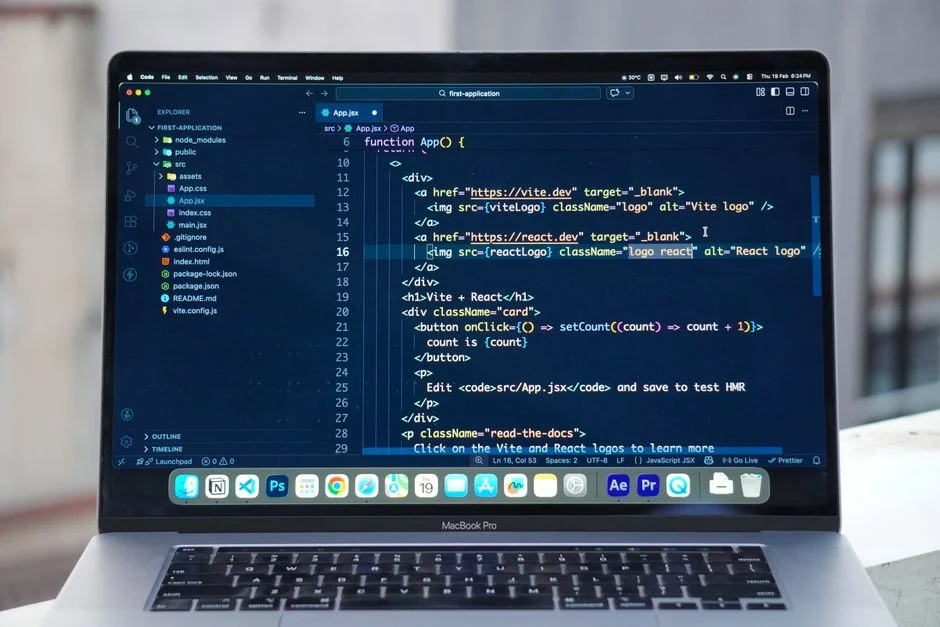

Most startup founders blindly choose Firebase because it is the default path, but in 2026, that convenience is a massive security liability. Relying solely on a proprietary, black-box ecosystem for your core data infrastructure is not just a technical debt trap; it is a fundamental failure of risk management. By tethering your application to Google’s walled garden, you are effectively signing over the sovereignty of your user data, with limited visibility into the underlying security hardening and compliance controls.
This article moves past the superficial feature comparisons that plague most tech blogs. We will dissect the architectural differences between Firebase and Supabase through the lens of a security engineer. We will look at how each handles the OWASP Top 10, data residency, and the long-term implications of vendor lock-in. Whether you are building a secure fintech tool or a high-traffic social platform, the choice between these two backends in 2026 requires a deep understanding of data isolation, access control, and auditability.
The Illusion of Security in Proprietary Backend-as-a-Service
When evaluating Backend-as-a-Service (BaaS) platforms, developers often prioritize speed of development over security posture. Firebase, while powerful, obscures the internal mechanics of its data storage and access control. As a security professional, I view this lack of transparency as a significant risk. If you cannot audit the underlying database engine, you cannot fully guarantee the integrity of your encryption-at-rest or the precise behavior of your row-level security (RLS) policies. This is particularly concerning when building sensitive applications such as a digital wallet application, where data breaches have catastrophic legal and financial consequences.
Conversely, Supabase leverages PostgreSQL, an industry-standard, open-source relational database. This allows for rigorous auditing of database schemas and security controls. When you use PostgreSQL, you can apply standard security patterns such as secrets management for web applications to ensure that sensitive connection strings and credentials are never exposed in the client-side bundle. The ability to run local instances of your database for testing ensures that your QA testing checklist for web applications can include database-level penetration testing, a feat that is significantly more difficult with Firebase’s proprietary Firestore architecture.
Furthermore, consider the implications of vendor lock-in. When your entire business logic is tied to Firebase’s proprietary SDKs, migrating away becomes a Herculean task, often requiring a total rewrite of your data access layer. If you ignore these risks, you might eventually face the same technical debt that leads to signs your mobile app needs a native rewrite. By choosing open-source technologies, you maintain the flexibility to move your infrastructure if your compliance requirements change or if the provider’s security standards fail to keep pace with modern threats.
Data Sovereignty and Compliance: PostgreSQL vs. Firestore
Data residency is a top-tier concern for any enterprise application in 2026. Firebase provides regional data placement, but the management of that data is still subject to the overarching policies of the provider. In contrast, Supabase allows for finer control over your infrastructure, especially when self-hosted or deployed in a private cloud environment. This is essential for industries with strict regulatory requirements, such as healthcare or finance. When you control the database engine, you can implement custom audit logging and data retention policies that satisfy GDPR or HIPAA, which is much simpler when you have direct access to the database logs and configuration.
Integrating third-party services often introduces vulnerabilities. For instance, architecting Google Sheets integration for scalable web applications requires careful handling of API tokens and scope permissions. In a Firestore environment, your access control is limited to the IAM roles provided by GCP. In a PostgreSQL environment, you can use granular RLS policies to ensure that even if an application token is compromised, the attacker has minimal access to the underlying tables. This depth of control is the difference between a minor incident and a full-scale data breach.
We must also address the lifecycle of data. Managing user requests for data deletion is a non-trivial task. You need to be architecting data deletion and right to be forgotten workflows in React Native applications with extreme care to ensure all related records are purged across your infrastructure. With Firestore, this can involve complex cloud functions that might fail silently. With PostgreSQL, you can use cascading deletes or database-level triggers to ensure that data integrity is maintained even during bulk deletion operations.
The Real-World Cost Analysis of Backend Infrastructure
Estimating the cost of a backend is rarely as simple as looking at a pricing page. While both Firebase and Supabase offer free tiers, the costs scale differently as your user base grows. Firebase’s pricing is heavily based on read/write operations and egress, which can become unpredictable for data-heavy applications. Supabase, while also offering managed services, provides a more predictable model based on database size and compute resources. For a startup, understanding the total cost of ownership is vital, as discussed in native app development cost: a comprehensive CTO guide to TCO and budgeting.
| Cost Factor | Firebase (Managed) | Supabase (Managed) |
|---|---|---|
| Read/Write Operations | High variable cost | Included in compute |
| Database Storage | Moderate | Low |
| Egress Traffic | High | Moderate |
| Infrastructure Lock-in | Extreme | Low |
For high-performance applications, such as a mobile app for inventory scanning, the cost of excessive API calls to Firestore can quickly exceed the monthly budget of a small business. In contrast, a well-optimized PostgreSQL instance can handle complex queries at a fraction of the cost. If you are also managing subscriptions, you must factor in external tools like optimizing mobile app subscription billing with RevenueCat: a CTO’s guide to revenue operations, which adds another layer of cost and integration complexity. Always remember that the cheapest option today might be the most expensive in terms of developer hours spent debugging proprietary system limitations.
Security Hardening and CI/CD Pipelines
A secure application is only as good as its deployment pipeline. When using Firebase, your deployment is often tied to the Firebase CLI, which can be a point of failure if not properly secured. In a professional environment, you should be securing mobile app CI/CD pipelines: a React Native blueprint by enforcing strict IAM roles, code signing, and automated security scans. Supabase integrates more naturally into standard CI/CD workflows because it is essentially a PostgreSQL environment that can be version-controlled using migration scripts.
Furthermore, automated monitoring is critical. Implementing mobile app crash reporting setup: a technical architecture guide is easier when your logs are centralized and accessible. With Supabase, you can export your logs to any standard logging service like Datadog or ELK, providing you with a unified view of your application’s health. Firebase also provides error reporting, but it is deeply integrated into the Google ecosystem, which might not be ideal if your organization uses a different stack for observability. Never rely on “vibe coding” or automated shortcuts for security-critical infrastructure, as warned in is vibe coding safe for production applications? a cloud architect’s perspective.
Scaling and Performance Considerations
Performance is not just about speed; it is about consistent latency under load. Firestore’s performance is excellent for simple CRUD operations but can degrade when you need to perform complex joins or aggregation queries. In contrast, PostgreSQL allows for sophisticated indexing, materialised views, and query optimization that can handle millions of rows efficiently. When scaling a mobile app, you need to be aware of the mobile app user retention strategies: a technical guide for CTOs, as a slow app caused by inefficient database queries will lead to high abandonment rates.
If you are choosing between languages for your app, your backend choice might influence your decision, as seen in Swift vs Kotlin Multiplatform for a new app: a systems engineering perspective. If your backend is PostgreSQL, you have a wider range of drivers and ORM options, providing better type safety and performance for your React Native application. This architectural flexibility is crucial for long-term maintenance and performance tuning, preventing your codebase from becoming a tangled mess of proprietary SDK calls.
Architectural Patterns for Modern Applications
Adopting the right architecture is paramount. For complex systems, you should be following standard software architecture patterns for web applications: a technical guide for CTOs. Using a relational database like PostgreSQL allows you to implement clean architecture, where your business logic remains independent of the database provider. This is a massive advantage over Firebase, where your business logic is often tightly coupled to the Firestore triggers and client-side SDKs.
By abstracting your data layer, you can easily swap out your database provider or even implement a multi-cloud strategy if your security requirements demand it. This level of architectural decoupling is impossible with Firebase. When building for the future, you must prioritize maintainability and portability, ensuring that your application can survive and thrive even if your chosen cloud provider changes its policies or pricing structure.
The Importance of Expert Architecture Reviews
Choosing between Firebase and Supabase is not a one-time decision; it is a foundational choice that dictates the security, cost, and scalability of your product for years. Many founders realize too late that they have built their house on sand, leading to expensive refactors. At NR Tech Studio, we specialize in helping businesses design robust, secure, and cost-effective architectures. Our team of senior engineers can perform a comprehensive audit of your proposed backend to ensure it meets your specific security and performance requirements.
Whether you are in the early planning stages or looking to modernize your existing stack, an expert review can save you thousands of dollars in technical debt. Contact us today to schedule an architecture review for your upcoming project.
Resources for Further Exploration
For deeper insights into the technologies discussed, we recommend exploring our curated resources. [Explore our complete Mobile App — React Native directory for more guides.](/topics/topics-mobile-app-react-native/)
Factors That Affect Development Cost
- Data egress volume
- Number of concurrent database connections
- Complexity of RLS policies
- Storage requirements
- Managed vs self-hosted compute costs
Costs vary significantly based on data usage patterns, with managed services often starting at a low monthly base rate that scales linearly with activity.
The decision between Firebase and Supabase in 2026 is ultimately a choice between convenience and control. While Firebase offers a faster path to a prototype, the long-term security and operational benefits of an open-source, PostgreSQL-based architecture like Supabase are undeniable. As a security engineer, my recommendation is to prioritize platforms that offer transparency, portability, and granular control over your data.
Do not wait until a security incident forces your hand. Invest in a robust architecture today to ensure your application is resilient, compliant, and ready for growth. If you need assistance navigating these complex infrastructure decisions, our team at NR Tech Studio is ready to help you build a foundation that lasts.
Not Sure Which Direction to Take?
Book a 30-minute call with one of our engineers — we’ll help you decide without the sales pitch.