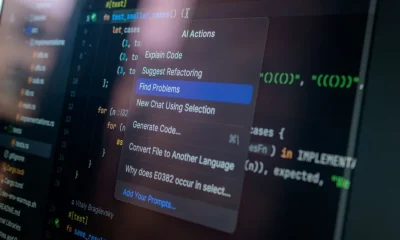

The integration of generative AI into the software development lifecycle has fundamentally altered the trajectory for startup founders and enterprise product teams. We are observing a significant shift where the initial phase of product development—the Minimum Viable Product (MVP)—is no longer defined by manual coding from scratch, but by the orchestration of AI-assisted development workflows. Software houses have moved beyond simple code delivery to providing sophisticated AI engineering services that synthesize LLM-driven scaffolding, automated test generation, and intelligent data pipeline construction. This transition is not merely about speed; it is about the structural integrity of a codebase that must evolve beyond its prototype phase.
For stakeholders navigating the current market, the challenge lies in distinguishing between AI-powered efficiency and technical debt accumulation. While AI can generate thousands of lines of code in seconds, the maintenance of that code requires rigorous architectural oversight. At NR Tech Studio, we view AI-built MVPs as a collaborative effort between human domain expertise and machine-generated logic. This article examines the technical requirements, vendor selection frameworks, and cost structures involved in engaging professional software house services to build your AI-enabled MVP, ensuring that your foundation is built for production-grade scale rather than just a quick launch.
The Evolution of AI-Driven MVP Development
The traditional software development lifecycle (SDLC) has always been constrained by human throughput. However, the introduction of AI-assisted coding environments, such as GitHub Copilot, Cursor, and LLM-integrated IDEs, has fundamentally changed the velocity of MVP creation. A professional software house now acts as an orchestrator of these tools, ensuring that the speed gained during the initial build is not negated by long-term maintenance burdens. When we talk about AI-built MVPs, we are referring to a methodology where AI agents handle repetitive boilerplate, schema generation, and unit test creation, while senior engineers focus on system architecture, security, and complex business logic integration.
This shift requires a new level of technical maturity. Many teams mistakenly assume that AI-built MVPs are inherently ‘cheaper’ or ‘faster’ without considering the underlying architectural debt. When a software house provides services for AI-built MVPs, they must implement strict governance over the AI’s output. This includes automated code reviews, security scanning for LLM-hallucinated vulnerabilities, and rigorous type-checking, especially when utilizing TypeScript in a Next.js environment. The goal is to produce a codebase that is clean, modular, and, most importantly, maintainable by humans once the MVP phase concludes.
Furthermore, the integration of AI into the MVP itself—such as embedding RAG (Retrieval-Augmented Generation) pipelines or fine-tuned LLM interfaces—requires specialized infrastructure. Software houses are no longer just building web interfaces; they are building AI-native applications that require robust vector databases like Supabase or Pinecone, alongside efficient API orchestration. The complexity of these systems necessitates a move away from ‘no-code’ quick fixes toward a hybrid approach where custom code provides the backbone for AI-driven features.
Technical Architecture and Infrastructure Requirements
An AI-built MVP is only as strong as its architectural foundation. When engaging a software house, you must prioritize a robust stack that can handle the unpredictability of AI responses. We recommend a stack centered around Next.js for the frontend, coupled with a type-safe backend in Node.js or Laravel. This ensures that the interfaces between your AI services and your application logic are strictly typed and predictable. Using Prisma as an ORM allows for seamless database migrations, which is critical when your data schema evolves rapidly during the MVP phase.
The integration of AI services requires careful consideration of latency and cost. For example, when building a feature that uses an LLM to process user requests, you cannot rely on synchronous API calls that might time out. Instead, you must implement an asynchronous pattern using task queues. A professional software house should architect this using tools like Redis or dedicated job queues to handle long-running AI tasks. This ensures that the user experience remains responsive while the AI processes the data in the background.
Security is another paramount concern. When you integrate third-party AI APIs (like OpenAI, Anthropic, or open-source models hosted on Hugging Face), you are effectively expanding your attack surface. A software house must ensure that all API keys are securely managed via environment variables and that data sent to external models is sanitized to protect sensitive user information. Additionally, implementing rate limiting and usage monitoring is essential to prevent runaway costs, which can occur if an AI feature is exploited by malicious actors or buggy client-side code.
Vendor Selection Framework for AI-Focused Software Houses
Selecting the right partner for an AI-built MVP is fundamentally different from selecting a traditional web development agency. You are looking for a partner that understands both software engineering lifecycle management and the nuances of AI model integration. A critical indicator of a high-quality software house is their ability to demonstrate a clear strategy for ‘human-in-the-loop’ development. They should have internal policies regarding the use of AI tools, ensuring that they are not simply copy-pasting AI output, but rather auditing and refining it for security and performance.
Use the following criteria to evaluate potential vendors:
- Experience with Vector Databases: Do they have a proven track record of working with Supabase (pgvector), Pinecone, or Weaviate?
- API Orchestration Expertise: Can they demonstrate how they handle complex chains of AI prompts and context management?
- Code Quality Governance: What is their process for reviewing AI-generated code? Do they use static analysis tools like ESLint and SonarQube?
- Scalability Strategy: How do they plan to transition the MVP from a single-tenant prototype to a multi-tenant production system?
Avoid vendors that promise ‘AI-only’ solutions, as these are often brittle and impossible to scale. Instead, look for partners who treat AI as a tool for acceleration rather than a replacement for engineering rigor. Ask for case studies that specifically highlight how they handled the transition from the MVP to the production phase, as this is where most AI-driven projects fail due to technical debt and lack of architectural foresight.
Detailed Cost Analysis and Pricing Models
Understanding the costs associated with AI-built MVPs is crucial for budgeting and avoiding hidden expenses. Unlike traditional development, AI-integrated projects often involve variable costs related to token usage, vector database storage, and the need for specialized senior engineering time to oversee AI outputs. Below is a breakdown of the typical cost models you will encounter when working with high-end software houses.
| Pricing Model | Characteristics | Estimated Monthly/Project Cost |
|---|---|---|
| Hourly Rate | Best for flexible scope and high uncertainty. | $150 – $300 per hour |
| Project-Based (Fixed) | Best for well-defined MVPs with clear scope. | $25,000 – $75,000 per project |
| Retainer (Fractional) | Best for ongoing AI feature iterations. | $10,000 – $25,000 per month |
It is important to note that the cost of an AI-built MVP is not just the development fee. You must also account for the ‘AI Tax,’ which includes the costs of third-party API tokens, cloud infrastructure for hosting models, and the additional time required for senior engineers to audit and secure the generated code. A professional software house should provide a transparent breakdown that includes these operational costs. If a quote seems significantly lower than the industry standards, it is likely that the vendor is skipping essential steps like security audits, rigorous unit testing, or proper architectural documentation, which will cost you significantly more in the long run during the scaling phase.
Security Implications and Data Privacy
When you build an AI-enabled MVP, you are often handling user data that is sent to third-party LLM providers. This introduces significant compliance and security risks, particularly in industries like Healthcare or Finance. A professional software house must implement a robust data privacy strategy from day one. This includes data de-identification, ensuring that PII (Personally Identifiable Information) is not sent to external models, and implementing strict access controls for any internal AI tools.
Furthermore, prompt injection attacks are a real threat to AI-built applications. If an attacker can manipulate the input that is fed to your AI model, they can cause the system to behave unexpectedly or leak sensitive information. A high-quality software house will implement layers of defense, such as input sanitization, output validation, and prompt monitoring. They should also be well-versed in the latest security standards for AI, such as the OWASP Top 10 for LLM applications, which provides a comprehensive list of vulnerabilities to mitigate.
Finally, consider the data retention policies of the AI models you are using. Are you using enterprise-grade APIs that guarantee your data will not be used for model training, or are you using public-facing endpoints? This distinction is vital for maintaining the confidentiality of your proprietary business data. Your software partner should guide you through these decisions, ensuring that your MVP complies with relevant regulations such as GDPR or HIPAA, if applicable.
Scaling Challenges and Long-Term Maintenance
The biggest pitfall for any MVP is the ‘scaling wall.’ When an AI-built MVP gains traction, the initial code structure—often rushed to meet market deadlines—frequently collapses under the weight of increased traffic and data complexity. A professional software house ensures that your MVP is built with a modular architecture that allows for the replacement of components as they reach their limits. This means avoiding vendor lock-in with specific AI models and building abstraction layers that allow you to switch models or service providers with minimal friction.
Maintenance is another often-overlooked aspect. AI-generated code, while functional, can be difficult to debug if the original context or reasoning is lost. To mitigate this, your software partner must enforce strict documentation standards. Every piece of logic, even that which was AI-assisted, should be documented as if it were written by a human. This ensures that your internal team or future developers can maintain, debug, and extend the application without needing to rely on the original AI prompts.
Lastly, consider the performance implications of AI features. As your user base grows, the latency of your AI-driven features will become a bottleneck. A professional software house will implement caching strategies, load balancing, and efficient prompt engineering to ensure that your application remains fast and cost-effective at scale. They should also provide you with a long-term roadmap that outlines how the system will be upgraded and refactored as the product matures.
The Strategic Build vs. Buy Decision
Deciding whether to build an AI-integrated MVP from scratch or to buy/subscribe to existing AI platforms is a fundamental strategic choice. The ‘Buy’ approach often involves integrating multiple SaaS tools via APIs, which can be faster but limits your customization and long-term control. The ‘Build’ approach, supported by a professional software house, gives you full ownership over your IP and the ability to tailor the AI’s behavior precisely to your business needs.
For startups, the decision often hinges on the competitive advantage of the AI implementation. If your core value proposition is the AI itself, you should prioritize building a custom, proprietary system. If the AI is merely a feature (e.g., a chatbot for customer support), buying a pre-built solution might be more cost-effective. However, even when ‘buying,’ you still need a software house to handle the integration and ensure it plays nicely with your existing infrastructure.
The following table summarizes the trade-offs:
| Factor | Buy (SaaS Integration) | Build (Custom AI MVP) |
|---|---|---|
| Time to Market | Very Fast | Moderate |
| Customization | Low | High |
| IP Ownership | None | Full |
| Long-term Costs | High (Subscription scaling) | Lower (Infrastructure maintenance) |
| Control | Low | High |
Ultimately, the role of the software house is to guide you through this decision matrix, ensuring that the chosen path aligns with your long-term business goals and technical capabilities. They should be able to provide an objective analysis of the pros and cons based on your specific requirements.
Conclusion
Engaging a software house for an AI-built MVP is an investment in your company’s foundation. By prioritizing architectural integrity, security, and long-term maintainability over the siren song of rapid, un-audited AI generation, you position your startup or enterprise to scale successfully. The most successful projects are those where AI is treated as a force multiplier for human expertise, not a substitute for it. Whether you are building from scratch or integrating existing models, having a technically rigorous partner is the difference between a prototype that gathers dust and a product that drives value.
We encourage you to reach out to our team at NR Tech Studio to discuss your specific MVP requirements. Our approach combines industry-standard engineering practices with the latest in AI integration, ensuring that your product is ready for the demands of the market. If you found this article helpful, consider subscribing to our newsletter for more deep dives into the technical realities of modern software development.
Factors That Affect Development Cost
- Complexity of AI model integration
- Requirement for custom model fine-tuning
- Volume and sensitivity of data processed
- Scope of API integrations
- Need for specialized AI engineering talent
Costs vary significantly based on the depth of AI integration and the architectural complexity of the required infrastructure.
The landscape of software development is rapidly shifting, and the ability to harness AI for MVP development is a defining characteristic of successful technical leadership. By focusing on architectural rigor, security, and long-term maintainability, you ensure that your initial build is a springboard for future growth rather than a source of technical debt.
If you are ready to move forward with your AI-powered MVP, our team at NR Tech Studio is here to provide the technical expertise and strategic guidance you need. Let’s build something that lasts.
NR Tech Studio builds custom web apps, mobile apps, SaaS platforms, and internal tools for growing businesses. If you’re working through a technical decision, feel free to reach out — no commitment required.