
In the current fiscal climate, restaurant operators are moving away from fragmented, off-the-shelf point-of-sale (POS) systems toward unified, bespoke restaurant management software. The trend is driven by a critical need for real-time data visibility across multiple locations, where legacy systems fail to integrate with modern inventory, labor scheduling, and supply chain logistics. As a CTO, I see this shift not merely as a technological upgrade, but as a fundamental re-platforming of the restaurant business model to prioritize data-driven decision-making.
The complexity of modern restaurant operations—spanning front-of-house (FOH) service, back-of-house (BOH) inventory, and e-commerce delivery channels—demands a robust API-first architecture. When off-the-shelf solutions impose artificial limitations on data access or require exorbitant per-seat licensing fees, custom development becomes the only viable path to achieving long-term technical sovereignty. This article explores the architectural requirements for building or scaling software that serves the high-throughput, low-margin environment of the hospitality industry.
The Economic Imperative of Custom Restaurant Software
The restaurant industry is historically defined by razor-thin profit margins, often ranging between 3% and 5%. In this environment, technical inefficiency is not just a nuisance; it is a direct contributor to business failure. Legacy restaurant management software often relies on siloed databases, preventing the seamless flow of information between the kitchen display system (KDS), the labor management module, and the financial reporting dashboard. When these systems operate independently, the cost of manual reconciliation and data entry error accumulates, leading to significant inventory shrinkage and labor inefficiencies.
By investing in custom-developed software, firms can eliminate the overhead associated with third-party middleware and API integration fees. Consider the total cost of ownership (TCO) for a multi-unit franchise using a standard SaaS product: licensing fees can easily exceed $50,000 annually per location when factoring in seat-based pricing, premium integrations, and data extraction costs. A custom-built platform, while requiring a higher upfront investment in development (typically ranging from $80,000 to $250,000 for a robust MVP), provides long-term cost predictability. The ability to own the source code allows for the implementation of specific business logic—such as proprietary recipe costing algorithms or unique loyalty program structures—that standardized platforms simply cannot accommodate.
Furthermore, custom software allows for the integration of specialized APIs that align with a company’s unique supply chain. For example, integrating an AI-driven demand forecasting service directly into your inventory management module can reduce food waste by 15-20% annually. This level of optimization is rarely achievable through generic software, which is designed to be a ‘one-size-fits-all’ solution rather than a tailored business accelerator.
Architectural Foundation: API-First Design Patterns
At the core of any modern restaurant management system must be a robust, RESTful API architecture. The API acts as the central nervous system, facilitating communication between the POS, the mobile ordering app, the kitchen display system, and the central analytics dashboard. Using a microservices approach allows developers to isolate critical components; for instance, the order processing service should be decoupled from the inventory tracking service. This ensures that even if the inventory module experiences high latency, the core transaction loop remains performant and uninterrupted.
When designing these APIs, we must adhere to strict performance standards. Every millisecond of latency in an order transaction at the register correlates to a decrease in throughput during peak hours. Using technologies like TypeScript for type safety and Node.js or Laravel for backend logic ensures that the development team can maintain high velocity while minimizing runtime errors. The following structure represents a typical API endpoint for order ingestion:
POST /api/v1/orders
{
  "location_id": "loc_9921",
  "items": [
    {"id": "sku_123", "quantity": 2, "modifiers": ["no_onions"]}
  ],
  "payment_token": "pm_5521",
  "timestamp": "2023-10-27T10:00:00Z"
}
Consistency in API design is paramount. By leveraging standard HTTP status codes and JSON-based request bodies, we ensure that third-party integrations (such as delivery platforms like DoorDash or UberEats) can be integrated with minimal friction. The documentation should be maintained using OpenAPI/Swagger specifications, enabling front-end teams to develop against the API schema before the backend implementation is even complete. This parallel development is a key factor in reducing time-to-market for new features.
Managing Technical Debt in High-Frequency Environments
Technical debt in restaurant software is particularly dangerous because the system operates in real-time. A bug in a deployment script or a memory leak in a reporting module can result in lost revenue within minutes during a dinner rush. Organizations often fall into the trap of ‘quick-fix’ coding to meet immediate demand, which results in a brittle codebase. To avoid this, we must emphasize rigorous testing protocols and continuous integration/continuous deployment (CI/CD) pipelines.
For example, implementing unit tests for every critical business function—such as tax calculation, discount application, and inventory decrementing—is non-negotiable. Without these safeguards, the system becomes impossible to refactor as the business scales. We recommend a testing coverage threshold of at least 85% for all core modules. Furthermore, infrastructure as code (IaC) tools like Terraform should be used to define the environment, ensuring that the development, staging, and production environments are identical, thus eliminating the ‘it works on my machine’ class of problems.
Refactoring should be treated as a continuous activity rather than a quarterly project. By dedicating 20% of every sprint to addressing technical debt, engineering teams can maintain a high velocity without the risk of system collapse. This is especially critical when dealing with legacy database schemas; migrating from an old, monolithic MySQL instance to a more distributed or partitioned structure requires careful planning and zero-downtime deployment strategies. Our approach typically involves blue-green deployment patterns, where the new version of the software is spun up alongside the old one, and traffic is cut over only after rigorous validation.
Data Integrity and Real-Time Analytics
The value of restaurant management software resides in its ability to synthesize raw transactional data into actionable intelligence. However, data integrity is often compromised by inconsistent logging and lack of synchronization between disparate modules. A centralized data warehouse, populated via event-driven architecture, is the gold standard for achieving a single source of truth. By using tools like Kafka or simple webhooks for event streaming, we can ensure that every transaction is captured, validated, and stored in a format suitable for long-term analysis.
Consider the ’30/30/30′ rule, which is a common heuristic for restaurant labor and food costs. To effectively track this, the system must correlate labor hours (from the scheduling module) with food consumption (from the inventory module) and revenue (from the POS). If these data points are not aligned by a common identifier—such as a specific shift or a cost center—the management team will be unable to accurately calculate the cost of goods sold (COGS) or labor percentage. Custom software allows us to build these relationships directly into the database schema, ensuring that reporting is not just accurate, but granular enough to drive operational decisions.
Furthermore, real-time analytics dashboards built with React and high-performance charting libraries (like Recharts or D3.js) provide restaurant managers with the visibility they need to adjust staffing levels or modify menu prices on the fly. By exposing these analytics through a GraphQL interface, we allow for flexible querying, enabling the management team to pull custom reports without needing to request new database migrations from the engineering team.
Scaling Infrastructure for Multi-Unit Operations
Scaling a restaurant management system from one location to one hundred is an exercise in distributed systems design. As the number of locations grows, the volume of incoming requests to the central database will spike, necessitating a move toward read-replicas and database sharding. Using a cloud-native approach, such as hosting on AWS or Supabase, allows for the automatic scaling of resources based on traffic patterns. During lunch and dinner peaks, the system should automatically provision additional compute resources to handle the increased load.
Database performance is the most frequent bottleneck. For read-heavy operations like reporting and inventory lookups, implementing a caching layer using Redis can significantly reduce the load on the primary database. By caching frequently accessed data—such as menu items, modifier groups, and store configurations—we reduce the response time of the API, creating a faster experience for the end-user. The cache must be invalidated intelligently whenever the underlying data changes, which is best handled through an event-based notification system.
Moreover, the security of the infrastructure cannot be overlooked. Each location must have its own isolated environment for data access. Implementing Role-Based Access Control (RBAC) ensures that a store manager can only access data relevant to their specific location, while regional managers and corporate executives have broader visibility. This level of security is essential for compliance with data protection regulations and for protecting proprietary business data from unauthorized internal access.
Pricing Models for Custom Development
When budgeting for custom restaurant management software, organizations must choose between different engagement models. Each model carries different risks and rewards related to velocity, quality, and long-term cost. It is essential to recognize that development costs are not just about the code; they include the cost of project management, architecture design, and ongoing maintenance.
| Model | Pricing Structure | Best For | Pros |
|---|---|---|---|
| Hourly | $100 – $250/hour | Ongoing maintenance | Flexibility, high control |
| Fixed Price | $50,000 – $300,000+ | MVP development | Predictable budget |
| Retainer | $15,000 – $50,000/month | Long-term scaling | Team continuity |
The choice between these models often depends on the maturity of your internal team. If you have an in-house CTO or engineering lead, a staff augmentation or retainer model often provides better results because it allows for tighter integration with your existing workflows. Conversely, if you are outsourcing the entire project, a fixed-price contract for an MVP is safer, provided the scope is extremely well-defined. Be wary of ‘low-cost’ development shops that offer rates significantly below the $100/hour mark; these often result in high technical debt that will cost significantly more to fix in the long run.
Total Cost of Ownership (TCO) should also factor in infrastructure costs, third-party API licensing, and the cost of training staff to use the new system. A well-designed custom platform typically results in a lower TCO over 3-5 years compared to a SaaS platform due to the elimination of per-user licensing fees and the ability to optimize performance for lower server costs.
Implementation Strategy and Change Management
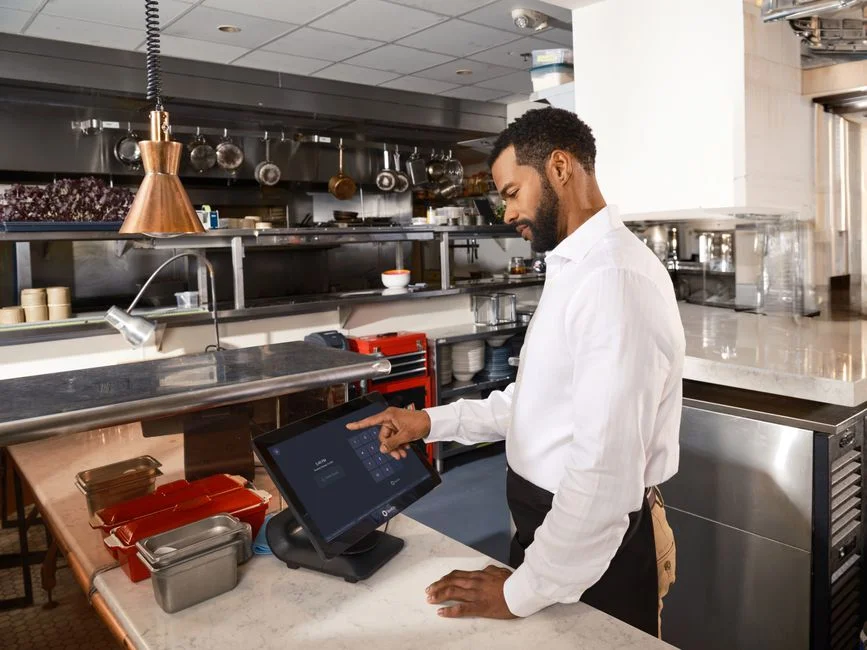
The implementation of new management software is often more of a people challenge than a technical one. Even the most elegant software will fail if the restaurant staff does not adopt it. Therefore, the implementation strategy must prioritize user experience (UX) and intuitive workflows. The POS interface, for instance, must be designed for high-stress environments where speed is critical. This means minimizing the number of clicks required to process an order and ensuring that the interface is responsive on tablets and mobile devices.
We recommend a phased rollout strategy. Start by deploying the system in a single ‘pilot’ location to identify bugs and workflow bottlenecks. Use this phase to gather feedback from the actual users—the servers, kitchen staff, and managers—and iterate on the interface. Once the system is stable and the users are trained, proceed with a regional rollout, followed by a full-scale deployment. This approach minimizes the impact of any unforeseen issues and allows the operations team to build confidence in the new system.
Change management also involves comprehensive training programs. Create documentation, video tutorials, and a dedicated support channel where staff can report issues or request assistance. By treating the software as an operational tool rather than an IT project, you ensure that the entire organization is aligned on the transition. The goal is to make the software invisible, allowing the staff to focus on serving customers while the system manages the complexity of the operation in the background.
Security and Compliance Considerations
In an industry that handles significant volumes of credit card transactions and sensitive customer data, security is not optional. Every component of the restaurant management software must be built with a ‘security-first’ mindset. This includes using encrypted storage for sensitive data, implementing strict API authentication protocols (such as OAuth 2.0 or JWT), and conducting regular penetration testing. The PCI-DSS (Payment Card Industry Data Security Standard) requirements are particularly relevant, as any system processing payments must adhere to these standards to avoid massive fines and reputational damage.
Beyond payment security, consider the physical security of the hardware. Tablets and POS terminals are susceptible to theft or tampering. Using Mobile Device Management (MDM) solutions, you can remotely wipe or lock devices, enforce security policies, and monitor the health of the hardware. Furthermore, log all administrative actions within the software. If a discount is applied or an order is voided, there should be an audit trail showing who performed the action and when. This level of accountability is essential for preventing internal fraud and ensuring the integrity of financial reporting.
Finally, ensure that your cloud infrastructure provider offers robust security features, such as automated backups, firewall management, and DDoS protection. By leveraging managed services from reputable providers, you offload the burden of infrastructure security, allowing your team to focus on the software logic. However, you must still maintain responsibility for application-level security, such as validating user inputs to prevent SQL injection or cross-site scripting (XSS) attacks.
Integrating Third-Party Services
No restaurant operates in a vacuum. Modern management software must integrate with a variety of third-party services, including payroll providers, accounting software (like QuickBooks or Xero), loyalty programs, and delivery platforms. The key to successful integration is the use of webhooks and standardized data formats. Rather than building custom connectors for every single service, focus on building a robust internal data export/import mechanism that can be easily mapped to different external formats.
When integrating with delivery platforms, the primary challenge is menu synchronization. If you change a price or update an item description in your central system, that change must propagate to the delivery platforms in real-time. This requires a dedicated synchronization service that monitors your database for changes and pushes updates to the delivery platform APIs. Using a queue-based system ensures that even if a delivery platform’s API is temporarily unavailable, your system will retry the update until it succeeds.
Furthermore, consider the long-term maintainability of these integrations. APIs change, and third-party services often deprecate old versions. Your software should be designed to handle these changes gracefully, with a modular architecture that allows you to swap out an integration provider without affecting the rest of the system. By abstracting the integration layer, you ensure that your software remains flexible and adaptable to the evolving landscape of restaurant technology.
Future-Proofing: AI and Machine Learning Integration
The next frontier for restaurant management software is the integration of AI to automate complex decision-making tasks. This includes inventory optimization, demand forecasting, and personalized marketing. For example, by analyzing historical sales data, weather patterns, and local events, an AI module can predict the demand for specific menu items with high accuracy. This information can then be used to automate inventory ordering, ensuring that the kitchen has exactly what it needs without over-ordering and wasting food.
Another application is in labor optimization. By predicting the volume of customers throughout the day, the software can suggest optimal staffing levels, ensuring that labor costs are kept in line with revenue. This is a game-changer for multi-unit operators who struggle to balance service quality with profitability. The key to implementing these features is starting with high-quality, structured data. Without a clean dataset, any AI model will be useless. Therefore, the effort spent on data integrity today is the foundation for the AI capabilities of tomorrow.
As you build your platform, keep the architecture modular enough to plug in new AI services as they become available. Whether it is using off-the-shelf APIs from providers like OpenAI or Google Cloud AI, or building custom models using Python and TensorFlow, the ability to integrate these tools into your existing workflow will be a key differentiator in the coming years. Stay focused on the business outcomes—lower costs, higher efficiency, better customer experience—and let the technology serve those goals.
The Evolution of Infrastructure: From Monolith to Microservices
For many legacy restaurant systems, the monolith is the primary source of technical debt. A single codebase handling everything from user authentication to inventory reporting becomes increasingly difficult to maintain as the business grows. Transitioning to a microservices architecture is often the most significant engineering hurdle a company faces. This involves breaking down the monolith into independent services, each with its own database and API, communicating via an event bus or direct API calls.
This migration must be done incrementally. Start by identifying the most high-impact, low-dependency module—such as a reporting service—and move it to its own service. Once you have a template for creating and deploying a microservice, move on to more complex modules like the order processing engine. This approach allows the team to learn and adapt without the risk of a full-system failure. It also provides the opportunity to choose the best technology for each specific task; for example, using a high-performance language like Go for order processing and a more flexible language like Python for reporting and analytics.
As you move toward microservices, invest heavily in observability. When an order fails to process, you need to know exactly which service failed and why. Distributed tracing tools like Jaeger or Honeycomb are essential for debugging these systems. By having a clear view of the entire request lifecycle, you can quickly identify and resolve issues, maintaining high availability even as the complexity of your system increases. This evolution is necessary for any restaurant business that aims to scale effectively in the long term.
Factors That Affect Development Cost
- Project complexity and scope
- Number of third-party integrations
- Scale of multi-unit deployment
- Data migration requirements
- Security and compliance audits
Development costs vary significantly based on whether you are building a new platform from scratch or integrating existing legacy modules.
Building or upgrading restaurant management software is a complex undertaking that requires a deep understanding of both the operational realities of the hospitality industry and the architectural requirements of modern distributed systems. By prioritizing API-first design, data integrity, and a modular infrastructure, businesses can create a platform that not only solves current inefficiencies but also scales with their future growth. The shift toward custom development is a strategic move to regain control over business data and processes, ultimately leading to a more resilient and profitable operation.
As you move forward with your technical strategy, remember that the goal is to create a system that serves the business, not the other way around. Focus on the core needs of your staff and your customers, and use technology to automate the friction points that prevent your business from reaching its full potential. The investment in a custom-built, well-architected platform is a commitment to the long-term success and agility of your restaurant business in an increasingly competitive market.
NR Tech Studio builds custom web apps, mobile apps, SaaS platforms, and internal tools for growing businesses. If you’re working through a technical decision, feel free to reach out — no commitment required.