Headless commerce development has transitioned from a niche architectural choice for enterprise-grade retailers to a standard requirement for businesses aiming for high-performance, omnichannel delivery. By decoupling the frontend presentation layer from the backend commerce engine, developers gain unprecedented control over user experience, page load times, and data orchestration. This architectural shift fundamentally changes how we manage state, handle API authentication, and optimize database queries across distributed systems.
For CTOs and technical founders, moving to a headless model is not merely about choosing a new tech stack; it is about re-engineering the data flow between services. Whether you are using WordPress as a content repository or a specialized commerce engine like Shopify or BigCommerce, the challenge lies in maintaining performance consistency while managing complex frontend frameworks like Next.js. This article provides a deep dive into the technical complexities of headless commerce, from managing API rate limits to optimizing server-side rendering (SSR) for e-commerce performance.
Architectural Decoupling and Data Flow Patterns
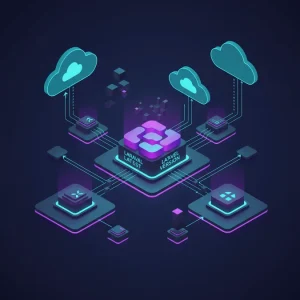
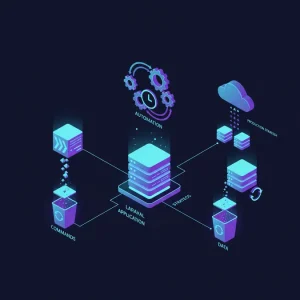
At its core, headless commerce development involves the total separation of the storefront from the backend logic. Unlike traditional monoliths where the server renders HTML directly, the headless pattern treats the backend as a pure data provider. This is typically achieved through RESTful or GraphQL APIs. The primary challenge here is the latency introduced by additional network hops between your frontend application and your commerce backend. To mitigate this, developers must implement robust caching strategies, such as Redis or Varnish, to store API responses at the edge.
When using WordPress as a headless backend, we interact with the WP REST API or the WPGraphQL plugin. The schema definition is critical; you must ensure that your data models are normalized before they reach the frontend. In a standard setup, the data flow looks like this:
// Example of a GraphQL query for product fetching in Next.js
const GET_PRODUCT_DETAILS = gql`
query GetProduct($id: ID!) {
product(id: $id) {
name
price
description
images {
sourceUrl
}
}
}
`;
The architectural trade-off involves increased complexity in state synchronization. Because the frontend is decoupled, you must handle authentication, cart state, and user sessions independently. This often requires implementing JSON Web Tokens (JWT) for secure communication between the client and the server, ensuring that session data remains persistent across reloads without overloading the backend database.
Managing Performance at Scale with Next.js
When integrating a headless commerce frontend with Next.js, performance is primarily dictated by your rendering strategy. You have three primary options: Static Site Generation (SSG), Incremental Static Regeneration (ISR), and Server-Side Rendering (SSR). For e-commerce, SSR is often necessary for dynamic inventory, while ISR provides an excellent balance for product catalog pages. The key is to minimize the time-to-first-byte (TTFB) by ensuring your API requests are executed in parallel.
Consider the memory management implications of large product catalogs. When fetching thousands of products, avoid loading the entire dataset into memory. Implement pagination or cursor-based fetching to ensure that the Node.js process does not experience heap exhaustion. Furthermore, leverage the getStaticProps or getServerSideProps patterns in Next.js to offload data fetching from the client browser, protecting your users from unnecessary re-renders.
| Rendering Method | Use Case | Performance Impact |
|---|---|---|
| SSG | Product Categories | High (Pre-rendered) |
| ISR | Product Details | High (Background update) |
| SSR | User Cart/Checkout | Moderate (Runtime) |
For more details on managing these strategies, refer to the Next.js official documentation regarding data fetching patterns.
Database Performance and Query Optimization
In a headless environment, your database remains the source of truth, but it is now subjected to frequent, concurrent API calls rather than direct page requests. In a WordPress environment, this often leads to bottlenecks in the wp_options table or inefficient meta_query operations. To scale effectively, you must index your database tables heavily based on the specific API endpoints you expose. If you are querying products by category, ensure that your taxonomy indexes are optimized for the MySQL query optimizer.
Database connection management is another critical factor. When your frontend makes multiple concurrent API requests, your backend may hit the connection limit. Using a database proxy like ProxySQL can help distribute these connections and prevent the dreaded ‘too many connections’ error. Always monitor slow query logs. A query that takes 200ms in a monolith might take 2000ms if it is triggered concurrently by 50 users, leading to database lock contention.
Security Protocols and API Integrity
Security in headless commerce is vastly different from traditional CMS security. Since your backend is exposed via APIs, you are vulnerable to automated scraping and brute-force attacks on your REST endpoints. You must implement rate limiting at the API gateway level. Tools like Nginx or cloud-based WAFs (Web Application Firewalls) are essential to filter malicious traffic before it reaches your application server.
Authentication is also a major concern. Never store sensitive credentials on the client side. Use an OAuth2 flow or a secure cookie-based session management system. When using WordPress as a headless backend, disable unnecessary API endpoints that expose system information. Ensure that your JWTs are short-lived and that you implement a robust token refresh mechanism. Always follow security best practices documented by WordPress REST API guidelines.
Pricing Models for Headless Commerce Development
Headless commerce projects require a higher initial investment compared to traditional CMS implementations due to the complexity of integrating multiple services. Costs vary based on the number of integrations, the complexity of the data synchronization, and the maintenance requirements for the frontend and backend separately.
| Service Model | Typical Monthly/Project Cost | Best For |
|---|---|---|
| Hourly Consulting | $150 – $300 / hour | Architecture audits |
| Project-Based (MVP) | $20,000 – $60,000 | Initial headless launch |
| Retainer (Maintenance) | $3,000 – $10,000 / month | Ongoing scaling |
These figures reflect the reality of senior engineering talent required to maintain such distributed systems. The cost variation is primarily driven by the complexity of the commerce engine and the degree of custom frontend development required. You are essentially paying for two distinct development streams: one for the API-driven backend and one for the high-performance frontend.
Common Scaling Challenges
Scaling a headless system presents unique challenges that do not exist in monoliths. The most common issue is state inconsistency. When a user adds an item to their cart, the frontend must immediately reflect this, but the backend must also confirm the inventory level. If the sync between these two layers is not atomic, users may encounter checkout errors. Use a distributed state management library like Redux or Zustand on the frontend to keep track of the local state, and ensure that your API responses are always validated against the backend database.
Another challenge is infrastructure orchestration. Managing a decoupled stack often involves maintaining two separate deployment pipelines. You must ensure that your frontend deployment is version-compatible with your backend API. Implementing a ‘Blue-Green’ deployment strategy for your frontend and a ‘Canary’ release for your backend API can help reduce downtime and minimize the risk of breaking changes during updates.
Common Technical Mistakes
A common mistake is over-fetching data. In GraphQL, it is easy to request more data than necessary. This leads to increased payload sizes and unnecessary database pressure. Always use fragment definitions to specify exactly which fields you need for each component. Furthermore, failing to implement proper error handling in the API layer often results in poor UX. If the backend API fails, the frontend should gracefully degrade rather than showing a white screen or a broken cart interface.
Another frequent error is ignoring the impact of third-party plugins. In a WordPress headless setup, many plugins assume they are running on a standard PHP-rendered page. They may inject scripts or styles that are incompatible with a React/Next.js frontend. You must audit every plugin to ensure it does not break your API-first architecture. If a plugin is not headless-compatible, you are often better off building the functionality from scratch using a dedicated service.
Infrastructure and DevOps Requirements
DevOps for headless commerce is intensive. Because you are maintaining two distinct applications, your CI/CD pipeline must be highly sophisticated. You need to automate testing for both the API contracts and the frontend components. Tools like Cypress or Playwright are essential for end-to-end testing, ensuring that the critical path—from product discovery to checkout—remains functional after every commit.
Furthermore, monitoring becomes more complex. You need unified logging that tracks requests as they travel from the frontend, through the API gateway, and into the backend database. Tools like Datadog or New Relic are standard in this space to provide observability across distributed services. Without proper monitoring, debugging a performance bottleneck becomes a manual, time-consuming process of elimination across different layers of your stack.
Maintenance and Long-Term Sustainability
Headless systems require proactive maintenance. Since you are relying on API versions, you must manage the lifecycle of your API contracts. When you update your backend, you must ensure backward compatibility for your frontend. This is why versioning your API (e.g., /api/v1/products) is non-negotiable. If you introduce breaking changes, you must support both versions until your frontend team has migrated.
Finally, consider the long-term cost of technical debt. A poorly architected headless system can become a maintenance nightmare. Ensure that your code is well-documented, your API schemas are strictly typed using TypeScript, and your team adheres to standard software engineering principles. If you are struggling with your existing architecture, consider requesting a professional architectural audit to identify bottlenecks before they impact your revenue.
Summary of Technical Trade-offs
Headless commerce is not a silver bullet. It introduces significant overhead in terms of development, maintenance, and infrastructure. However, for businesses that require high performance and the ability to deliver experiences across multiple channels (web, mobile, IoT), it is the only viable path. The trade-off is clear: you exchange simplicity for scalability and flexibility.
By prioritizing API design, implementing robust caching, and maintaining strict versioning, you can build a system that is both performant and sustainable. The key is to avoid common mistakes like over-fetching and to invest in proper monitoring from day one. If your business is ready to scale, headless commerce provides the foundation required to compete in a high-demand digital marketplace.
Factors That Affect Development Cost
- Project complexity
- Number of third-party integrations
- Data migration requirements
- Frontend framework complexity
- API versioning and maintenance
Costs are highly variable depending on the technical debt of the existing system and the desired scale of the new headless architecture.
Transitioning to a headless commerce architecture is a significant technical undertaking that requires a deep understanding of distributed systems and API management. By decoupling your frontend and backend, you gain the ability to scale your operations and deliver a superior customer experience. However, the complexity of managing state, security, and performance requires a disciplined approach to development and infrastructure.
If you are considering a headless migration or need help optimizing your current commerce stack, our team at NR Studio specializes in custom software development and architectural audits. We help businesses build high-performance systems that are ready for the future. Contact us today to schedule an architectural audit and ensure your platform is built for scale.
NR Studio builds custom web apps, mobile apps, SaaS platforms, and internal tools for growing businesses. If you’re working through a technical decision, feel free to reach out — no commitment required.