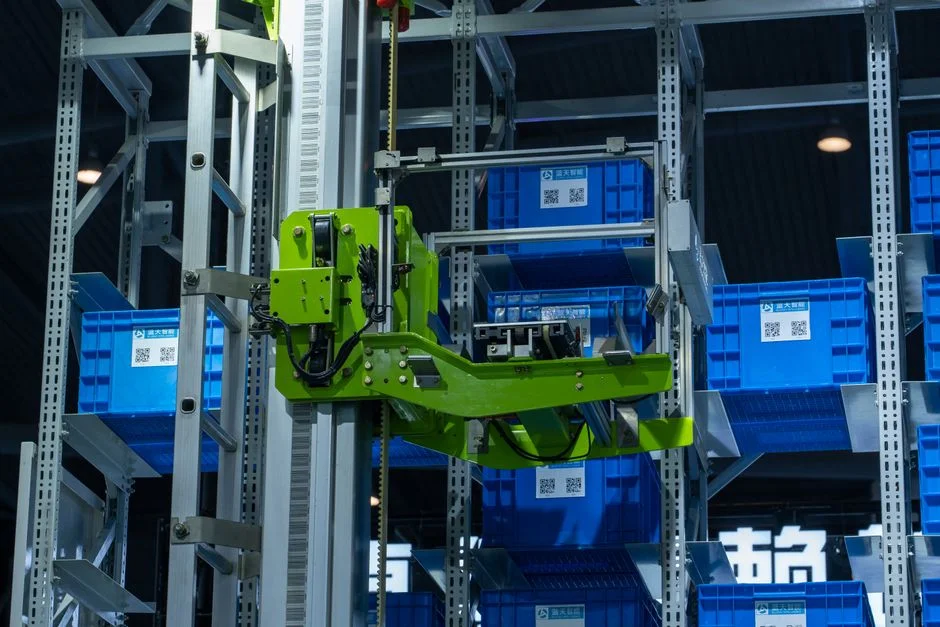
Inventory management systems (IMS) are the backbone of logistics, retail, and manufacturing businesses. When the complexity of tracking stock levels, warehouse locations, and supply chain movements exceeds the capability of spreadsheets, you need a custom-built solution. Laravel stands out as a premier choice for this task due to its expressive syntax, robust database abstraction layer, and extensive ecosystem of packages.
For CTOs and founders, the challenge is not just writing code, but building a system that maintains data integrity under heavy concurrent load. This guide outlines how to architect a scalable, maintainable IMS using Laravel, focusing on critical design patterns, database constraints, and performance strategies that ensure your business operations never stall.
Architecting the Database Schema for Inventory Integrity
The foundation of any IMS is the database. You must ensure ACID compliance to prevent race conditions when multiple users update stock levels simultaneously. Using Laravel migrations and Eloquent models, you should define clear relationships between products, warehouses, stock movements, and suppliers.
// Example schema snippet for Stock Movements

Schema::create('stock_movements', function (Blueprint $table) {

    $table->id();

    $table->foreignId('product_id')->constrained();

    $table->foreignId('warehouse_id')->constrained();

    $table->integer('quantity_change'); // Negative for sales, positive for restock

    $table->string('reason');

    $table->timestamps();

});
Crucially, avoid storing ‘current_stock’ as a simple integer column on the products table. Instead, calculate current stock by summing movements. This provides an immutable audit trail, which is essential for reconciliation and security.
Handling Concurrency with Database Transactions
When two sales occur simultaneously, a poorly written application might decrement stock below zero. Laravel provides a clean interface for database transactions, ensuring that either all parts of an inventory update succeed or none do.
DB::transaction(function () use ($productId, $quantity) {

    $stock = Stock::where('product_id', $productId)->lockForUpdate()->first();

    if ($stock->quantity >= $quantity) {

        $stock->decrement('quantity', $quantity);

    } else {

        throw new InsufficientStockException();

    }

});
The lockForUpdate() method is the most important component here; it prevents other processes from reading or modifying the record until your transaction completes, effectively preventing race conditions.
Integrating Real-Time Stock Updates
Modern inventory systems require real-time visibility. Using Laravel Echo and WebSockets, you can push stock updates to dashboards immediately. This eliminates the need for manual page refreshes and ensures that warehouse staff are always working with accurate data.
For high-frequency environments, offload these notifications to a background queue. Laravel’s queue system allows you to fire events that broadcast updates without delaying the user’s response time, keeping your application responsive under load.
Performance Considerations for Large Catalogs
As your SKU count enters the tens of thousands, simple Eloquent queries will become slow. You must implement aggressive indexing on foreign keys and frequently queried columns like sku or barcode. Furthermore, utilize Laravel’s caching layer (Redis) to store product metadata, preventing repeated database hits for static information.
Consider the tradeoff: Caching adds complexity to your invalidation logic. If you cache stock levels, you must ensure that every update clears or updates the cache immediately, or you risk displaying stale data to users.
Security Best Practices for Inventory Data
Inventory data is proprietary and sensitive. Ensure that your API endpoints are protected with Sanctum or Passport. Use Laravel Policies to enforce strict authorization: a warehouse worker should not have the same permissions as an inventory manager or a system administrator.
Always validate incoming requests using Form Requests to prevent mass-assignment vulnerabilities. Never trust the client to provide the current stock level; always calculate it server-side based on authorized transaction records.
Decision Framework: Custom Development vs. ERP Integration
Should you build custom or buy? If your inventory workflow is standard (e.g., simple retail), existing ERPs are cheaper. If your inventory logic involves complex manufacturing steps, custom logic, or unique warehouse automation, a custom Laravel application is the only way to avoid ‘feature bloat’ and rigid constraints.
| Factor | Custom Laravel | Off-the-shelf ERP |
|---|---|---|
| Flexibility | High | Low |
| Maintenance | Internal/Agency | Vendor Dependent |
| Integration | Unlimited | Limited by API |
Factors That Affect Development Cost
- Complexity of business logic
- Number of warehouse locations
- Integrations with external logistics providers
- Real-time reporting requirements
- User role-based access control complexity
Development costs vary significantly based on the depth of custom features and the level of integration required with existing business infrastructure.
Frequently Asked Questions
Why should I move my inventory from spreadsheets to a custom Laravel system?
Spreadsheets lack data integrity, suffer from version control issues, and cannot handle high-concurrency updates. A Laravel system provides ACID compliance, real-time reporting, and role-based access control, which are essential for growing businesses.
How do I ensure my Laravel inventory system remains fast as I add more products?
Focus on database indexing, query optimization, and using Redis for caching frequently accessed static product data. Ensure your stock calculations are performed at the database level rather than loading entire collections into memory.
What factors influence the cost of developing a custom inventory system?
Costs are primarily driven by the complexity of your business logic, the number of third-party integrations (like accounting or logistics software), and the level of automation required for warehouse operations.
Building a custom inventory management system in Laravel provides the flexibility to grow alongside your business. By focusing on database integrity through transactions, implementing real-time updates, and maintaining strict security protocols, you create a system that serves as a competitive advantage rather than a bottleneck.
At NR Studio, we specialize in building scalable Laravel applications tailored to specific business workflows. If you are ready to move beyond spreadsheets and build a robust, custom inventory solution, our team of senior developers is here to help.
NR Studio builds custom web apps, mobile apps, SaaS platforms, and internal tools for growing businesses. If you’re working through a technical decision, feel free to reach out — no commitment required.