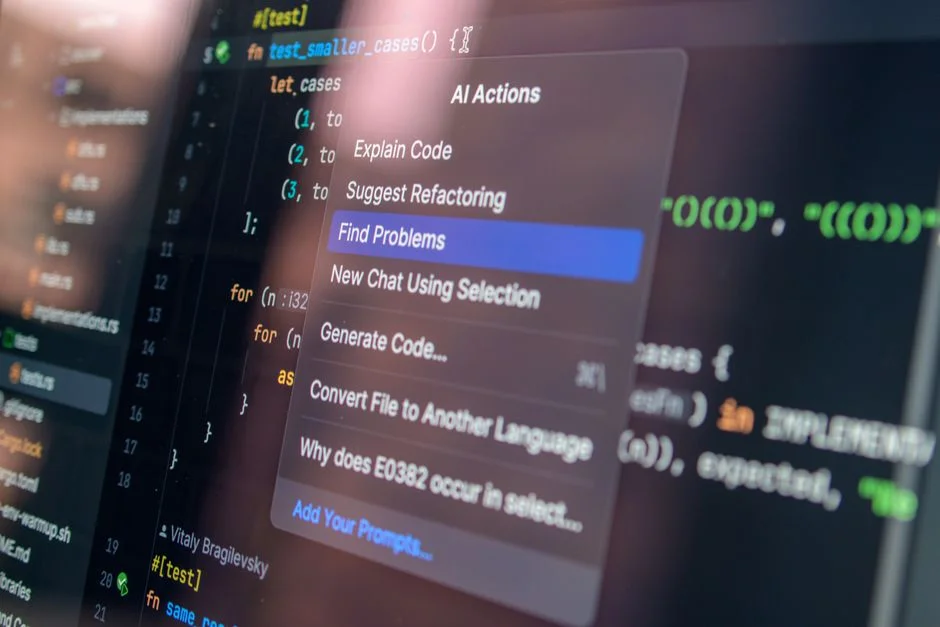
The integration of Large Language Models (LLMs) into the software development lifecycle has transitioned from experimental curiosity to a standard productivity accelerator. Historically, developers relied on manual code reviews, static application security testing (SAST), and linting tools to maintain codebase integrity. Today, AI-powered completion engines like GitHub Copilot or direct API-based generation via the OpenAI API and Claude API have fundamentally shifted the threat landscape by introducing non-deterministic code production into production environments.
This shift requires a rigorous re-evaluation of security postures. When code is generated by an AI, it often lacks the context of the broader system architecture, potentially introducing vulnerabilities that a human developer would identify during standard design patterns. This analysis examines the technical realities of AI-generated code, focusing on how automated synthesis intersects with traditional security frameworks like the OWASP Top 10.
The Mechanism of AI Code Generation and Security Risks
AI code generation operates on probabilistic token prediction rather than logical execution. When a model predicts the next sequence of characters, it mimics patterns found in its training data, which includes millions of lines of open-source code—not all of which is secure. This leads to the fundamental risk: the model prioritizes functional completion over security compliance.
- Context Blindness: Models often lack deep insight into the specific security policies of the host organization.
- Hallucination of Libraries: AI models frequently suggest non-existent or deprecated packages, which attackers can weaponize through dependency confusion attacks.
- Pattern Replication: If the training corpus contains vulnerable patterns (e.g., insecure cryptographic implementations), the model will likely replicate them as “standard” solutions.
Mapping AI Risks to the OWASP Top 10
AI-generated code frequently introduces vulnerabilities that align with the most common security failures identified by OWASP. The most prevalent issue is Injection (A03:2021). AI models often suggest SQL queries or shell commands that fail to sanitize user input, as they optimize for brevity rather than safety.
Furthermore, Broken Access Control (A01:2021) is a recurring theme. When requesting boilerplate code for authentication or authorization logic, AI models often suggest simplified implementations that lack robust permission checks, relying on client-side validation that can be easily bypassed by a malicious actor.
Statistical Realities of Automated Code Vulnerabilities
Recent research indicates that code produced by LLMs is significantly more likely to contain security flaws compared to code written by experienced engineers. A study by researchers at Stanford University found that participants using AI assistants were more likely to introduce security vulnerabilities than those who did not, largely due to over-reliance on the tool’s output without verification.
| Vulnerability Type | Likelihood in AI Output | Risk Level |
|---|---|---|
| Hardcoded Secrets | High | Critical |
| SQL Injection | Medium | High |
| Insecure Deserialization | Medium | High |
| Insufficient Logging | Low | Medium |
The Role of Retrieval Augmented Generation (RAG) in Security
To mitigate the risks of base models, many organizations are implementing Retrieval Augmented Generation (RAG). By grounding the model in an organization’s internal documentation, security guidelines, and verified code snippets, developers can steer the AI toward secure patterns. However, RAG is not a silver bullet; if the retrieved documents themselves contain insecure examples, the model will merely propagate those flaws with higher confidence.
Hardcoded Secrets and Credential Leakage
One of the most persistent issues with AI-generated code is the tendency to suggest hardcoded API keys, environment variables, or connection strings. AI models are trained on public repositories where developers often accidentally commit secrets. The model learns that these patterns are acceptable, leading it to generate code that includes placeholders or actual credentials, which can lead to catastrophic data breaches if pushed to production.
Insecure Cryptographic Implementations
Cryptographic operations are notoriously difficult to implement correctly. AI models often suggest outdated algorithms like MD5 or SHA-1 for hashing, or improper block cipher modes (e.g., ECB mode) because these appear frequently in legacy open-source code. A security engineer must treat every cryptographic suggestion from an AI as inherently suspect and subject to mandatory peer review against modern standards like NIST or OWASP guidelines.
Dependency Vulnerabilities and AI Hallucination
AI models often suggest imports for third-party libraries that do not exist. An attacker can register these non-existent package names on public registries (like npm or PyPI) with malicious payloads, creating a supply chain attack. This is a form of dependency confusion where the AI effectively acts as the delivery mechanism for the malicious package.
Secure Coding Practices in the Age of AI
To safely integrate AI into the development pipeline, teams must adopt a ‘Zero Trust’ approach to generated code. This includes:
- Automated Scanning: Integrating SAST and DAST tools that run immediately after code generation.
- Human-in-the-loop (HITL): Requiring mandatory senior engineer review for all AI-generated logic.
- Policy Enforcement: Using linters to block known insecure coding patterns before they reach the repository.
Data Compliance and Privacy Concerns
When developers use AI APIs (such as the OpenAI API or Claude API) to process code, they must consider where that data is sent. If proprietary code or sensitive business logic is sent to an external API for analysis or generation, it may be used to retrain the model, potentially leading to the leakage of intellectual property or sensitive PII. Organizations should utilize enterprise-grade API instances that guarantee data isolation and non-retention policies.
The Importance of Static Analysis (SAST) Integration
Static Application Security Testing tools have become more critical than ever. Because AI can generate hundreds of lines of code in seconds, the volume of potential vulnerabilities increases proportionally. SAST tools must be configured to run on every commit, specifically looking for common AI-generated patterns like insecure input handling or improper error management that could lead to information disclosure.
Contextual Awareness and System Design
AI models lack the architectural context required to make high-level security decisions. A model might suggest a perfectly secure function, but if that function is placed in an insecure part of the application flow, the overall system remains vulnerable. Security engineers must focus on system design and threat modeling, ensuring that the AI is only used for isolated tasks rather than complex architectural decisions.
Future Outlook: Towards Secure AI Development
The future of AI-generated code lies in ‘Security-by-Design’ models. We expect to see specialized LLMs trained specifically on secure coding standards and internal company security policies. Until such models become ubiquitous, the burden of security remains firmly on the developer and the organization’s security team to validate every line of code synthesized by the machine.
Frequently Asked Questions
Is AI-generated code inherently safe?
No, AI-generated code is not inherently safe. It often mimics patterns from its training data, which includes both secure and insecure code, and lacks the context of your specific system security requirements.
How can we secure code generated by AI?
You should treat AI code as untrusted input. Always subject it to automated static analysis, manual security reviews, and ensure it complies with your internal security policies before merging into your codebase.
Does AI-generated code frequently lead to OWASP Top 10 vulnerabilities?
Yes, AI models frequently generate code susceptible to injection attacks, broken access control, and insecure cryptographic practices, which are all prominent in the OWASP Top 10.
The utility of AI in software development is undeniable, but it introduces a significant shift in the attack surface. By treating every AI-generated snippet as untrusted input and enforcing rigorous automated testing and human oversight, engineering teams can capture the benefits of increased velocity without compromising the security of their applications.
Security is not a static state but a continuous process of verification and adaptation. As AI tools evolve, so must our defensive strategies, moving toward a model where automated security testing is as fundamental as the code generation itself.
NR Studio builds custom web apps, mobile apps, SaaS platforms, and internal tools for growing businesses. If you’re working through a technical decision, feel free to reach out — no commitment required.