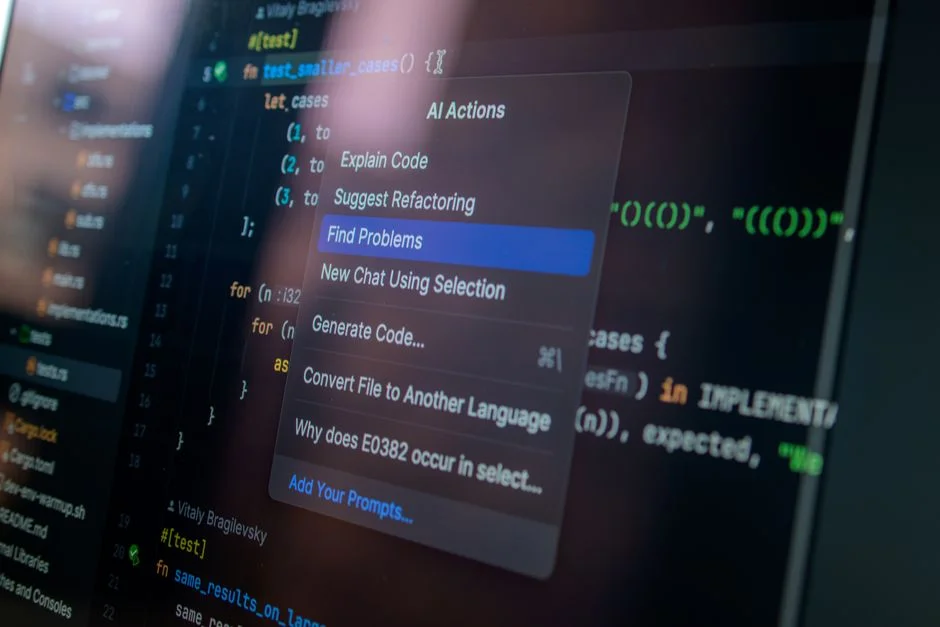
Integrating artificial intelligence into existing business software is no longer a theoretical exercise for enterprise-grade firms; it is a tactical necessity for companies looking to optimize operational efficiency. For startup founders and CTOs, the challenge lies not in the existence of AI models, but in the architectural implementation of these models into production-grade systems.
This guide outlines the technical roadmap for embedding AI into your stack, focusing on data security, latency management, and the practical realities of API-driven development. We move beyond the hype to discuss how to architect systems that are scalable, maintainable, and cost-effective.
Defining the AI Integration Architecture
Successful AI integration requires a clear separation between your core application logic and the AI services. You should never tightly couple your business logic with external AI endpoints. Instead, implement a service layer that acts as a gateway.
Consider the following pattern for a Laravel-based backend:
// Example Service Pattern for AI Integration

namespace App\Services;
class AIService {
public function processRequest(string $prompt) {
return Http::withToken(config('services.openai.key'))
->post('https://api.openai.com/v1/chat/completions', [
'model' => 'gpt-4',
'messages' => [['role' => 'user', 'content' => $prompt]]
])->json();
}
}
By using a dedicated service class, you isolate the API provider. If you decide to switch from GPT-4 to an open-source model hosted on your own infrastructure, you only update the service class, keeping the rest of your application untouched.
Data Privacy and Security Considerations
When integrating AI, data leakage is your primary risk. You must implement strict data sanitization before sending any information to an external API. Use PII (Personally Identifiable Information) masking techniques to ensure customer data remains private.
- Anonymization: Strip names, emails, and phone numbers from datasets before processing.
- Encryption: Use TLS 1.3 for all data in transit.
- Compliance: Ensure your chosen AI provider complies with GDPR, HIPAA, or SOC2 requirements depending on your industry.
Never train public models on your proprietary data unless you have a dedicated, private instance provided by a vendor. For highly sensitive data, consider local LLMs hosted on your own AWS or Azure infrastructure.
Managing Latency in Production
AI inference is inherently slower than standard database queries. If you make a blocking call to an AI API during a user request, your application will hang, leading to a poor user experience. The solution is an asynchronous processing architecture.
Use a queuing system to handle AI tasks. In the Laravel ecosystem, this means offloading requests to a Redis-backed queue. The user submits a request, your app returns a 202 Accepted response, and the AI process runs in the background. Once finished, you push the result to the frontend via WebSockets or a polling mechanism.
The 30% Rule and Augmentation Strategy
The 30% rule for AI serves as a guiding heuristic for product development. It suggests that you should aim to automate roughly 30% of a role’s tasks to yield significant productivity gains without introducing catastrophic risk or replacing the human element entirely.
Focus on augmenting your workforce, not replacing them. For example, in a customer support dashboard, use AI to suggest responses to agents rather than auto-sending them. This keeps a human in the loop, ensuring accuracy and tone consistency, which are critical in professional environments.
Cost Management and Scalability
AI integration costs are variable and can quickly spiral if not monitored. API providers charge based on tokens (input + output). To manage costs:
- Caching: Cache common prompt-response pairs in Redis. If two users ask the same question, serve the cached response.
- Model Selection: Use smaller, cheaper models (like GPT-4o-mini) for simple tasks and reserve the high-end models (like GPT-4 or Claude 3.5 Sonnet) only for complex reasoning tasks.
- Rate Limiting: Implement strict rate limits on your API endpoints to prevent runaway costs from malicious or accidental usage.
Decision Framework: API vs. Self-Hosted
When deciding between using a managed API (like OpenAI or Anthropic) versus self-hosting an open-source model (like Llama 3), use this framework:
| Factor | Managed API | Self-Hosted |
|---|---|---|
| Implementation Speed | Fast | Slow |
| Control | Low | High |
| Cost Basis | Per-token | Infrastructure/Ops |
| Data Security | Third-party | Full Internal |
Choose managed APIs for rapid prototyping and non-sensitive tasks. Choose self-hosting when you have strict data residency requirements or when your volume is high enough that the per-token cost exceeds the cost of maintaining your own GPU cluster.
Factors That Affect Development Cost
- API token usage volume
- Model complexity (GPT-4 vs smaller models)
- Infrastructure costs for self-hosting
- Development time for custom service integration
- Maintenance of secure data pipelines
Costs vary significantly based on whether you utilize third-party APIs or host proprietary models on your own cloud infrastructure.
Frequently Asked Questions
How to incorporate AI into your software?
Start by identifying a specific use case where AI adds value, such as document summarization or automated data entry. Build a backend service layer that communicates with an AI API and implement an asynchronous queue to handle requests without slowing down your application.
What is the 30% rule for AI?
The 30% rule is a heuristic suggesting that AI should aim to automate roughly 30% of a specific job role’s tasks to provide significant productivity gains without replacing the human element entirely. It emphasizes augmentation over total replacement.
How do I integrate AI into my business?
Identify a repetitive task, such as customer support inquiries or data entry. Then, build a secure backend service that connects your internal database to an AI model via an API, ensuring that all data transfers are monitored and secure.
How can I make $1000 a day using AI?
Building a sustainable business with AI requires solving real problems for customers, not just leveraging a tool. Focus on building high-value, custom software that automates complex workflows for specific industries rather than seeking quick, automated income schemes.
Integrating AI is an engineering challenge that requires careful attention to architecture, security, and cost. By decoupling your services, adopting asynchronous processing, and maintaining human-in-the-loop workflows, you can build software that provides real value without compromising performance or privacy.
At NR Studio, we specialize in building custom, AI-integrated software solutions for businesses that need more than just a wrapper. If you are ready to build a scalable, secure AI-enabled platform, reach out to our engineering team to discuss your requirements.
NR Studio builds custom web apps, mobile apps, SaaS platforms, and internal tools for growing businesses. If you’re working through a technical decision, feel free to reach out — no commitment required.