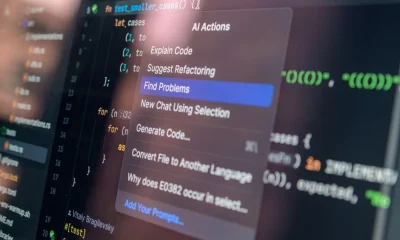
Software maintenance is often mischaracterized as a static operational expense. In the current enterprise landscape, where AI integration and rapid feature iteration define competitive advantage, maintenance has evolved into a dynamic investment in system longevity. As businesses scale their reliance on complex SaaS ecosystems, the traditional view of maintenance—simply fixing bugs—is insufficient. Modern software maintenance now encompasses architectural refactoring, security patching, and the continuous tuning of AI models to prevent performance degradation.
Understanding the actual financial burden of maintaining a codebase requires looking beyond basic hourly rates. For CTOs and founders, the challenge lies in balancing technical debt with the necessity of shipping new features. This guide provides a strategic breakdown of maintenance costs, focusing on the variables that drive Total Cost of Ownership (TCO) and how to manage them effectively in an era defined by rapid technological shifts and AI-driven workflows.
Primary Cost Drivers in Modern Software Ecosystems
The cost of maintaining a production-ready application is dictated by the complexity of the tech stack and the frequency of change. Organizations utilizing modern frameworks like Next.js or Laravel must account for the following core drivers:
- Framework and Dependency Updates: With the rapid release cycles of React and Next.js, keeping dependencies current is mandatory for security and performance. Failing to update leads to ‘dependency drift,’ where the cost of a major upgrade later is significantly higher than incremental maintenance.
- Infrastructure and Cloud Overhead: Serverless environments and managed databases require ongoing configuration tuning. As traffic patterns change, infrastructure costs shift, necessitating architectural adjustments to maintain cost efficiency.
- AI Model Calibration: For systems integrating OpenAI or Claude APIs, maintenance involves prompt engineering iterations, monitoring for AI hallucinations, and adjusting RAG pipelines. These are not ‘set and forget’ implementations; they require ongoing observation to ensure output quality remains within acceptable thresholds.
The Hidden Costs of Technical Debt and AI Drift
Hidden costs are the primary reason maintenance budgets balloon unexpectedly. These costs often remain invisible until they impact system stability or team velocity.
Technical debt is not a failure; it is a trade-off. However, unmanaged debt accumulates interest that eventually consumes the entire development capacity of a team.
In the context of AI Integration, the concept of ‘AI Drift’ presents a unique hidden cost. Unlike traditional software, AI-driven features can exhibit performance degradation over time as underlying models update or user input patterns shift. Maintaining a robust Retrieval Augmented Generation (RAG) system requires constant evaluation of vector databases and embedding quality. If the data retrieval process is not audited, the system may provide increasingly inaccurate results, leading to a loss of user trust that is far more expensive to recover than the cost of ongoing maintenance.
Strategic TCO Analysis Over a Three-Year Horizon
To accurately forecast maintenance, CTOs should evaluate the Total Cost of Ownership (TCO) over a 36-month period. The distribution of costs typically follows an inverted curve:
| Phase | Focus | Cost Weight |
|---|---|---|
| Year 1 | Feature parity and stabilization | Moderate |
| Year 2 | Scaling and architectural refinement | High |
| Year 3 | Legacy modernization and tech refresh | Very High |
In Year 1, the focus is on building the product. By Year 2, the maintenance budget must increase to accommodate technical debt repayment and performance optimization. By Year 3, the cost of maintaining older versions of frameworks or outdated API integrations often exceeds the cost of a partial rewrite. Planning for this cycle is essential for maintaining consistent team velocity.
Architectural Considerations for Long-Term Scalability
The architecture choices made during the initial development phase dictate the maintenance cost profile for years to come. Opting for modular architectures, such as micro-services or well-defined service layers in a Laravel application, allows teams to isolate maintenance tasks.
When integrating AI, decoupling the AI logic from the core business logic is a critical architectural decision. Using a design pattern that allows for swapping LLM providers or updating prompt strategies without deploying the entire codebase reduces the risk of regression. Furthermore, implementing comprehensive logging and monitoring for AI agents ensures that debugging remains a surgical process rather than a system-wide investigation.
Optimizing Maintenance Through Team Velocity
Maintenance should not be viewed as a separate workstream but as an integral part of the development cycle. High-performing teams integrate maintenance tasks into their daily sprint planning rather than allowing them to accumulate into a ‘maintenance phase’.
- Automated Testing: Investing in a comprehensive suite of unit and integration tests reduces the cost of regression testing.
- CI/CD Pipelines: Automating the deployment process ensures that updates are small, frequent, and easier to roll back.
- Documentation: Maintaining clear documentation for API endpoints and AI prompt structures reduces the onboarding cost for new engineers, which is a major factor in team-based maintenance expenses.
Factors That Affect Development Cost
- Codebase complexity and modularity
- Frequency of framework and library updates
- Infrastructure scaling and cloud resource management
- AI model tuning and API usage costs
- Technical debt repayment frequency
- Engineering team experience and turnover rate
Maintenance costs generally scale linearly with the number of active integrations and the age of the codebase, though investment in automated testing often leads to a long-term reduction in these expenses.
Software maintenance is a strategic function that directly impacts the scalability and longevity of a business. By recognizing that maintenance costs are inextricably linked to architectural decisions, dependency management, and the nuances of AI integration, leadership can move from reactive firefighting to proactive system stewardship. The goal is to reach a state where the cost of maintenance is predictable and commensurate with the value the software delivers to the business.
Prioritizing clean code, robust automated testing, and modular architecture is not merely a technical preference; it is a financial imperative. When software is built with maintenance in mind, the total cost of ownership decreases, and the organization gains the agility required to adapt to new market demands and technological advancements.
Get a Project Estimate
Every project has a different scope. Share your requirements and we’ll give you a realistic breakdown within 48 hours.