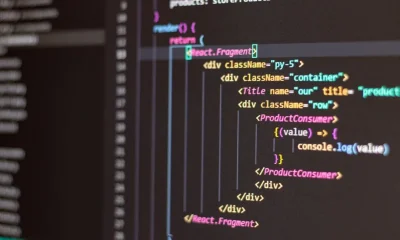

React for beginners involves understanding its declarative component-based paradigm for building user interfaces, which simplifies complex UI development. However, for a security-conscious developer, it immediately means grappling with the unique client-side attack surface and the critical need for secure coding practices from the initial commit. A recent industry report, such as the 2023 ReasonLabs Application security assessment, underscored that a significant percentage of web application vulnerabilities originate in the frontend, often due to inadequate developer awareness during the early stages of project development.
While React itself is not inherently insecure, its flexible nature allows for misconfigurations and coding patterns that can expose applications to significant risks. This guide will equip new React developers with a foundational understanding of secure development principles, emphasizing defensive coding, robust data handling, and proactive vulnerability mitigation, ensuring that the applications they build are not only functional but also resilient against common threats.
Understanding React’s Core: Component-Based Architecture and its Security Surface
React is a declarative, component-based JavaScript library for building user interfaces. For beginners, this means applications are constructed from isolated, reusable pieces of code called components, each managing its own state and rendering logic. This modularity is a double-edged sword from a security perspective; while it promotes code organization and reusability, it also means that a single vulnerable component can compromise an entire application. Developers must understand that each component, from a simple button to a complex data table, represents a potential entry point for malicious input or an avenue for unintended data exposure.
At its heart, React uses JSX (JavaScript XML), a syntax extension that allows developers to write HTML-like code directly within JavaScript. This blending of concerns, while convenient for development, demands careful scrutiny. Without proper sanitization and escaping, rendering user-provided content via JSX can lead directly to Cross-Site Scripting (XSS) vulnerabilities. For instance, if a component directly renders user input without validation, an attacker could inject malicious scripts that execute in other users’ browsers. The virtual DOM, React’s in-memory representation of the UI, efficiently updates the actual browser DOM. However, this abstraction does not absolve developers of security responsibilities; data still flows through the virtual DOM, and any compromised data here can eventually manifest in the real DOM, impacting user security.
Consider a basic React component structure:
import React from 'react';

function UserProfile({ userData }) {
  // Insecure: Directly rendering user-provided HTML
  // if userData.bio contains malicious script tags.
  return (
    <div>
      <h2>{userData.name}</h2>
      <p>Email: {userData.email}</p>
      <div dangerouslySetInnerHTML={{ __html: userData.bio }} />
    </div>
  );
}

export default UserProfile;
The `dangerouslySetInnerHTML` prop is a critical security concern. Its name explicitly warns developers about the inherent risk of injecting raw HTML. While React automatically escapes string variables rendered within JSX curly braces (`{}`), this mechanism is bypassed when `dangerouslySetInnerHTML` is used. A beginner might use this for rich text rendering without fully understanding the implications. A secure approach would involve either stripping all HTML tags from user input on the server-side, using a trusted library for sanitization on the client-side (though server-side is always preferred for ultimate trust), or rendering only a subset of safe HTML tags.
Furthermore, the concept of component state and props is fundamental. Props are read-only inputs passed from parent to child components, while state is managed internally by a component. Mismanaging state, particularly sensitive data, can lead to exposure. For example, storing authentication tokens or personally identifiable information (PII) directly in a component’s local state without proper encryption or secure context management could allow an attacker, through various means (e.g., debugging tools, XSS), to access this data. The immutability of props helps prevent accidental data modification, but developers must ensure that sensitive data is not inadvertently passed down the component tree to components that do not require it, adhering to the principle of least privilege.
The modular nature also extends to component lifecycle methods or hooks, such as `useEffect`. These hooks often interact with external APIs, manipulate the DOM, or manage subscriptions. Insecure practices within these hooks, such as fetching data from untrusted sources without validation or performing actions that modify global state without proper authorization checks, can introduce vulnerabilities. For instance, a `useEffect` hook that fetches data based on a URL parameter without sanitizing the parameter could be susceptible to injection attacks if the parameter is used in a backend query. Understanding how data flows through these components and their lifecycle is paramount for identifying and mitigating potential security weaknesses early in the development cycle. Adopting a security-first mindset means questioning every data input, every data output, and every interaction between components and external systems.
Client-Side Security Challenges in React Applications
Developing React applications inherently means operating within the client-side environment, which presents a distinct set of security challenges compared to server-side development. The browser, by its very nature, is an open environment. Code is downloaded and executed locally, making it susceptible to inspection, manipulation, and various attack vectors if not properly secured. For beginners, it is critical to understand that client-side security measures are always secondary to robust server-side validation and authorization, but they form a vital layer of defense.
One of the most pervasive client-side threats is Cross-Site Scripting (XSS). As discussed, rendering untrusted user input directly into the DOM is a primary cause. React’s default behavior helps by escaping string content, but developers often bypass this with `dangerouslySetInnerHTML` or by constructing DOM elements dynamically in an unsafe manner. Attackers can inject malicious scripts to steal session cookies, deface websites, or redirect users to phishing sites. A robust defense involves rigorous input sanitization on the server, output encoding on the client, and strict Content Security Policies (CSPs). For example, a beginner might retrieve an article body from an API and render it directly. If that body contains `<script>alert(‘You are hacked!’)</script>`, it executes. The solution is never to trust external content implicitly.
// Insecure rendering example
function ArticleContent({ content }) {
  return <div dangerouslySetInnerHTML={{ __html: content }} />;
}

// Secure rendering example (assuming server-side sanitization or a trusted client-side library)
// It's still crucial that 'content' has been sanitized on the server.
import DOMPurify from 'dompurify';

function SafeArticleContent({ content }) {
  const cleanContent = DOMPurify.sanitize(content);
  return <div dangerouslyInnerHTML={{ __html: cleanContent }} />;
}
Another significant concern is Cross-Site Request Forgery (CSRF). While React applications, particularly those using token-based authentication (like JWTs) stored in `localStorage` or `sessionStorage` rather than HTTP-only cookies, can be less susceptible to traditional CSRF attacks, the risk is not entirely eliminated. If session cookies are used, or if the application relies on certain browser-level functionalities, CSRF tokens remain a necessary defense. Attackers can trick authenticated users into executing unwanted actions on a web application. Implementing CSRF tokens, typically managed by the backend and included in frontend requests, is the standard mitigation. React developers must ensure these tokens are correctly sent with state-changing requests and validated by the server. Without proper understanding, a beginner might omit these tokens, assuming React handles it, leading to a critical vulnerability.
Sensitive data exposure is a constant threat. React applications often handle various forms of sensitive data, from user credentials to personal information. Storing authentication tokens in `localStorage` is a common practice but carries risks. `localStorage` is accessible via JavaScript, meaning an XSS attack can easily exfiltrate these tokens. For highly sensitive tokens, `HttpOnly` cookies are generally preferred, as they are inaccessible to client-side JavaScript. This requires careful coordination between frontend and backend. Additionally, ensuring that sensitive data is never hardcoded into the client-side bundle or exposed through development tools (e.g., React DevTools) is paramount. Inspecting the network tab or application storage in browser developer tools can reveal inadvertently exposed data, highlighting the need for vigilance.
Insecure Direct Object References (IDOR) can also manifest in React applications, typically when the frontend constructs API requests using easily guessable or sequential IDs without sufficient server-side authorization checks. For example, if a React component fetches user details using an ID from the URL (`/users/123`), and an attacker simply changes `123` to `124`, they might access another user’s data if the backend does not robustly verify the requesting user’s authorization for `124`. The React frontend’s role is to ensure that any IDs or parameters sent to the backend are handled with the expectation that the backend will perform strict authorization. Developers should never assume the client-side UI prevents access to unauthorized data; the server is the ultimate arbiter of access control.
Finally, client-side applications are susceptible to various forms of tampering. Attackers can use browser developer tools to modify JavaScript code, manipulate network requests, or alter DOM elements. While client-side validation provides a good user experience, it should never be relied upon for security purposes. All critical validations, authorization checks, and business logic must reside on the server. A beginner might be tempted to implement all validation logic in React for responsiveness, but this must always be duplicated and enforced on the backend to prevent malicious circumvention.
Secure State Management and Data Flow in React
Effective state management is crucial in React applications, governing how data is stored, updated, and accessed across components. From a security standpoint, the primary concern is preventing unauthorized access to or modification of sensitive data within the application’s state, and ensuring data integrity throughout its lifecycle. Beginners often start with local component state, but as applications grow, more sophisticated patterns like Context API, Redux, or Zustand become necessary. Each approach carries distinct security considerations that must be understood.
Local Component State: For simple components, `useState` and `useReducer` hooks manage internal state. While generally safe for non-sensitive UI-specific data, caution is advised if sensitive information is temporarily held here. Any data stored in local state is accessible via browser developer tools, making it vulnerable if an XSS attack is successful. Therefore, authentication tokens or PII should ideally not reside in local component state for extended periods, or at all if alternatives exist. Instead, such data should be fetched and used immediately, or managed by more secure mechanisms.
Context API: React’s Context API provides a way to pass data through the component tree without having to pass props down manually at every level. This is often used for global application state, such as user authentication status, theme preferences, or application-wide configurations. The security risk here lies in overexposing sensitive data. If a `UserContext` contains a user’s full profile, including sensitive details, and this context is provided at the root of the application, every component consuming this context could potentially access that sensitive data. The principle of least privilege dictates that components should only have access to the data they absolutely need. Therefore, contexts should be designed to share only necessary, non-sensitive information, or separate contexts should be created for different levels of data sensitivity.
// Insecure: Exposing full user object in context
const AuthContext = React.createContext(null);

function AuthProvider({ children }) {
  const [user, setUser] = React.useState({ id: '123', name: 'Alice', role: 'admin', sensitiveKey: 'xyz' });
  return (<AuthContext.Provider value={{ user }}>{children}</AuthContext.Provider>);
}

// Secure: Exposing only necessary, non-sensitive user data
const AuthContextSecure = React.createContext(null);

function AuthProviderSecure({ children }) {
  const [user, setUser] = React.useState({ id: '123', name: 'Alice', role: 'admin' });
  return (<AuthContextSecure.Provider value={{ user: { id: user.id, name: user.name, role: user.role } }}>{children}</AuthContextSecure.Provider>);
}
External State Management Libraries (Redux, Zustand, etc.): Libraries like Redux provide a centralized store for application state, offering powerful debugging tools and predictable state updates. While these libraries themselves are not inherently insecure, their misuse can introduce vulnerabilities. Storing sensitive data in the global Redux store makes it accessible to any part of the application that connects to the store. Developers must ensure that sensitive data is either encrypted before storage, or, preferably, not stored in the client-side state at all if it can be fetched on demand and immediately used. Furthermore, Redux DevTools, while invaluable for debugging, can expose the entire application state, including sensitive information, to anyone with access to the browser. In production environments, these tools must be disabled or configured to strip sensitive data. For example, a common mistake is to store a JWT token directly in the Redux store. If an XSS vulnerability occurs, this token can be easily exfiltrated. A more secure approach involves using `HttpOnly` cookies for tokens, limiting client-side access.
Beyond storage, the flow of data itself requires scrutiny. Data entering a React application, whether through user input, API responses, or URL parameters, must undergo rigorous validation. While client-side validation (e.g., checking email format) enhances user experience, it is never a substitute for server-side validation. Malicious actors can bypass client-side checks with ease. Therefore, all data sent to the backend must be re-validated on the server before processing or storage. Conversely, data received from the backend must also be treated with suspicion until it has been properly sanitized, especially if it contains HTML or executable content. Never assume backend data is perfectly safe for direct rendering. This dual-layer validation strategy is fundamental to preventing injection attacks and maintaining data integrity.
Finally, data immutability, a core principle in React and many state management libraries, indirectly contributes to security. By preventing direct modification of state objects, it forces developers to create new state objects for every update. This predictability can make it easier to reason about data changes and track potential unauthorized modifications. However, it does not inherently prevent sensitive data from being stored or transmitted insecurely. The onus remains on the developer to consciously identify, protect, and minimize the presence of sensitive information within the client-side state management system.
Authentication and Authorization Best Practices for React Frontends
Authentication and authorization are critical pillars of application security, and their implementation in a React frontend requires careful consideration. While the ultimate authority for these processes resides on the server, the React application plays a vital role in initiating authentication flows, managing tokens, and enforcing UI-level authorization. Beginners must understand that any authentication or authorization logic on the client-side is purely for user experience and must be mirrored and strictly enforced on the server to prevent circumvention.
Authentication Flows: React applications commonly integrate with backend authentication systems using token-based approaches like JSON Web Tokens (JWTs) or OAuth 2.0. Upon successful authentication, the backend issues a token (e.g., an access token, refresh token) to the frontend. The critical security decision for the React developer is how to store these tokens. Storing JWTs in `localStorage` is common due to its simplicity, but it is highly vulnerable to XSS attacks. If an attacker successfully injects a script, they can easily access and exfiltrate the token, gaining unauthorized access to the user’s account. A more secure approach for access tokens, especially those with shorter lifespans, is to use `HttpOnly` cookies. These cookies are inaccessible to client-side JavaScript, significantly mitigating XSS risks. Refresh tokens, which typically have longer lifespans, should always be stored in `HttpOnly` cookies and sent only to a specific secure endpoint for renewing access tokens.
Consider this table comparing token storage options:
| Storage Method | Pros | Cons | Security Recommendation |
|---|---|---|---|
localStorage / sessionStorage |
Easy to use, accessible by JS | Highly vulnerable to XSS; tokens can be stolen | Avoid for sensitive tokens like access/refresh tokens. Suitable for non-sensitive data. |
HttpOnly cookies |
Inaccessible by JS; mitigates XSS | Vulnerable to CSRF (if not mitigated); requires backend coordination | Recommended for access tokens (short-lived) and refresh tokens (long-lived). Requires CSRF protection. |
| Memory (JS variable) | Not persisted; removed on page refresh | Vulnerable to XSS (if accessed); limited persistence | Only for very short-term, non-persisted tokens. Not practical for most auth. |
Authorization on the Frontend: Once authenticated, the frontend often needs to adapt its UI based on the user’s roles or permissions. This is client-side authorization. For example, a navigation link to an admin panel might be hidden for regular users. While useful for user experience, this UI-level protection is easily bypassed by malicious users who can inspect the DOM or directly navigate to restricted routes. Therefore, all authorization decisions, such as whether a user can view a specific resource or perform an action, must be strictly enforced on the server-side. The React application should send the user’s token with every API request, and the backend must validate this token and verify the user’s permissions for the requested action. Beginners must avoid the common pitfall of relying solely on frontend checks for authorization.
Secure API Communication: Authentication and authorization tokens are typically sent with API requests. Ensuring these requests are secure is paramount. All communication with the backend should occur over HTTPS (HTTP Secure) to encrypt data in transit, preventing eavesdropping and tampering. This is not a React-specific concern but a fundamental web security requirement. Additionally, implement robust error handling for authentication failures. Generic error messages like “Invalid credentials” are acceptable, but revealing specific reasons for failure (e.g., “Username not found”) can aid attackers in enumeration attacks.
Protecting Against Brute-Force and Credential Stuffing: While primarily a backend responsibility, the React frontend plays a role in presenting the user interface for authentication. Implementing features like rate limiting on login attempts (managed by the backend), CAPTCHA challenges, and Two-Factor Authentication (2FA) significantly enhance security. The frontend should integrate these mechanisms seamlessly, providing clear user feedback without exposing backend logic. For 2FA, the React application would guide the user through the additional verification step, sending the necessary codes or responses to the backend for validation.
Session Management: For applications using traditional session-based authentication, the React frontend will implicitly rely on session cookies. As mentioned, ensuring these are `HttpOnly` and `Secure` (sent only over HTTPS) is vital. Implement proper session invalidation mechanisms, such as logging out users after a period of inactivity and allowing users to revoke sessions from other devices. The React application should have a clear logout mechanism that securely invalidates the session on the backend and clears any client-side tokens or state.
In summary, while React provides the interface, the backend provides the security backbone for authentication and authorization. Beginners must always remember to prioritize server-side enforcement, use secure token storage mechanisms, and ensure all communication is encrypted. The frontend’s role is to securely facilitate these processes and provide a user experience that reinforces the application’s security posture.
Protecting Against Common React Vulnerabilities: OWASP Top 10 Perspective
The OWASP Top 10 provides a critical awareness document for web application security, listing the most common and critical security risks. While many of these are primarily backend concerns, a React frontend, especially for beginners, can inadvertently introduce or exacerbate these vulnerabilities. Understanding how each of these applies to the client-side is crucial for building secure applications from the ground up.
A01:2021 Broken Access Control: This occurs when users can act outside of their intended permissions. In React, this often manifests as UI elements being conditionally rendered based on user roles (e.g., an ‘Edit Product’ button visible only to admins). A beginner might assume hiding a button is sufficient. However, an attacker can bypass client-side checks and directly send requests to the backend API. The mitigation is strict server-side access control. The React frontend should merely reflect the user’s authorized state, but never be the sole enforcer. Always validate permissions on the server for every sensitive action or data retrieval.
A02:2021 Cryptographic Failures: This refers to inadequate protection of sensitive data. In React, this primarily involves how sensitive data (like authentication tokens, PII) is stored and transmitted. Storing JWTs in `localStorage` without encryption, transmitting data over HTTP instead of HTTPS, or performing client-side encryption with easily reversible methods are common pitfalls. The solution involves using `HttpOnly` and `Secure` cookies for tokens, ensuring all API communication is over HTTPS, and avoiding client-side encryption of critical data unless absolutely necessary and performed with robust, server-managed keys. Sensitive data should be handled minimally on the client-side.
A03:2021 Injection: While SQL injection is a backend issue, XSS is a type of injection highly relevant to React. As previously discussed, rendering untrusted input directly via `dangerouslySetInnerHTML` is a classic example. Other forms include URL parameter injection if not sanitized before use in API calls or display. React’s default escaping helps, but developers must be vigilant when bypassing it or using libraries that might introduce these risks. Always sanitize and validate user-provided data on the server, and encode output on the client when rendering dynamic content.
A04:2021 Insecure Design: This new category emphasizes the need for threat modeling and secure design principles. For React beginners, this means thinking about security from the architectural phase. Are sensitive features isolated? Is the authentication flow robust? Are there clear boundaries between trusted and untrusted data? For example, an insecure design might involve a single-page application (SPA in Software Development) that fetches all user data upfront, rather than on-demand, increasing the surface area for exposure if a component is compromised. Designing for least privilege and defense in depth from the outset is crucial.
A05:2021 Security Misconfiguration: This often involves improper server configuration, but in React, it extends to insecure client-side settings. Examples include enabling verbose error messages in production that reveal sensitive information, leaving debugging tools enabled, or failing to implement a robust Content Security Policy (CSP). For beginners, ensuring that development-specific configurations (like Redux DevTools) are disabled or secured in production builds is vital. Configuring a strict CSP header can significantly reduce the impact of XSS by restricting which scripts can execute and which resources can be loaded by the browser.
<!-- Example of a Content Security Policy (CSP) header -->
<meta http-equiv="Content-Security-Policy" content="default-src 'self'; script-src 'self' https://trusted-cdn.com; style-src 'self' 'unsafe-inline'; img-src 'self' data:; connect-src 'self' https://api.yourdomain.com; font-src 'self'; object-src 'none'; base-uri 'self'; form-action 'self'; frame-ancestors 'self';">
A06:2021 Vulnerable and Outdated Components: React applications heavily rely on third-party libraries from npm. These dependencies can contain known vulnerabilities. Beginners must understand the importance of regularly auditing dependencies using tools like `npm audit` or Snyk, and keeping packages updated. Ignoring warnings or using outdated versions introduces known attack vectors into the application. This extends beyond direct React dependencies to all transitive dependencies in the `node_modules` folder.
A07:2021 Identification and Authentication Failures: This overlaps with A02. In React, it relates to insecure handling of authentication tokens, weak session management (e.g., not invalidating sessions on logout), or client-side storage of sensitive credentials. The guidance here is consistent: use `HttpOnly` cookies for tokens, enforce strong password policies (backend), and implement multi-factor authentication (MFA) where possible, with the frontend securely orchestrating the user experience.
A08:2021 Software and Data Integrity Failures: This includes issues related to insecure updates, CI/CD pipeline vulnerabilities, or relying on untrusted data. For React, this means ensuring the build process is secure, dependencies are verified, and data received from external sources (APIs) is always validated and sanitized before use. Client-side data integrity checks are useful for UX but never for security; server-side validation is paramount.
A09:2021 Security Logging and Monitoring Failures: While logging is primarily a backend and infrastructure concern, the React frontend can provide valuable context for security monitoring by logging client-side errors, unusual user behavior, or failed API requests. Implementing client-side error reporting (e.g., using Sentry) can help detect and respond to potential attacks or anomalies, provided sensitive data is not inadvertently logged.
A10:2021 Server-Side Request Forgery (SSRF): While primarily a backend vulnerability, a React frontend could inadvertently contribute by allowing users to provide URLs that are then processed by the backend without sufficient validation. For example, an image upload feature where the user provides a URL for the server to fetch the image. If the URL is not validated, the backend might be tricked into making requests to internal services. The React frontend should ensure any user-provided URLs are thoroughly validated for format and domain before sending them to the backend.
By adopting a security-first mindset and systematically addressing these OWASP Top 10 categories, even beginners can significantly enhance the security posture of their React applications.
Secure API Integration and Data Handling
Integrating a React frontend with backend APIs is fundamental to building dynamic applications. However, this interaction point is also a significant attack surface. For beginners, understanding the principles of secure API integration and robust data handling is paramount to prevent vulnerabilities that could compromise data integrity, confidentiality, and availability. The core tenet is that the client-side should never implicitly trust data from the server, nor should the server implicitly trust data from the client.
Always Use HTTPS: This is non-negotiable. All communication between your React application and backend APIs must occur over HTTPS. This encrypts data in transit, protecting against eavesdropping (Man-in-the-Middle attacks) and ensuring data integrity. Deploying an application without HTTPS is a critical security failure. Modern hosting providers make HTTPS easy to implement, often automatically. Developers should also ensure that any third-party APIs used also enforce HTTPS.
CORS (Cross-Origin Resource Sharing): CORS is a browser security feature that restricts web pages from making requests to a different domain than the one that served the web page. While often seen as an annoyance by beginners, CORS is a vital security mechanism. The backend API must be carefully configured to specify which origins are allowed to access its resources. Wildcard origins (`*`) should be strictly avoided in production environments, as they open up the API to requests from any domain, potentially allowing malicious sites to interact with your API. The React application needs to understand and respect these CORS policies; issues often point to misconfiguration on either the frontend or backend.
// Example of a backend CORS configuration (simplified, for illustration)
const express = require('express');
const cors = require('cors');
const app = express();

// Insecure: Allows all origins
// app.use(cors());

// Secure: Allows specific origin(s)
app.use(cors({
  origin: 'https://your-react-app.com',
  methods: ['GET', 'POST', 'PUT', 'DELETE'],
  credentials: true // Important for cookies/authorization headers
}));

// ... API routes ...
API Key Management: If your React application uses public API keys (e.g., for mapping services, analytics), these keys are inherently exposed in the client-side code. Therefore, these keys should only grant access to public, non-sensitive data and should have strict rate limits and domain restrictions enforced on the backend of the API provider. Never embed API keys that grant access to sensitive operations or data directly in your React code. For sensitive operations, tokens should be dynamically generated server-side and have short lifespans, or the entire operation should be proxied through your own backend to hide the key.
Input Validation (Client-Side vs. Server-Side): React applications often perform client-side input validation for a better user experience (e.g., showing immediate feedback for an invalid email format). This is valuable for UX but offers zero security. Malicious users can easily bypass client-side JavaScript validation. Therefore, every piece of data submitted from the React frontend to the API must be re-validated on the server. This includes checking data types, lengths, formats, and ranges. Failure to do so opens the door to various injection attacks (SQL, NoSQL, command injection) and data integrity issues. Beginners must internalize this dual-validation strategy.
Output Encoding and Sanitization: When your React application receives data from an API, especially if that data might contain user-generated content, it must be treated as potentially malicious. Before rendering this data into the DOM, it should be sanitized. While React escapes string content by default, situations requiring `dangerouslySetInnerHTML` demand explicit sanitization using a trusted library (e.g., DOMPurify) to strip out malicious HTML tags and attributes. However, the most robust approach is to perform sanitization on the server-side before sending data to the client.
Error Handling and Information Disclosure: Secure API integration also involves careful error handling. When an API request fails, the React application should present generic, user-friendly error messages. Revealing detailed backend error messages (e.g., stack traces, database errors) to the client can provide attackers with valuable information about your backend architecture and potential vulnerabilities. These detailed errors should only be logged internally on the server for debugging purposes.
Rate Limiting and Throttling: While primarily a backend concern, the React frontend should be designed to gracefully handle rate-limiting responses (e.g., HTTP 429 Too Many Requests). This indicates that the API is protecting itself from abuse, and the frontend should inform the user and potentially implement a retry mechanism with exponential backoff. Beginners should be aware that aggressive or repeated API calls without proper handling can trigger these security mechanisms.
By prioritizing HTTPS, correctly configuring CORS, managing API keys judiciously, implementing rigorous server-side validation, and sanitizing all incoming data, React developers can build applications that interact securely with backend services.
Dependency Management and Supply Chain Security in React Projects
Modern React development relies heavily on a vast ecosystem of third-party libraries and packages, managed primarily through npm or Yarn. While these dependencies accelerate development and provide powerful functionalities, they also introduce significant supply chain security risks. For beginners, understanding how to manage dependencies securely is as crucial as writing secure application code itself. A single vulnerable dependency, even deep within the dependency tree, can compromise an entire application.
Understanding the Dependency Tree: When you install a package, it often brings along its own dependencies, and those dependencies bring theirs, forming a complex tree. This means your application might implicitly rely on hundreds, if not thousands, of external code modules. Each of these modules represents a potential point of failure if it contains vulnerabilities, is maliciously tampered with, or becomes unmaintained. Beginners need to be aware that `npm install` does not just install what’s explicitly listed in `package.json`; it installs an entire ecosystem.
Vulnerability Scanning Tools: The first line of defense is regularly scanning your project for known vulnerabilities in your dependencies. Tools like `npm audit` (built into npm) and `yarn audit` (for Yarn) are essential. These tools check your installed packages against public vulnerability databases and report known issues, often suggesting remediation steps like updating to a newer version or applying a patch. Running these commands frequently, especially before deployment, is a non-negotiable security practice. For example:
# To run an audit with npm
npm audit

# To automatically fix some vulnerabilities (use with caution and review changes)
npm audit fix

# To run an audit with Yarn
yarn audit
Beyond built-in tools, more advanced solutions like Snyk, Dependabot (GitHub), or GitLab’s dependency scanning integrate into CI/CD pipelines, providing continuous monitoring and alerting for new vulnerabilities. Beginners should familiarize themselves with at least one such tool and incorporate it into their workflow.
Keeping Dependencies Updated: Developers often defer updating dependencies due to fear of breaking changes. However, outdated packages are a leading cause of known vulnerabilities. Regularly updating dependencies to their latest stable versions is crucial, as security patches are often included in minor or patch releases. While major version updates can be more challenging due to potential breaking changes, they are sometimes necessary to address critical security flaws. Automating dependency updates with tools like Renovate or Dependabot can help manage this process more effectively, but human review of changes is always recommended.
Pinning Dependencies and Lock Files: `package-lock.json` (npm) and `yarn.lock` (Yarn) are critical for supply chain security. These files record the exact version of every single dependency, including transitive ones, ensuring that every developer and every build environment uses the identical set of packages. This prevents inconsistencies and ensures that if a vulnerability is discovered in a specific version, it can be reliably identified and updated across all environments. Beginners should commit these lock files to version control and understand their purpose: to create reproducible builds and maintain a stable dependency graph.
Reviewing New Dependencies: Before adding a new package to your project, especially one that handles sensitive data or performs critical operations, take time to review it. Consider its popularity, maintenance status, open issues, and recent security advisories. A package with few downloads, no recent updates, or a history of security issues should be approached with extreme caution. For critical functionalities, preferring well-established, actively maintained libraries from reputable organizations is generally a safer choice. Also, be wary of packages that request excessive permissions or seem to perform unrelated tasks.
Integrity Checks: npm and Yarn use integrity hashes (`sha512` or `sha1`) in `package-lock.json` and `yarn.lock` files. These hashes verify that the package downloaded from the registry matches the package that was originally installed and locked. This helps protect against package tampering, where a malicious actor might modify a package on the npm registry to inject malware. If the hash doesn’t match, the installation will fail, alerting you to a potential compromise. Beginners should understand that these integrity checks are a silent but powerful layer of defense.
Private Package Registries: For larger organizations, using a private npm registry (e.g., Nexus, Artifactory) can add another layer of control. These registries can proxy public npm packages, allowing for internal vetting and caching, reducing reliance on the public registry’s immediate availability and integrity. They can also host internal private packages securely.
In essence, dependency management in React is a continuous security process, not a one-time setup. Beginners must adopt a proactive stance, regularly auditing, updating, and scrutinizing their project’s external code to mitigate the ever-present risks of supply chain attacks.
Deployment, Environment Variables, and Security Configuration
The journey of a React application from development to production involves crucial deployment steps, each presenting unique security considerations. For beginners, understanding how to securely configure their application, manage sensitive information via environment variables, and implement browser-level security policies is vital to ensure the deployed application is resilient against attacks. Inadvertent misconfigurations during deployment are a common source of critical vulnerabilities.
Environment Variables: React applications often need different configurations for development, testing, and production environments (e.g., API endpoints, authentication keys, feature flags). Sensitive information, such as API keys (even public ones that should be restricted), should never be hardcoded directly into the source code and committed to version control. Instead, they should be managed using environment variables. For React applications built with Create React App or Next.js, environment variables prefixed with `REACT_APP_` or `NEXT_PUBLIC_` are typically exposed to the client-side bundle during the build process. This means they are publicly visible in the browser’s source code. Therefore, only non-sensitive or publicly exposed values should use these. Any truly secret key (e.g., database connection strings, private API keys) must remain on the backend server and never be exposed to the client-side React application. The React frontend should only receive data from the backend after it has been securely processed and authorized.
# .env.production file for React (example)
REACT_APP_API_URL=https://api.yourdomain.com/production
REACT_APP_ANALYTICS_KEY=public_analytics_key_123

# NEVER expose true secrets here, like database credentials or private keys.
# Those belong on the server-side only.
During deployment, build tools will inject these environment variables into the static JavaScript bundles. It is critical to ensure that the correct environment variables are used for the target deployment environment (e.g., production variables for a production build). Misconfiguring this can lead to a production application interacting with a development API, or using incorrect security settings.
Content Security Policy (CSP): A Content Security Policy is an HTTP response header that browsers use to prevent XSS and other code injection attacks. It specifies which external resources (scripts, stylesheets, images, fonts, etc.) the browser is allowed to load and execute. For a React application, a strict CSP is a powerful defense mechanism. It can prevent an attacker, even after a successful XSS injection, from loading and executing malicious scripts from an unauthorized domain. Beginners should learn to craft a CSP that is specific to their application’s needs, allowing only trusted sources. This often requires careful auditing of all external resources used by the application. Implementing CSP can be challenging initially due to potential compatibility issues with various libraries, but its security benefits are immense.
Security Headers: Beyond CSP, other HTTP security headers are crucial for hardening a React application:
- Strict-Transport-Security (HSTS): Forces the browser to communicate with your server only over HTTPS, preventing downgrade attacks.
- X-Content-Type-Options: Prevents browsers from MIME-sniffing a response away from the declared content-type, which can mitigate certain XSS attacks.
- X-Frame-Options: Prevents clickjacking by controlling whether your site can be embedded in an `<iframe>`, `<frame>`, `<embed>`, or `<object>`.
- Referrer-Policy: Controls how much referrer information is included with requests.
These headers are typically configured on the web server (e.g., Nginx, Apache) or CDN, but React developers should be aware of their importance and ensure their deployment environment sets them correctly.
Removing Development-Specific Code and Tools: Development builds of React applications often include debugging tools, verbose logging, and un-minified code. In production, these should be removed or disabled. Tools like React DevTools, while invaluable during development, can expose application state and component hierarchy, which could be exploited by an attacker if left active and accessible in a production environment. Ensure your build process (e.g., `npm run build` for Create React App, `next build` for Next.js) automatically handles this optimization and stripping for production. Environment-specific conditional rendering or code splitting can also be used to exclude development-only features from production bundles.
Secure Deployment Pipelines (CI/CD): A secure deployment pipeline is fundamental. This means ensuring that your Continuous Integration/Continuous Delivery (CI/CD) system is secure, that secrets are stored securely (e.g., in a secret management system), and that build artifacts are not tampered with. Integrating security scans (SAST, DAST, dependency scans) into the pipeline provides automated checks before deployment. For beginners, understanding that their code goes through a secure process from commit to production is an advanced but critical concept for overall application security.
By diligently managing environment variables, implementing robust security headers, and ensuring a clean, production-ready build, React beginners can significantly reduce the attack surface of their deployed applications.
Proactive Security Measures and Continuous Vigilance for React Developers
Building secure React applications is not a one-time effort; it requires continuous vigilance and a proactive approach throughout the entire software development lifecycle. For beginners, adopting a security-first mindset from the outset is paramount, moving beyond just writing functional code to writing code that is inherently resilient against threats. This involves integrating security into every phase, from design to deployment and ongoing maintenance.
Threat Modeling: Before writing a single line of code, consider conducting a basic threat model. This involves identifying potential threats, vulnerabilities, and attacks that could impact your React application. Ask questions like: What sensitive data does this application handle? Who are the potential attackers? How could they compromise the system? What are the entry points for data? This exercise helps prioritize security efforts and design defensive mechanisms into the architecture rather than patching them later. For a beginner, this might involve simply listing the data flows and identifying where user input is processed or sensitive data is handled.
Security Code Reviews: Peer code reviews are an excellent opportunity to catch security flaws early. Developers should look not only for functional correctness but also for common security anti-patterns: direct rendering of untrusted HTML, insecure API calls, improper state management of sensitive data, and potential XSS vectors. Establishing a security checklist for code reviews can help standardize this process. Even for beginners, reviewing each other’s code with a security lens can significantly improve overall security awareness and quality.
Static Application Security Testing (SAST): SAST tools analyze source code (or bytecode) without executing it, identifying potential vulnerabilities such as insecure coding practices, known API misuses, or configuration flaws. Integrating SAST tools (e.g., SonarQube, ESLint plugins with security rules) into your CI/CD pipeline allows for automated security checks with every code commit. These tools can catch issues that human reviewers might miss and provide immediate feedback to developers. For React, this can include flagging `dangerouslySetInnerHTML` usage or identifying insecure regex patterns.
Dynamic Application Security Testing (DAST): DAST tools test the running application from the outside, simulating attacks to identify vulnerabilities that might not be visible in the source code alone. While often more complex to set up, DAST tools (e.g., OWASP ZAP, Burp Suite) can detect issues like misconfigured headers, broken authentication flows, or exposed API endpoints. Beginners should be aware of these tools and, as they progress, learn how to run basic DAST scans against their deployed applications.
Stay Informed and Educated: The web security landscape evolves rapidly. New vulnerabilities, attack techniques, and mitigation strategies emerge constantly. React developers, especially beginners, must commit to continuous learning. Subscribe to security newsletters, follow reputable security researchers, participate in security communities, and regularly consult resources like the OWASP Top 10 and OWASP Cheatsheets. Understanding the latest threats helps anticipate and defend against them. This includes being aware of security advisories for the specific React libraries and frameworks you are using.
Secure Software Development Lifecycle (SSDLC): Incorporating security into every phase of development is the hallmark of an SSDLC. This means:
- Requirements: Defining security requirements upfront (e.g., data encryption, authentication strength).
- Design: Conducting threat modeling and architectural reviews.
- Development: Implementing secure coding practices, using SAST tools.
- Testing: Performing security tests (manual and automated, DAST).
- Deployment: Ensuring secure configuration and hardening.
- Maintenance: Monitoring, patching, and incident response.
For beginners, even adopting a few of these practices can significantly elevate their security posture.
Incident Response Plan: While ideally, you prevent all attacks, breaches can still occur. Having a basic incident response plan is crucial. This involves knowing how to detect a breach, contain it, eradicate the threat, recover systems, and conduct a post-incident analysis. For a React application, this might involve knowing how to quickly roll back a deployment, invalidate compromised tokens, or notify users if sensitive data was exposed.
By embracing these proactive measures and maintaining continuous vigilance, React developers can build applications that are not only feature-rich but also robustly secure, protecting both their users and their organizational assets.
The Role of Secure Development Principles in React Projects
While diving into React’s syntax and component model is exciting for beginners, integrating secure development principles from the very beginning is far more critical than learning the latest hook or library. Security should not be an afterthought, bolted on at the end of a project; it must be an intrinsic part of every decision, from architecture to implementation. This foundational understanding separates a merely functional application from a resilient and trustworthy one.
Principle of Least Privilege: This fundamental security concept dictates that every component, module, or user should only have access to the information and resources absolutely necessary for its legitimate purpose. In React, this means:
- Components should only receive the props they need, avoiding passing down entire sensitive objects.
- API requests should only fetch the data required for the current view, not an entire database record.
- User roles should strictly limit access to specific UI elements and, more importantly, backend API endpoints.
Violating this principle increases the attack surface, as a compromise of a low-privilege component could inadvertently expose high-privilege data or functionality.
Defense in Depth: Relying on a single security control is inherently risky. A robust security posture involves multiple layers of defense, so if one layer fails, others can still protect the system. For a React application, this translates to:
- Client-side input validation (for UX) backed by server-side input validation (for security).
- HTTPS for data in transit, combined with secure token storage.
- A strong Content Security Policy, complemented by secure coding practices to prevent XSS.
- Frontend authorization checks (for UI experience) backed by rigorous backend authorization.
Each layer adds resilience, making it harder for an attacker to fully compromise the system.
Secure by Default: Whenever possible, design and implement features to be secure by default. This means that if a developer makes no explicit security configurations, the system should still operate in a reasonably secure state. For example, React’s default behavior of escaping string content rendered in JSX is a ‘secure by default’ mechanism. Tools and frameworks that enforce secure defaults reduce the cognitive load on developers and prevent common mistakes. Beginners should seek out frameworks and libraries that prioritize security in their design.
Fail Securely: When an error or unexpected condition occurs, the application should fail in a way that prioritizes security. This means:
- Displaying generic error messages to the user instead of revealing sensitive system details (e.g., stack traces).
- Logging out users if an authentication token is invalid or expired, rather than allowing continued access.
- Rejecting requests with invalid input rather than attempting to process potentially malicious data.
Never allow an application to continue in an insecure state or expose sensitive information during an error condition.
Separation of Concerns: While React blends HTML-like syntax with JavaScript, maintaining a clear separation of security concerns is vital. Authentication logic, data validation, and authorization decisions should be clearly delineated and, where appropriate, reside primarily on the server. The React frontend should focus on rendering the UI and securely facilitating user interaction, acting as a trusted agent for the user, but never as the ultimate arbiter of security. This also means keeping sensitive business logic off the client-side where it can be easily inspected and tampered with.
Regular Security Audits and Penetration Testing: Even with the best intentions and secure coding practices, vulnerabilities can emerge. Regular security audits, whether internal code reviews by security experts or external penetration tests, are essential. These exercises can uncover weaknesses that automated tools or internal teams might miss. For beginners, understanding that their code will eventually undergo such scrutiny can encourage more diligent security practices from the start.
By internalizing these core secure development principles, React beginners can move beyond merely building functional UIs to crafting robust, trustworthy, and secure web applications that protect user data and maintain operational integrity. This proactive approach to security is an investment that pays dividends in reputation, compliance, and user trust.
Embarking on the journey of learning React offers immense potential for building dynamic and engaging user interfaces. However, for a security engineer, the true measure of a beginner’s proficiency lies not just in their ability to write functional code, but in their unwavering commitment to security. The client-side nature of React applications introduces a unique set of challenges that demand a security-first mindset, rigorous validation, and continuous vigilance against evolving threats. By understanding the inherent risks of client-side operations, prioritizing secure data handling, and applying fundamental secure development principles, new React developers can lay a strong foundation for building applications that are not only robust and scalable but also inherently secure.
The responsibility for safeguarding user data and maintaining application integrity rests with every developer. Integrating security best practices from the initial stages of development, rather than treating them as an afterthought, is the most effective strategy to mitigate risks and build trust. As you continue to explore the vast capabilities of React, always remember that a secure application is a successful application.
Explore our complete Laravel, Basics directory for more guides.
NR Studio builds custom web apps, mobile apps, SaaS platforms, and internal tools for growing businesses. If you’re working through a technical decision, feel free to reach out — no commitment required.