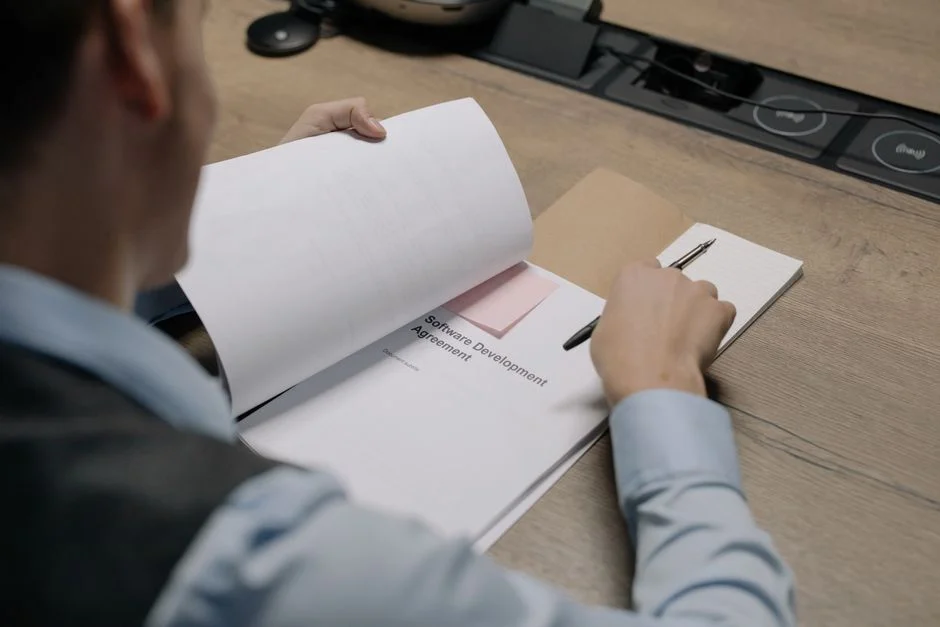

A software development proposal is not just a sales document; it is a technical blueprint that establishes trust between your agency and a prospective client. For CTOs and startup founders, a proposal that lacks technical rigor or strategic clarity is an immediate red flag. It suggests that the development team does not fully grasp the complexities of the system they are meant to build.
At NR Tech Studio, we view the proposal process as a preliminary architectural audit. This article outlines how to move beyond generic templates and create a proposal that demonstrates engineering maturity, reduces scope creep, and clearly defines the path to a high-performance, scalable product.
The Anatomy of a Technical Proposal
A winning proposal must be structured to address the client’s business goals while providing enough technical depth to prove capability. Do not bury the technical implementation in an appendix; make it central to the narrative.
- Executive Summary: A high-level overview of the problem, the proposed solution, and the expected business outcome.
- Technical Architecture: A detailed breakdown of the stack (e.g., Next.js, Laravel, PostgreSQL), data flow, and infrastructure choices.
- Scope of Work: A granular list of features, broken down by module, ensuring clear boundaries.
- Project Methodology: Explanation of your Agile/Scrum process, including how you manage sprints, CI/CD pipelines, and code reviews.
- Timeline and Milestones: A realistic schedule mapped to deliverables, not just dates.
- Risk Mitigation and Quality Assurance: A transparent look at how you handle technical debt, security testing, and deployment stability.
Defining the Technical Stack and Architecture
When you recommend a stack, you must explain why it fits the specific business requirements. If you are proposing a high-traffic e-commerce platform, simply stating you will use Laravel is insufficient. You must explain how you will handle high-concurrency requests using Laravel’s queue architecture or how you will optimize database performance with indexing and caching strategies.
Pro-tip: Always link your technology choices to business outcomes. For example, ‘We are using Next.js for the frontend to ensure server-side rendering, which will directly improve your SEO performance and initial load times for end users.’
Avoid buzzwords. If you mention Docker or Kubernetes, briefly explain how they will streamline the deployment process and ensure environment parity, preventing the ‘it works on my machine’ syndrome.
Scope Management and Estimating Complexity
Scope creep is the primary cause of failed software projects. A well-written proposal includes a clear ‘In-Scope’ vs ‘Out-of-Scope’ section. This protects both the agency and the client.
When estimating, avoid single-point estimates (e.g., ‘This feature will take 10 hours’). Instead, provide ranges based on complexity. If a requirement is ambiguous, explicitly state the assumptions you are making. If those assumptions change, the estimate must be revisited. This approach demonstrates that you understand software development is iterative and unpredictable.
Use a table to categorize tasks by priority and estimated effort. This allows the client to make trade-off decisions if the budget is constrained.
The Role of Methodology: Agile, Scrum, and CI/CD
Your clients need to know how you work. A proposal should outline your development lifecycle. Mentioning your use of CI/CD pipelines, automated testing, and TDD (Test-Driven Development) signals that you prioritize long-term maintainability over quick-and-dirty code.
Explain your communication rhythm. How often will you hold status meetings? How do you handle bug tracking? By defining these processes in the proposal, you set expectations for transparency and accountability, which are critical for building a long-term partnership.
Risk Mitigation and Security Considerations
Every project has risks—data breaches, infrastructure failures, or third-party API changes. A professional proposal addresses these head-on. Include a section on security, detailing your approach to authentication (e.g., OAuth, JWT), data encryption, and compliance with industry standards.
Furthermore, address technical debt. Explicitly state that your team writes clean, documented code and performs regular code reviews to prevent the accumulation of debt that could hinder future scaling.
The Decision Framework: How to Win the Bid
To win, you must align your proposal with the client’s internal decision-making process. CTOs care about scalability, security, and maintainability. Startup founders care about time-to-market, cost, and ROI. Tailor the tone of your proposal to the primary stakeholder.
| Stakeholder | Primary Concern | Proposal Focus |
|---|---|---|
| CTO | Technical Debt, Scalability | Architecture, Testing, CI/CD |
| Founder | Time-to-market, ROI | Roadmap, MVP, Efficiency |
| Product Manager | Feature parity, UX | Scope, User Stories, Milestones |
Factors That Affect Development Cost
- Project complexity and scope
- Number of technical integrations
- Level of required security and compliance
- Timeline and resource allocation
- Maintenance and support requirements
The cost of a software development proposal is typically negligible compared to the total project budget, but the time invested in drafting a high-quality, accurate proposal is a significant factor in project success.
Frequently Asked Questions
What are the 5 main parts of a proposal?
The five essential parts are the executive summary, the problem statement, the proposed technical solution, the project scope and timeline, and the investment/budget breakdown.
What are the three C’s of proposal writing?
The three C’s are Clear, Concise, and Compelling. Your proposal must be easy to understand, free of unnecessary fluff, and persuasive enough to convince the client that you are the best choice for the job.
Can ChatGPT write a project proposal?
ChatGPT can generate templates and draft sections of a proposal, but it cannot replace the technical insight and business strategy required for a high-quality document. You must review and customize any AI-generated content to ensure it accurately reflects your unique technical approach and the specific needs of the client.
What are 5 things all proposals should include?
All proposals should include a clearly defined scope of work, a realistic timeline with milestones, a breakdown of the technology stack, a risk mitigation plan, and a transparent pricing structure.
Writing a software development proposal is an exercise in engineering communication. By focusing on technical depth, clear scope boundaries, and transparent project management, you position your agency as a strategic partner rather than a commodity service provider.
At NR Tech Studio, we specialize in building complex, scalable software solutions. If you need assistance in structuring your next project or require a partner to execute on a high-stakes development roadmap, reach out to our team to discuss how we can help you succeed.
NR Tech Studio builds custom web apps, mobile apps, SaaS platforms, and internal tools for growing businesses. If you’re working through a technical decision, feel free to reach out — no commitment required.