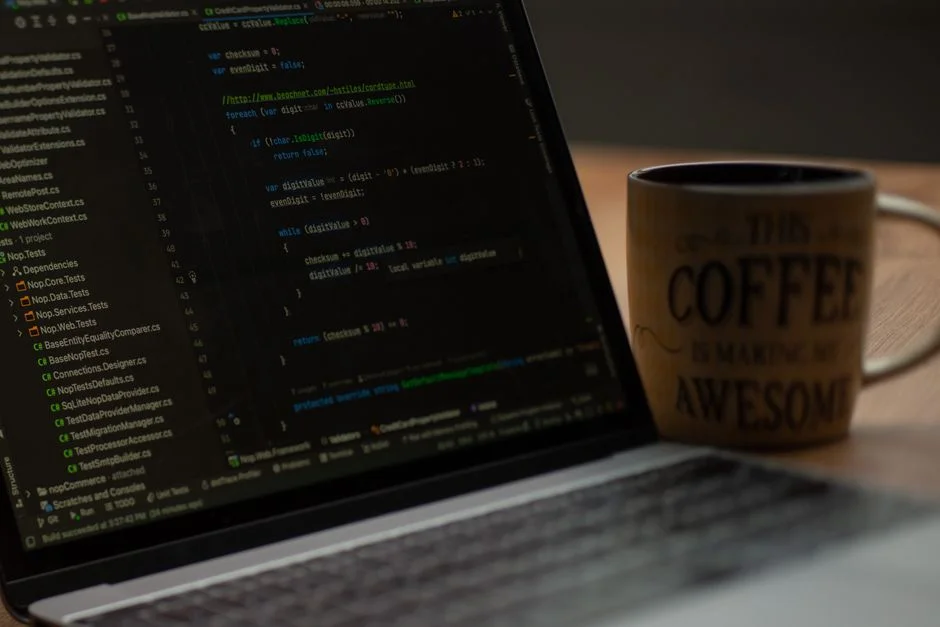

The allure of building a software startup without writing a single line of code is undeniable. It promises a path to market that bypasses the high costs and long lead times of traditional software engineering. For non-technical founders, the prospect of using ‘no-code’ tools to launch a Minimum Viable Product (MVP) feels like a shortcut to startup success. However, as an editorial director at a software development agency, I see the aftermath of these choices every day—often in the form of technical debt, performance bottlenecks, and limited scalability that force a complete rewrite within eighteen months.
This article provides a candid, technical assessment of the ‘no-code’ movement. We will examine the genuine utility of low-code platforms for rapid prototyping, the critical limitations that define their ceiling, and the decision-making framework you need to determine when to use visual builders and when to commit to professional, custom software development.
The Reality of No-Code and Low-Code Platforms
No-code platforms provide a visual interface to build application logic, database schemas, and user interfaces. They function by abstracting away the underlying complexity of programming languages like TypeScript or PHP. For a founder, this means the ability to drag and drop a login form or a data table without understanding authentication protocols or database normalization.
- Speed to market: You can often launch a functional prototype in days.
- Cost efficiency: Lower barrier to entry for initial validation.
- Maintenance abstraction: The platform provider handles server infrastructure, security patches, and uptime.
However, the trade-off is total platform dependency. You are restricted to the primitives provided by the vendor. When your business requirements evolve beyond these primitives—such as needing custom encryption, proprietary algorithms, or complex integrations with legacy ERP systems—you will find yourself hitting a ‘no-code wall’ that no amount of visual configuration can overcome.
The 80/20 Rule in Startup Software Development
In the context of software startups, the 80/20 rule suggests that 80% of your user value comes from 20% of your features. The goal of an MVP is to identify and build that 20% to validate your market hypothesis. No-code tools are exceptionally effective at building this specific 20%.
If your startup’s core value proposition is standard—such as a marketplace, a directory, or a simple CRM—no-code tools are often sufficient. The danger arises when founders mistake the ‘convenience’ of the 80% for the ‘necessity’ of the entire system. If your competitive advantage is performance, proprietary data processing, or high-concurrency handling, the 80/20 rule dictates that you should outsource or hire for the core 20% while perhaps using off-the-shelf tools for the remainder.
Architectural Limitations and Scalability Bottlenecks
When you build without code, you are building on a black-box architecture. You do not own the source code, you cannot perform custom database indexing, and you have no control over the underlying DevOps processes like CI/CD pipelines or automated testing suites. As your user base grows, you will likely encounter:
- Database Latency: Without access to raw SQL queries or custom indexes, performance will degrade as your dataset grows.
- Vendor Lock-in: Migrating away from a proprietary no-code platform often requires a complete rebuild of the application logic.
- Security Risks: You are limited to the security protocols provided by the vendor; you cannot implement custom security audits or specific compliance measures (e.g., HIPAA or SOC2) at the code level.
For a startup aiming for long-term viability, these are not mere inconveniences; they are existential risks to your business.
When to Choose Custom Development Over No-Code
You should transition to or start with custom software development when your business requirements involve complex logic, high security requirements, or the need for deep integration with third-party APIs. Technologies like Laravel, Next.js, and PostgreSQL provide the foundation for scalable, proprietary software that you own entirely.
Decision Framework: If your product requires custom algorithms, low-latency performance, or strict data sovereignty, do not use no-code. If you are building a simple landing page or a basic internal tool for validation, no-code is a viable path.
Custom development allows for TDD (Test Driven Development), rigorous code reviews, and the ability to optimize every layer of the stack, from the database query to the frontend rendering.
Cost Considerations and Long-Term Value
While no-code reduces initial capital expenditure, it often increases long-term operational costs. Many platforms charge per-seat or per-record fees that scale linearly with your success. Conversely, custom development requires a higher upfront investment in talent and architecture, but it provides a lower marginal cost of scaling and, crucially, adds to your company’s valuation as a proprietary asset.
Founders must weigh the ‘cost of speed’ against the ‘cost of technical debt.’ Paying for a custom build with an agency like NR Tech Studio ensures you own your IP, which is a critical factor for investors during due diligence.
The Role of Professional Engineering in Startup Success
Even if you start with a no-code MVP, you will eventually reach a point where you need professional engineers to handle ‘Software Architecture’ and ‘Software Scalability.’ Professional developers bring more than just syntax knowledge; they bring an understanding of design patterns, SOLID principles, and system reliability.
At NR Tech Studio, we often work with founders who have outgrown their initial no-code solutions. We help them extract their business logic and migrate to a robust, maintainable architecture using modern frameworks. This ensures that their product can handle real-world traffic without crashing or becoming unmanageable.
Factors That Affect Development Cost
- Project complexity and feature scope
- Scalability and performance requirements
- Data security and compliance needs
- Integrations with legacy systems
- Long-term maintenance and ownership
No-code solutions typically involve lower initial costs but can become expensive as they scale, whereas custom development requires higher initial investment for superior long-term ROI.
Frequently Asked Questions
Can I create a software without coding?
Yes, you can create functional prototypes and simple applications using no-code platforms like Bubble, Webflow, or Airtable. These tools allow you to build interfaces and logic without writing code, though they come with limitations regarding scalability, data ownership, and performance.
What is the 80/20 rule for startups?
The 80/20 rule in startups suggests that 80% of the value your product provides comes from 20% of its features. For founders, this means focusing exclusively on the core functionality that solves your primary user problem rather than trying to build a feature-complete product from day one.
Was Elon Musk a coder?
Yes, Elon Musk has a background in software engineering. He wrote code for his early ventures like Zip2 and X.com, which provided him with a technical foundation that influenced his approach to building scalable systems at companies like Tesla and SpaceX.
Building a startup without code is a legitimate strategy for early-stage validation, but it is rarely a long-term architecture strategy. The most successful founders understand the difference between building a prototype and building a business. Use no-code tools to test your assumptions, but be prepared to transition to a custom, scalable codebase as soon as you have found product-market fit.
If you are ready to transition your startup to a professional, high-performance platform, our team at NR Tech Studio specializes in building custom software that scales with your business. Contact us today to discuss how we can help you move beyond the limitations of no-code platforms.
Ready to Build a Custom Solution?
NR Tech Studio specializes in custom software built around your workflow. Tell us what you’re building and we’ll walk through your options together.