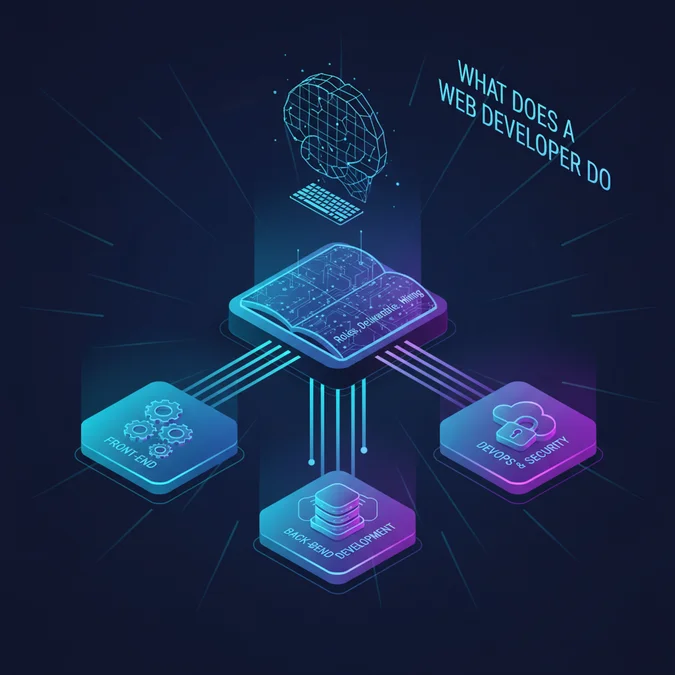

A web developer’s primary role is to build and maintain websites and web applications, ensuring they are functional, user-friendly, and visually appealing. This involves writing code, debugging, and collaborating with designers and other stakeholders to bring digital experiences to life, effectively translating abstract concepts into tangible, interactive platforms.
Understanding the intricate world of web development is crucial for businesses seeking digital solutions and for individuals considering a career in this dynamic field. This article demystifies the web developer’s responsibilities, explores various specializations, details essential skills, outlines career paths, and provides critical insights for evaluating and hiring top-tier web development talent.
The Core Responsibilities of a Web Developer
At its core, a web developer is a digital architect and engineer, responsible for the creation and maintenance of all aspects of a web presence. This encompasses everything from a simple static page to complex, interactive web applications. The daily tasks involved in website development are diverse, requiring a blend of technical prowess and problem-solving skills.
When we ask what is a web coder, we are referring to the individual who translates design mockups and functional requirements into executable code. A web programmer meticulously writes, tests, and refines the instructions that tell a browser or server how to behave. This means web programmers code using various languages and frameworks to achieve specific functionalities, ensuring responsiveness, security, and performance.
A typical web developer career description includes:
- Coding and Implementation: Writing clean, efficient code using languages like HTML, CSS, JavaScript, Python, Ruby, PHP, or Java.
- Debugging and Testing: Identifying and resolving software defects and ensuring cross-browser compatibility and optimal performance.
- Maintenance and Updates: Keeping websites current, secure, and functional, including applying patches and upgrading dependencies.
- Collaboration: Working closely with UI/UX designers, project managers, and other developers to integrate different components and meet project goals.
- Performance Optimization: Ensuring fast loading times and smooth user interactions.
- Security Implementation: Protecting websites from vulnerabilities and cyber threats.
Callout: The essence of a web developer’s work is to bridge the gap between human ideas and machine execution, transforming concepts into functional, accessible digital experiences.
Consider a simple web component like a button that submits a form. The web developer must ensure that when a user clicks this button, the correct data is collected, validated, sent to the server, and the user receives appropriate feedback. This seemingly simple action involves front-end interaction, back-end processing, and database communication.
// Example: Basic JavaScript for a form submission button
// This snippet demonstrates a web programmer's code for client-side interaction.
document.getElementById('submitButton').addEventListener('click', function(event) {
    event.preventDefault(); // Prevent default form submission
    const formData = new FormData(document.getElementById('myForm'));
    fetch('/api/submit-form', {
        method: 'POST',
        body: formData
    })
    .then(response => response.json())
    .then(data => {
        console.log('Success:', data);
        alert('Form submitted successfully!');
    })
    .catch(error => {
        console.error('Error:', error);
        alert('Form submission failed.');
    });
});
Types of Web Developers: Front-End, Back-End, and Full-Stack
The field of web development is broadly categorized into specialized roles, each focusing on different layers of a web application. Understanding these distinctions clarifies what is web dev from various angles and highlights the collaborative nature of building a complete digital product. The distinction between a web programmer web developer often lies in this specialization, with programmers typically focusing on specific coding tasks within these broader roles.
A website programmer might specialize in one area, while a web developer often has a more holistic view, combining programming with design principles or server management.
Front-End Developer
Front-end developers are responsible for the user-facing side of a website, everything a user sees and interacts with. They craft the visual elements, layout, and interactive features using HTML for structure, CSS for styling, and JavaScript for dynamic behavior. Their primary goal is to ensure an intuitive and engaging user experience. The term web design dev often refers to this role, blurring the lines between pure design and interactive implementation.
Back-End Developer
Back-end developers work on the server-side logic, databases, and APIs that power the front-end. They ensure data is stored, retrieved, and processed correctly. This involves server management, database administration, and writing code in languages like Python, Ruby, Node.js, PHP, or Java. They build the unseen infrastructure that makes a website functional.
Full-Stack Developer
Full-stack developers possess skills in both front-end and back-end development. They can handle all aspects of a web application, from designing the user interface to managing the server and database. This versatility makes them invaluable for smaller teams or as technical leads on larger projects, providing a comprehensive understanding of the entire development lifecycle.
Here is a comparison of these roles:
| Aspect | Front-End Developer | Back-End Developer | Full-Stack Developer |
|---|---|---|---|
| Focus | User Interface, User Experience | Server, Database, Logic | Both Front-End and Back-End |
| Key Technologies | HTML, CSS, JavaScript, React, Angular, Vue.js | Python, Node.js, Ruby, PHP, Java, SQL, MongoDB | All of the above |
| Primary Goal | Interactive, Responsive UI | Functional, Secure Server Logic | Complete, Integrated Application |
| Example Code Area | Styling a button, form validation | User authentication, data storage | Building an entire feature from UI to database |
For instance, a front-end developer might write the following JavaScript to animate a UI element:
// Front-end code example: Animating a header on scroll
// This demonstrates a web design dev's work for visual interaction.
window.addEventListener('scroll', function() {
    const header = document.querySelector('header');
    if (window.scrollY > 100) {
        header.style.transform = 'translateY(-100%)';
        header.style.opacity = '0';
    } else {
        header.style.transform = 'translateY(0)';
        header.style.opacity = '1';
    }
});
Conversely, a back-end developer might set up a simple API endpoint using Node.js and Express:
// Back-end code example: Simple API endpoint
// This is typical work for a website programmer focused on server logic.
const express = require('express');
const app = express();
const port = 3000;

app.get('/api/data', (req, res) => {
    res.json({ message: 'Data from server', timestamp: new Date() });
});

app.listen(port, () => {
    console.log(`Server listening at http://localhost:${port}`);
});
Essential Skills and Technologies for Modern Web Programming
Succeeding as a web developer today demands a robust set of technical and soft skills, continuously updated to keep pace with rapid technological advancements. Understanding web developer job requirements means recognizing proficiency in core languages, frameworks, and tools, alongside crucial interpersonal abilities.
The landscape of modern web programming is characterized by component-based architectures, cloud integration, and a strong emphasis on user experience and performance. Therefore, website development skills must extend beyond basic coding.
Technical Skills Checklist:
- Foundational Languages: HTML5, CSS3, JavaScript (ES6+).
- Front-End Frameworks/Libraries: React, Angular, Vue.js.
- Back-End Languages/Runtimes: Node.js, Python (Django, Flask), Ruby (Rails), PHP (Laravel), Java (Spring Boot).
- Database Management: SQL (PostgreSQL, MySQL), NoSQL (MongoDB, Cassandra).
- Version Control: Git and platforms like GitHub, GitLab, Bitbucket.
- API Development: RESTful APIs, GraphQL.
- Cloud Platforms: AWS, Google Cloud Platform (GCP), Azure.
- Deployment & DevOps Basics: Docker, Kubernetes, CI/CD pipelines.
- Testing Frameworks: Jest, Mocha, Cypress (for front-end), Pytest, JUnit (for back-end).
- Responsive Design: Media queries, Flexbox, CSS Grid.
- Web Security Best Practices: OWASP Top 10, data encryption.
Soft Skills Checklist:
- Problem-Solving: Breaking down complex issues into manageable parts.
- Communication: Clearly articulating technical concepts to non-technical stakeholders and collaborating effectively with team members.
- Attention to Detail: Meticulousness in coding and debugging.
- Continuous Learning: Staying updated with new technologies and industry trends.
- Time Management: Prioritizing tasks and meeting deadlines.
- Adaptability: Adjusting to changing project requirements and technologies.
Callout: The convergence of software development web development means developers are increasingly expected to understand broader software engineering principles, including architectural patterns, system design, and scalability, beyond just website creation.
For aspiring developers, identifying the right web development tools for beginners is crucial. A powerful code editor like Visual Studio Code, a modern browser with robust developer tools (Chrome DevTools, Firefox Developer Tools), and a command-line interface are indispensable. Learning Git is non-negotiable for collaborative development.
The shift towards single-page applications (SPAs) and progressive web apps (PWAs) exemplifies modern web programming. This requires a deep understanding of asynchronous JavaScript, state management, and client-side routing, moving away from traditional server-rendered pages. This evolution necessitates continuous learning and adaptation for anyone in web development.
How to Become a Web Developer: Education, Career Path, and Growth
For many aspiring professionals, the question of how can i be a web developer often begins with exploring educational pathways and understanding the career trajectory. The good news is that the field is highly meritocratic, valuing practical skills and demonstrable projects over traditional degrees alone.
1. Educational Paths for Web Developer Education:
- Self-Taught Learning: Many successful developers are self-taught, utilizing online resources, documentation, and personal projects. Platforms like freeCodeCamp, The Odin Project, and MDN Web Docs offer structured learning paths.
- Coding Bootcamps: Intensive, short-term programs (typically 3-6 months) designed to provide practical, job-ready skills. They are excellent for rapid skill acquisition and career transition.
- Associate’s or Bachelor’s Degree: Traditional computer science or software engineering degrees provide a strong theoretical foundation, algorithms, data structures, and broader software engineering principles. While not strictly necessary for entry-level roles, they can be beneficial for senior positions or specialized areas.
2. Building a Portfolio:
Regardless of the educational route, a strong portfolio is paramount. It serves as concrete evidence of your skills and ability to deliver. Include diverse projects that showcase your proficiency in different technologies, problem-solving capabilities, and understanding of best practices. Open-source contributions are also highly valued.
3. Networking and Community Engagement:
Attending meetups, conferences, and participating in online communities (e.g., Stack Overflow, Reddit’s r/webdev) can provide invaluable learning opportunities, mentorship, and job leads. Networking is a critical component of professional growth in any field, especially in tech.
4. Continuous Learning:
The web development landscape evolves at an incredible pace. Staying current with new frameworks, languages, and tools is not optional. Dedicate time regularly to learning new concepts and experimenting with emerging technologies.
Web Developer Job Information and Career Progression:
The career path for a web developer is dynamic and offers numerous opportunities for specialization and advancement. Typical progression might look like this:
| Career Stage | Typical Responsibilities | Key Skills Developed |
|---|---|---|
| Junior Developer | Assisting senior developers, implementing small features, bug fixes, learning codebase. | Core language proficiency, version control, basic debugging. |
| Mid-Level Developer | Independent feature development, code reviews, contributing to architectural discussions. | Framework mastery, API integration, testing, performance optimization. |
| Senior Developer | Leading projects, mentoring juniors, architectural design, complex problem-solving. | System design, project management, advanced debugging, strategic planning. |
| Lead/Architect | Setting technical direction, managing teams, high-level system architecture, innovation. | Leadership, enterprise architecture, business acumen, strategic vision. |
This path isn’t linear for everyone; some may specialize in UI/UX, others in DevOps, or even transition into product management. The key is to continuously refine skills and seek out challenging projects that foster growth.
Web Development Project Deliverables and Commercial Considerations
For businesses, understanding what does a web developer do from a commercial perspective is paramount for successful project outcomes and effective resource allocation. This involves clarity on deliverables, pricing models, and how to identify the best web dev partners. The term desarrollo web, the Spanish equivalent, encompasses the same commercial considerations for global clients.
When engaging a web developer or development team, clear expectations regarding deliverables are crucial. These typically include:
- Functional Website/Application: The core product, meeting all specified requirements.
- Source Code: Well-documented, clean, and maintainable code base.
- Technical Documentation: API documentation, setup guides, and architectural diagrams.
- Deployment & Hosting Configuration: Setup of servers, databases, and continuous integration/delivery pipelines.
- Testing Reports: Documentation of unit, integration, and user acceptance testing.
- User Manuals/Training Materials: For complex applications, guiding end-users or administrators.
- Maintenance & Support Plan: Post-launch support, bug fixes, and updates.
The intersection of software development web design is particularly critical here. A developer isn’t just coding; they’re integrating design, user experience, and business logic into a cohesive product. This holistic approach is what defines a truly valuable web development service.
Evaluating Web Development Services and the Best Web Dev Partners:
Choosing the right web developer developer or agency involves more than just comparing hourly rates. Consider these factors:
- Portfolio and Case Studies: Review past projects that align with your industry or technical requirements.
- Technical Proficiency: Assess their team’s expertise in relevant technologies.
- Communication and Project Management: Evaluate their process for updates, feedback, and issue resolution.
- Scalability and Future-Proofing: Discuss how they approach building extensible and maintainable solutions.
- Security Practices: Inquire about their approach to data protection and vulnerability management.
- Post-Launch Support: Understand their service level agreements (SLAs) for maintenance and bug fixes.
Pricing Models and Deliverables Matrix:
Web development costs vary widely based on complexity, features, and the engagement model. Common pricing structures include:
| Pricing Model | Description | Best Suited For | Pros | Cons |
|---|---|---|---|---|
| Fixed Price | Total project cost agreed upfront. | Well-defined projects with clear scope. | Predictable budget, clear deliverables. | Less flexibility, scope creep can be costly. |
| Time & Material | Pay for actual hours worked and resources used. | Projects with evolving requirements, R&D. | High flexibility, adaptable to changes. | Budget uncertainty, requires close monitoring. |
| Dedicated Team | Hire a team for an extended period (monthly rate). | Ongoing development, large-scale products. | Full control, deep team integration. | Higher long-term cost, management overhead. |
Agency Vetting Checklist:
- ☑ Does their portfolio demonstrate relevant experience?
- ☑ Do they have a clear communication plan and project management methodology?
- ☑ Are their technical skills aligned with your project’s needs (e.g., specific frameworks, cloud expertise)?
- ☑ Can they provide references from previous clients?
- ☑ Do they offer post-launch support and maintenance?
- ☑ Is their proposal transparent regarding scope, timeline, and costs?
- ☑ Do they prioritize security and performance in their development process?
Engaging in desarrollo web requires a strategic partnership. By thoroughly vetting potential developers and clearly defining project parameters, businesses can ensure they receive high-quality, impactful digital solutions that drive commercial success.
Factors That Affect Development Cost
- Project complexity
- Number of features and integrations
- Technology stack required
- Developer experience level (junior, mid, senior)
- Geographic location of developers
- Engagement model (fixed price, time & material, dedicated team)
- Post-launch support and maintenance requirements
The cost for web development services varies significantly based on project scope, team expertise, and ongoing support needs.
Frequently Asked Questions
What is the primary role and meaning of a web developer?
A web developer’s primary role is to build and maintain websites and web applications, ensuring they are functional, user-friendly, and visually appealing. This involves writing code, debugging, and collaborating with designers and other stakeholders to bring digital experiences to life, giving meaning to their technical work.
What is the difference between a web programmer and a web developer?
While often used interchangeably, a ‘web programmer’ typically emphasizes the coding aspect, focusing on logic and functionality. A ‘web developer’ has a broader scope, encompassing design, user experience, and overall project management alongside coding, making them a more holistic role.
What are the typical web developer job requirements?
Typical web developer job requirements include proficiency in programming languages like HTML, CSS, JavaScript, and often frameworks like React or Angular. Strong problem-solving skills, attention to detail, and experience with version control systems are also crucial for success in the role.
Can I become a web developer without a traditional degree, and what education is needed?
Yes, many successful web developers are self-taught or attend bootcamps. A strong portfolio showcasing practical projects, continuous learning, and networking are often more critical than a traditional degree. Practical skills and experience are highly valued in the industry, making alternative education paths viable.
What is ‘desarrollo web’ and how does it relate to web development?
‘Desarrollo web’ is the Spanish term for web development. It refers to the same process of creating and maintaining websites and web applications, encompassing all aspects from coding and design to server configuration and database management. It’s simply the translation of the field.
What are some essential web development tools for beginners?
Essential web development tools for beginners include a code editor like VS Code, a web browser with developer tools (Chrome, Firefox), and version control systems like Git. Learning basic command-line interfaces and package managers is also beneficial for starting your web development journey effectively.
What should you consider regarding web developer meaning?
When assessing web developer meaning, prioritize measurable technical outcomes, transparent communication, and experienced engineering guidance to ensure maximum ROI.
The role of a web developer is central to the digital economy, encompassing everything from foundational coding to complex system architecture. Whether building a simple static site or a sophisticated web application, their work ensures that online experiences are functional, engaging, and secure. We’ve explored the diverse responsibilities, the specialized roles of front-end, back-end, and full-stack developers, the essential skills required, and the various paths one can take to enter and grow within this dynamic profession.
For businesses, understanding these facets is key to effective collaboration, successful project delivery, and making informed hiring decisions. For individuals, it illuminates a rewarding career path demanding continuous learning and adaptability. As the digital landscape continues to evolve, the demand for skilled web developers who can translate vision into reality will only intensify, making this a pivotal and exciting field.
NR Studio builds custom web apps, mobile apps, SaaS platforms, and internal tools for growing businesses. If you’re working through a technical decision, feel free to reach out — no commitment required.