
Public sector digital infrastructure demands a departure from standard enterprise patterns. When building for government entities, the primary constraints shift from rapid market iteration to absolute accessibility, long-term archival stability, and rigid security compliance. Engineers tasked with this work operate within a landscape defined by federal mandates rather than consumer trends.
This guide provides a technical blueprint for navigating the complexities of public-facing systems. From integrating legacy data silos to ensuring strict adherence to WCAG 2.2 standards, we break down the engineering requirements necessary for resilient, high-availability platforms that serve the public interest.
Foundational Requirements for Web Design For Government Agencies
Effective web design for government agencies starts with a commitment to universal access and data integrity. Unlike commercial platforms, these sites must accommodate diverse user demographics across aging hardware and restricted network environments.
Technical Checklist for Public Sector Compliance:
- Accessibility: Full WCAG 2.2 AA compliance as the absolute baseline, with automated CI/CD gating for contrast and screen reader compatibility.
- Data Sovereignty: Hosting must strictly adhere to federal data residency requirements and approved cloud service provider (CSP) environments.
- Performance: Zero-dependency front-end strategies to ensure functionality on low-bandwidth connections common in rural or underserved areas.
- Security: Implementation of mandatory HTTPS-everywhere, HSTS, and Content Security Policy (CSP) headers to prevent XSS and man-in-the-middle attacks.
Technical Lifecycle of Government Web Development
Government web development follows a procurement-heavy lifecycle that necessitates modularity to survive long-term maintenance cycles. The following table contrasts the architectural approaches for public sector requirements.
| Criteria | Headless CMS | Traditional Monolith |
|---|---|---|
| Scalability | High (API-first) | Low (Tight coupling) |
| Security Surface | Reduced (API-only) | High (DB/UI exposure) |
| Maintenance | Modular (Partial updates) | High (Full rebuilds) |
| Compliance | Easier (Isolated audit) | Difficult (System-wide) |
For high-traffic portals, we recommend a static site generation (SSG) pattern to minimize server-side exposure. Below is a sample configuration for a secure deployment pipeline:
# Simplified CI/CD pipeline snippet for government compliance
jobs:
 build:
 runs-on: ubuntu-latest
 steps:
 - name: Security Scan
 run: npm run audit:accessibility # Fail build if WCAG violations found
 - name: Build Assets
 run: npm run build
 - name: Deploy to GovCloud
 run: aws s3 sync./dist s3://secured-gov-bucket
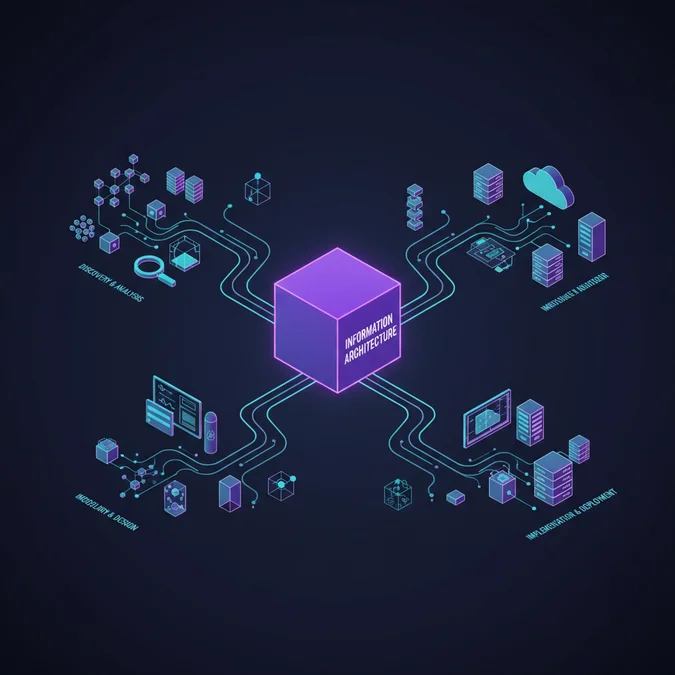
Information Architecture for Public Sector Portals
Mapping citizen journeys requires transforming unstructured legacy data into accessible, machine-readable schemas. The architecture must support deep linking and search engine indexing while maintaining strict access controls for protected documents.
| Data Layer | Strategy | Outcome |
|---|---|---|
| Legacy SQL | API Wrapper | Decoupled search |
| Document Archive | JSON/Markdown | Structured retrieval |
| Citizen Portal | SSO / OAuth2 | Unified identity |
Prioritize a taxonomy-first approach to information architecture. By decoupling content from presentation, agencies can pivot their frontend interfaces without re-engineering the underlying data persistence layers.
Security and Performance Standards for .gov Infrastructure
Security in government infrastructure is not an additive feature; it is the substrate of the architecture. For.gov systems, high availability is mandated by the need for continuous access to public services.
// Example of a hardened CSP header implementation
const helmet = require('helmet');
app.use(helmet.contentSecurityPolicy({
 directives: {
 defaultSrc: ["'self'"],
 scriptSrc: ["'self'", "trusted-gov-scripts.js"],
 styleSrc: ["'self'", "fonts.gov"],
 upgradeInsecureRequests: [],
 },
}));
Performance metrics should focus on Time to Interactive (TTI) rather than vanity metrics like total page load time. For public users, immediate feedback on forms and search queries is critical for accessibility and user trust.
Frequently Asked Questions
What are the primary technical hurdles in web design for government agencies?
Major hurdles include maintaining strict WCAG 2.2 accessibility compliance, ensuring robust security for sensitive public data, and managing legacy system integration. Engineers must prioritize modular architecture to allow for secure updates while maintaining uptime standards expected by public users across various devices and network conditions.
How does government web development differ from commercial enterprise projects?
Government web development requires adherence to specific federal mandates regarding accessibility, data privacy, and hosting on approved.gov infrastructure. Unlike commercial projects, the focus is on universal access, long-term archival stability, and rigorous documentation standards rather than iterative marketing-led feature releases or rapid consumer-facing pivot cycles.
Successful government digital transformation relies on prioritizing long-term maintainability over short-term velocity. By adhering to modular architecture, strict accessibility standards, and robust security patterns, agencies can build platforms that serve their constituents effectively for years to come.
Review your current procurement and deployment pipelines against the requirements outlined in this guide to ensure your infrastructure meets the evolving demands of the public sector.