
When automating cloud databases, teams frequently hit an operational wall right after the virtual infrastructure stabilizes. The AWS RDS instance or Azure Flexible Server spins up smoothly via standard cloud provider modules, exiting with an exit code of 0. However, the downstream deployment pipeline halts immediately: the application database does not exist, internal schemas are unconfigured, application users lack login grants, and performance extensions like pg_stat_statements remain disabled.
Bridging the boundary between managed cloud infrastructure and PostgreSQL internal database administration requires an entirely different operational paradigm. While cloud providers orchestrate physical hypervisors, VPC attachments, storage subsystems, and parameter groups, they do not speak the internal PostgreSQL wire protocol required to declare fine-grained permissions or logical structures.
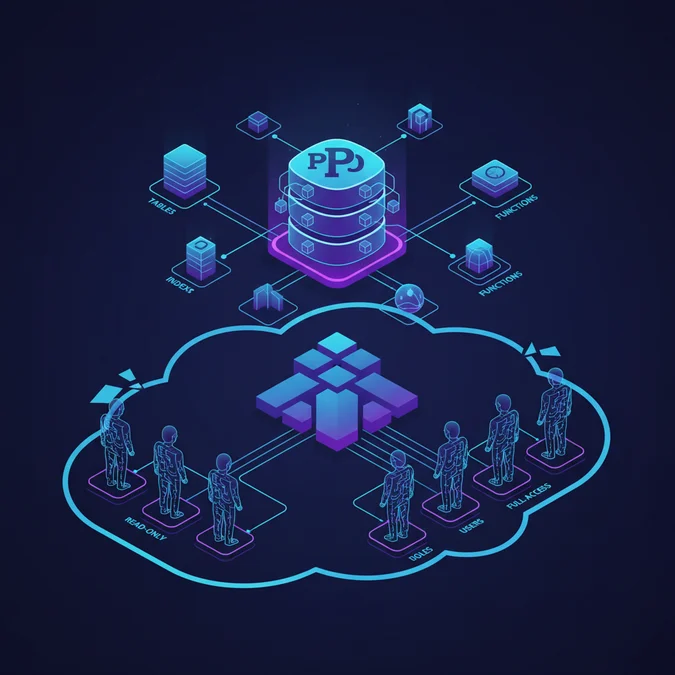
The cyrilgdn/postgresql provider resolves this division by operating directly over database network sockets. This technical reference establishes the architectural patterns, networking tunnels, role-based access control (RBAC) configurations, and operational safety controls necessary to run the provider reliably across automated, zero-trust production environments.
Architectural Boundaries: Cloud Database vs Terraform PostgreSQL Provider
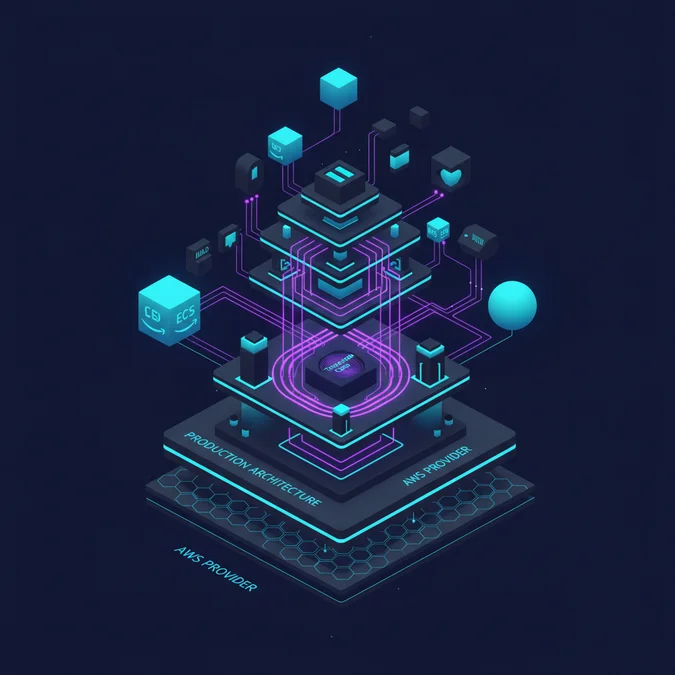
A common architectural anti-pattern in Infrastructure as Code (IaC) is treating database instances and database contents as a singular entity. In practice, database lifecycle management divides into two distinct operational planes: the Infrastructure Management Plane and the Database Engine Plane.
Frequently Asked Questions
What is the difference between the PostgreSQL backend and the Terraform PostgreSQL provider?
The PostgreSQL state backend stores Terraform state files inside an existing database table. In contrast, the Terraform PostgreSQL provider interacts with the database engine API to manage internal resources like roles, permissions, schemas, and extensions declaratively.
Why should you use the cyrilgdn/postgresql provider instead of hashicorp/postgresql?
The original HashiCorp community provider is archived. The cyrilgdn/postgresql namespace is the actively maintained registry standard, supporting modern PostgreSQL versions, enhanced grant systems, AWS RDS IAM authentication, and updated connection handling.
Can Terraform manage table-level schemas and DDL migrations?
Terraform can create schemas and extensions, but it is not designed for table-level DDL or transactional schema migrations. Use migration tools like Flyway or Liquibase for table schemas, while reserving Terraform for database instances, users, and privileges.
How do you connect Terraform to a private RDS instance without a public IP?
Run Terraform inside your private VPC using self-hosted CI/CD runners, or establish an automated SSH tunnel through a bastion host using AWS SSM Session Manager before executing terraform plan and apply commands.
What are critical engineering considerations for terraform postgres provider?
When implementing terraform postgres provider, prioritize deterministic execution, rigorous error handling, observability metrics, and strict security isolation to maintain production reliability and eliminate latency bottlenecks.
What are critical engineering considerations for terraform database?
When implementing terraform database, prioritize deterministic execution, rigorous error handling, observability metrics, and strict security isolation to maintain production reliability and eliminate latency bottlenecks.
Successfully integrating the Terraform PostgreSQL provider into enterprise infrastructure requires respecting the operational boundary between cloud infrastructure provisioning and database engine administration. Attempting to combine both inside a monolithic root module causes dependency deadlocks, fragile plan phases, and networking failures across private network topologies.
By decoupling compute provisioning from internal object declaration, routing engine connections through secure SSM tunnels, and enforcing declarative default privileges, platform teams can eliminate manual database bootstrapping while enforcing least-privilege role-based access control across every environment.
References & Further Reading