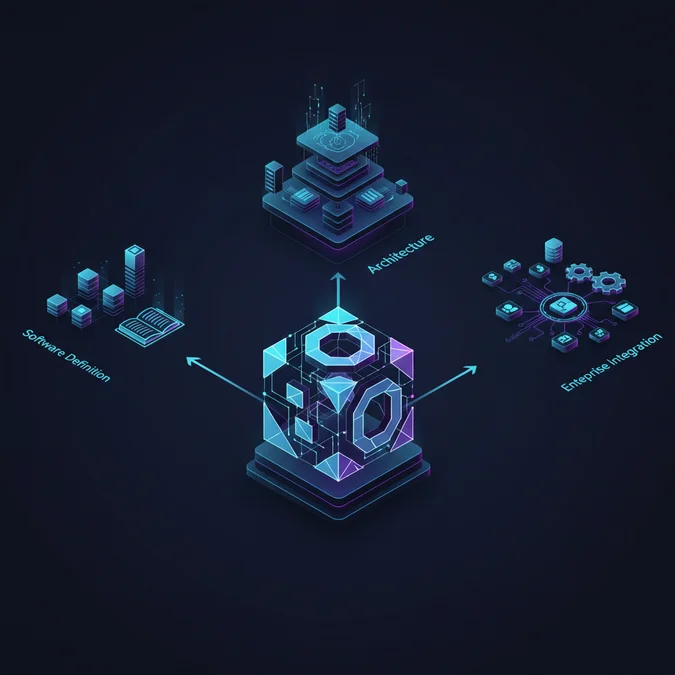

According to Gartner market share evaluations, Oracle Database and enterprise software suites continue to secure over 40% of mission-critical transaction workloads across Global 2000 enterprises. At its architectural core, an oracle software definition denotes a multi-tier suite of relational database management systems, middleware, and cloud infrastructure engineered to guarantee high-concurrency ACID transactions, high availability via clustered nodes, and unified multi-tenant lifecycle operations. Understanding these low-level database primitives and enterprise middleware contracts is essential for software architects evaluating enterprise data backends or integrating modern web frameworks like Laravel into legacy stacks.
Historically, developer communities conflate the enterprise database engine with Oracle’s broader application ecosystem, which spans ERP suites, Java runtime platforms, and distributed cloud services. This ambiguity often creates architectural friction when systems engineers attempt to connect high-throughput web applications with multi-terabyte transactional stores. Examining the exact internal mechanics of Oracle Database reveals how tablespaces, memory structures, and transaction redo logs differ fundamentally from standard open-source relational systems like MySQL or PostgreSQL.
This technical guide establishes an objective engineering breakdown of the Oracle software ecosystem. We cover the foundational database architecture, System Global Area memory management, high availability patterns through Real Application Clusters, multi-tenant isolation, integration strategies with modern application stacks like PHP and Laravel, and the concrete technical trade-offs required when migrating to or maintaining these relational environments.
Technical Definition of Oracle Software
An oracle software definition designates an integrated suite of enterprise systems engineered primarily around the Oracle Relational Database Management System (RDBMS), enterprise middleware, and virtualization layers. Unlike basic file-based or monolithic tabular stores, Oracle RDBMS functions as a distributed, multi-model database engine that processes complex object-relational schemas, partitioned storage indices, and high-concurrency distributed transactions across disparate operating systems.
At its operational foundation, the software separates logical data representations from physical disk layout, operating through a dedicated set of system memory buffers and concurrent background workers. This design permits zero-downtime reconfiguration, online data schema migrations, and fine-grained row-level locking without escalating to coarse table locks under severe I/O pressure. In real-world enterprise infrastructure, the term extends past the database engine to include Oracle Fusion Middleware, WebLogic Server, and modern Oracle Cloud Infrastructure (OCI) foundational toolsets.
To evaluate these technologies systematically, engineering teams formalize evaluation criteria by reviewing RFC software engineering design documents before committing transactional workloads to specific memory or clustering models. The overarching architecture prioritizes transactional durability, strict isolation levels, and non-blocking read operations above simple operational setups.
Core Architecture: Physical and Logical Storage Structures
The internal architecture of the Oracle database balances logical data abstraction with physical operating system boundaries. Logical structures categorize application storage hierarchically, while physical structures dictate block storage directly on NVMe arrays, SANs, or Automated Storage Management (ASM) volumes.
The Logical Hierarchy
Oracle organizes relational data through a four-tiered logical continuum:
- Data Blocks: The atomic unit of storage allocation, configurable in sizes from 2KB to 32KB. A single block houses row data, variable transaction table entries, and block overhead.
- Extents: Contiguous sets of specific data blocks allocated when database objects grow. Dynamic extent management avoids disk fragmentation during heavy ingestion.
- Segments: Collections of extents reserved for a discrete database entity, such as a data table, an index, or an undo log.
- Tablespaces: Logical containers mapping directly to one or more physical datafiles. Common defaults include
SYSTEM,SYSAUX,UNDOTBS, and bespoke application spaces.
Physical Storage Files
Physical disk storage is organized into three mandatory file categories:
- Datafiles: Binary files on disk holding segment extents, indexes, and materialized views.
- Control Files: Small, high-integrity binary records capturing database physical structure, current sequence logs, and backup checkpoints. These files are typically multiplexed across different disks to avoid single points of failure.
- Online Redo Log Files: Circular sequential log streams tracking every single transactional modification before changes flush to persistent datafiles.
Memory Management: SGA and PGA Mechanics
Oracle software assigns shared and dedicated memory spaces to optimize transaction latencies while limiting operating system paging penalties. The two chief memory components are the System Global Area (SGA) and the Program Global Area (PGA).
The System Global Area (SGA) represents a shared RAM block accessible by all server processes concurrently. Key sub-pools include:
- Database Buffer Cache: Stores disk blocks read directly from storage. Modified dirty buffers reside here until written to disk asynchronously.
- Shared Pool: Caches parsed SQL syntax, PL/SQL compilation trees, and the active data dictionary cache. Reusing execution plans through the library cache cuts parsing latencies drastically.
- Redo Log Buffer: Holds circular in-flight transaction records immediately before the Log Writer (LGWR) dumps them into online redo files.
- Large Pool: Provides optional large memory allocations for shared server connections, backup operations, and parallel execution buffers.
The Program Global Area (PGA), by contrast, is a private, non-shared memory space allocated to an individual server process when a client establishes a database session. The PGA manages localized operations including SQL sorts, hash joins, bitmap merge processing, and persistent user session variables. Sizing PGA dynamically via PGA_AGGREGATE_TARGET prevents memory exhaustion during bulk joins.
Background Engine Processes and Lifecycle Execution
The real engine of an active Oracle instance is its array of background processes. These concurrent daemons maintain high availability, buffer cleanliness, and operational durability without blocking active client request threads.
The core daemon set includes:
- Database Writer (DBWn): Asynchronously flushes dirty blocks from the Database Buffer Cache down to persistent storage datafiles using a least-recently-used (LRU) algorithm.
- Log Writer (LGWR): Transports pending log data from the Redo Log Buffer directly to active online redo logs on disk when a transaction explicitly commits or when the buffer reaches one-third capacity.
- System Monitor (SMON): Conducts automated instance recovery upon unexpected host termination by rolling forward committed changes recorded in the redo logs and rolling back uncommitted undo segments.
- Process Monitor (PMON): Scans for failed client processes, reclaims allocated resources, rolls back abandoned locks, and updates network listeners with dynamic instance metrics.
- Checkpoint (CKPT): Signals DBWn during planned checkpoints, updating control files and datafile headers to synchronize physical state across all storage tiers.
High Availability and Clustering: RAC vs Data Guard
High availability in the Oracle software landscape centers around two main architectures: Oracle Real Application Clusters (RAC) for shared-disk active-active clustering, and Oracle Data Guard for shared-nothing disaster recovery.
| Evaluation Metric | Oracle Real Application Clusters (RAC) | Oracle Active Data Guard |
|---|---|---|
| Node Execution Model | Active-Active (All nodes read and write simultaneously) | Active-Passive (Primary writes, Standby reads/recovers) |
| Storage Architecture | Shared Storage (ASM over SAN/NAS) | Independent, replicated local storage per site |
| Cache Synchronization | Cache Fusion over low-latency private interconnects | Continuous transport of Redo logs via TCP/IP |
| Failure Mitigation | Instant node failover, zero data loss (RPO = 0) | Site-level failover with near-zero or zero data loss |
| Common Bottleneck | Interconnect latency during severe cache contention | Wide-area network bandwidth during heavy redo generation |
RAC links multiple physical hosts to a uniform storage pool using Cache Fusion. When Node A requires a data block currently held in Node B’s memory buffer, the block transfers directly over a private high-speed interconnect rather than incurring disk I/O. Data Guard, on the other hand, safeguards systems against data center loss by streaming redo records to a synchronized standby database, ensuring business continuity.
Multi-Tenant Architecture: Container and Pluggable Databases
Beginning with modern Oracle versions, the multi-tenant architecture restructured resource sharing and isolation boundaries. Instead of provisioning isolated physical server instances for every workload, the software model separates container runtimes from business schema catalogs.
The multi-tenant framework relies on two core database concepts:
- CDB (Container Database): The root architectural layer containing memory allocations, background processes, metadata dictionaries, and redo log files common to the entire server environment.
- PDB (Pluggable Database): A portable, fully isolated collection of schemas, tablespaces, and user credentials that plugs into a CDB. To client applications, a PDB appears as an autonomous, self-contained database.
This design streamlines administrative operations. A database administrator can patch or back up the root CDB once, updating dozens of dependent PDBs simultaneously. Furthermore, cloning environments for development or testing requires only a few metadata operations, drastically cutting resource overhead compared to spinning up independent virtual machines.
Connecting Modern Application Frameworks: The Laravel Implementation
Enterprise web architectures frequently connect lightweight backend applications to legacy Oracle data repositories. Within the PHP and Laravel ecosystem, connecting directly to an Oracle RDBMS requires installing the low-level OCI8 or pdo_oci extensions compiled against the Oracle Instant Client libraries, alongside a dedicated query driver.
The standard Laravel database layer communicates natively with MySQL, PostgreSQL, SQLite, and SQL Server. Bridging to Oracle typically employs community-maintained drivers like yajra/laravel-oci8. Configuring this adapter requires careful attention to sequence handling, casing of schema attributes, and session-level date formatting.
<php

// config/database.php
return [
 'default' => env('DB_CONNECTION', 'oracle'),
 'connections' => [
 'oracle' => [
 'driver' => 'oracle',
 'tns' => env('DB_TNS', ''),
 'host' => env('DB_HOST', '192.168.1.100'),
 'port' => env('DB_PORT', '1521'),
 'database' => env('DB_DATABASE', 'ORCLPDB1'),
 'service_name' => env('DB_SERVICE_NAME', 'ORCLPDB1.localdomain'),
 'username' => env('DB_USERNAME', 'app_user'),
 'password' => env('DB_PASSWORD', 'SecureSecret123'),
 'charset' => env('DB_CHARSET', 'AL32UTF8'),
 'prefix' => '',
 // Enforce explicit date formatting to avoid runtime parsing regressions
 'date_format' => 'Y-m-d H:i:s',
 'dynamic' => [
 'auto_commit' => false,
 'session' => [
 'NLS_DATE_FORMAT' => 'YYYY-MM-DD HH24:MI:SS',
 'NLS_COMP' => 'LINGUISTIC',
 'NLS_SORT' => 'BINARY_CI',
 ],
 ],
 ],
 ],
];
When handling stateful user authentication or webhook processing through web applications connected to enterprise databases, session stability becomes critical. Application engineers must account for security contexts, such as resolving a Laravel 419 page expired error, ensuring middleware does not inadvertently drop transactional database locks during expired CSRF sessions.
Database Schema Migrations and Mock Data Pipelines
Modern CI/CD pipelines require automated verification and deterministic data fixtures. Running schema migrations on an Oracle instance introduces structural differences from typical open-source databases. In Oracle, tables default to uppercase identifiers, empty strings evaluate functionally as NULL, and primary key incrementation traditionally relies on dedicated sequence objects paired with triggers rather than native auto-incrementing data columns.
When testing application models against Oracle schemas, engineering teams isolate environments by configuring continuous integration pipelines supported by automated testing services. These pipelines run integration suites against ephemeral containerized Oracle Express Edition (XE) nodes, avoiding drift between development environments and production.
To maintain consistent test data, modern developers integrate factories and custom database population scripts. Constructing predictable enterprise seeders can be mirrored across database types by using patterns described in our guide on Laravel factories and seeders. This ensures test data fixtures comply with rigid check constraints and foreign key dependencies enforced by Oracle’s internal validation engine.
Real-World Engineering Trade-Offs: Oracle vs Open Source RDBMS
Selecting an enterprise data platform requires evaluating operational complexity against specialized technical capabilities. The table below illustrates the trade-offs between Oracle RDBMS and prominent open-source alternatives like PostgreSQL and MySQL.
| System Attribute | Oracle RDBMS Enterprise | PostgreSQL (Modern v15+) | MySQL (InnoDB v8+) |
|---|---|---|---|
| Concurrency Control | Multi-Version Concurrency Control (MVCC) via Undo Segments | MVCC via table-level tuple versioning (VACUUM dependent) | MVCC via Undo Log pages inside shared or separate tablespaces |
| Clustering Architecture | Native Shared-Disk Active-Active (RAC) | Active-Passive replication (Patroni, repmgr) | Active-Passive or Group Replication (InnoDB Cluster) |
| Partitioning Depth | Composite, Range, List, Hash, Interval, Virtual Column | Declarative partitioning (Range, List, Hash) | Basic Range, List, Hash, Key partitioning |
| In-Memory Acceleration | Dual-format In-Memory Column Store within SGA | Third-party extensions (e.g. Citus, Hydra) | HeatWave (OCI cloud-only integration) |
| Administrative Overhead | High (Requires specialized DBAs and system tuning) | Moderate (Standard devops automated toolchains) | Low to Moderate (Widespread community familiarity) |
Oracle excels in high-throughput environments where multi-terabyte tables require sophisticated partitioning, autonomous table compression, and complex PL/SQL stored procedures running close to the data engine. Conversely, the operational complexity and heavy memory footprint mean it is often over-engineered for microservices or simple REST API operational layers, where PostgreSQL or MySQL offer lower overhead and simpler continuous integration workflows.
Common Technical Mistakes in Oracle Deployments
Operating an Oracle environment presents unique structural challenges that differ from standard relational database workflows. Below are the most frequent operational oversights encountered during production deployments:
- Ignoring Shared Pool Fragmentations: Writing raw, non-parameterized SQL statements floods the library cache with unique parse trees. This causes severe latch contention and CPU spikes. Always enforce bind variables across application queries.
- Treating Empty Strings as Distinct Values: In Oracle, an empty string
''evaluates automatically asNULL. Applications expecting empty strings to behave as distinct string values will fail validation checks and query predicates. - Misconfiguring Undo Retention: Sizing the undo tablespace too small or setting
UNDO_RETENTIONbelow the duration of the longest-running read query results inORA-01555: snapshot too olderrors during heavy concurrent updates. - Unindexed Foreign Keys: Neglecting to create indexes explicitly on child foreign key columns leads to catastrophic full-table shared locks on the child table whenever the parent table undergoes row-level deletions or primary key updates.
Explore the Fundamentals
Designing enterprise architectures demands deep familiarity with every layer of the modern application stack. From configuring high-throughput relational databases to structuring front-end routing and scalable backend frameworks, mastering these primitives unlocks resilient system performance across diverse deployment environments.
Explore our complete Laravel, Basics directory for more guides.
An accurate oracle software definition reflects a resilient, enterprise-grade data management ecosystem capable of sustaining massive transaction throughputs, strict ACID durability, and zero-downtime clustering across distributed systems. Through structural abstractions like tablespaces, advanced shared memory architectures within the System Global Area, and horizontal scalability via Real Application Clusters, Oracle remains a dominant foundation for global corporate workloads.
Integrating these systems with modern developer tooling and web application frameworks requires a disciplined understanding of underlying system processes, connection interfaces, and memory models. Evaluating the trade-offs between raw capabilities, administrative complexity, and alternative relational databases ensures systems architects build infrastructure that balances performance, fault tolerance, and long-term maintainability.