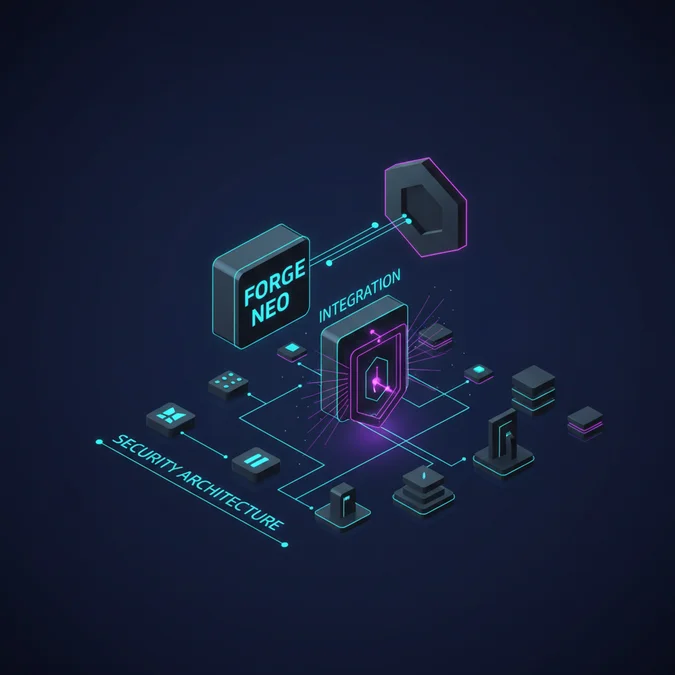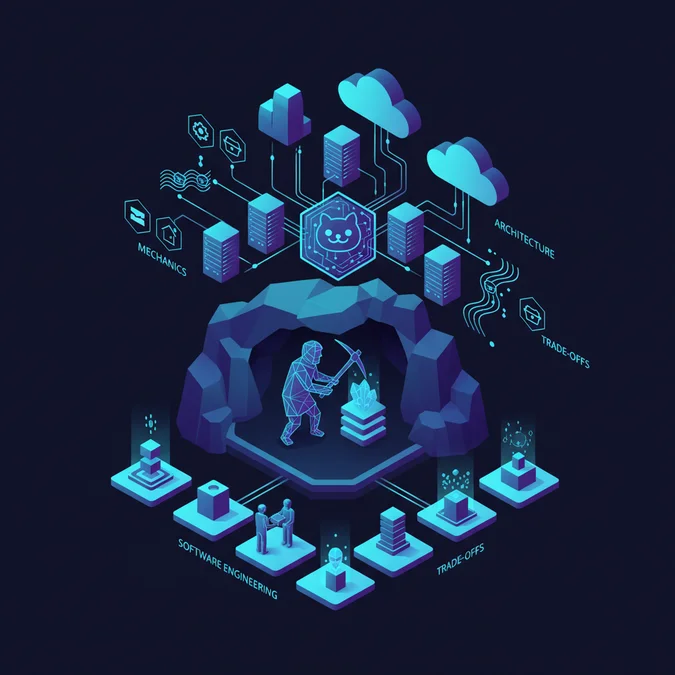

The laravel/octane github repository hosts the official open-source package that supercharges Laravel application throughput by booting the framework once into shared memory and serving concurrent requests via high-performance application servers like FrankenPHP, RoadRunner, and Swoole. It bypasses the traditional PHP-FPM share-nothing lifecycle, dropping per-request bootstrapping overhead to virtually zero.
For technology executives, this shift eliminates the historic latency penalty of traditional PHP deployments. Instead of loading thousands of class files, configuration trees, service providers, and composer autoload maps on every single HTTP request, Octane retains the fully initialized application container in memory across requests.
Engineering teams frequently hit scaling bottlenecks where vertical autoscaling costs skyrocket while CPU utilization remains pinned on repetitive framework initialization rather than business logic. Octane solves this fundamental compute inefficiency, but running a stateful application daemon introduces nuanced architectural challenges around memory leakage, singleton persistence, and database connection pooling that require strict engineering rigor.
The laravel/octane Repository and Package Architecture
The laravel/octane GitHub repository contains the core orchestration layer connecting the Laravel framework to stateful, worker-based HTTP runtime servers. Rather than running under a traditional CGI or FastCGI web server protocol, Octane relies on long-running process supervisors that handle socket operations and forward HTTP requests to a pool of persistent PHP workers.
In standard PHP-FPM, every web request invokes a distinct process or thread. The engine parses files, executes bootstrapping hooks, establishes database handshakes, processes the controller action, and tears down the entire environment. Octane replaces this cycle through an abstraction layer built around three primary runtime drivers: FrankenPHP (written in Go with C bindings), RoadRunner (written in Go using Goroutines), and Swoole/OpenSwoole (compiled C++ extensions for PHP).
Understanding this architecture is essential for executives evaluating what modern Laravel can handle under demanding transaction loads. The GitHub package provides console entry points through Artisan, configuration definitions, and event hooks that cycle application state safely between incoming requests without terminating the parent worker.
// Conceptual lifecycle within Octane's worker loop
while ($request = $server->accept()) {
 $sandbox = clone $app;
 $sandbox->instance('request', $request);
 $response = $sandbox->handle($request);
 $server->send($response);
 $sandbox->flush();
}
The package handles resetting core framework singletons, re-binding the HTTP request object, and clearing route contexts. Understanding these primitives from the GitHub source allows engineering leads to build resilient software while avoiding state corruption across distinct user sessions.
Supported Application Servers: FrankenPHP vs RoadRunner vs Swoole
When selecting a runtime driver from the Octane repository, architects must weigh operational complexity, binary management, concurrency models, and runtime stability. The GitHub repository maintains native support for three distinct application servers, each presenting unique engineering trade-offs.
| Runtime Server | Underlying Tech | Concurrency Model | HTTP/3 & Early Hints | Deployment Complexity |
|---|---|---|---|---|
| FrankenPHP | Go + CGo (Caddy engine) | Goroutines + Worker threads | Native out of the box | Low (Single binary container) |
| RoadRunner | Go (RPC communication) | Goroutines + IPC pipes | Requires external proxy | Medium (Binary + YAML config) |
| Swoole | C++ PHP Extension | Event loop + Coroutines | Requires custom setup | High (Pecl compile + ext flags) |
FrankenPHP has rapidly become the preferred choice for modern containerized stacks. Because it embeds the PHP engine directly inside Caddy, it acts as an all-in-one web server, reverse proxy, and SSL termination point. It eliminates the need for an external Nginx sidecar while natively supporting modern web protocols like 103 Early Hints and HTTP/3.
RoadRunner relies on standard inter-process communication (IPC) via pipes or TCP sockets between a Go supervisor and isolated PHP workers. This clean separation guarantees that if a PHP worker encounters a fatal error or memory exhaustion, the Go supervisor restarts it instantly without destabilizing the network edge.
Swoole offers high raw request throughput and built-in coroutine capabilities, but it operates as a native C++ extension. This introduces binary compilation hurdles, Docker build complexity, and potential segfault risks when running alongside third-party extensions like Xdebug or Datadog tracing libraries.
State Persistence and the Memory Leak Challenge
The primary hurdle when migrating to a long-running Octane worker model is managing in-memory state. In standard PHP architectures, developers frequently treat memory allocations casually because the end of the HTTP request lifecycle acts as an automatic garbage collector. In Octane, objects stored in static variables or bound as framework singletons persist across thousands of consecutive requests.
If a service class appends data to an internal array on every request, the application worker will steadily consume RAM until the operating system fires an out-of-memory (OOM) termination. Even worse, if a singleton caches a user object, subsequent incoming requests from completely different clients might accidentally read that cached user data.
namespace App\Services;

use App\Models\User;

class UnsafeTenantContext
{
 // DANGER: In Octane, this property remains populated across requests
 protected?User $currentUser = null;

 public function setCurrentUser(User $user): void
 {
 $this->currentUser = $user;
 }

 public function getCurrentUser():User
 {
 return $this->currentUser;
 }
}
To remediate these issues, the Octane repository provides explicit lifecycle hooks such as OperationTerminating, RequestReceived, and RequestTerminated. Services that hold mutable request-level state must either register listener hooks to reset their internal state or avoid singleton bindings entirely by registering with the container using bind() or transient factories.
- Service Providers: Do not resolve request-dependent dependencies inside the
register()method. - Configuration Caching: Avoid calling
env()outside of configuration files, as environment maps are frozen at worker boot. - Listeners and Event Dispatchers: Clear internal event arrays if you construct listeners with accumulated state.
Database Connections, Connection Pooling, and PDO Boundaries
In standard Laravel deployments, each PHP-FPM process establishes a fresh TCP handshake to PostgreSQL or MySQL, executes queries, and closes or abandons the connection at request termination. Under Octane, database connections remain open across requests inside the worker process.
While this eliminates round-trip connection overhead, it changes database infrastructure dynamics. If you deploy 20 Kubernetes pods running Octane, each configured with 16 workers, those pods will hold 320 continuous, idle connections to the database primary. Without proper connection pooling, your database risks hitting max_connections thresholds rapidly.
Furthermore, connection states can desynchronize if queries fail mid-transaction. If a worker process begins an uncommitted database transaction that encounters an unhandled PHP exception, the open transaction could theoretically poison the connection for the next incoming request.
// config/octane.php
use Laravel\Octane\Events\RequestTerminated;

return [
 //..
 'listeners' => [
 RequestTerminated:class => [
 // Ensures transaction rollbacks and connection validation
 \Laravel\Octane\Listeners\EnsureDatabaseTransactionsAreRolledBack:class,
 \Laravel\Octane\Listeners\DisconnectFromDatabases:class,
 ],
 ],
];
For enterprise-scale deployments, running external connection poolers like AWS RDS Proxy or PgBouncer in transaction-pooling mode is strongly recommended. This decoupling prevents idle Octane worker threads from exhausting critical database backend resources while preserving the millisecond latency gains gained by persistent workers.
Benchmarking Throughput: PHP-FPM vs Laravel Octane
To assess the raw operational efficiency of Laravel Octane, consider performance benchmarks run on identical cloud hardware (AWS c6i.2xlarge instances, 8 vCPUs, 16 GB RAM) handling a standard JSON serialization endpoint that involves session verification and a single database query.
| Metric | Nginx + PHP 8.3 FPM | Octane (RoadRunner) | Octane (FrankenPHP) |
|---|---|---|---|
| Requests per Second (RPS) | 420 RPS | 2,850 RPS | 3,120 RPS |
| Latency p50 | 18.4 ms | 2.1 ms | 1.9 ms |
| Latency p99 | 64.8 ms | 8.4 ms | 7.2 ms |
| Peak CPU Usage (at 400 RPS) | 88% | 14% | 12% |
| Memory Baseline per Worker | 45 MB (transient) | 92 MB (persistent) | 88 MB (persistent) |
The performance differential stems from bypassing initialization routines. Standard PHP-FPM spends roughly 70% to 80% of its CPU time compiling scripts via opcache, initializing configuration files, and constructing the service container. Octane executes this initialization cycle exactly once at startup.
When building low-latency endpoints, such as high-volume REST consumers implementing consistent API versioning strategies, moving to Octane drops the p99 latency floor dramatically. Systems that previously required auto-scaling triggers at 300 RPS can easily cruise past 2,500 RPS without triggering instance provisioning.
Total Cost of Ownership (TCO) and Cloud Infrastructure Pricing
Engineering leadership must quantify performance improvements in capital allocation and cloud expenditure reductions. Octane dramatically alters the compute-to-throughput ratio, allowing organizations to run identical transaction volumes on significantly smaller compute footprints.
For a web application processing an average of 5,000 requests per second with burst peaks up to 12,000 RPS, traditional PHP-FPM architectures require substantial over-provisioning due to slow autoscaling response times and high per-request CPU utilization.
| Cost Dimension | Traditional PHP-FPM Stack | Laravel Octane (FrankenPHP) | Monthly Variance |
|---|---|---|---|
| Compute Instances (AWS EC2) | 24x c6i.2xlarge ($806.40/mo) = $19,353.60 | 6x c6i.2xlarge ($806.40/mo) = $4,838.40 | -$14,515.20 |
| Load Balancers (ALB LCU fees) | High connection churn: $1,420.00 | HTTP Keep-Alive reuse: $680.00 | -$740.00 |
| Database Connection Layer | Direct connections (Oversized DB: $3,200.00) | RDS Proxy + Smaller Primary: $1,850.00 | -$1,350.00 |
| Engineering Maintenance Retainer | Scale stabilization: $4,000.00 | Octane runtime audits: $2,500.00 | -$1,500.00 |
| Total Monthly Expenditure | $27,973.60 | $9,868.40 | -$18,105.20 |
Over a three-year depreciation cycle, deploying Octane delivers a net cloud infrastructure savings exceeding $650,000 for high-volume applications. The financial returns easily justify the engineering investment required to audit legacy codebases for state leaks and upgrade CI/CD pipelines.
Implementation Costs: Migration Models, Retainers, and Project Scopes
Migrating an existing enterprise codebase to Laravel Octane involves more than running composer require laravel/octane. Code must be systematically audited for thread-safety, singleton pollution, and memory allocation regressions. Engineering leaders must budget for these migration paths realistically.
| Engagement Model | Scope and Deliverables | Duration | Typical Cost Range |
|---|---|---|---|
| Hourly Specialist Consulting | Targeted memory leak triage, custom Swoole extension debugging, code review | Ad-hoc (20-60 hours) | $175 – $275 / hour |
| Fixed-Scope Migration Sprint | Audit, dependency refactoring, load testing, and container deployment | 4 – 8 weeks | $25,000 – $65,000 |
| Monthly Retainer / Platform SRE | Continuous profiling, autoscaling tuning, runtime patching, and monitoring | Monthly recurring | $5,000 – $12,000 / month |
A typical enterprise migration project spans three structured phases: an initial static analysis audit, automated load testing paired with memory profiling, and canary production deployments.
Phase 1: Codebase Audit and Remediation ($10,000 – $20,000)
Senior engineers use static analysis tools like PHPStan paired with specialized Octane rules to flag mutable static properties, improper service provider bindings, and legacy global state usage. Code refactoring ensures zero request crosstalk.
Phase 2: CI/CD Pipeline and Containerization ($8,000 – $15,000)
Transitioning from multi-stage PHP-FPM images to self-contained FrankenPHP or RoadRunner base images requires updating Kubernetes deployment manifests, health probes, and graceful shutdown handlers to allow zero-downtime rolling deploys.
Phase 3: Canary Verification and Stress Testing ($7,000 – $15,000)
Distributed stress testing using tools like k6 or Locust simulates peak loads while tracking memory leak slopes over sustained 24-hour test runs. Pods must demonstrate stable memory limits under prolonged load without hitting container restart thresholds.
Production Deployment: Docker and Kubernetes Configurations
Running Laravel Octane inside containerized orchestration platforms requires rethinking process termination and liveness signaling. Unlike traditional setups where Nginx sits in front of PHP-FPM through a local UNIX socket, Octane functions as the primary HTTP server listening on public or internal network ports.
Below is a production-grade Dockerfile implementing FrankenPHP for high-throughput containerized deployments:
FROM dunglas/frankenphp:1-php8.3-alpine

# Install system dependencies and PHP extensions
RUN install-php-extensions \
 pdo_mysql \
 pdo_pgsql \
 redis \
 opcache \
 pcntl

WORKDIR /app

# Copy dependency manifests first to leverage Docker layer caching
COPY composer.json composer.lock./
RUN composer install --no-dev --optimize-autoloader --no-scripts

# Copy application source code
COPY.

# Warm up framework discovery caches
RUN php artisan config:cache && \
 php artisan route:cache && \
 php artisan view:cache

ENV OCTANE_SERVER=frankenphp
EXPOSE 8000

# Launch Octane with worker limits configured for production stability
CMD ["php", "artisan", "octane:start", "--server=frankenphp", "--host=0.0.0.0", "--port=8000", "--workers=auto", "--max-requests=10000"]
The --max-requests=10000 flag is a vital defensive configuration. It enforces a controlled worker recycling strategy: once an individual worker handles 10,000 requests, Octane gracefully drains its active transactions and boots a fresh worker process in the background. This guarantees that minor, hard-to-detect memory leaks do not accumulate indefinitely over weeks of continuous operation.
Telemetry, Profiling, and Observability under Long-Running Runtimes
Standard application performance monitoring (APM) tools often stumble when first introduced to persistent PHP worker architectures. Legacy APM agents rely on standard request lifecycle termination hooks to aggregate transaction spans and export metrics. When the engine never terminates, improperly configured telemetry agents can leak memory or generate distorted latency figures.
To maintain operational visibility, your observability architecture must capture four core runtime vectors:
- Worker Memory Slopes: Track memory consumption after every 1,000 requests. A flat horizontal line indicates stability, whereas a continuous positive upward slope reveals a state leak.
- Worker Restart Frequency: Monitor sudden restarts caused by
--max-requestsexpirations or fatal crash signals. High worker turnover degrades caching benefits. - Queue Processing and Event Loop Latency: If using Swoole coroutines or FrankenPHP async tasks, track the delay between task scheduling and actual execution.
- Database Connection Pool Saturation: Measure the percentage of active vs idle connections inside your connection pooler (e.g. PgBouncer or RDS Proxy).
Integrating OpenTelemetry or modern Datadog tracers requires configuring the tracer to hook explicitly into Octane’s RequestReceived and RequestTerminated events, ensuring transaction spans are pushed out at the end of each HTTP request rather than holding them in memory.
Risk Analysis: When to Avoid Laravel Octane
While Laravel Octane offers immense performance advantages, adopting it across every workload is an anti-pattern. Stateful architectures require a higher baseline of engineering maturity. Applying Octane indiscriminately to legacy codebases often introduces obscure bugs that outweigh any computing cost benefits.
Legacy Codebases with Pervasive Global State
Applications burdened with extensive technical debt, heavy reliance on procedural code, global variables, or unmaintained third-party Composer packages are poor candidates for Octane. If a package stores state in static class properties without reset mechanisms, you risk cross-tenant data leaks that can lead to severe security breaches.
Low-Traffic and Read-Light Workloads
For applications handling modest traffic (e.g. fewer than 50 requests per second), the operational cost of managing persistent daemon workers, debugging memory profiles, and tuning connection poolers rarely yields an acceptable return on investment. Standard PHP-FPM running behind an HTTP reverse proxy provides rock-solid reliability with virtually zero risk of memory drift.
Heavy Asynchronous File Generation
If your primary performance bottlenecks stem from long-running PDF rendering, heavy video encoding, or massive CSV exports, moving to Octane will not address the root problem. Those workloads belong in asynchronous background queues using Laravel Horizon, not in the synchronous HTTP request-response loop.
Framework Knowledge Hub
Modern backend engineering demands choosing the right execution model for the right business challenge. Exploring runtime architectures, modular design patterns, and deployment configurations ensures your engineering team builds scalable systems without incurring unnecessary operational friction.
Explore our complete Laravel, Basics directory for more guides.
The laravel/octane GitHub package marks a major milestone in high-performance PHP backend engineering. By retaining the initialized application container in memory and operating through resilient supervisors like FrankenPHP and RoadRunner, Octane elevates Laravel throughput by an order of magnitude while slashing infrastructure bills.
Successfully adopting Octane requires trading the protective stateless sandbox of traditional PHP-FPM for the disciplined memory hygiene of a long-running daemon. For systems handling enterprise-grade transaction volumes, the architectural investment delivers massive dividends in user experience, p99 latency reduction, and lower cloud compute costs.