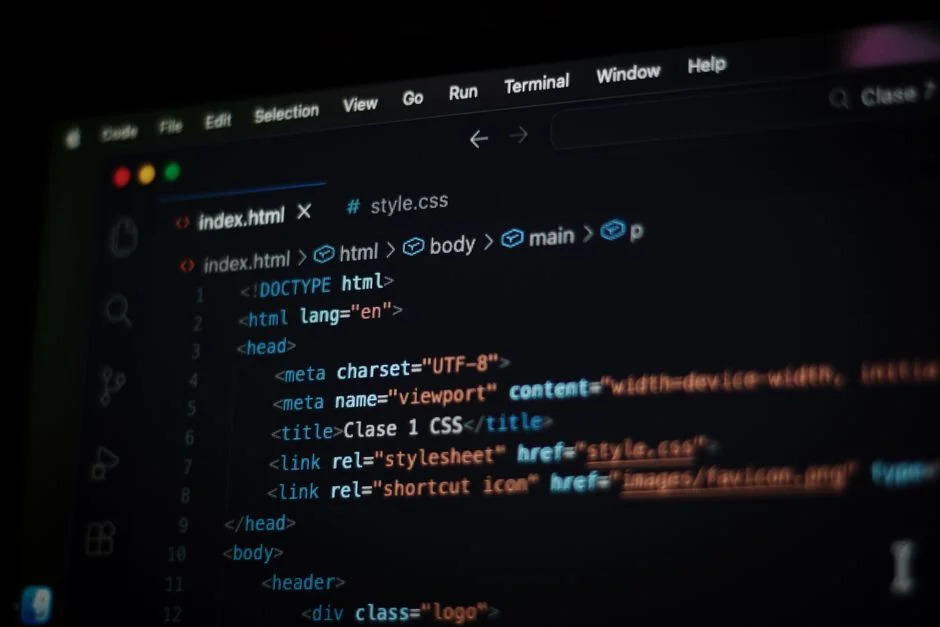

Laravel defer is a global helper function introduced in Laravel 11 that executes non-blocking closure callbacks after an HTTP response has been completely transmitted to the client. It provides lightweight, in-process asynchronous task offloading without introducing the infrastructure overhead, queue serialization latency, or operational cost of a full message broker like Redis or RabbitMQ.
In standard PHP-FPM and FastCGI architectures, an incoming web request locks an execution worker until every database write, third-party API call, and log operation finishes. This synchronous bottleneck degrades Tail Latency (p99), limits ingress throughput on application load balancers, and demands aggressive horizontal autoscaling simply to handle slow downstream I/O. The defer() helper redefines this request-response lifecycle by taking advantage of transport-level output termination.
By leveraging PHP FastCGI finish request primitives or modern long-running application runtimes like Laravel Octane, deferred execution keeps response times low while ensuring background work completes reliably. However, executing tasks within the web runtime introduces concrete memory leakage, execution timeout, and concurrency management trade-offs that systems architects must carefully calculate.
Under the Hood: FastCGI Protocols and Runtime Execution Lifecycles
Understanding the behavior of the defer() helper requires a deep examination of how PHP communicates with reverse proxies such as Nginx, Traefik, or AWS Application Load Balancers. In a traditional PHP-FPM pool, the web server acts as a FastCGI client, forwarding the HTTP request envelope over a UNIX domain socket or TCP connection. The PHP worker handles initialization, boots the framework container, executes route handlers, and formats the HTTP response.
Under normal conditions, the FastCGI worker does not release the connection until the entire script reaches termination. When you invoke defer(), Laravel registers a closure into an in-memory queue inside the Illuminate\Foundation\Defer\DeferredCallbackCollection instance. The execution flow operates as follows:
- The HTTP Kernel completes request processing and generates an
Illuminate\Http\Response. - The application sends headers and output content buffers back to the FastCGI buffer.
- The response triggers the transport-level termination routine via
fastcgi_finish_request(). - The FastCGI socket closes, signaling the reverse proxy that the payload is complete.
- The client receives HTTP status 200 and data packets immediately.
- The PHP process remains active in background space, invoking each queued closure sequentially before executing terminable middleware and shutting down.
The structural difference between a standard synchronous request, a deferred callback, and an asynchronous queue appears below:
| Execution Model | Client Perceived Latency | Infrastructure Dependencies | Fault Isolation | Max Execution Window |
|---|---|---|---|---|
| Synchronous Request | High (Handler + I/O time) | None (Single Web Pod) | Zero (Fails entire request) | max_execution_time |
Laravel defer() |
Low (Handler compute only) | None (Shared Web Pod memory) | Partial (Response already delivered) | Remaining PHP worker timeout |
| Queued Job (Redis/SQS) | Lowest (Push to broker time) | Worker Nodes, Redis/SQS, Supervisord | Total (Isolated queue process) | Configurable per queue job |
When engineering high-volume APIs using lightweight modern patterns such as flexible route structures, eliminating synchronous overhead without provisioning external brokers delivers dramatic reductions in edge response times.
Implementation Mechanics: Basic Closures, Cancellation, and State
Using the defer() helper is syntactically straightforward, but handling variable scoping, closure binding, and abort state demands precise code structure. When passing data into a deferred closure, always capture objects by value or extract immutable scalar values to protect against race conditions or mid-execution memory mutation.
<php

namespace App\Http\Controllers;

use App\Models\Order;
use App\Services\AuditLogger;
use App\Services\MetricsDispatcher;
use Illuminate\Http\JsonResponse;
use Illuminate\Http\Request;
use function Illuminate\Support\defer;

class CheckoutController extends Controller
{
 public function __invoke(Request $request, AuditLogger $logger, MetricsDispatcher $metrics): JsonResponse
 {
 // Primary synchronous database mutation
 $order = Order:create([
 'user_id' => $request->user()->id,
 'amount' => $request->integer('amount'),
 'status' => 'confirmed',
 ]);

 $orderId = $order->id;
 $userId = $request->user()->id;
 $ipAddress = $request->ip();

 // Defer non-critical metrics and logging post-response
 defer(function () use ($logger, $metrics, $orderId, $userId, $ipAddress) {
 // Executes after FastCGI client disconnects
 $logger->recordOrderEvent($orderId, $userId, $ipAddress);
 $metrics->increment('orders.completed', 1, ['gateway' => 'stripe']);
 })->name('record-order-metrics');

 return response()->json([
 'message' => 'Order accepted',
 'order_id' => $order->id,
 ], 202);
 }
}
The callback accepts modifier methods to fine-tune execution conditions:
- Named Callbacks: Using
->name('identifier')prevents duplicate tasks from stacking up during a single request lifecycle or allows targeted cancellation. - Conditional Cancellation: You can invoke
defer()->cancel('identifier')if an unhandled exception occurs later in the primary controller flow, guaranteeing tasks do not fire after validation or payment rejections. - Always Execute: Appending
->always()forces the callback to run even if the HTTP response throws an unhandled exception or aborts early with a 4xx or 5xx code.
For operations involving authentication verifications such as multi-factor authentication steps, deferring security access audit writes keeps the authentication handshake rapid for the end-user while still recording telemetry on the local system.
Concurrency and Runtime Drift: PHP-FPM vs Laravel Octane
The operational environment dictates how defer() behaves under load. The runtime mechanics diverge sharply between standard process-isolated PHP-FPM pools and persistent memory engines like Laravel Octane (running RoadRunner, Swoole, or FrankenPHP).
PHP-FPM Lifecycle Implications
In PHP-FPM, memory isolation is absolute. Once the deferred callbacks finish executing, the worker terminates or clears its memory ceiling before handling the next inbound connection. However, while deferred tasks execute, the PHP-FPM worker remains busy. It cannot accept a new connection from the backlog queue. If you defer a slow 3-second external HTTP call on a pool with 50 workers, 50 concurrent requests will exhaust the pool completely within seconds, returning HTTP 502 Bad Gateway to subsequent traffic.
Laravel Octane Persistent Worker Implications
Laravel Octane keeps the entire framework compiled in RAM across thousands of requests. When defer() executes inside FrankenPHP or RoadRunner, it does not call fastcgi_finish_request(). Instead, Octane sends the response stream to the client and fires the deferred events using its internal event loop or worker task pool.
// Octane-safe deferred task
defer(function () {
 // In Octane, singletons remain dirty across cycles.
 // Clear state or re-resolve fresh instances from the sandbox container.
 $analytics = app()->makeFresh(TelemetryClient:class);
 $analytics->flushBuffers();
});
If a deferred task leaks memory or modifies a static class property inside Octane, that corruption persists into subsequent client requests. Systems architects must ensure that deferred closures do not leave unclosed file handles, dangling database transactions, or uncollected memory blocks in long-running processes.
Infrastructure Sizing: CPU, Memory, and PHP Worker Saturation
Offloading tasks through defer() instead of a separate worker tier changes resource consumption patterns on your web pods. Because deferred tasks consume CPU cycles on the web node directly, failing to compute the correct FPM process concurrency can lead to catastrophic CPU starvation.
To compute the maximum safe capacity of a PHP-FPM cluster utilizing deferred logic, use this capacity sizing model:
Max Workers per Node = (Total Available Pod RAM - System Overhead) / Peak Worker Memory Footprint
Ingress Capacity (RPS) = Max Workers / (Synchronous Execution Duration + Deferred Execution Duration)
Notice that deferred duration directly inflates total worker occupancy time. Consider an application deployed on AWS Elastic Kubernetes Service (EKS) on c6i.xlarge instances (4 vCPU, 8 GB RAM):
- System & Daemon Overhead: 1.5 GB
- Available Memory for FPM: 6.5 GB (6,656 MB)
- Average Worker Footprint: 85 MB
- Max Concurrent Workers: 6,656 / 85 = 78 workers
- Scenario A (Pure Sync): 50ms compute = 1,560 theoretical requests per second.
- Scenario B (With 300ms Deferred Task): 350ms total worker hold time = 222 theoretical requests per second.
Although the end user experiences a 50ms response in Scenario B, the web pod itself suffers an 85% drop in total ingress capacity because workers remain pinned while running background logic. In scenarios where automated infrastructure provisioning is handled via declarative server recipes, configuring sysctl queue depths and matching PHP pool sizing to ingress expectations is mandatory.
Failure Modes, Error Recovery, and Monitoring Telemetry
The most dangerous pitfall of deferred execution is silent failure. Because the HTTP response has already shipped with a 200 OK or 202 Accepted status code, the client assumes the entire operation succeeded. If a deferred closure throws an unhandled exception, drops a database connection, or terminates due to a memory limit, the client is never alerted.
Observability Pipeline Configuration
Every deferred task must be wrapped in observability instrumentation to route errors to your Application Performance Monitoring (APM) system (such as Datadog, New Relic, or Sentry). The following production pattern wraps execution in explicit error capture boundaries:
<php

namespace App\Infrastructure\Telemetry;

use Throwable;
use Illuminate\Support\Facades\Log;
use Sentry\State\Scope;
use function Sentry\configureScope;
use function Sentry\captureException;
use function Illuminate\Support\defer;

class SafeDeferredTask
{
 public static function run(string $taskName, callable $callback): void
 {
 defer(function () use ($taskName, $callback) {
 $startTime = microtime(true);

 try {
 $callback();

 $duration = (microtime(true) - $startTime) * 1000;
 Log:channel('stdout')->info("Deferred task completed: {$taskName}", [
 'task_name' => $taskName,
 'duration_ms' => round($duration, 2),
 'memory_peak_mb' => round(memory_get_peak_usage(true) / 1024 / 1024, 2),
 ]);
 } catch (Throwable $exception) {
 // Send to APM error tracker
 if (app()->bound('sentry')) {
 configureScope(function (Scope $scope) use ($taskName): void {
 $scope->setTag('execution.context', 'deferred');
 $scope->setExtra('task_name', $taskName);
 });
 captureException($exception);
 }

 Log:channel('stderr')->error("Deferred task failed: {$taskName}", [
 'task_name' => $taskName,
 'error' => $exception->getMessage(),
 'file' => $exception->getFile(),
 'line' => $exception->getLine(),
 ]);
 }
 })->name($taskName);
 }
}
Key operational practices for monitoring deferred closures include:
- Structured JSON Logging: Ensure logs stream directly to
stdoutorstderrso log aggregators (Vector, FluentBit) can ship them to Elasticsearch or Grafana Loki. - Heartbeat Metrics: Emit Prometheus or Datadog statsd counters before and after execution to track execution frequency, failure rates, and execution time drift.
- Timeout Defense: Be aware that
max_execution_timestill applies in PHP-FPM. If your global timeout is 30 seconds and the request took 5 seconds, the deferred task will abort hard if it exceeds 25 seconds.
Architectural Boundaries: When to Defer vs When to Queue
The choice between in-process defer() and out-of-process queues (Amazon SQS, Redis, RabbitMQ) is an engineering balance between latency, operational overhead, and data durability. Using defer() for tasks that require guaranteed execution is an anti-pattern.
Decision Matrix
- Use
defer()when: The operation is short (under 250ms), failures are tolerable or self-correcting (analytics pings, cache invalidations, local audit logs), and zero extra infrastructure is desired. - Use Queues when: The task is computationally heavy (image transformation, report generation), relies on unstable third-party HTTP endpoints (webhooks, email dispatchers), requires automatic retries with exponential backoff, or requires strict at-least-once execution guarantees.
| Criteria | Laravel defer() | Background Queue Worker |
|---|---|---|
| Execution Context | In-process (Same Web Pod) | Out-of-process (Dedicated Queue Pod) |
| Delivery Guarantee | Best effort (Lost if process crashes) | At-least-once (Persistent storage) |
| Retry Capabilities | None natively built-in | Configurable retries, backoff, dead-letter queues |
| Network Overhead | 0ms (Local memory execution) | 5-25ms (Broker serialization and network transport) |
| Operational Cost | $0 additional infrastructure | Requires Redis, SQS, or RabbitMQ clusters |
Relying on defer() for critical transactional workflows like order charging or inventory allocation introduces catastrophic risk: if the underlying virtual machine is terminated by a spot instance reclamation event or autoscaler scale-down, any deferred callbacks waiting in memory are wiped instantly.
Infrastructure Cost Analysis: In-Process Defer vs Queue Clusters
Adopting defer() directly affects cloud infrastructure budgets. By executing minor post-response tasks in-process, engineering teams can eliminate or substantially downscale managed message broker services and dedicated worker instances. However, if poorly managed, increased web pod dwell time forces the horizontal pod autoscaler (HPA) to over-provision expensive web nodes.
Below is a concrete, enterprise cost comparison modeling an API handling 15 million requests per month on AWS infrastructure across three different deployment architectures:
| Cost Element | Architecture A: Pure Sync (No Defer/No Queue) | Architecture B: Lightweight Defer (Zero Queues) | Architecture C: Managed Broker + Dedicated Workers |
|---|---|---|---|
| Ingress Web Nodes | 6x c6i.large ($410.40/mo) | 4x c6i.large ($273.60/mo) | 3x c6i.large ($205.20/mo) |
| Queue / Worker Nodes | $0.00 | $0.00 | 2x c6i.large ($136.80/mo) |
| Managed Broker Service | $0.00 | $0.00 | AWS ElastiCache Redis (cache.m6g.large) ($118.26/mo) |
| Application Load Balancer | $28.50/mo | $24.20/mo (lower LCU dwell) | $22.10/mo |
| Data Transfer / Serialization | $15.00/mo | $15.00/mo | $42.00/mo (VPC cross-AZ queue traffic) |
| Total Monthly Cost | $453.90 | $312.80 | $524.36 |
| Annualized Run Rate | $5,446.80 | $3,753.60 | $6,292.32 |
Engineering implementation fees also vary heavily based on organizational architecture and engagement models. When hiring specialized systems engineering support to transition legacy architectures to optimized runtime models, expect the following cost ranges:
| Pricing Model | Typical Cost Range | Delivery Scope and Operational Deliverables |
|---|---|---|
| Hourly Specialist Consulting | $150 to $275 per hour | Architecture audit, PHP-FPM optimization, bottleneck profiling. |
| Monthly Engineering Retainer | $4,500 to $12,000 per month | Continuous tuning, APM alert integration, HPA autoscaling policies. |
| Fixed-Scope Modernization Project | $15,000 to $45,000 per engagement | Full migration from synchronous monolith to Octane/defer patterns. |
Architecture B yields the optimal cost-to-performance efficiency for micro-services and internal APIs where operations do not demand dead-letter queue architectures, shaving up to 40% off compute expenditures compared to over-provisioned worker pools.
Cluster Resources and Directory Navigation
Building resilient, highly performant web services requires an understanding of how foundational framework components interact with low-level execution environments, operating system boundaries, and continuous cloud deployments.
[Explore our complete Laravel, Basics directory for more guides.](/topics/topics-laravel-basics/)
Review the master hub to deepen your architectural knowledge across core container bindings, routing lifecycles, and configuration pipelines.
Factors That Affect Development Cost
- Worker pool concurrency tuning
- Managed message broker elimination (Redis/SQS)
- APM instrumentation integration
- Autoscaling policy restructuring
Infrastructure costs scale from $300 monthly for lightweight deferred setups up to $6,000 or more annually for fully isolated multi-tier queue environments.
Laravel defer bridges the gap between complex asynchronous message brokers and blocking synchronous HTTP execution. By using output buffering and FastCGI termination routines, it delivers sub-millisecond perceived API performance without the financial and operational drag of secondary message infrastructure.
When adopting deferred execution, maintain clear system boundaries: keep closures brief, isolate volatile memory states, wrap tasks with APM instrumentation, and reserve true queuing systems for mission-critical jobs that mandate persistence and retries.